EN


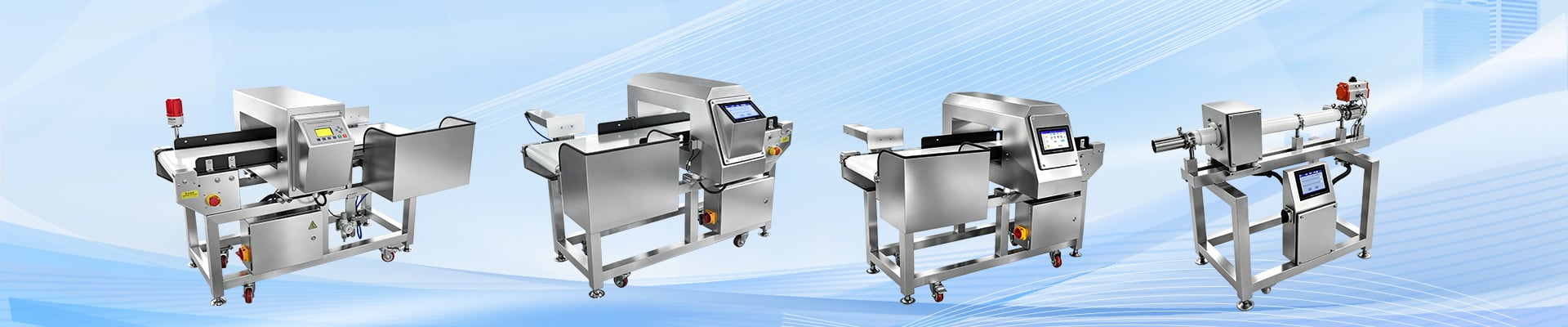
Home > > Metal Detector
| Core Competency | Technical Advantage & Buyer Benefit |
|---|---|
| 0.7mm Extreme Accuracy | Engineered for ultimate safety with a precision of Fe ≥ 0.7mm, capturing even the finest metallic fragments. |
| Smart Learning Algorithm | Advanced automatic learning function filters out product effect, ensuring stable detection even for salty or wet goods. |
| Massive Preset Library | Store up to 100 product test data profiles, allowing for seamless, one-touch switching between diverse production batches. |
| Counter-Inspection Capability | Optional intelligent detection for missing components (desiccants, cards, pins), ensuring 100% package completeness. |
| Digital Stability Core | Utilizes original imported chips and an integrated filling/sealing coil for superior anti-interference in high-speed lines. |
| Global Compliance Design | Built to European and American industrial standards, featuring food-grade SUS 304 stainless steel construction. |
| Seamless Automation | Intuitive touch screen control with multiple rejection modes (Pusher, Flap, Air) for zero-bottleneck integration. |
One decision shapes this conveyor metal detector: how tall the aperture has to be. Seven heights are made, 100 mm (4010) to 350 mm (4035), each with its own grade. Fit the smallest aperture your tallest pack clears and you hold the finest grade the frame allows.
Thirty seconds on our own floor: a vacuum-sealed roast chicken on the belt, through the aperture, down the outfeed chute, with a ferrous test card beside it. The metal detector in this clip has the alarm and the belt stop, which is the standard build.
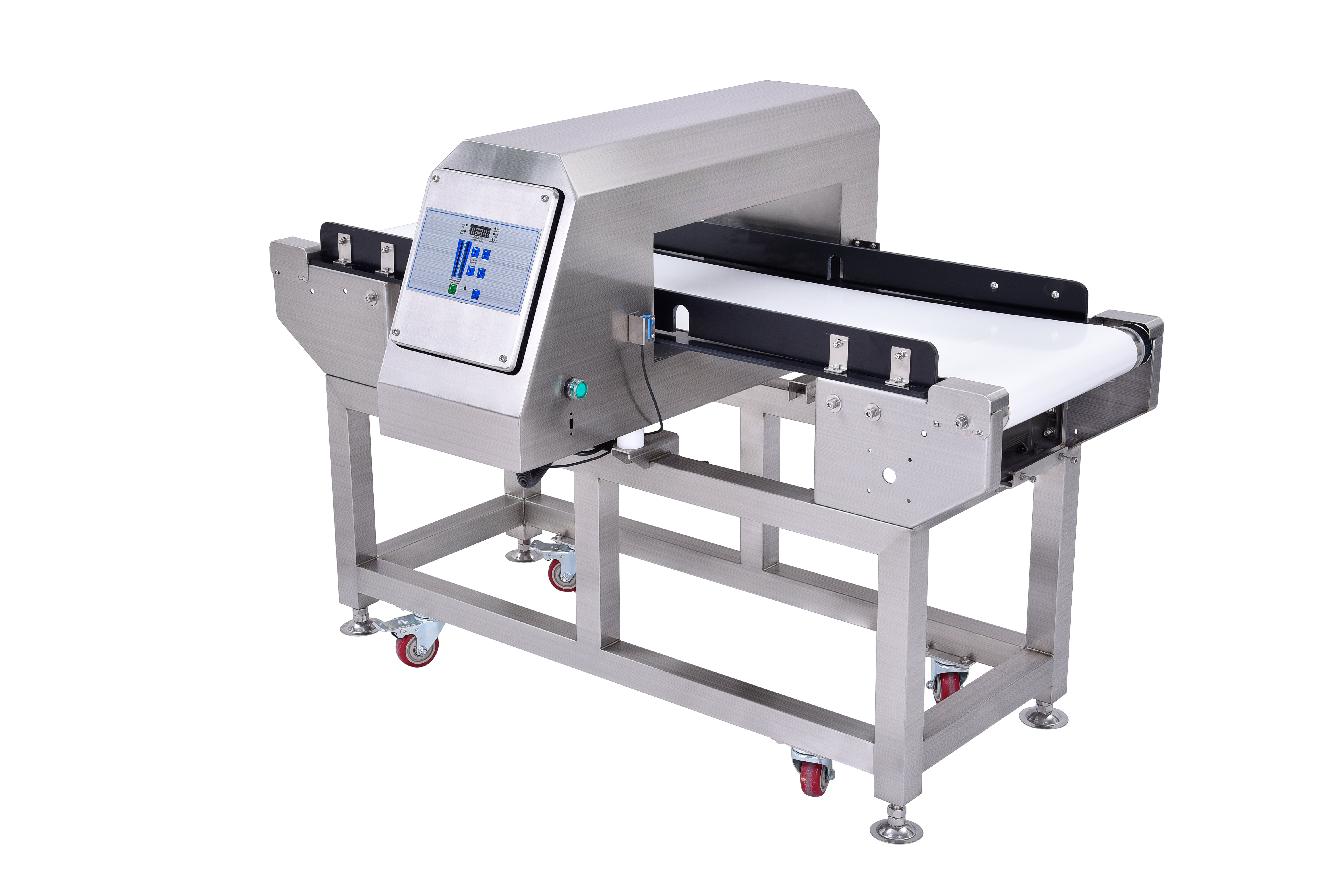
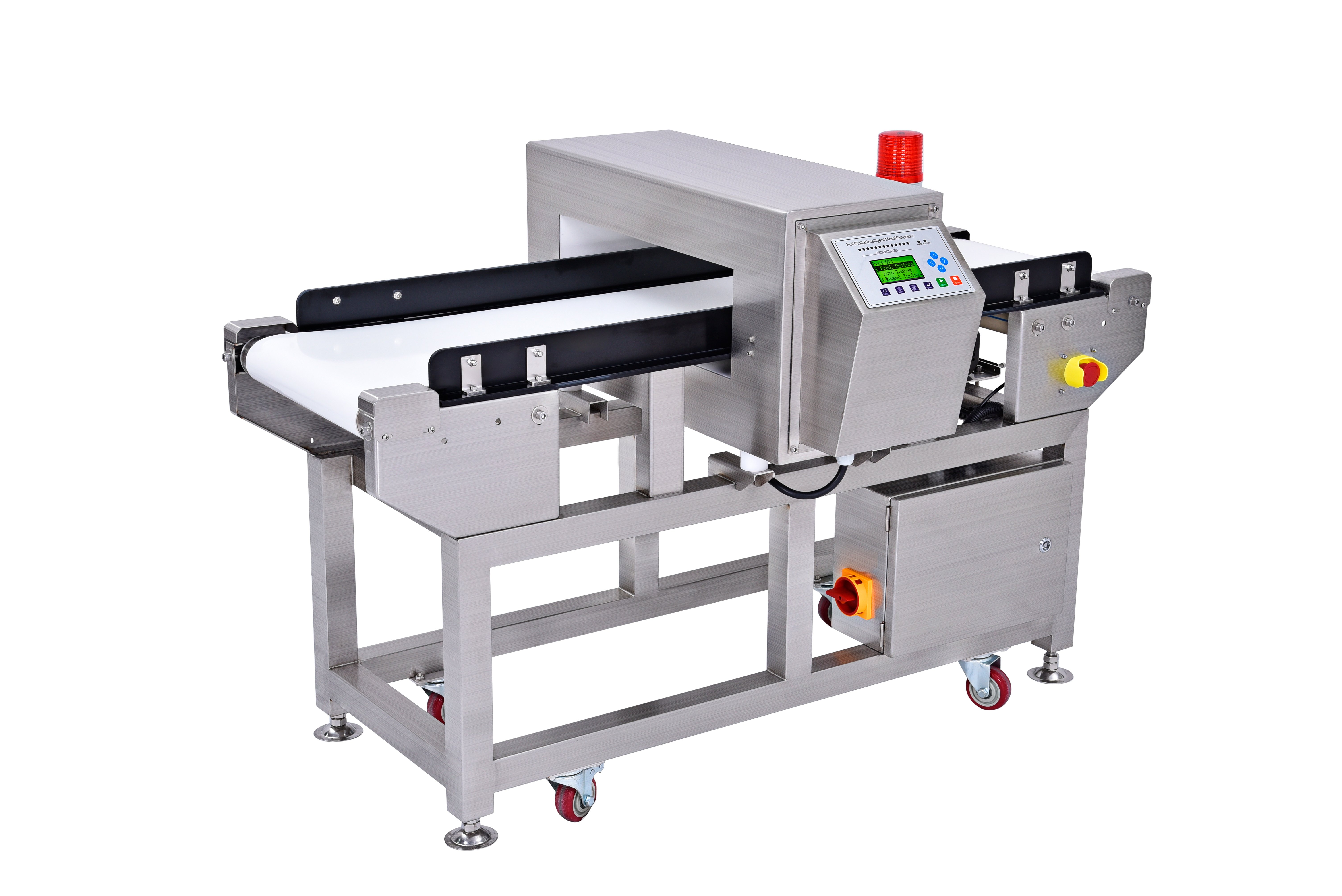
SUS 304 stainless steel throughout: the aperture housing, the control column, both conveyor sections and the cabinet below. It stands on adjustable feet with castors alongside: level it where it runs, wheel it to the next line.
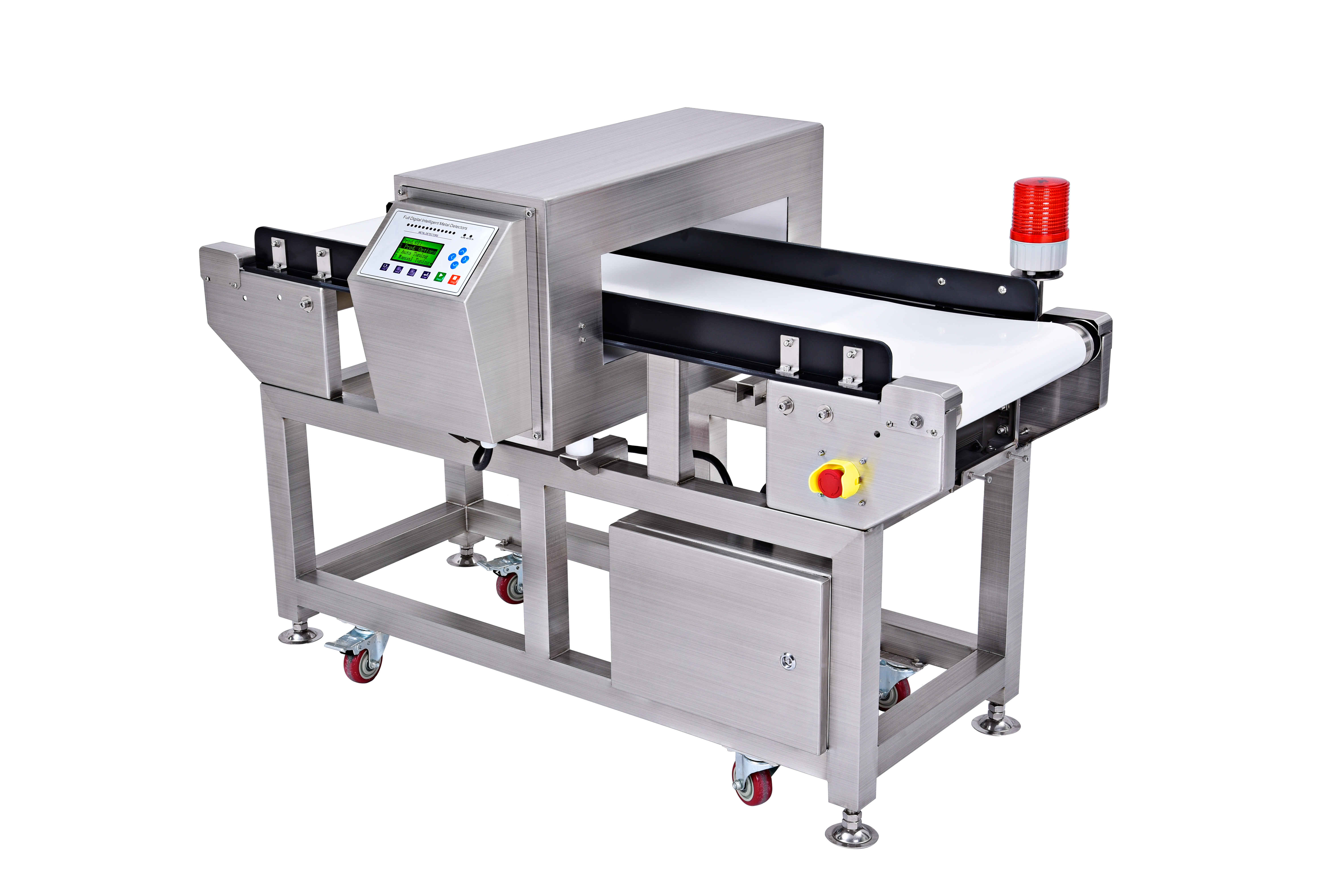
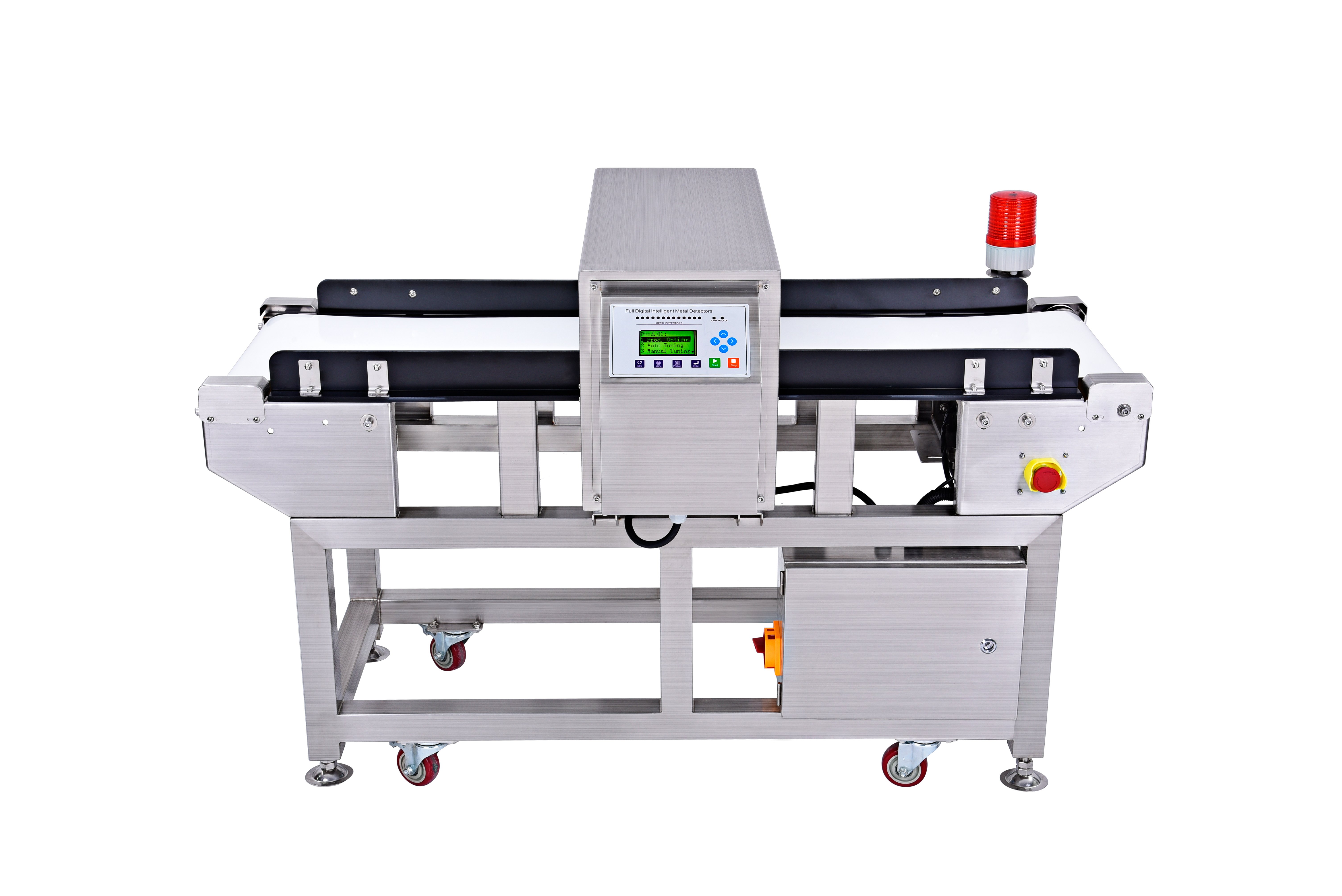
Three parts decide how a food metal detector behaves: the aperture, the panel it is set from, and the sensor at the end of the belt. Setting up takes one move — the metal detector runs its own tuning pass over the product and stores the result as one of 100 recipes.
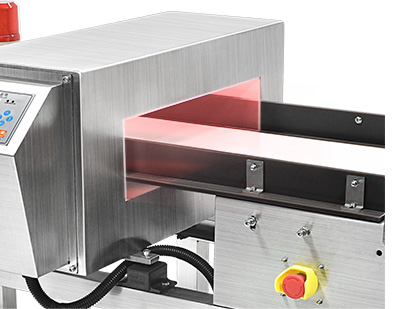
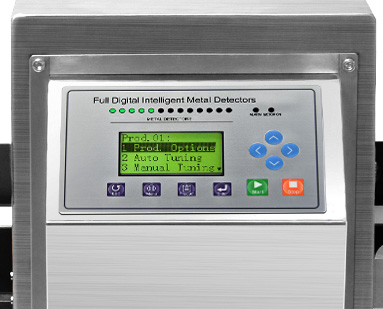
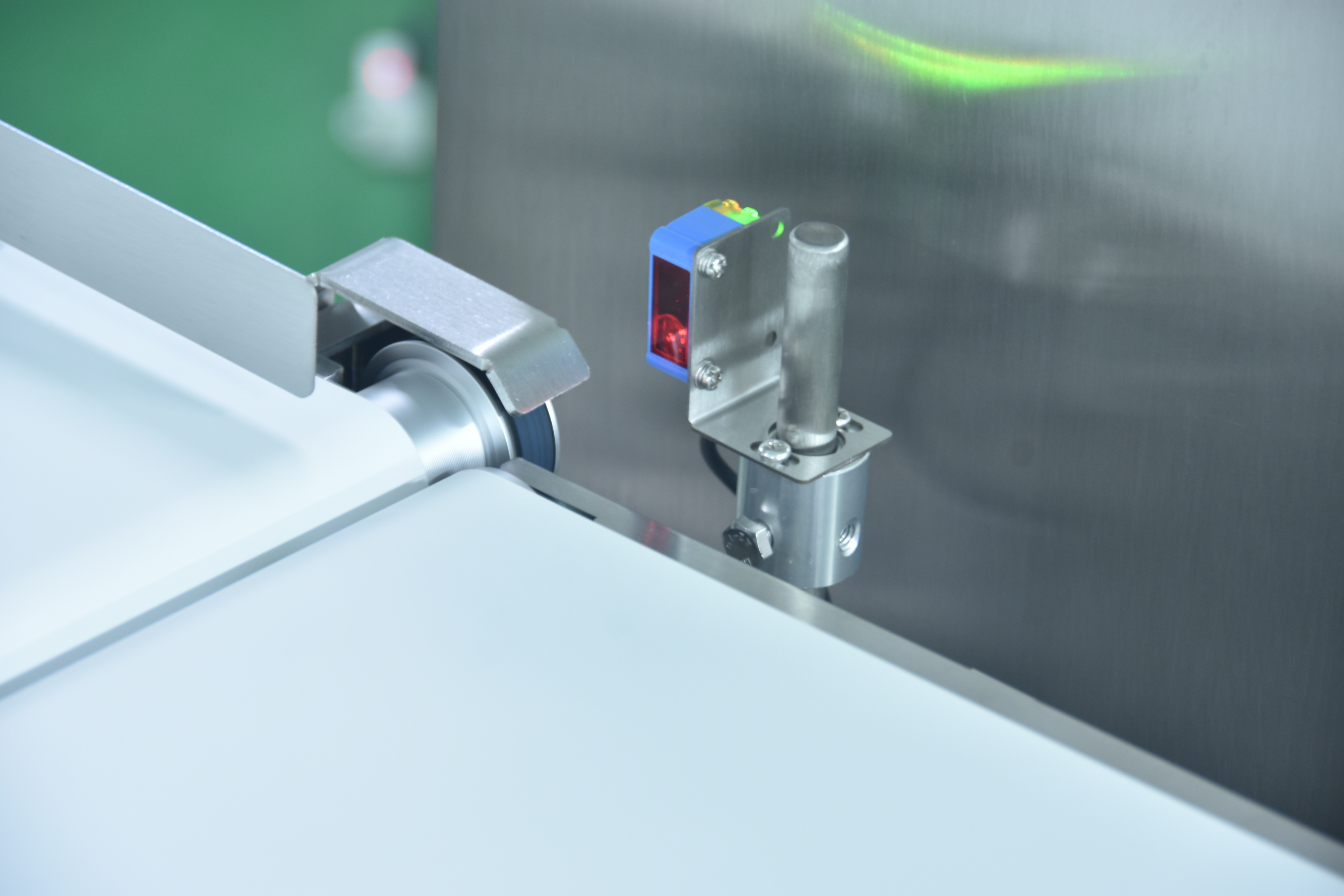
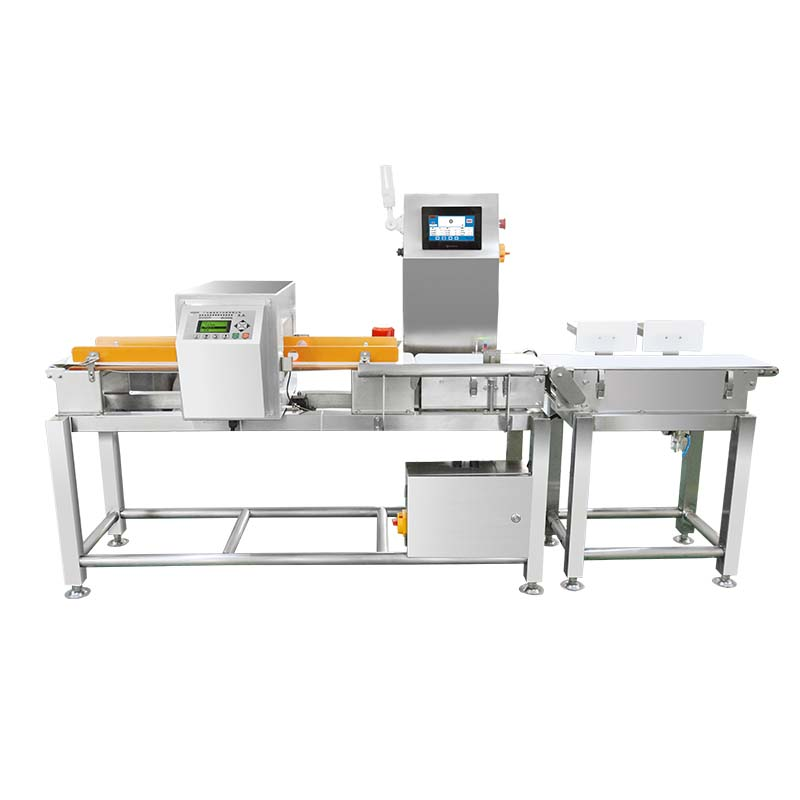
The same metal detector ships two ways. Standard: a buzzer sounds, the belt stops and the pack is lifted off by hand. With a removal device fitted the metal detector clears the pack itself and the line keeps running — a pusher for a firm pack, a flap gate or swing arm for a light one, an air blast where space is tight. Pneumatic versions need compressed air on site; the alarmed version needs only power.
These figures are quoted on an empty machine, which is how every maker states them; what a food metal detector will find on a sealed bag of frozen chicken is smaller, set by the pack, the speed and the building. Send a sample and we quote against your pack.
| Item | CQ-YW818 |
| Model | CQ-YW818 |
| Machine type | Conveyor metal detector, product-effect learning |
| Aperture heights (tunnel) | 100 mm (4010) to 350 mm (4035) |
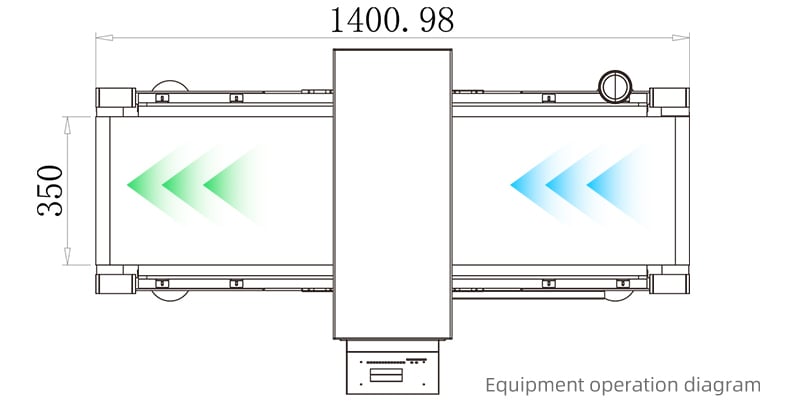
| Aperture width | 400 mm, or made to your pack |
| Ferrous grade | ≥ 0.8 mm at the 100 mm aperture |
| Non-ferrous grade | ≥ 1.2 mm at the 100 mm aperture |
| Stainless steel grade | ≥ 1.5 mm 304 SUS at the 100 mm aperture |
| Belt speed | 25–30 m/min, adjustable |
| On detection | Buzzer and belt stop as standard Pusher, flap or air blast supplied on request, on external air |
| Stored recipes | 100, set by the detector's tuning pass |
| Body material | SUS 304 stainless steel |
| Dimensions L × W × H | 1400 × 820 × 900 mm |
| Machine weight | ≈ 200 kg |
| Power supply | AC 220 V ± 10 %, 50 Hz, 120 W |
| Working height | 700 mm, or made to your line |
| Operator panel | LCD, one-button product setting |
| Basis of grades | Empty machine, test piece at the aperture centre |
| Built and run | Assembled and powered up in our hall |
Height is what sensitivity costs: a 100 mm aperture is quoted at ≥ 0.8 mm ferrous; open the same metal detector to 350 mm and the figure is ≥ 3.0 mm. The air gap between coil and pack is what sets the grade.
The three figures are ball diameters, in mm.
On metal detection, non-ferrous and stainless run one to two steps behind ferrous throughout. If your contaminant is stainless wire or aluminium swarf rather than a broken blade, that gap decides which height you can afford.
Food lines are where most of these go: bakery and biscuit, meat and poultry, seafood, vegetables, fruit, coffee, tea and spices, bean curd and grains. Wet end and dry end use the same metal detector; only the recipe changes.
Outside food the same metal detector works in reverse: boxes, printed matter and assembled parts that leave the line with a metal fitting, desiccant sachet or deoxidiser inside are checked for the presence of that item, and the detector alarms on the pack that went through without it.


One pack type is worth calling out: metalised film and aluminium foil. Foil reflects a metal detector as a mirror reflects light, so metal detection through a foil pouch is the hardest case here and no honest quotation promises the same grade through it. Product-effect learning tunes the film signal out rather than the fragment.
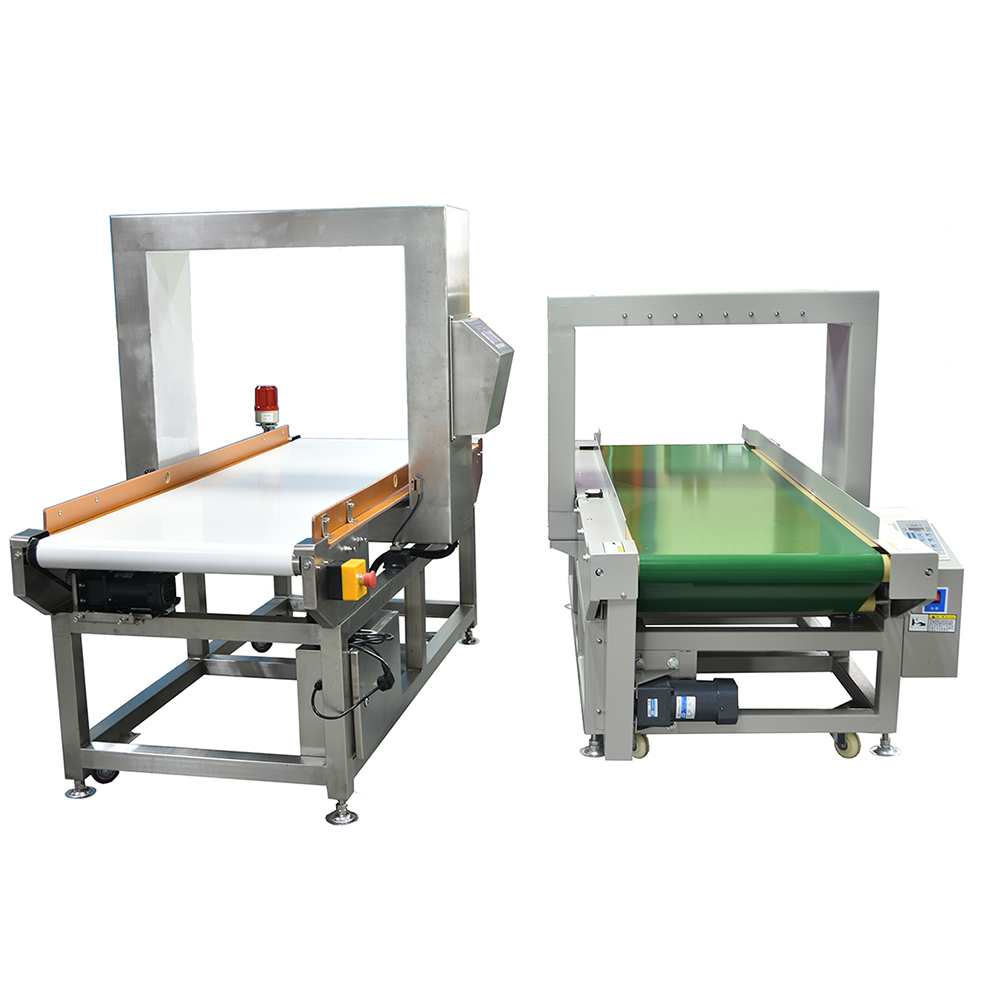
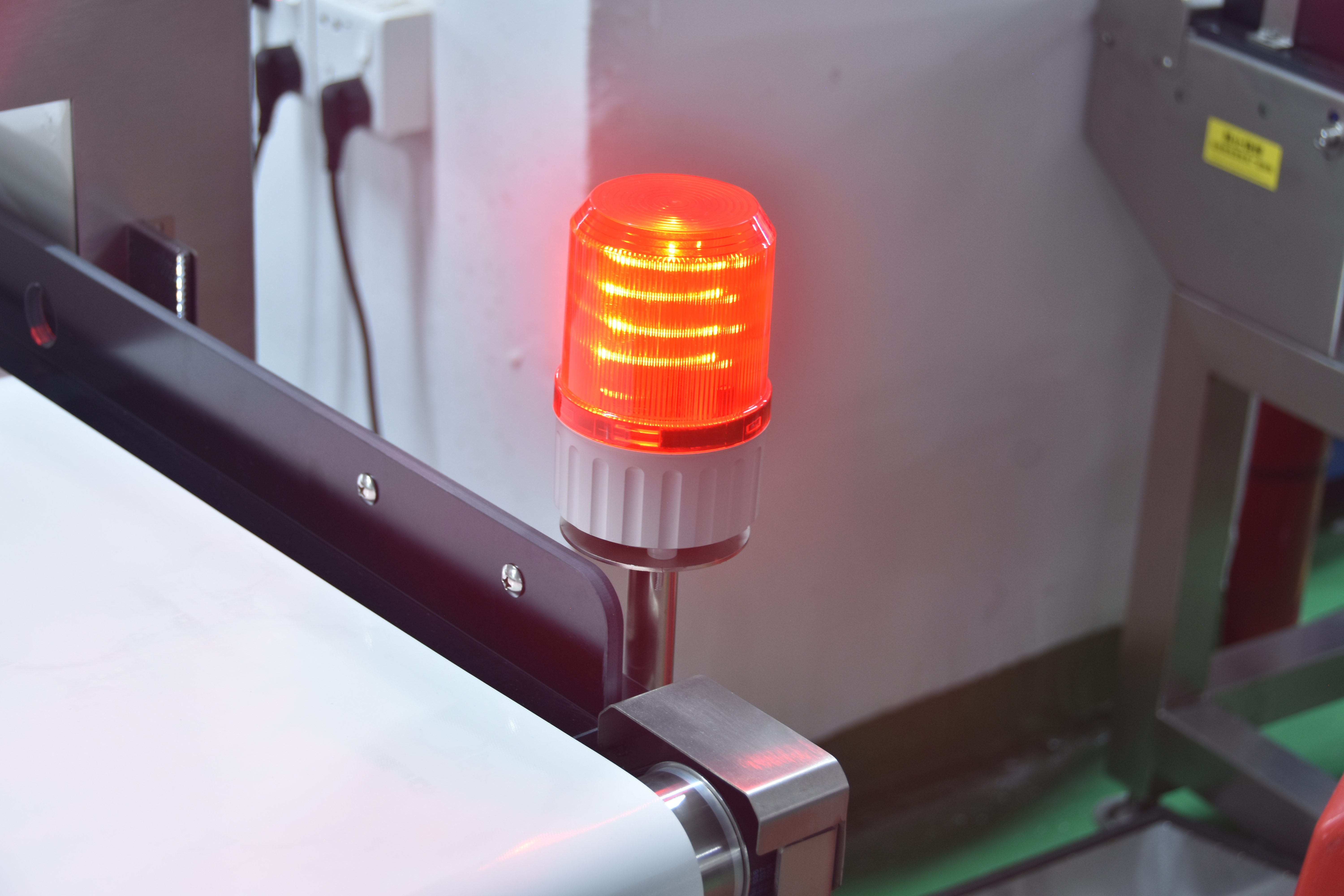
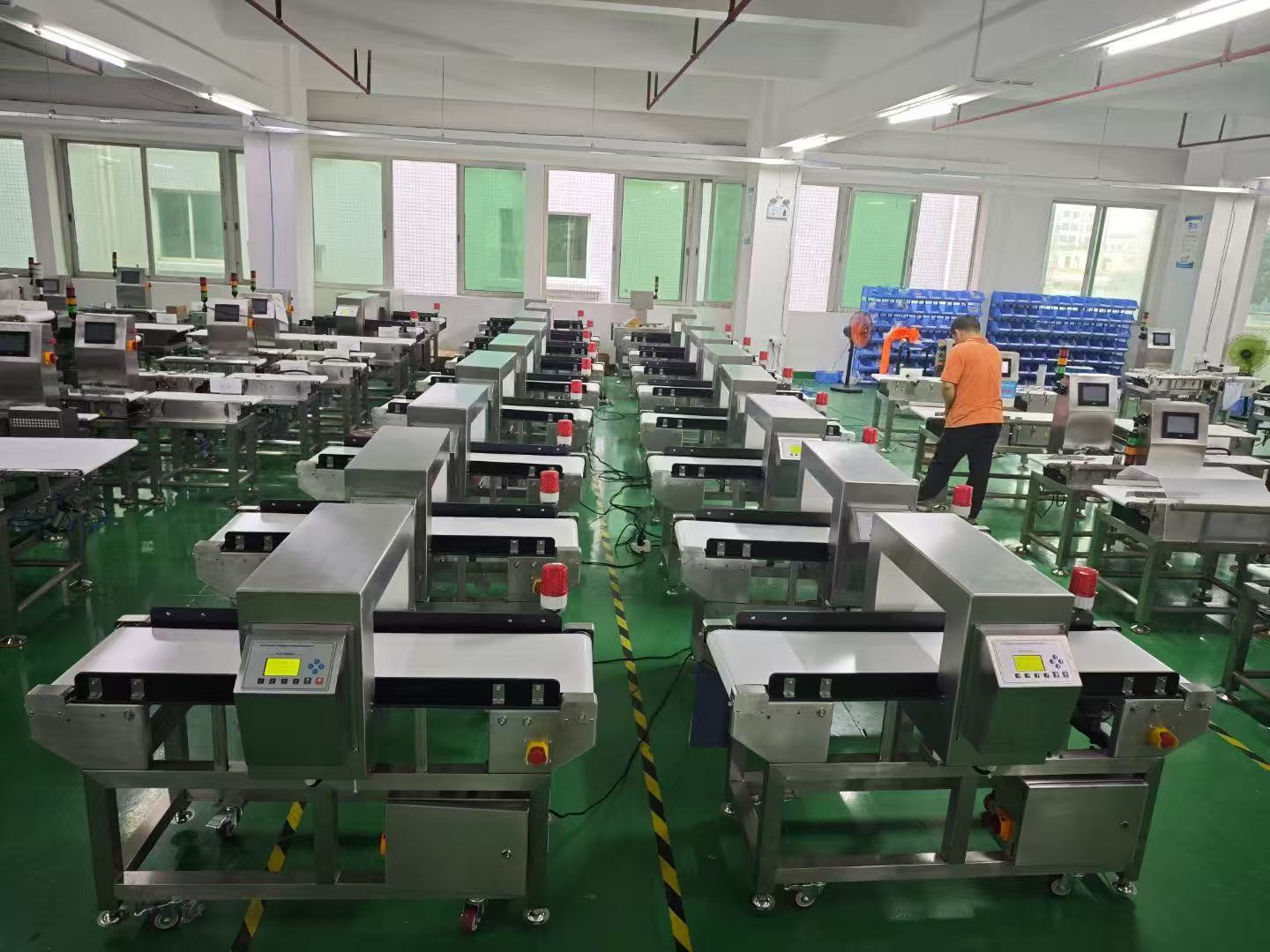
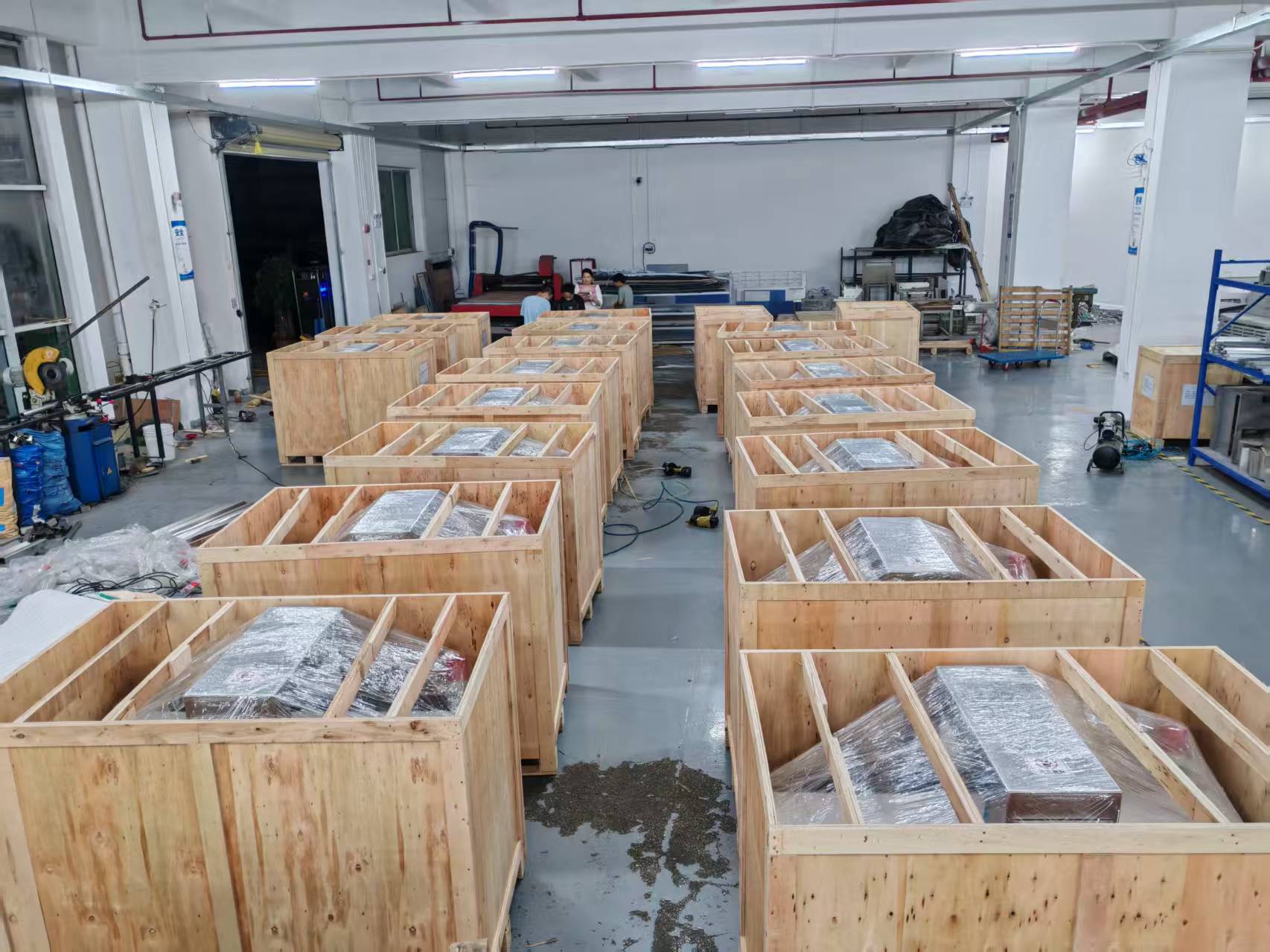
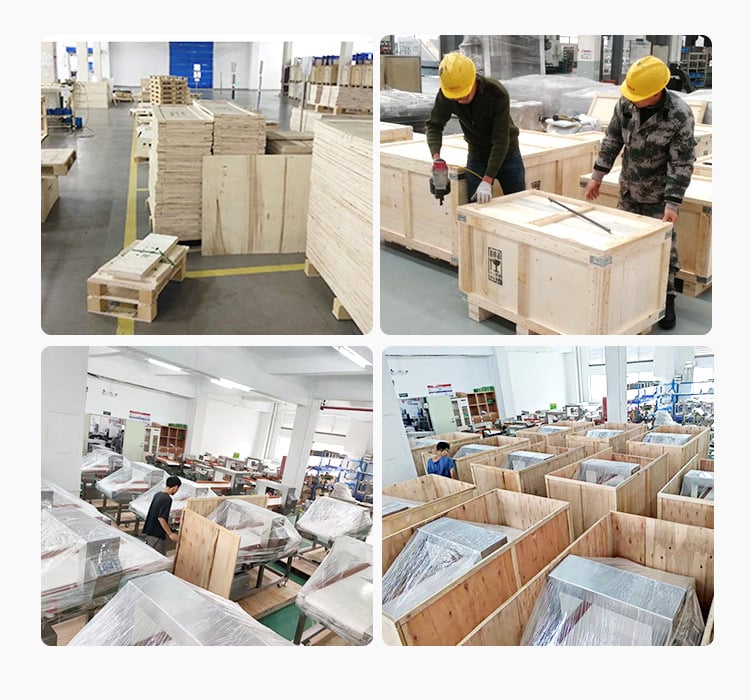
Every metal detector is assembled, wired and run under power in our Dongguan hall before packing. Frames stand on the green epoxy floor with their tower lights up while they are tested; past them they are wrapped and crated, the crate built in-house from a pallet base, plywood shell and strapped lid.
Buzzer and belt stop, and the pack is lifted off by hand — unless a removal device is fitted, which clears it and lets the line keep running.
Metal detection through foil is the hardest case a metal detector faces, and the grade changes with it. We would rather show you on your own pouch than claim a figure.
Yes, with the presence-check option specified at order and priced separately.
Less, and how much depends on product effect, moisture and where in the pack the fragment sits. Test pieces ship with the machine for your QA.
On site the metal detector needs AC 220 V ± 10 %, 50 Hz, 120 W, a level floor and access at both ends of the run; air too for a pneumatic device. One-year warranty on the whole machine, parts free, shipped by sea, air or express.
Tell us the pack type, its height in millimetres, the weight per piece, the belt speed you run at, and whether a fragment has to be removed or only flagged. We will come back with the aperture height, the grade your metal detector holds and the price.

 ONLINE