EN



Pondus Praecisum: Garantit exactitudinem ponderis producti ad qualitatem et conformitatem.
Operatio Celeris: Auget productivitatem in lineis celeriter moventibus.
Facilis ad Usum et Integrandum: Simplex institutio et impernia intuenda tempus mortuum minuunt.
Durabilis & Fiducialis: Factus est ad prestandum diebus et noctibus in mediis difficilibus.
Data Clara et Renuntiationes: Praebet perceptiones quae ad meliorationem processus conducant.
Energeticum Parcissimum: Minuit sumptus operationum.
Summa: Garantit qualitatem, maximam productionem efficit et gubernationem simplicem reddit.
Intervallo usque ad 15 kg, cum scala de 1 g, super cingulo longo 620 mm et lato 400 mm, currente ab 10 ad 60 m/min. Unum tantum telum sufficit ut utrumque extremum lineae mixtae amplectatur: parvum onus in cista matutinum et sacculus de 10 kg vespertino, sine mutatione machinae et sine amissione resolutionis necessariae pro onere levi. Hoc est pro quo intervallo constitutum — onus quod deficere solet est illud quod nemo expectavit.
Linea mixta est casus difficilis pro reprehendo ponderator . Run a light pack over a heavy-duty cell and the resolution disappears; run a heavy pack over a fine cell and you damage it. This frame sits in the middle: a 15 kg range that takes a sack or a case, and a 1 g scale that still reports a small shortfall on a light box, at ± 1 to ± 5 g.
Switching between two packs is a stored programme, not a rebuild. Up to 100 of them are held on the machine, each with its own target and tolerance, recalled from the 7-inch colour touch screen; a learning function will take a target from a run of good packs instead of from the keypad. Zero tracking runs continuously, following the drift as the belt turns.
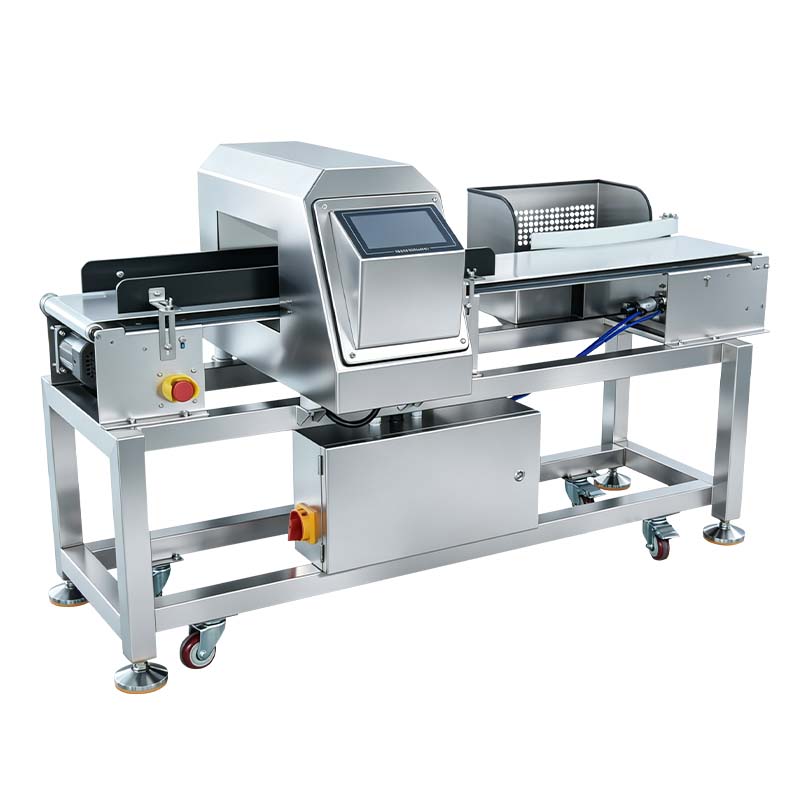
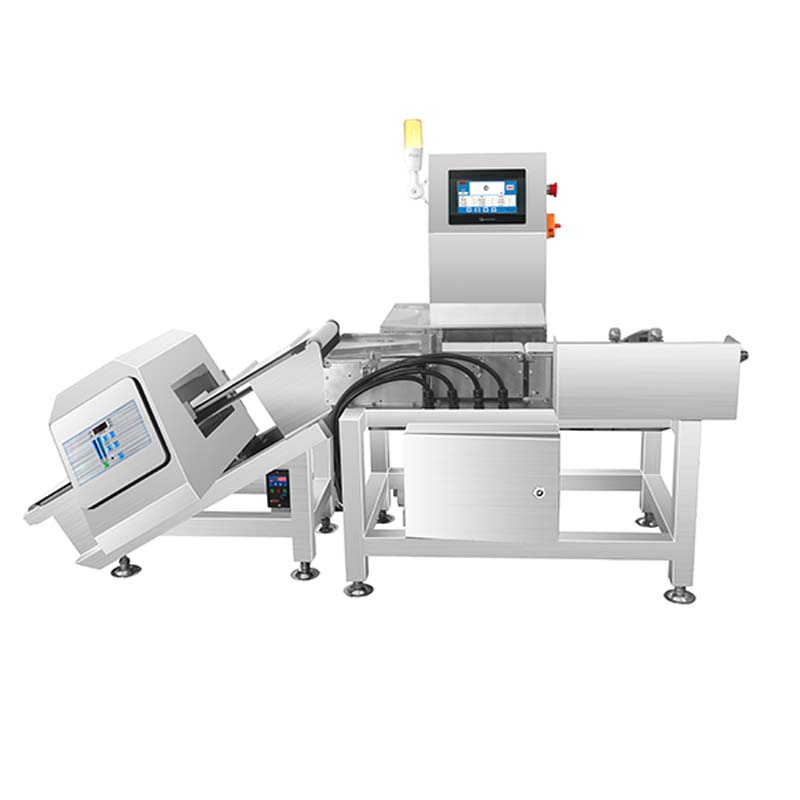
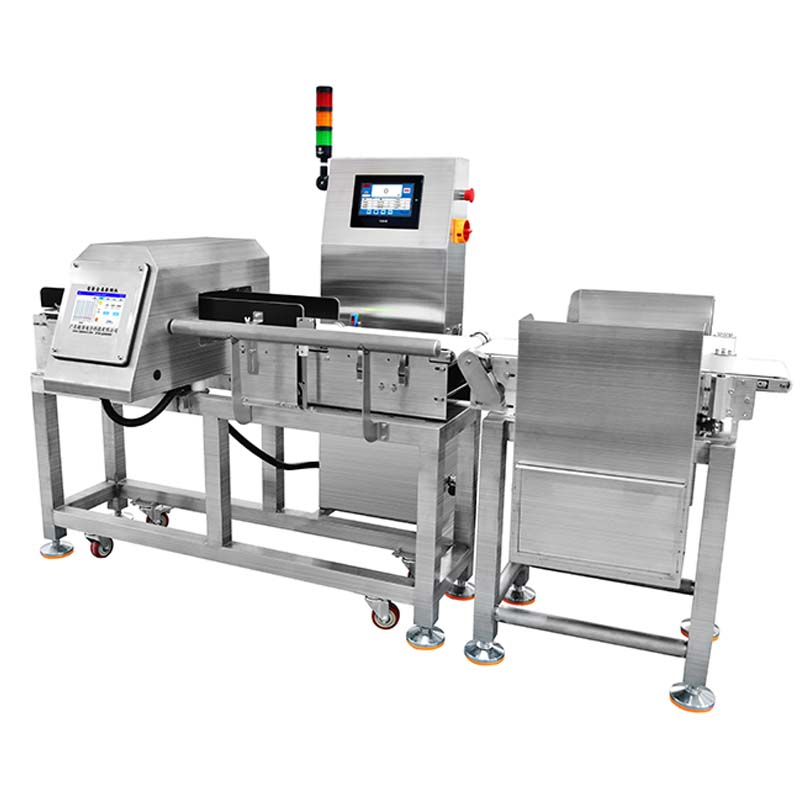
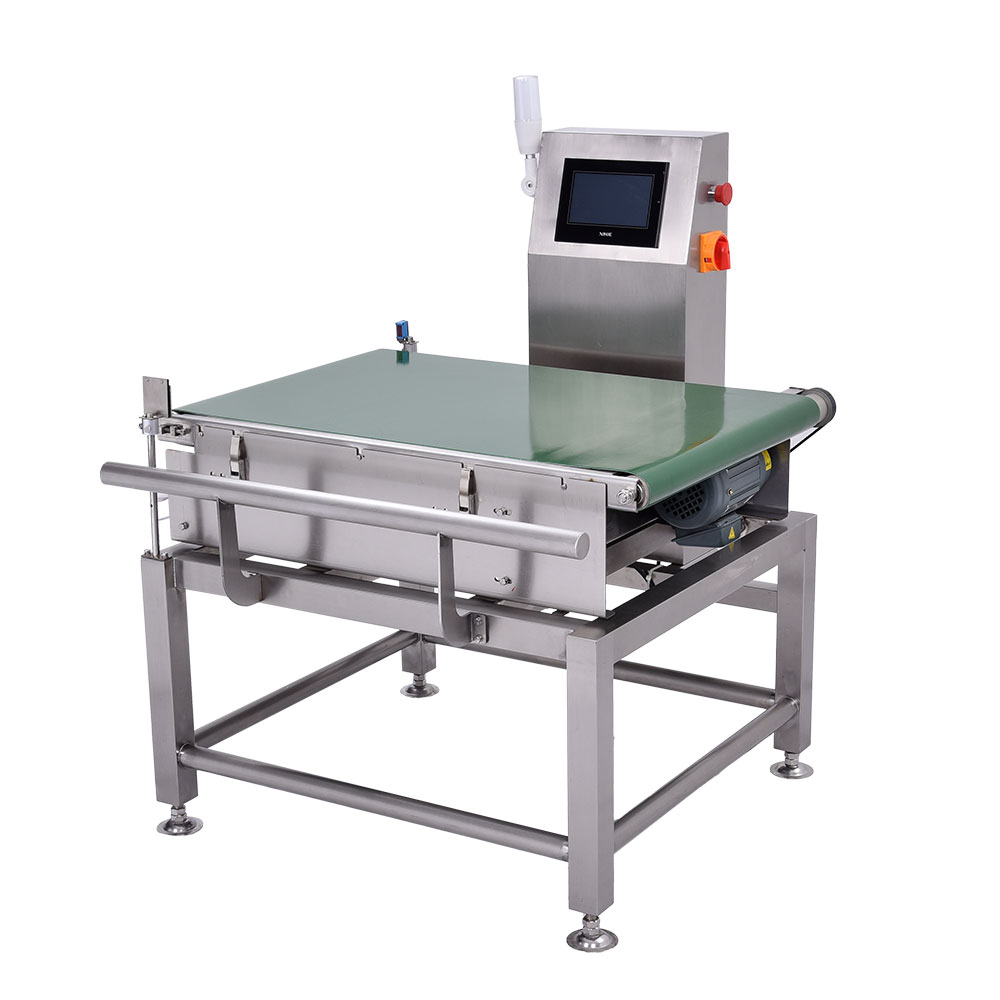
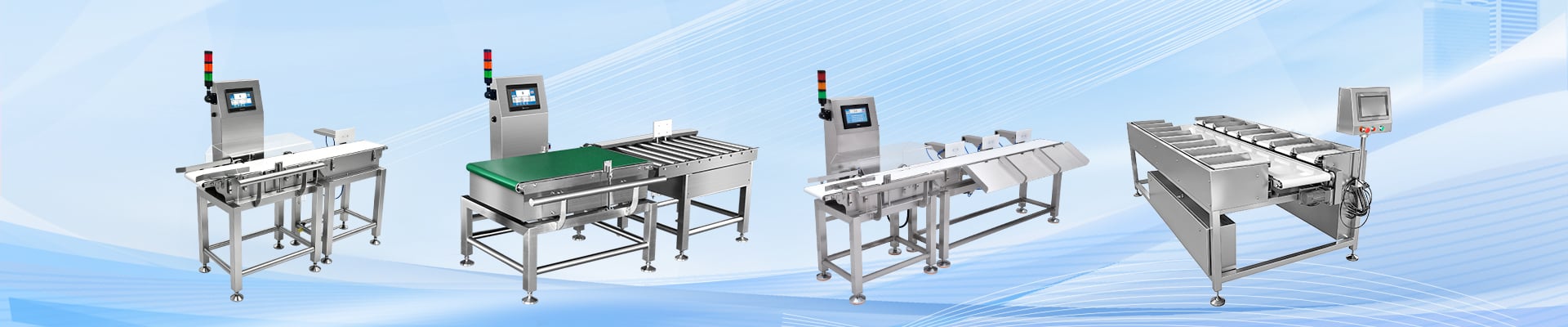
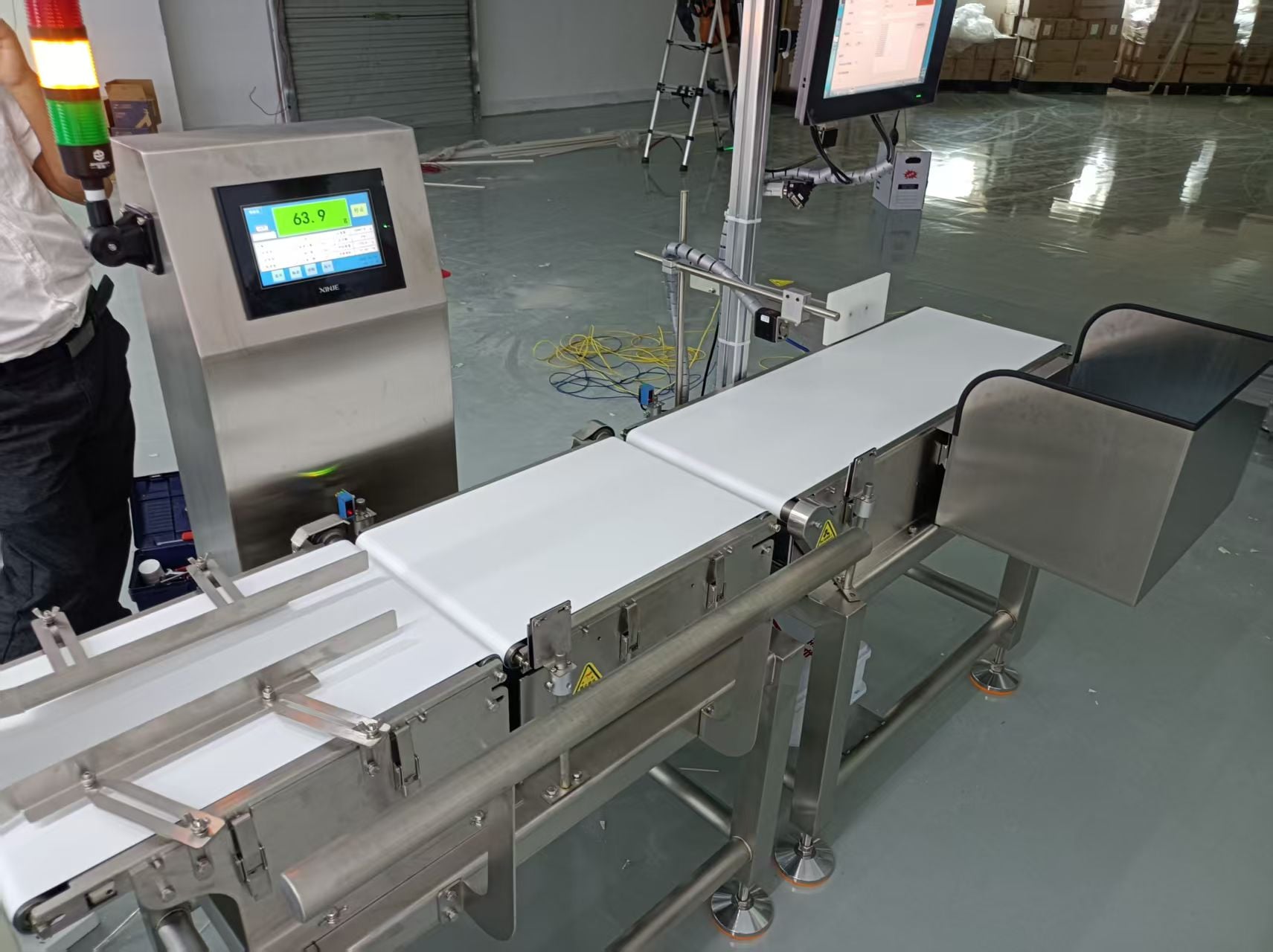
The machine consists of two stainless steel frames bolted in line, supporting three belt sections: infeed, weighing, and a short reject section at the outfeed end. Mounting the reject section on its own frame isolates the weighing section from cylinder recoil; for a 15 kg pack, that impact is substantial. The two frames also separate for shipping and reconnect on site.

Four rejection devices are available on this frame: a cross-belt pusher, a flap, an air blast, or a swing arm. At this weight, the pusher is typically preferred—it removes the pack squarely rather than tipping it, and works equally well with boxes, bags, or bundles. All four devices are pneumatic, and the machine includes its own filter and pressure regulator.


| Characteristica | Dētaillia Technica / Praestātiō |
| Modellum | CQ-YWXP400 |
| Rangus ponderandi | ≤ 15 kg per item |
| Minima scala | 1 g* |
| Praecisio in pondere | ± 1 g to ± 5 g In superpositione quae sectionem ponderationis transversat celeritate constante |
| Velocitas lorum | 10–60 m/min, regulabilis |
| Perfusio | Usque ad 60 pecia/min |
| Convector ponderans | 620 mm (long.) × 400 mm (lat.) |
| Maxima Magnitudo Producti | ≤ 450 mm (long.) × 390 mm (lat.) |
| Modus Reiectionis | Impulsor · lamella · flatus aeris · bracchium oscillans Ad lineam et ad pachetum aptatum |
| Programmata productorum servata | 100, cum automatica memoria discendi |
| Cellula oneris et regula | Cellula oneris ZEMIC L6D16 Controller celeris A/D campionis |
| Materia corporis | Acer inoxidabilis SUS 304 |
| Materialis cinguli transportantis | PVC gradus alimentaris |
| Control and data | schermum coloratum tactilis septem-pollicare USB · RS232 · RS485 |
| Fons Potentiae | AC 220 V ± 10 %, 50 Hz, 400 W |
| Suppētītiō Aeris Externae | 0,6–1 MPa For the pneumatic rejection device |
| Dimensiones (L × L × A) | 2146 × 1110 × 1231 mm |
| Ambitus operativus | 0–40 °C, 30–95 % RH |
Electrica in alto clausibili cabineto post pondus-framen sita sunt, non per ipsum diffusa; indicia monitionis et terra-studius extra sunt, ubi ingeniorum operator ea exspectat. Filtrum aeris et regulatum pendet in reici-framene ad manum, ita ut cadentia quae impellentem alit sine aperiendo quidquam reguletur. Omnis pes in filetato pede super cuneo terminatur, quod machinam tam longam permittit aequari in plano non aequo.

The 15 kg range on a 620 × 400 mm belt is for packs up to 450 × 390 mm, at up to about 60 packs per minute. It suits a packing hall running more than one pack size: paper reams, boxed goods, sacks, bagged components, where the check must keep up with the line and no one wants a second machine for the lighter half of the range.
It is not the frame for sachets, stick packs or anything weighed in hundredths of a gram; those require a narrower belt and a finer cell. Nor is it intended for pallet loads. Send the pack sizes you run and the weight of each, and we will say whether one frame covers them or whether the line needs two.
Yes, within the ranges quoted: up to 15 kg per pack with a 1 g scale and ± 1 to ± 5 g. Tell us the lightest and the heaviest piece you run and we will say whether they belong on one frame.
Paceta usque ad 450 mm longa, 390 mm lata et singula 15 kg gravis, transversim movens ad constantem celeritatem.
Impulsor transversus cinguli, valvula, aeris insufflatio aut brachium oscillans — electum secundum pacetum. Omnia quattuor sunt pneumatica, et machina suum proprium regulatorem habet.
100 programmatum servatorum, singulum cum suo proprio obiecto et tolerantia, evocandorum ex 7-pollici coloreto tactilis schermo aut discendorum ex cursu bonorum pacetorum.
AC 220 V, 50 Hz, 400 W; aer compressus pro reiciendi instrumento; et planus solum ubi stat.
Duae structurae dividuntur et per mare, per aera vel per internationalem expressam expeditionem in exportationis arculis super palletis vehuntur. Totius machinae garantiā unus annus, cum partibus gratuitō substitutis intra eam.
Magnitudines fasciculorum, pondera et velocitas lineae satis sunt ut ad id quod ad aptationem, praecisionem et modum quo fasciculus defectuosus lineam tuam relinquere debet revertamur.

 INTERRETIALIS