 EN
EN


Product conductivity represents one of the most critical factors influencing how a metal detector establishes and maintains its baseline readings during food and industrial inspection operations. When manufacturers deploy an industrial metal detector on their production lines, the device must first calibrate to the specific electrical properties of the product being inspected. Understanding this relationship between conductivity and baseline performance directly impacts detection accuracy, false alarm rates, and operational efficiency across pharmaceuticals, beverages, meat processing, and other contamination-sensitive industries.
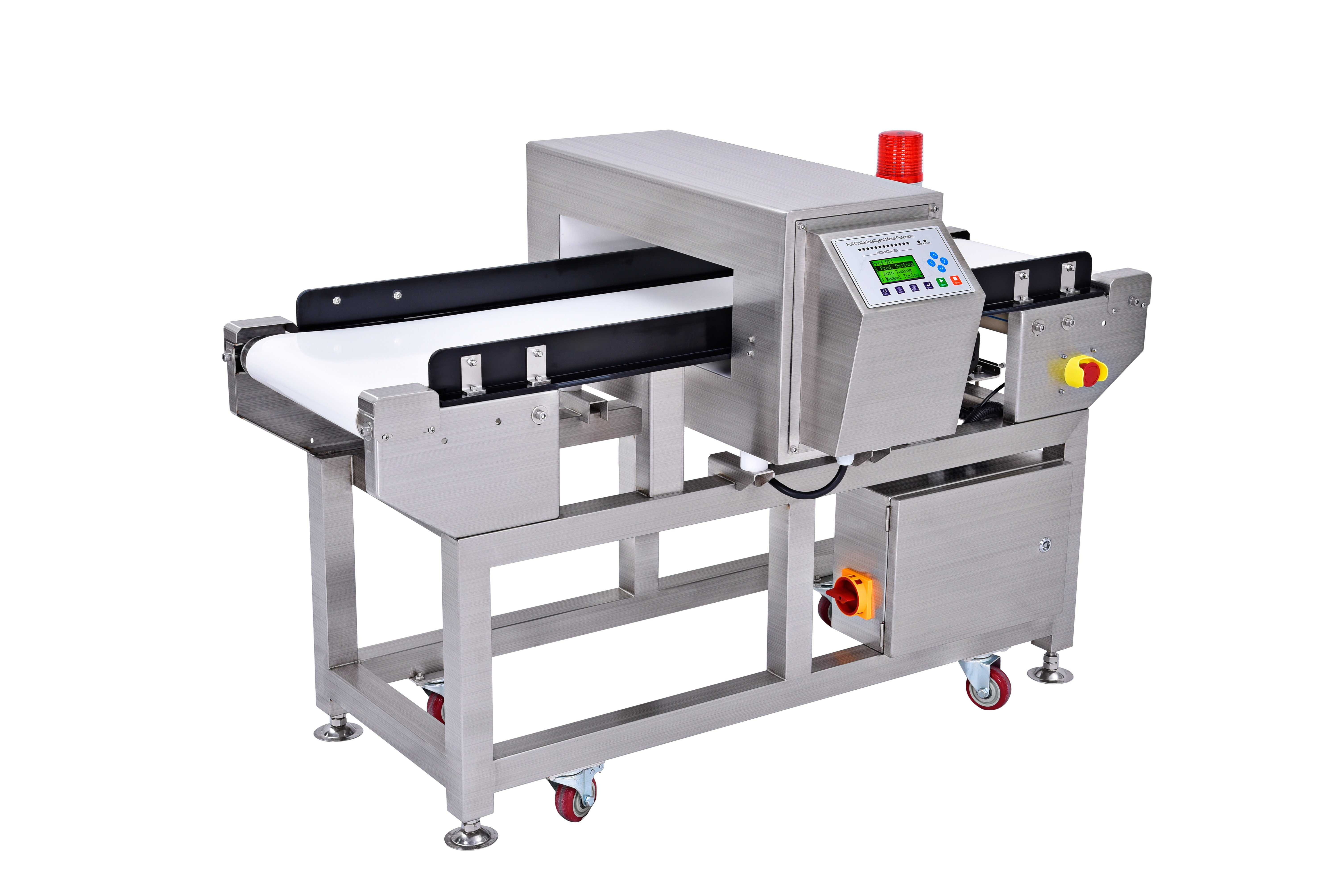
The baseline reading acts as the reference point from which a food metal detector measures signal deviations caused by foreign metallic contamination. When a product passes through the detection field, its inherent conductivity generates a background signal. High-conductivity products like processed meat, brine solutions, or salty beverages create stronger background signals, while low-conductivity items such as dry grains or chocolate produce weaker ones. This conductivity variation forces operators to adjust sensitivity thresholds and rebalance the system to distinguish genuine metal fragments from the product's natural electrical signature.
Understanding Conductivity's Role in Baseline Establishment
How Product Conductivity Affects Signal Response
An industrial metal detector operates by transmitting electromagnetic fields through the product stream and measuring signal changes that occur when metallic objects enter the detection zone. The product itself, depending on its conductivity level, influences this electromagnetic environment significantly. Highly conductive products such as ham, seafood, or electrolyte beverages cause the detector's coils to experience increased eddy current losses, which manifests as a larger baseline signal amplitude. When an industrial metal detector receives this elevated baseline, it must establish a reference point higher than normal, leaving less signal margin available for metal detection.
Conversely, low-conductivity products generate minimal electromagnetic interaction, resulting in a weak baseline that leaves ample sensitivity headroom. The food metal detector's microprocessor continuously monitors these background signals and automatically adjusts gain settings to maintain operational stability. This automatic balancing mechanism protects against drift and temperature variations, but it also means that baseline readings shift significantly between product runs with different conductivity profiles, requiring recalibration or causing detection performance to fluctuate if not properly managed.
Baseline Drift and Recalibration Requirements
When production lines switch between products of varying conductivity, the metal detector baseline naturally drifts as the system adapts to new electrical conditions. A contamination detection system must maintain stable baselines to prevent false rejects of safe products and false passes of contaminated items. Many modern industrial metal detectors include automatic retuning algorithms that detect baseline shifts and recalibrate within seconds, but understanding the root cause—conductivity variation—helps operators anticipate when manual intervention becomes necessary. Products with highly irregular conductivity, such as those with varying moisture content or salt concentration, demand more frequent baseline adjustments to maintain reliable contamination detection performance.
Conductivity Impact on Sensitivity and Detection Performance
Sensitivity Margin Reduction in High-Conductivity Products
The fundamental constraint in metal detector design is the limited signal window available for detecting metal contamination. This window spans from the baseline reading established by the product's natural conductivity to the maximum signal the detector electronics can safely measure without saturation. A food metal detector operating on high-conductivity products experiences baseline readings that occupy 60–80% of this available signal window, leaving only 20–40% margin for metal detection signals. This reduced margin directly translates to lower practical sensitivity for catching smaller metal fragments, ferrous particles, or non-ferrous contaminants.
Consider a beverage processing line where juice or brine solutions possess conductivity levels around 2000 microsiemens per centimeter. An industrial metal detector tuned for this product baseline uses substantial electronics capacity just tracking the product signal, limiting the ability to detect fine metal wires or small stainless steel fragments. Operators must either accept reduced sensitivity for that product or invest in more sophisticated detector hardware with wider dynamic range. This trade-off between conductivity accommodation and contamination detection remains central to optimizing food metal detector performance in mixed-product environments.
Ferrous vs. Non-Ferrous Detection Challenges
Product conductivity affects ferrous and non-ferrous metal detection differently, creating another layer of complexity in baseline management. Ferrous metals like iron wire generate distinctive phase signatures that the metal detector can distinguish from product conductivity patterns, allowing reasonable detection even in moderately conductive products. However, non-ferrous metals such as copper, aluminum, or stainless steel produce signal characteristics more easily masked by high-conductivity product signals. In contamination detection applications where both ferrous and non-ferrous contamination must be caught, high-conductivity products force baseline readings upward, disproportionately compromising non-ferrous detection reliability unless the industrial metal detector includes multi-frequency or advanced phase-discrimination circuitry.
Practical Strategies for Managing Conductivity and Baseline Performance
Product Profiling and Preset Configuration
Leading modern food metal detector systems store conductivity profiles for different products and production recipes, allowing rapid baseline adjustment when changeovers occur. An industrial metal detector equipped with product memory can automatically recall optimal sensitivity settings for each item, reducing manual recalibration time and human error. Operators measure or record the conductivity of each product batch, then associate these measurements with appropriate detector sensitivity presets. This approach proves especially valuable in facilities processing diverse product ranges, such as meat plants handling ham, chicken, beef, and sausage, each with distinct conductivity characteristics affecting contamination detection capability.
Beyond simple preset storage, advanced industrial metal detector units include automatic conductivity measurement functions that profile incoming products and calculate optimal baseline settings without operator input. This intelligence reduces production line disruptions during changeovers and minimizes the window where contamination detection sensitivity remains suboptimal. For operations requiring highest reliability, such as pharmaceutical or baby food processing, this automated baseline optimization directly supports food safety compliance and reduces regulatory risk from undetected foreign objects.
Equipment Selection and Detector Specifications
Choosing appropriate metal detector technology for your product portfolio requires understanding conductivity ratings and detection specifications. A food metal detector intended for high-conductivity products should feature wider dynamic range and robust signal processing electronics compared to units designed for dry goods. Dual-frequency or multi-frequency industrial metal detector systems offer superior performance in challenging conductivity environments by measuring phase and amplitude across multiple frequency bands, enabling better separation of product signals from contamination signals. For facilities handling variable-conductivity products, investing in detectors with greater signal headroom and advanced baseline stabilization algorithms delivers more consistent contamination detection performance across product mix changes.
FAQ
How does product conductivity specifically change metal detector baseline readings?
Product conductivity directly determines the strength of the electromagnetic signal generated within a metal detector's sensing field. Higher conductivity products create larger background signals that the detector measures as baseline, while lower conductivity products establish lower baselines. This baseline shift occupies the detector's available signal window, reducing the margin available for detecting actual metal contamination, particularly affecting sensitivity to non-ferrous metals and smaller particles in contamination detection applications.
Can an industrial metal detector maintain accurate contamination detection across products with very different conductivity levels?
Yes, modern industrial metal detector systems include automatic baseline adjustment and adaptive sensitivity algorithms that respond to conductivity changes between product runs. However, extreme conductivity variations still reduce detection performance for smaller contaminants. Facilities can optimize food metal detector reliability by storing conductivity profiles for each product, using multi-frequency detection technology, and maintaining regular system calibration. These practices ensure stable contamination detection across diverse product portfolios while minimizing changeover delays and sensitivity loss.
What role does conductivity play in false reject rates during contamination detection?
When an industrial metal detector baseline drifts due to unaccounted conductivity variation, the system may incorrectly identify normal product signal fluctuations as contamination signals, triggering false rejects. High-conductivity products amplify this risk because minor signal instabilities become more pronounced relative to baseline. Using automated baseline stabilization, understanding product conductivity characteristics, and implementing proper preventive maintenance on metal detector electronics all reduce false reject rates and improve food production efficiency while maintaining contamination detection integrity.
Table of Contents
- Understanding Conductivity's Role in Baseline Establishment
- Conductivity Impact on Sensitivity and Detection Performance
- Practical Strategies for Managing Conductivity and Baseline Performance
-
FAQ
- How does product conductivity specifically change metal detector baseline readings?
- Can an industrial metal detector maintain accurate contamination detection across products with very different conductivity levels?
- What role does conductivity play in false reject rates during contamination detection?