 EN
EN


X-ray Food Inspection Systems: A Dealer's Buying Guide
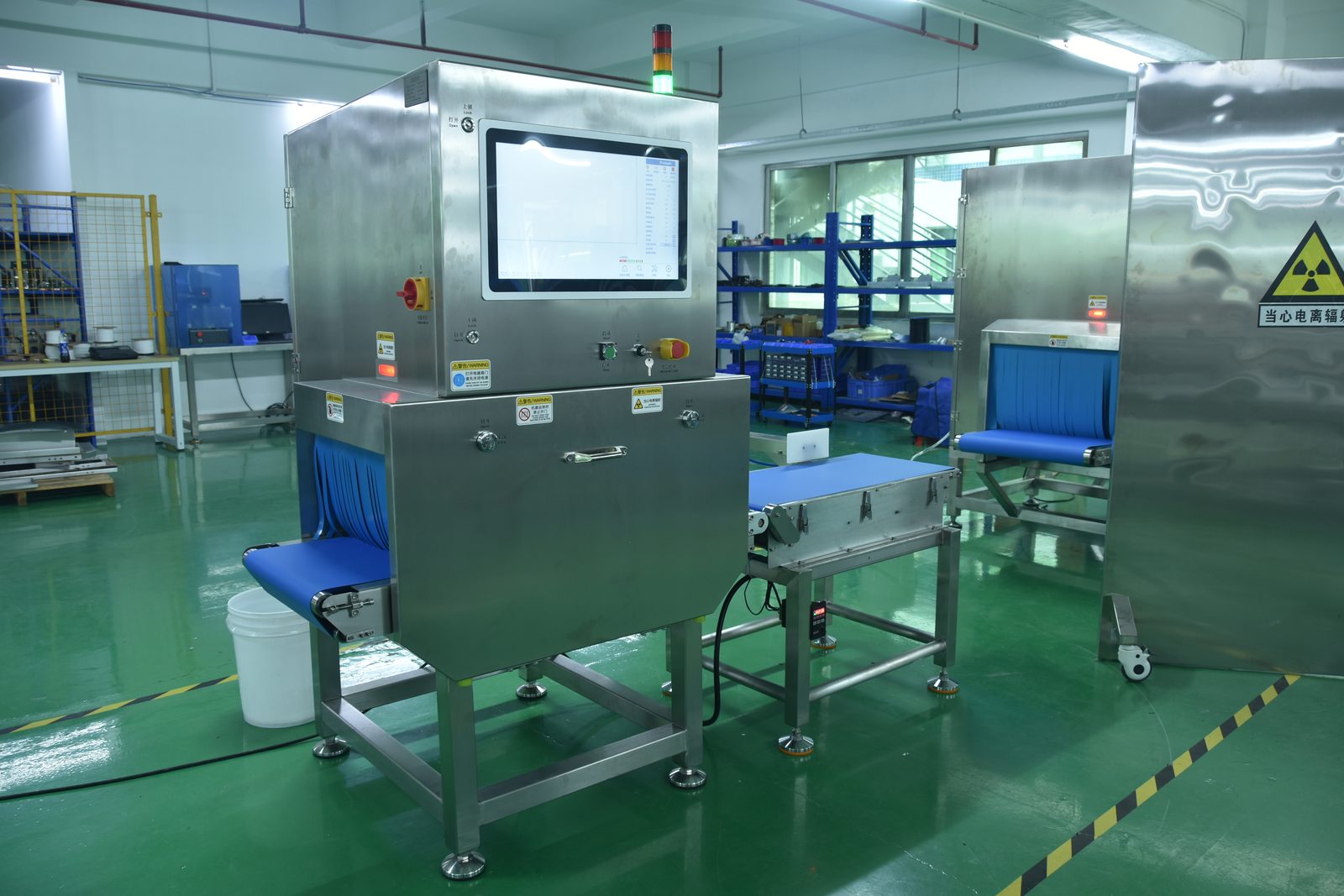
A processor holds up a frozen fish block and asks whether the machine can see a 2 mm bone fragment inside it. Answer in ten seconds and the conversation moves to price. Hesitate, and the buyer calls someone else. An x-ray food inspection system is sold on physics, not brochures, and as the dealer you are the one who has to explain that physics.
What an X-ray Food Inspection System Detects — and What It Doesn't
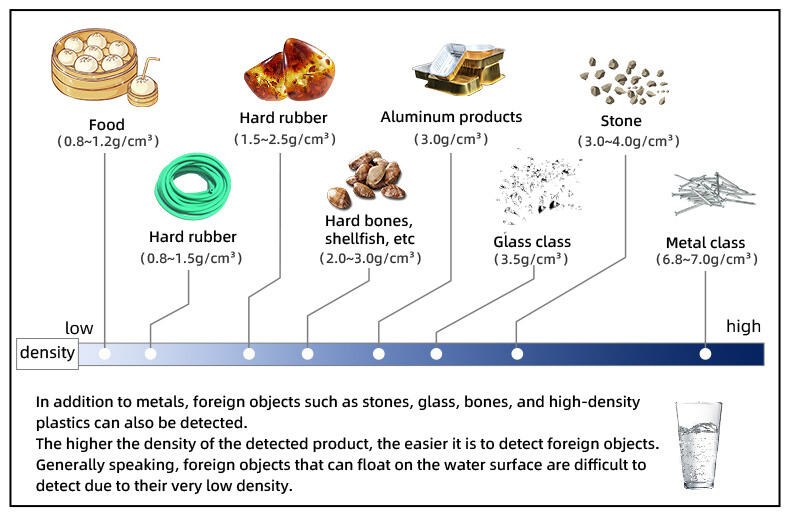
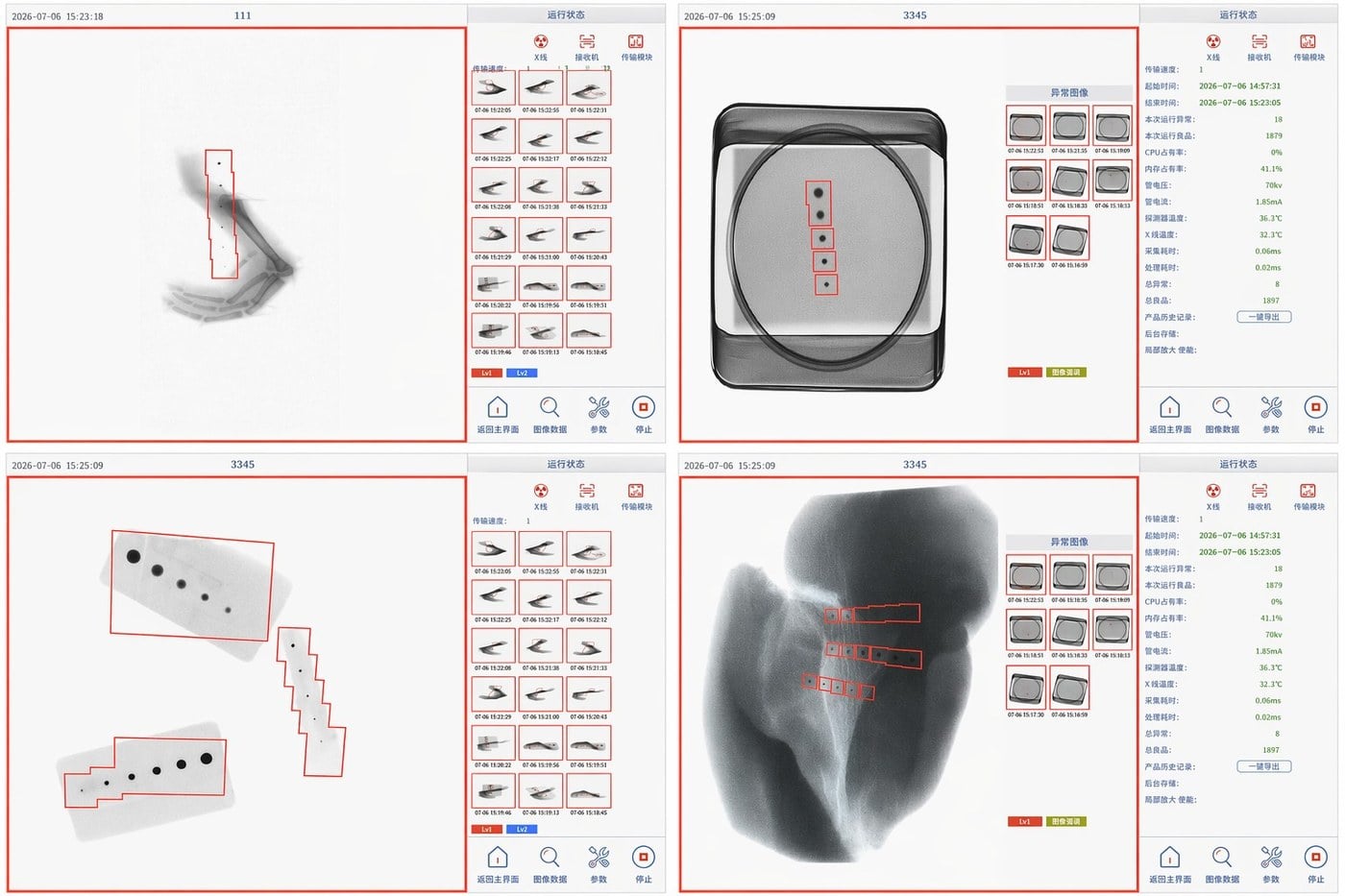
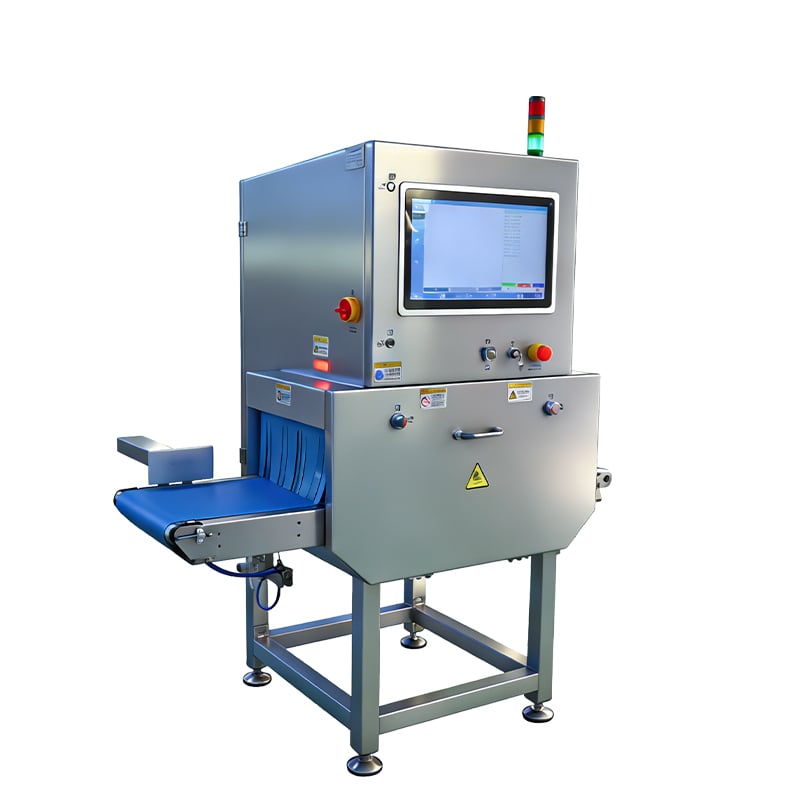
X-ray inspection measures density. A beam passes through the product, a detector records how much energy survived, and software flags anything denser than the food around it. There is no magnetic field and no tuning to "product effect", which is why it behaves differently from the metal detector your customer probably already runs.
Contaminants that show up clearly
- Ferrous and stainless steel fragments, including the small wires behind most recalls
- Glass, ceramic and stone, all denser than food
- Bone in poultry, fish and meat
- Metal inside foil-laminated packaging, where a metal detector is effectively blind
That last point closes deals on its own. Foil looks like a permanent signal to a metal detector. An x-ray food inspection system reads straight through it.
Where the technology struggles
Low-density foreign bodies give almost no contrast: wood splinters, hair, insects, thin film. Fast belts and thick, dense products also trade away sensitivity, so a 0.5 mm fragment inside a 60 mm frozen block is harder to find than the same fragment in a 20 mm biscuit. Say this before the factory quotes, not after.
The Five Specifications That Decide a Deal
Most quotes for an x-ray food inspection system collapse because one number was never agreed. Pin these down first.
Tunnel size and belt width
Measure the largest pack in the customer's range, not the average one, and leave margin for product position. A large-tunnel system rated to 20 kg and a compact unit with 0.4 mm precision sit in different budget brackets.
Belt speed mapped to throughput
Customers quote packs per minute, not metres per second. Convert before quoting, or agree on a number that no machine on the line can deliver.
Sensitivity at a defined product
"0.5 mm stainless" is not a specification until product, thickness and speed are attached. Put all three in writing on every quote.
Radiation and local registration
Cabinet systems are shielded and interlocked, and leakage limits depend on the standard the unit is certified against. Some countries require registration before use. Raise it in the first meeting, not after shipping.
Washdown rating
A dry snack line and a raw-poultry line need different machines; washdown and cleaning agents change the enclosure and the price.
Rejection Systems: Where Warranty Claims Start
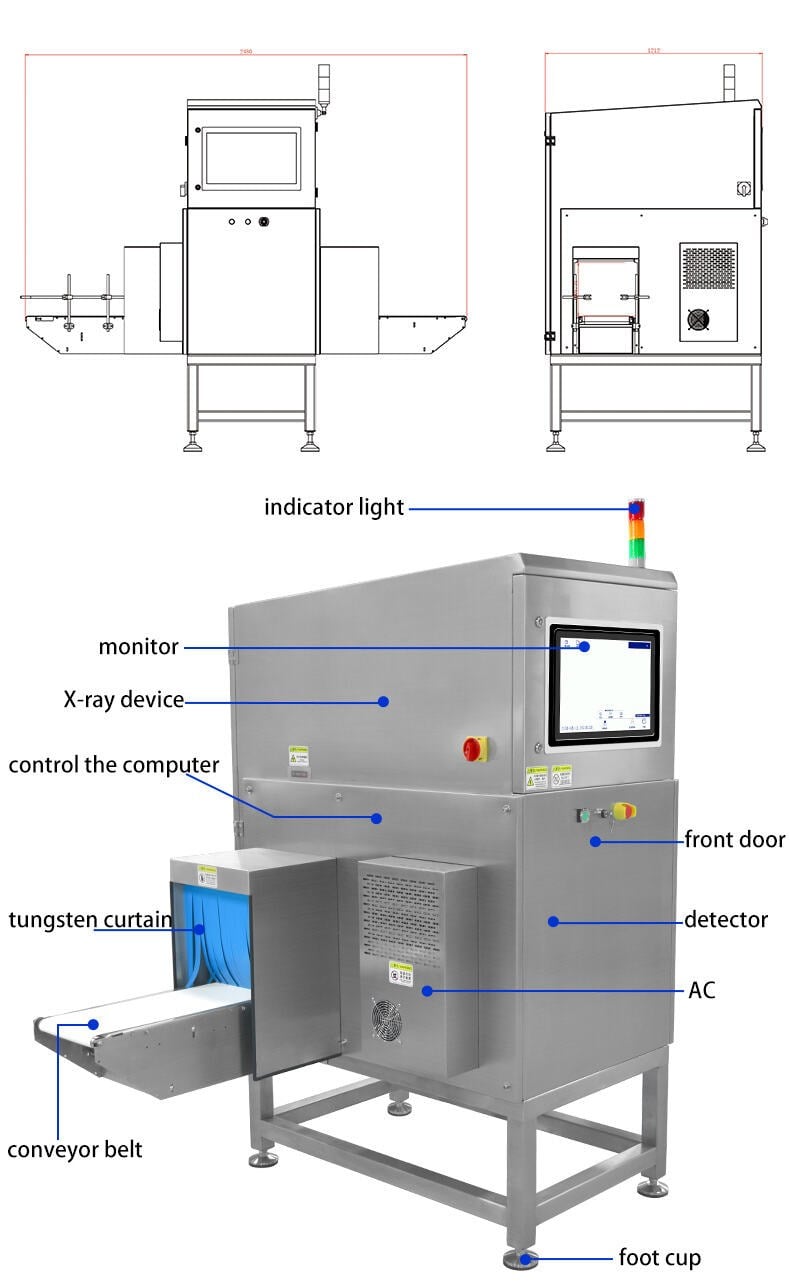
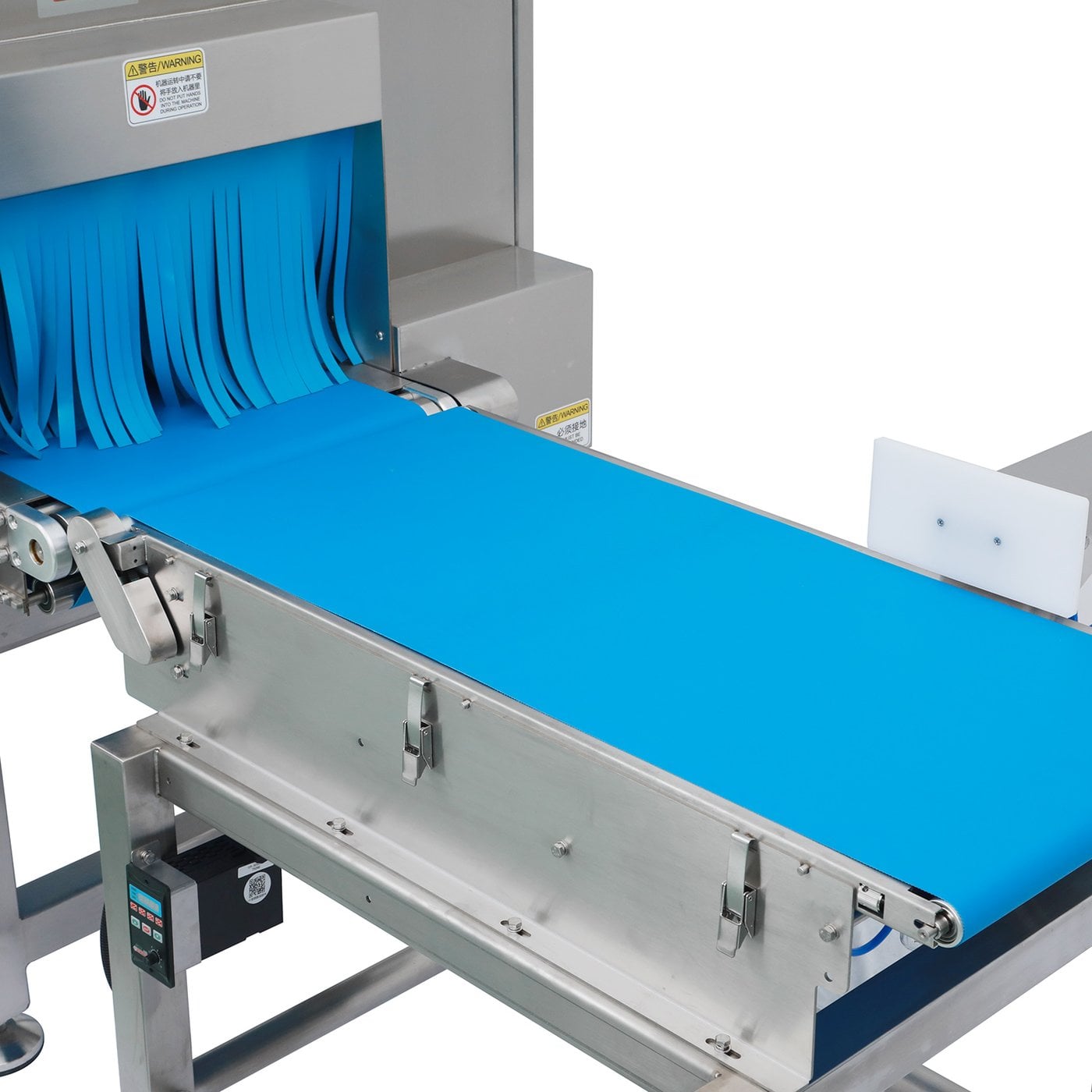
Detection is the easy half of an x-ray food inspection system. Removing the contaminated pack without stopping the line is where projects get expensive.
Air blast, pusher, flip or drop-out
Air blast suits light packs on fast lines; a pusher handles heavier items; a flip or dual-stage mechanism is for products that must not be damaged, or where removal has to be confirmed. A dual-stage rejection solution covers lines that mix formats.
Settle these before commissioning
- Does the reject bin signal back, so the record shows confirmation rather than a command?
- Can a rejected pack land back on the line through a gap or an oversized chute?
- Is there space downstream for the reject conveyor?
What End Users Ask First
Buyers repeat the same list. Short, specific answers make you sound like a partner rather than someone reading from a catalogue.
- How small a fragment can you find? Give the figure with product, thickness and speed attached.
- Will it work through my packaging? Foil, metalised film, glass jars and cans behave differently.
- Do I still need my metal detector? Sometimes yes — the two catch different failures.
- Can I see my own product run? Send samples; nobody buys from a demo video.
Compliance Documents You Should Be Able to Produce
Auditors ask how foreign body control is verified, and dealers are asked for paperwork long before they are asked for a discount. Keep a current pack ready:
- CE marking, Declaration of Conformity and the applicable EMC and safety test reports
- Radiation shielding or leakage test documentation for the delivered unit, not just the type
- Materials certificates for product-contact parts, typically 304 or 316 stainless
- FAT report, IQ/OQ/PQ templates, and manuals in the customer's language
Registration rules differ by country, so confirm the local position before quoting. Missing paperwork stalls payment more often than technical faults do.
Spare Parts and the Real Cost of Ownership
Dealers who sell an x-ray food inspection system on price alone tend to lose the account when the first major part fails.
The X-ray source is the largest item
Ask the factory for its expected service life and replacement price, then build a rough five-year cost for the customer. Volunteering that number builds more trust than any specification sheet.
Small parts stop lines
Conveyor belts, air preparation units, sensors, test pieces and interlock switches all wear. A modest local stock resolves most breakdowns in a day instead of a week.
Service model
Remote diagnosis handles software and configuration issues; mechanical failures need a visit. Agree a realistic response window with the factory and commit to it.
Starting a Dealership Without Overcommitting
You do not need a warehouse to start selling an x-ray food inspection system. Keep one demonstration unit or arrange factory sample testing, quote standard configurations, and hold stock only on the parts that fail most often.
Negotiate these three, not just the discount
- Territory in writing — which industries, which countries, and whether the factory will sell direct into your area
- Demo and sample policy — who pays shipping on customer samples, and who owns the demo unit
- Marketing assets and training — photos, video, translated documentation and technical training for one of your engineers
Positioning against established brands
Expect the objection: why not buy the brand everyone knows? The workable answer is not "we are cheaper", but a comparison on the three things the customer weighs — sensitivity verified on their own product, five-year cost, and response time when the line is down.
The dealers who do well with x-ray equipment are rarely the ones with the largest territory. They answer the bone question, quote sensitivity with conditions attached, and arrive with the compliance file already printed.
One question worth asking before you commit to a line: how many of your customers would fail their next retailer audit because of foreign body documentation rather than detection itself?

Frequently Asked Questions
What is the price of an x-ray food inspection system, and what drives it up?
Tunnel size, belt speed, detector configuration, rejection type and enclosure rating drive the price. A quote built on pack size, required sensitivity and throughput is the only one worth comparing between suppliers.
Can an x-ray inspection machine detect bones and glass in food?
Yes. Bone, glass, ceramic and stone are denser than the surrounding food, so they contrast clearly in the image. A metal detector cannot see them at all.
What is the difference between x-ray inspection and metal detection for food?
A metal detector reacts to conductive material and misses glass, stone and bone; it also struggles with foil packaging. X-ray reads density, so it covers metal, glass, bone and dense plastics, including through foil.
Does an x-ray food inspection machine need radiation licensing or registration?
Requirements vary by country and sometimes by state or province. Some markets require registration with a health or radiation authority before commissioning. Confirm the local position before the machine ships.
How long does it take to install and commission an x-ray food inspection system?
One to three days on an existing conveyor line, covering placement, power and air connection, product setup and validation. Add the customer's own IQ/OQ/PQ paperwork to the schedule.

 Hot News

 ONLINE