
Get a Free Quote

Our representative will contact you soon.
Email
Name
Company Name
Message
0/1000
X Ray Machine

X Ray Machine

Home >   >  X Ray Machine

CQ-YW800 Tailored X-Ray Inspection Solution | Dual-Stage Rejection (Push & Flip) for Complex Production Lines

CQ-YW800 Tailored X-Ray Inspection Solution | Dual-Stage Rejection (Push & Flip) for Complex Production Lines

A bag needs a flip. A carton needs a push. This machine has both.

Bagged & sachet Light bags tip off the belt. A pusher would knock them into the next pack.
Boxed & carton Flat cartons are pushed clean off the belt and stay upright.
Bulk loose Meatballs and other loose items have no pack around them. Tunnel and reject delay are set to the product.

Tell us which two packs share your belt. We will set a reject device for each.

  • Overview
  • Inquiry
  • Related Products
CQ-YW800 — 4020 Series

Tailored X-Ray Foreign Body Inspection with Dual-Stage Rejection

Built around your line rather than ours. The CQ-YW800 pairs a 4020-series inspection tunnel with two independent rejection devices — a pusher and a flip — so a single X-ray inspection machine can sort more than one product category on the same belt.

Belt speed
10–70 m/min
Load capacity
Up to 10 kg (22 lbs)
Foreign body
0.4 mm SUS 304
In line: a bagged bakery product through the tunnel, the foreign body flagged on the X-ray image, the pack rejected.

Dual-Stage Rejection

The rejection system is where a tailored X-ray inspection machine separates from a catalogue one. An integrated pusher plus flip, rather than a single deflector, lets one line apply different sorting logic to different categories without stopping the belt.
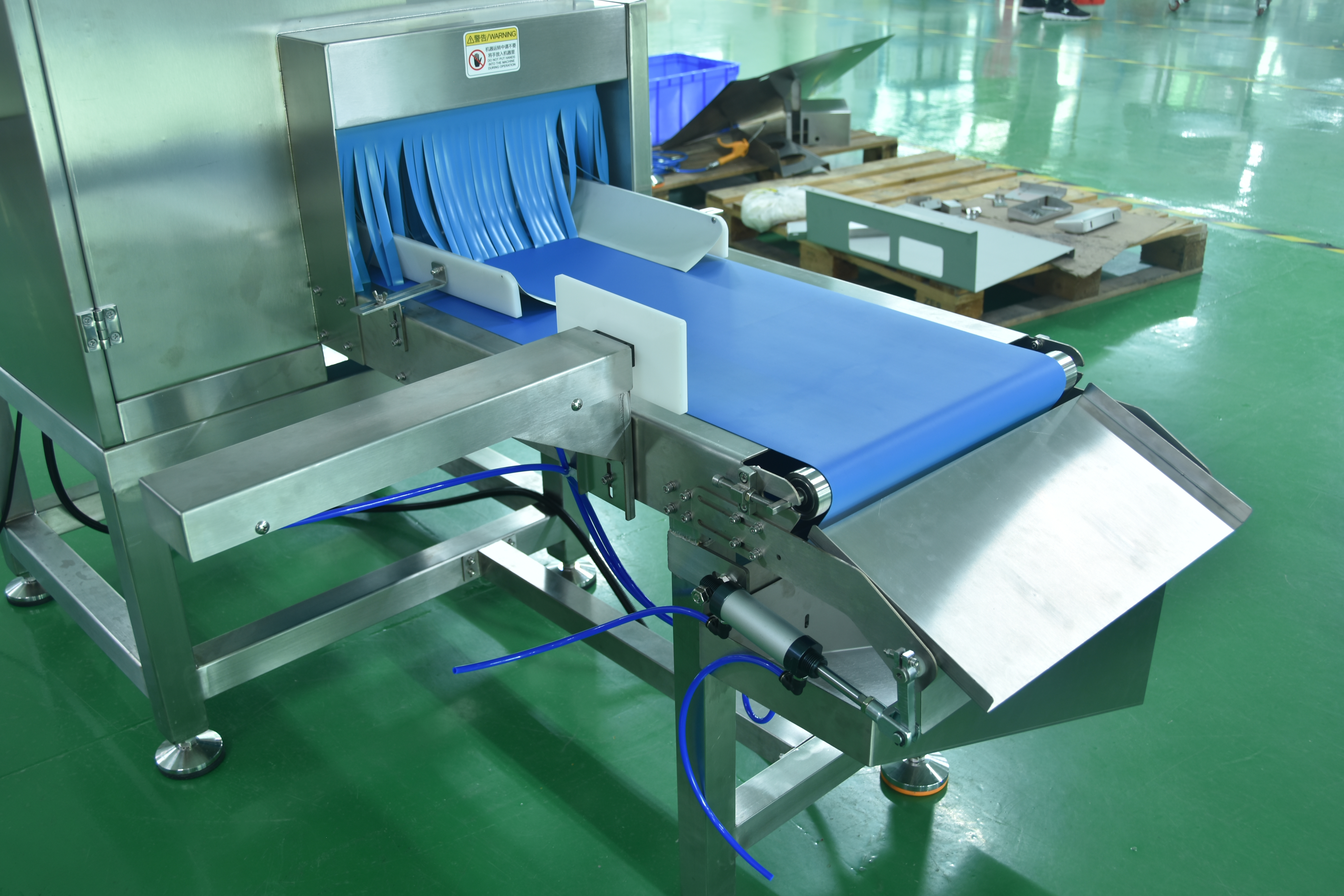
CQ-YW800 reject station: pneumatic cylinder driving the pusher paddle
Pusher station past the tunnel exit: pneumatic cylinder and blue air line driving the paddle across the belt, with the stainless flip plate downstream.
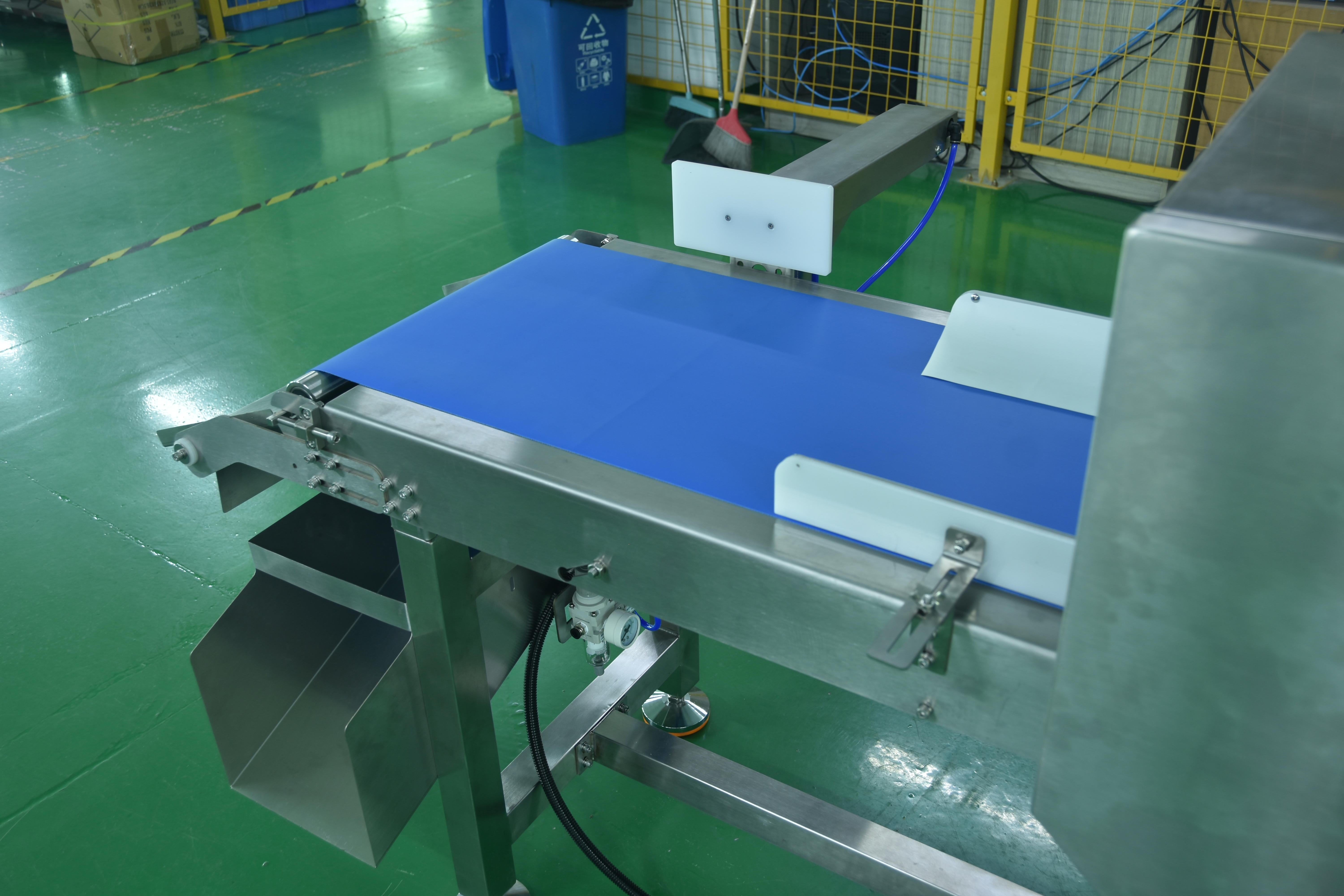
CQ-YW800 infeed side: pusher paddle and stainless reject bin
Infeed side: the pusher paddle and guide plates, air preparation unit, and the stainless reject bin that collects what the line takes out.
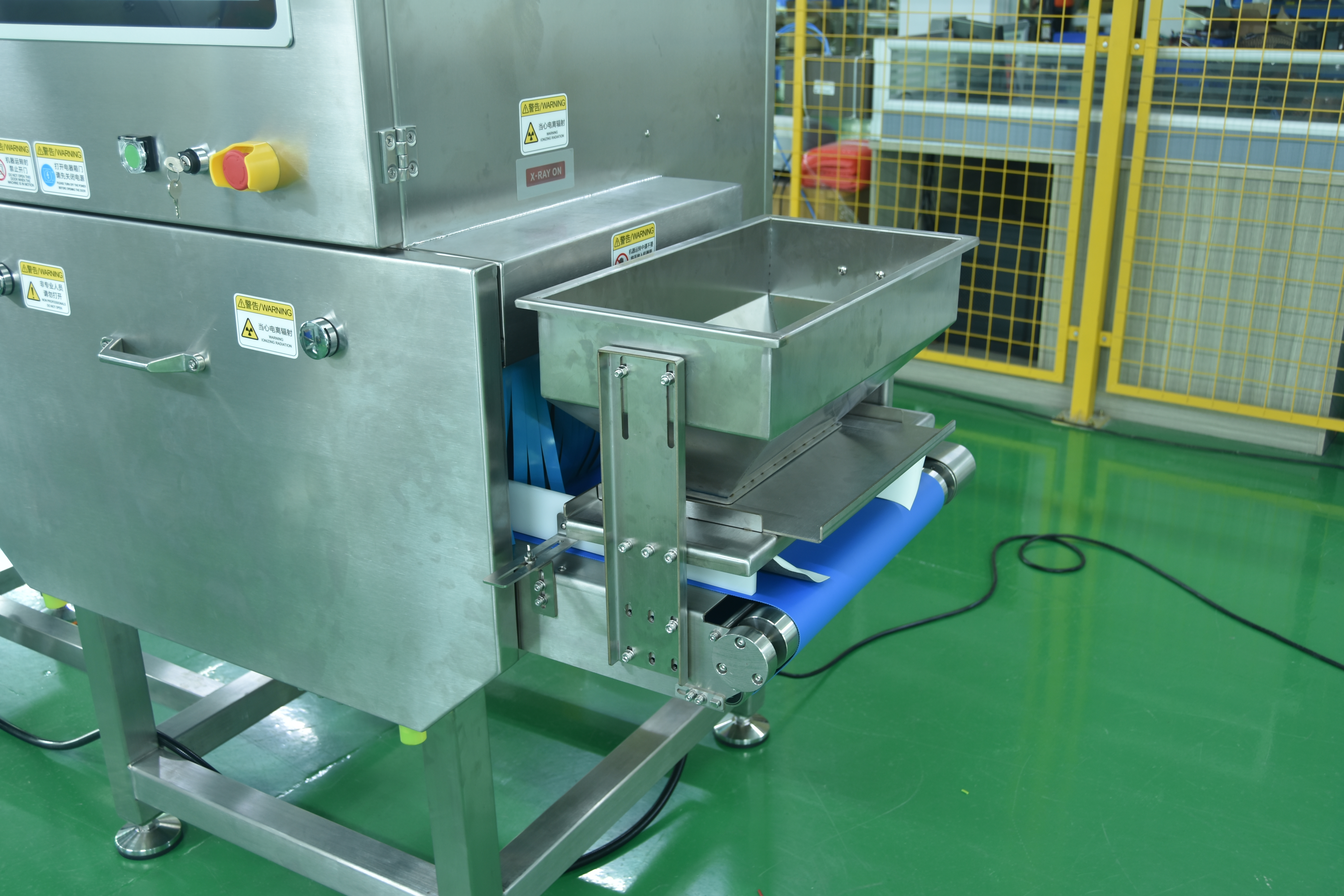
CQ-YW800 discharge end: collector tray and cabinet warning labels
Discharge end: stainless collector tray at the belt exit, cabinet warning labels and the emergency stop on the door.

Machine Views

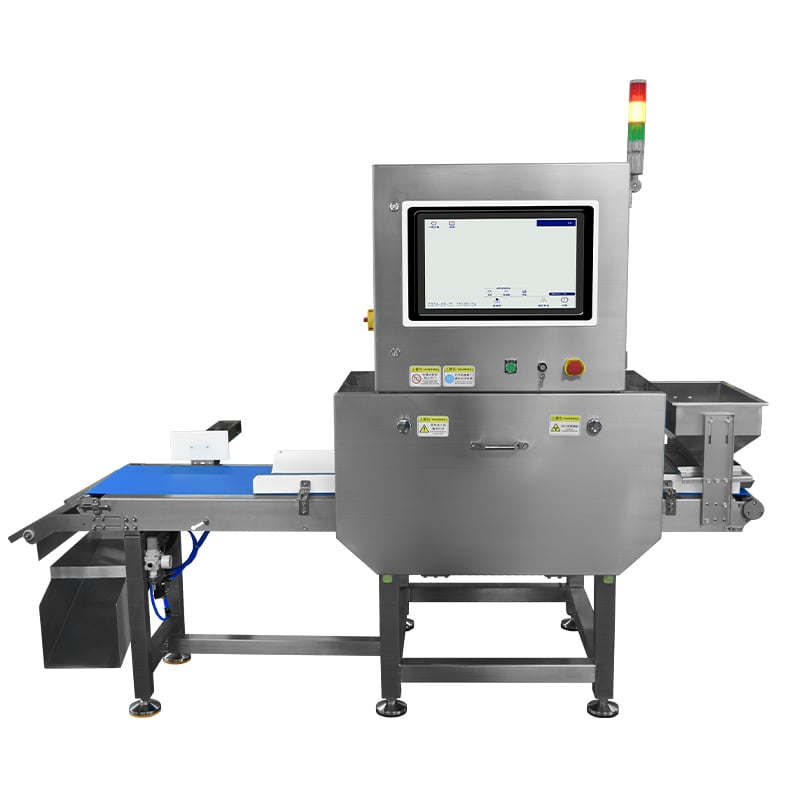
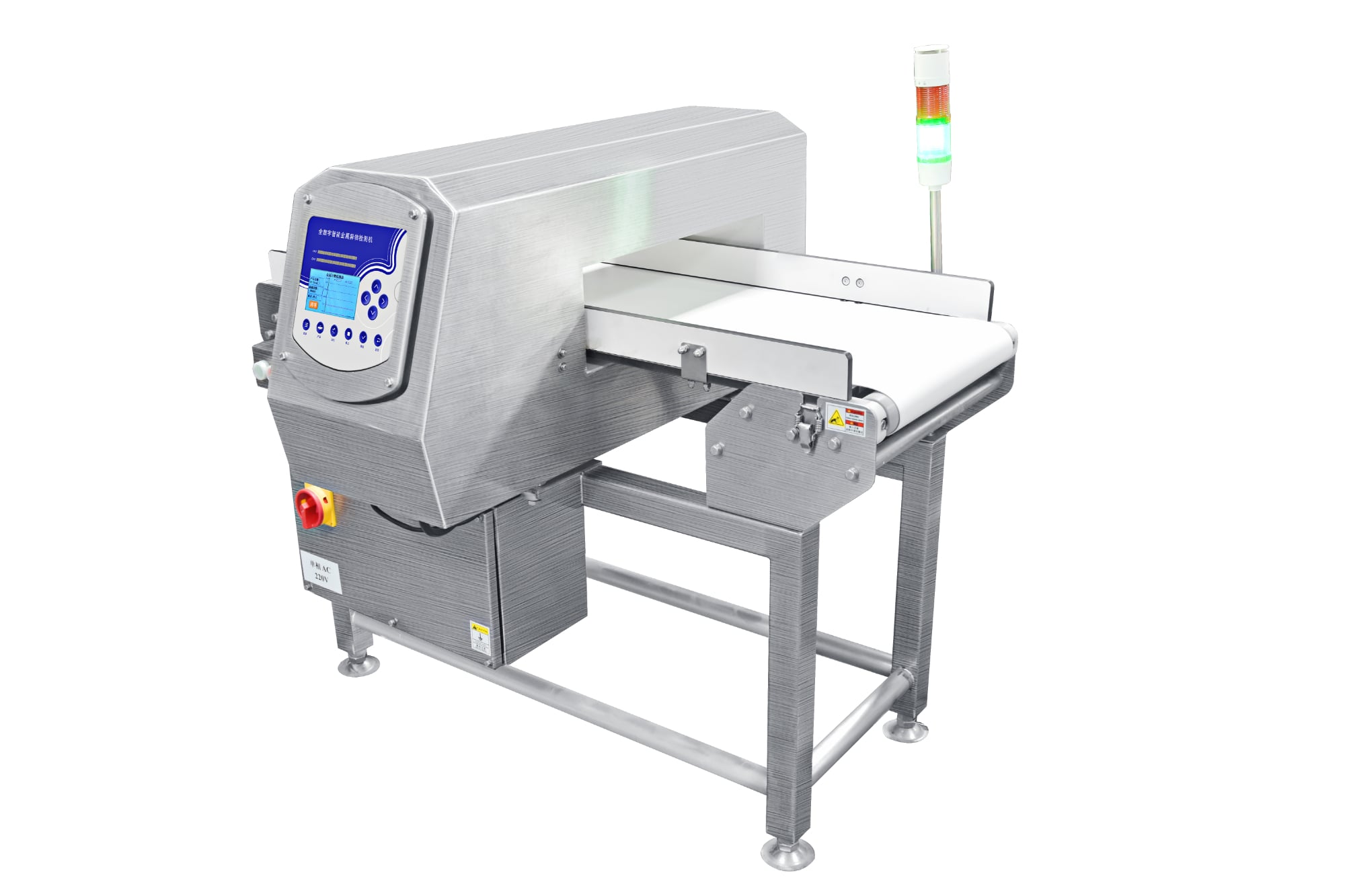
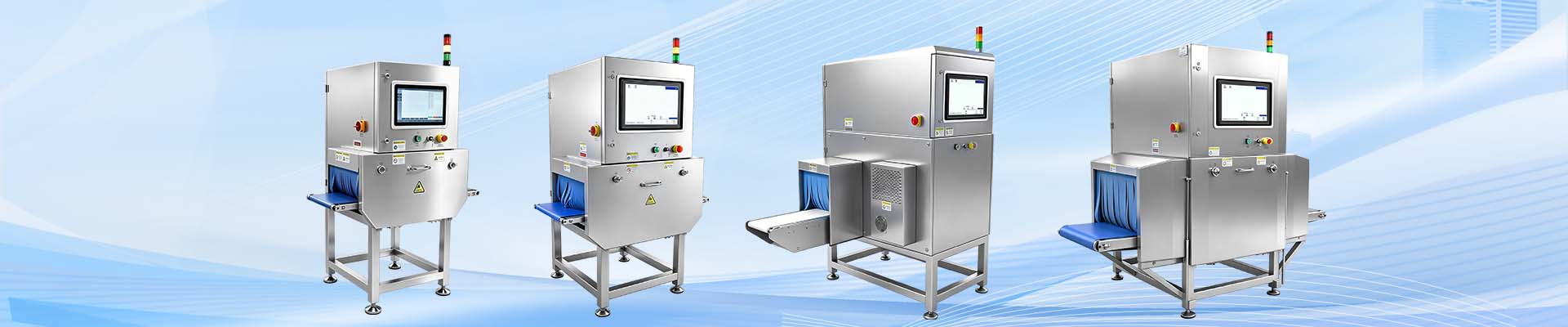
CQ-YW800 X-ray machine: stainless cabinet, touchscreen HMI, tower light
Front view: SUS 304 cabinet, colour touchscreen HMI, tower status light and the food-grade PU belt running the full length of the frame.
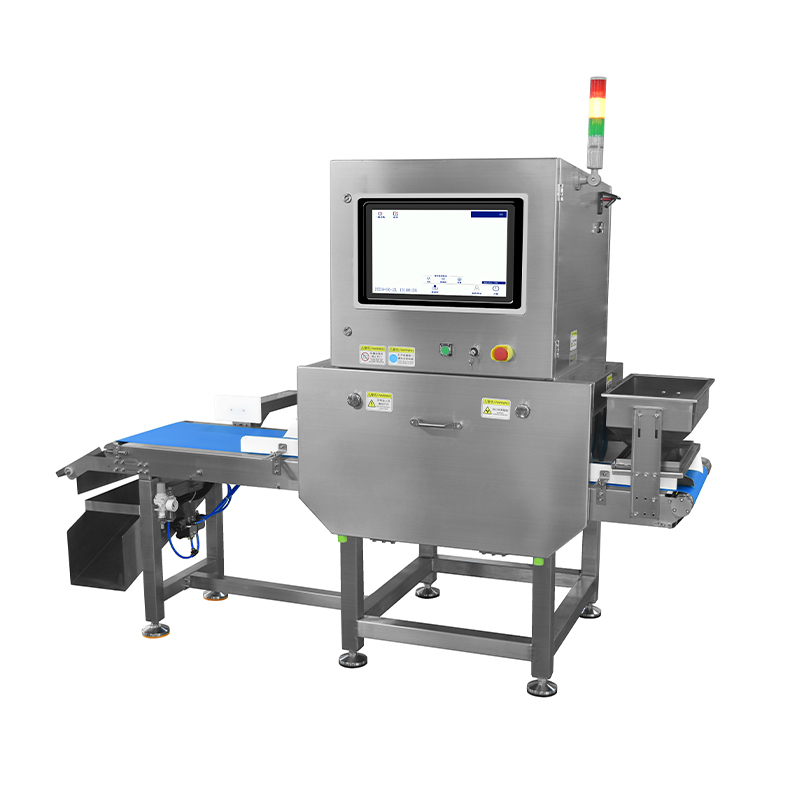
CQ-YW800 three-quarter rear view: extended frame and discharge tray
Three-quarter view: the extended modular frame, the discharge tray and the belt returning through the tunnel.
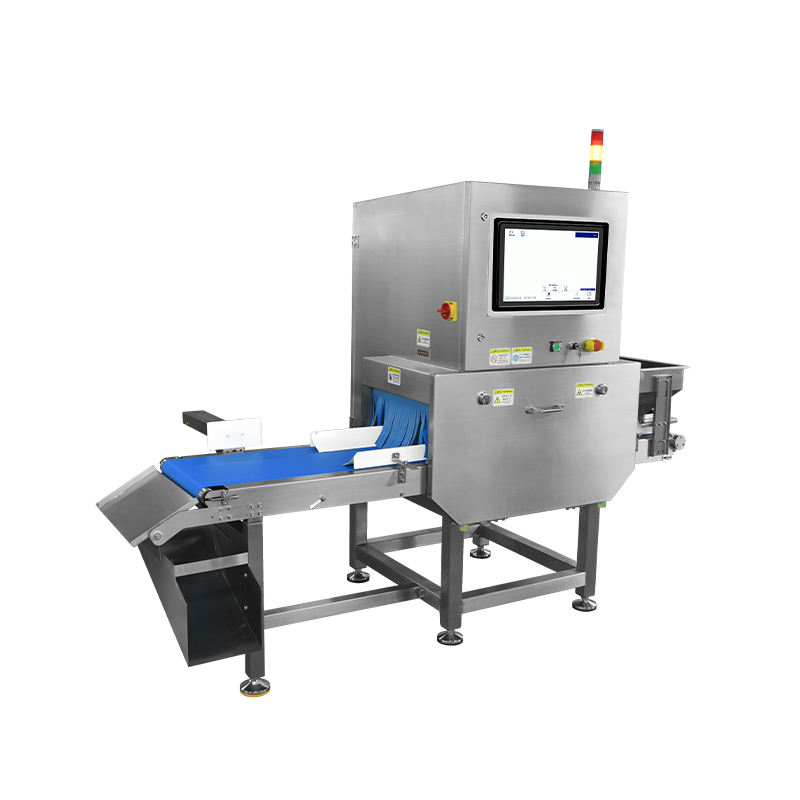
CQ-YW800 front-left view: infeed conveyor, pusher paddle, reject bin
Front-left view: the infeed conveyor, the pusher paddle and the reject bin under the belt, with the tunnel entrance ahead.

Technical Details / Performance

Feature Technical Details / Performance
Model / series CQ-YW800 — 4020 series
Rejection system Dual-stage: integrated pusher + flip
X-ray source 150 W / 240 W / 350 W, selectable
Tunnel size (W × H) 400 mm × 200 mm
Max. product size ≤280 mm (W) × 200 mm (H) · or ≤400 mm (W) × 60 mm (H)
Belt speed 10–70 m/min, adjustable
Detection accuracy (min. sphere) 0.4 mm SUS 304 · 1.0 mm ceramic · 2.0 mm glass
Specified with no product in the beam (empty belt)
Load capacity Up to 10 kg (22 lbs)
Frame Extended 2010 mm modular frame
Overall dimensions (L × W × H) 2010 × 1137 × 1483 mm (+100 mm)
Product formats Bagged · boxed · bulk loose products
Construction Full SUS 304 stainless steel frame, food-grade PU belt
Power supply AC 220 V, 1.5 kVA, 50/60 Hz
Alarm Audible and visual
Ambient temperature −15 °C to +45 °C
Connectivity LAN port · USB port, for real-time reporting and digital audit trails
Operator interface Multi-language touch screen (English / Chinese)

Foreign Body Detection Accuracy

X-rays pass through the pack rather than around it, so detection does not depend on the product being dry, light or conductive. On the CQ-YW800, measured with no product in the beam, the smallest sphere the X-ray inspection machine is specified to resolve is:

0.4 mm
SUS 304
1.0 mm
Ceramic
2.0 mm
Glass

Specified on an empty belt; inside a loaded pack the limit depends on the product's density and pack thickness.

X-Ray Imaging

The decision is made on the rendered X-ray image, so one pass also covers foreign bodies, product shape and pack integrity. The figures below show what that image resolves.
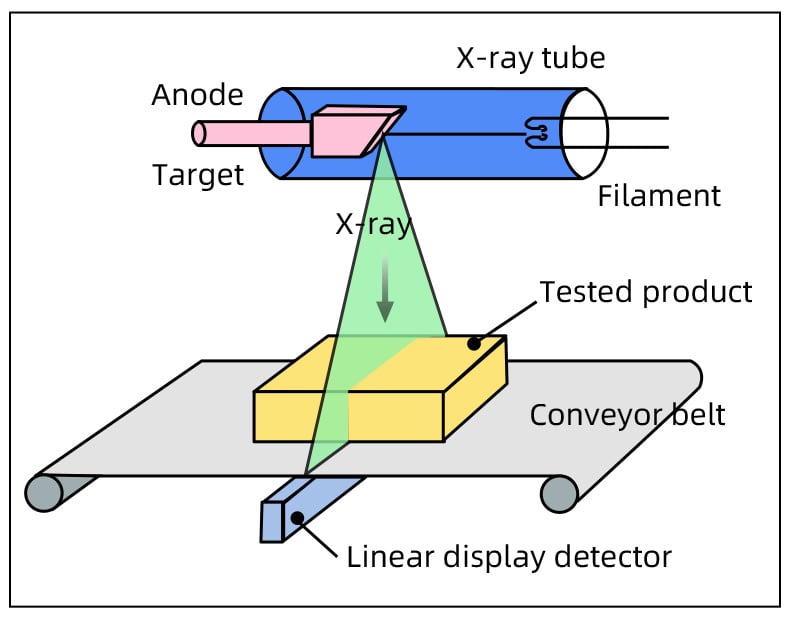
X-ray principle: X-ray tube above the belt, detector array below
How the image is formed: an X-ray tube above the belt, a linear detector array below it and the product passing between the two.
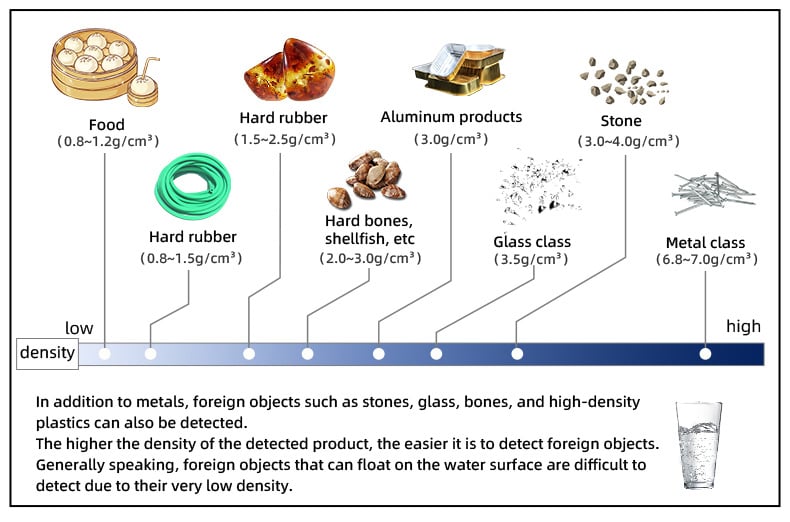
Density chart: food, rubber, aluminium, stone, glass and metal foreign bodies
Detectability follows density: beyond metals, stones, glass, bones and high-density plastics are also detected. Very low-density objects that float on water are the difficult case.
X-ray image of a can with the detected foreign body boxed
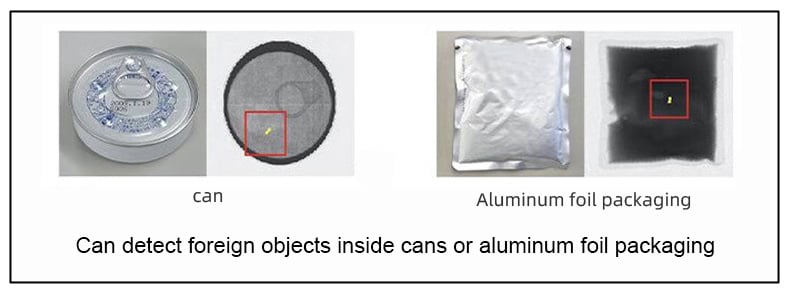
Foreign bodies detected inside cans and inside aluminium foil packaging — the two cases a conventional metal detector cannot separate from the packaging itself.
Shape and quantity detection: damaged pack, missing layer, wrong count
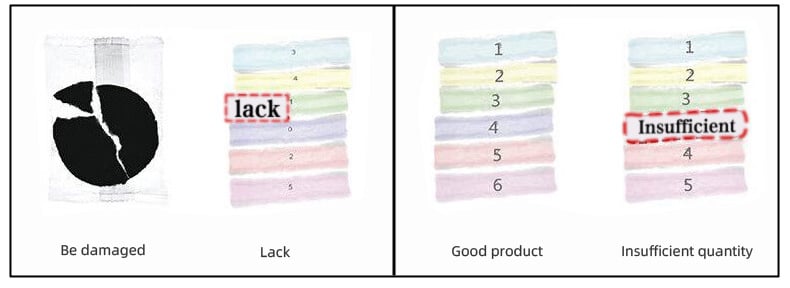
Shape and quantity on the same pass: damaged product, a missing piece and an incorrect count are flagged as well as foreign bodies.
Shielding detection and foreign-body clamping on a bag seal
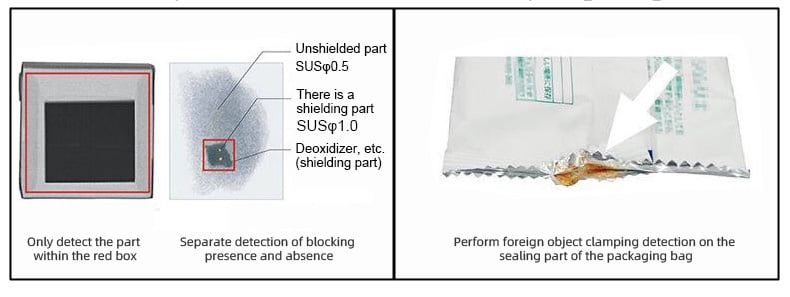
Shielding and sealing: the shielding part and the unshielded remainder are detected separately, and the seal of the bag is checked for a clamped foreign body.

How The X-Ray Machine Works

X-rays penetrate materials that are opaque to visible light. The X-ray inspection machine passes a low-dose beam through the product; a detector array picks up the signal and reconstructs it as an image, which is analysed to decide whether the pack is within specification.

Because the decision is made on a rendered image rather than a single measurement, one pass also covers the product itself — shape, quantity, shielding and sealing-clip inspection.

The interface shows the live X-ray image and the decision for each pack, and the X-ray inspection machine logs each decision for later batch review.

Where This X-Ray Machine Fits

Pack formats this X-ray inspection machine is configured for: small bags, boxes and bulk loose products, on lines where more than one pack type passes one inspection point.

A typical duty is a bagged bakery product straight from the packing line, with the reject devices pulling any pack the X-ray flags before case packing.

On The Floor

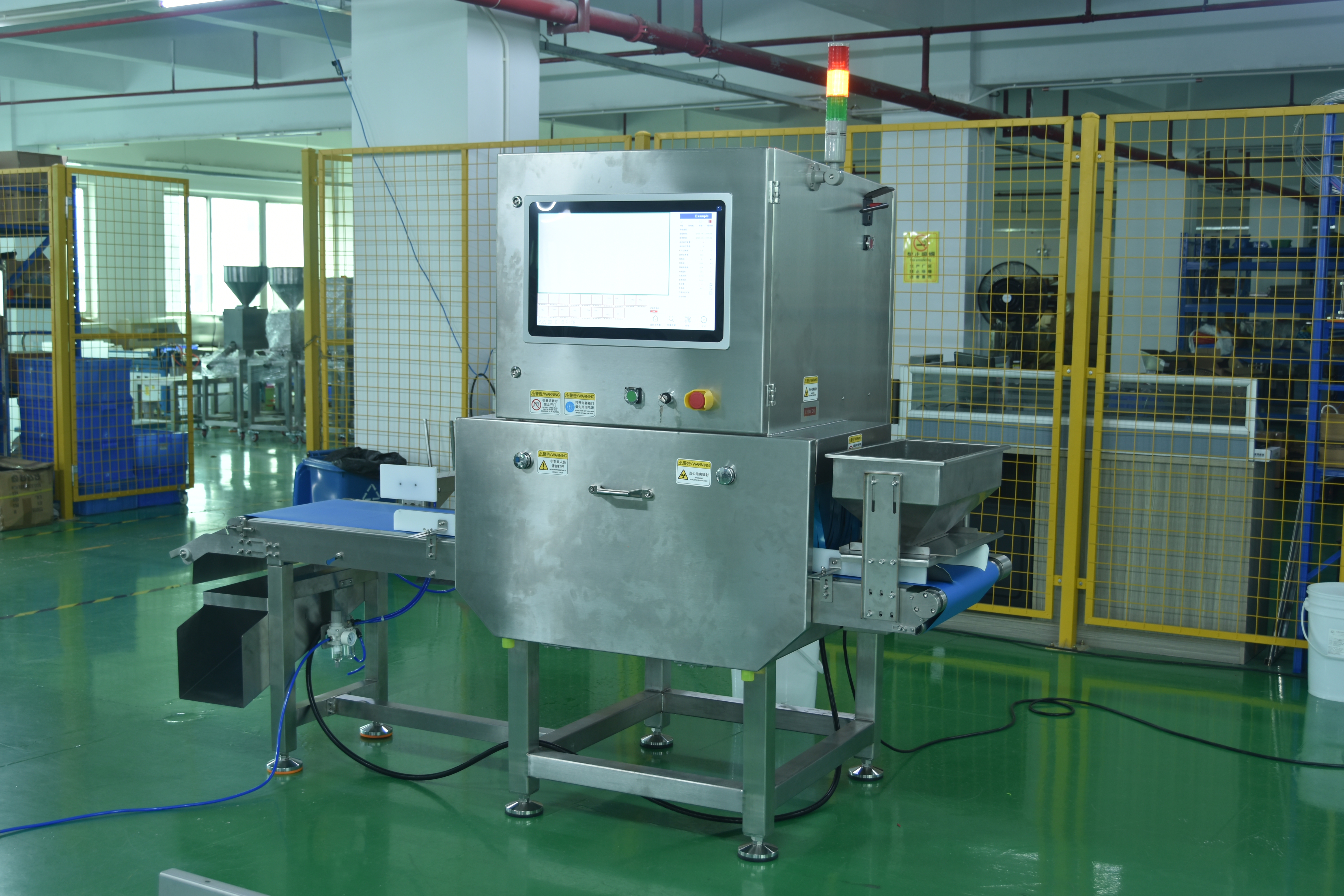
Every CQ-YW800 X-ray inspection machine is assembled and run in on our own floor before dispatch, with the infeed conveyor, reject bin and discharge tray set up as one working line.
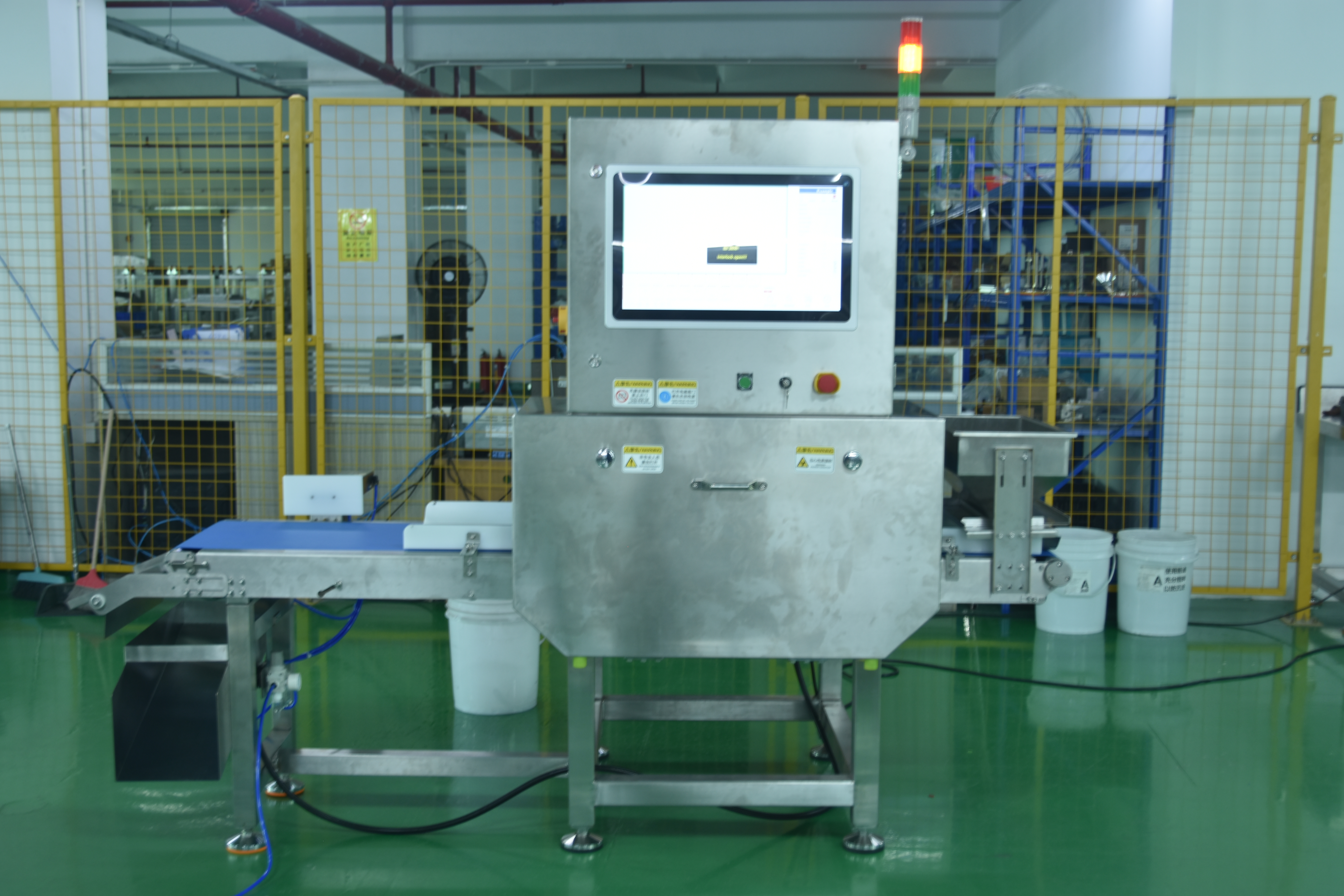
CQ-YW800 on the floor: belt and reject bin in position
Set up as a working line: cabinet, infeed conveyor and reject bin in position, tower status light on.
CQ-YW800 floor view: extended infeed, pusher paddle, discharge tray
Three-quarter floor view: the extended infeed, the pusher paddle and the discharge tray at the far end.

Common Questions On Foreign Body Detection

What is the smallest contaminant the CQ-YW800 is specified to detect?
With no product in the beam the limit is a 0.4 mm stainless steel 304 sphere, 1.0 mm ceramic and 2.0 mm glass. The foreign body is detected by X-ray, not by conductivity, so detection does not depend on the contaminant being metal. Inside a loaded pack the limit follows the product's density and thickness.
How does a dual-stage rejection system help on a mixed line?
The X-ray inspection machine carries an integrated pusher and an integrated flip. Two devices on one belt let a single inspection point apply different sorting logic to different categories without stopping the line.
What product weight and line speed can it take?
Up to 10 kg (22 lbs) per product, with belt speed adjustable from 10 to 70 m/min — sized for automated lines rather than manual packing tables.
What pack formats does it accept?
Small bags, boxes and bulk loose products. The extended 2010 mm modular frame lets us match infeed and outfeed to your conveyor layout rather than a fixed catalogue length.
Is the X-ray inspection machine built for hygiene and washdown areas?
The frame is full SUS 304 stainless steel with food-grade PU belting, the construction specified for food lines this X-ray inspection machine works on.
How is the inspection record kept?
The X-ray inspection machine provides a LAN port and a USB port for real-time reporting and digital audit trails, and the touch screen records each pack's decision. The interface is multi-language (English / Chinese).
Does your line run more than one pack type? Tell us — we will size the dual-stage X-ray machine around your line.

Send the pack dimensions, the weight per piece and your belt speed, and we will come back with the CQ-YW800 X-ray inspection machine configuration — tunnel, frame length and which reject device does the sorting.

E-mail [email protected] · Phone +86 185 7599 3435 · Factory: Liaobu Town, Dongguan City, Guangdong, China

GET IN TOUCH

Email Address *
Name
Phone Number
Company Name
Message *

Related Search

cq yw800 tailored x ray inspection solution  dual stage rejection push  flip for complex production lines-0
onlineONLINE