EN


Home > > Check Weigher

Precision You Can Trust: Ensures every product meets exact weight standards with advanced sensors, guaranteeing quality and compliance.
Built for Speed: Keeps up with your fastest production lines, weighing hundreds of items per minute without sacrificing accuracy.
Easy to Integrate & Use: Fits seamlessly into your existing operation with a simple interface, minimizing setup time and training.
Data at Your Fingertips: Provides real-time monitoring and detailed reports for smarter decisions and process optimization.
Rugged & Reliable: Constructed for tough environments to deliver consistent performance day in and day out.
A 210 mm belt and a 0.1 g minimum scale fix what this build is for: packs, jars and small cartons up to 1000 g, crossing at 15 to 100 metres a minute, each one weighed against its own target and passed or rejected.
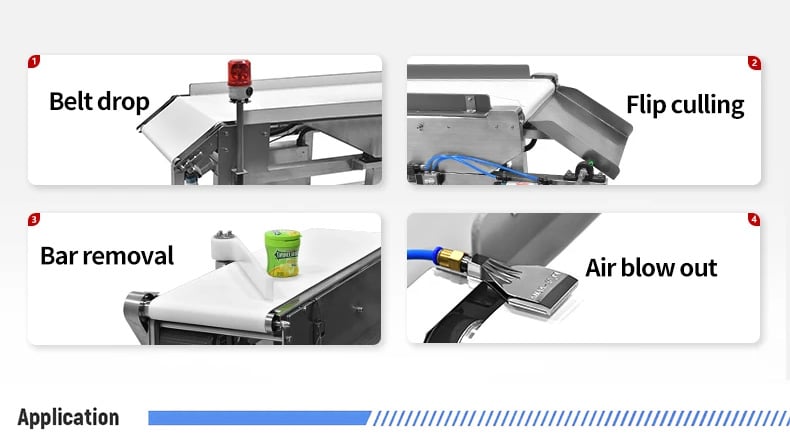
A failed pack does not stop the line. The weigher reports the verdict and a removal device takes it off the belt while the packs behind keep moving. Four methods are offered: a pusher, a flap gate, an air blow, or a swing arm.
The unit in the clip carries the pusher, its plate on two guide rods driven by a blue air line. Pneumatic devices run on 0.6 to 1 MPa of external air, regulated under the frame.

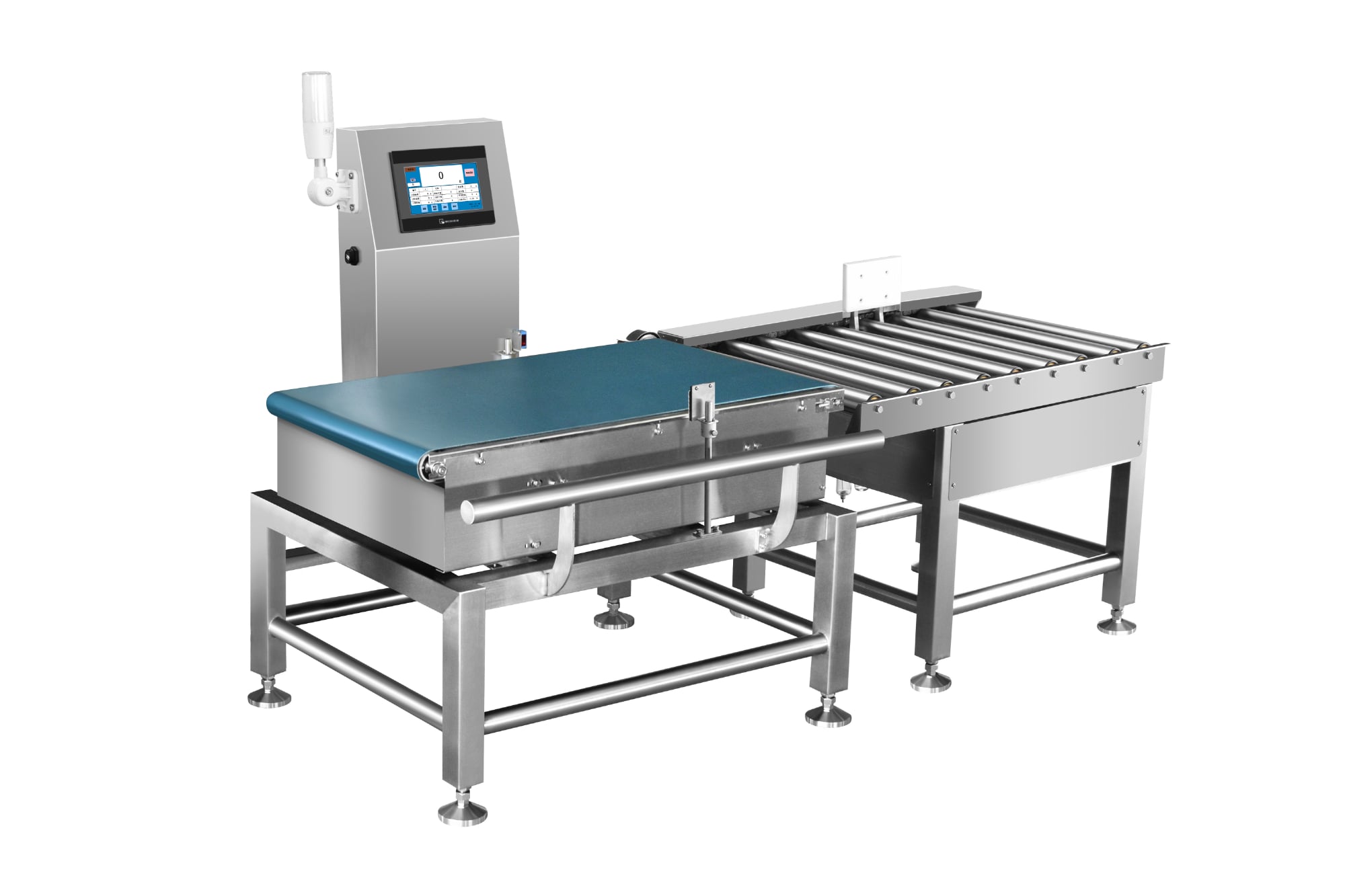
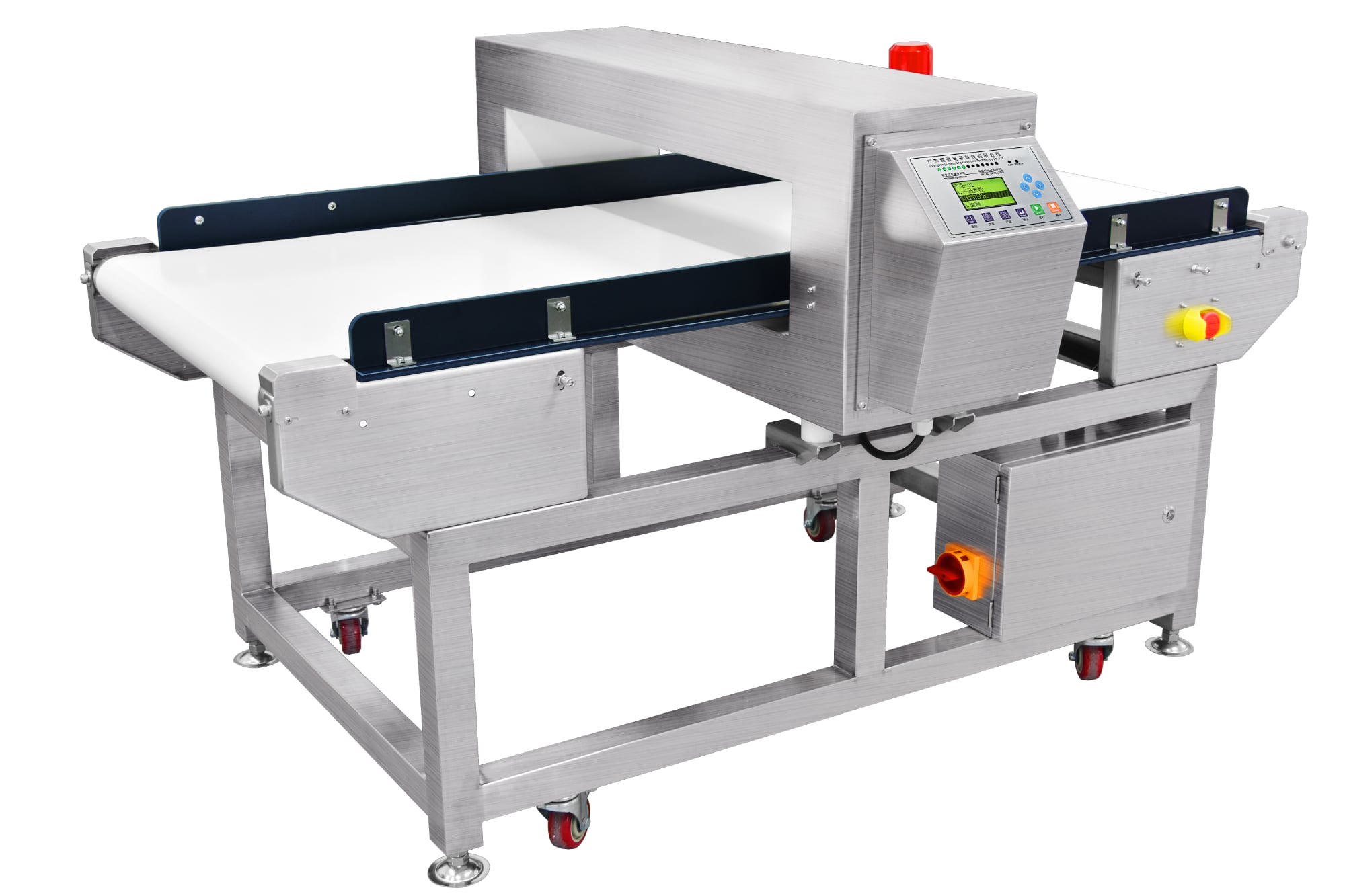
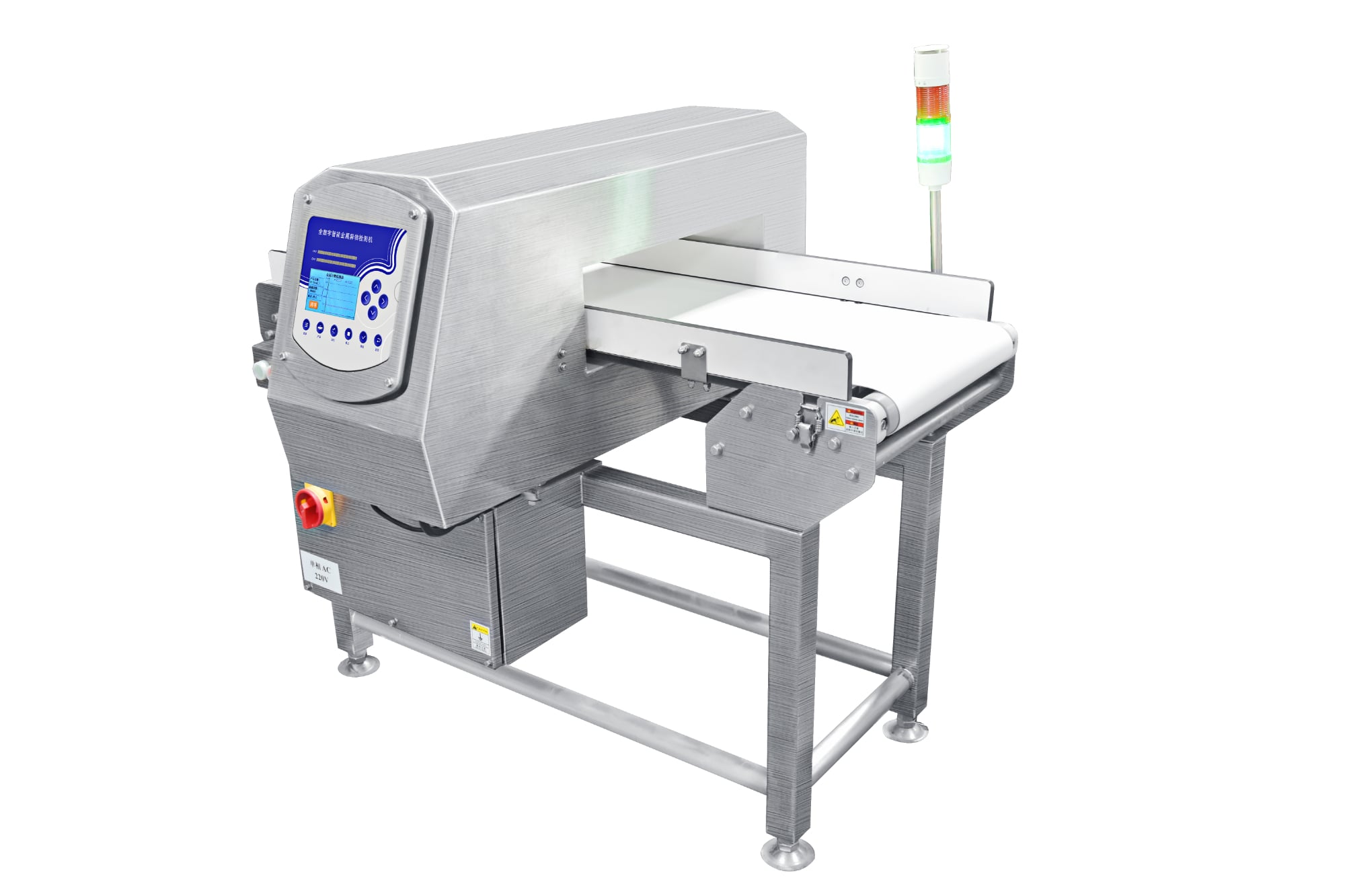
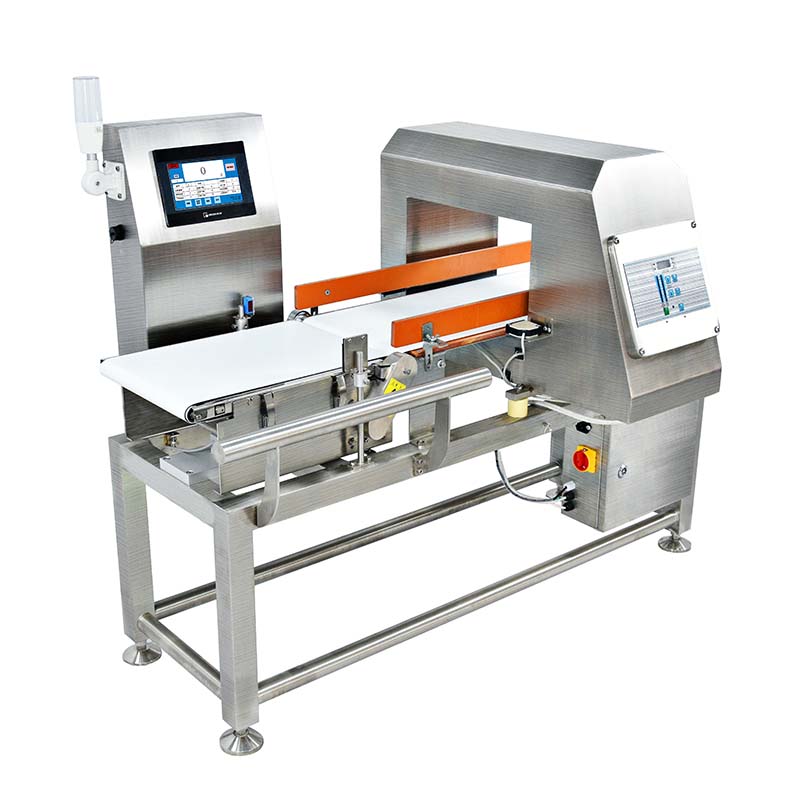
Three studio views: front-left three-quarter, right-hand side and straight on. The frame is stainless and stands on adjustable feet; the column carries the touch screen, the emergency stop and the tower light; the reject station closes the run.


Seen end on: the belt between its rails, the windshield above it, the handrail for reaching the weighing section. Seen from the rear: the cabinet on its hinges, the earth and hazard labels, and the air filter and regulator, mounted where they drain without pulling the machine out of the line.


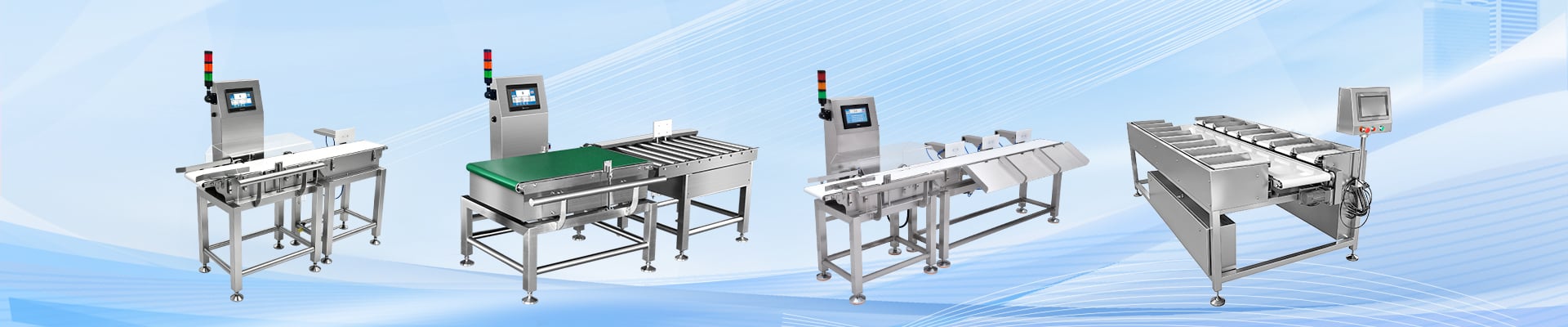
The belt is food grade PU; where the packs suit it a powered roller section can be fitted instead. Fasteners and the load cell are reachable from the sides.
These are the figures we build to. Anything marked as matched to the line is chosen with you.
| Feature | Specification At A Glance |
| Model | CQ-YWXP210 |
| Weighing range | ≤ 1000 g per item |
| Minimum scale | 0.1 g |
| Weighing accuracy | ± 0.3 g to ± 0.5 g On an item crossing the weighing section at a steady speed |
| Belt speed | 15–100 m/min, adjustable |
| Throughput | Up to 160 pcs/min |
| Weighing conveyor belt | 400 mm (L) × 210 mm (W) |
| Maximum item size | ≤ 280 mm (L) × 200 mm (W) |
| Rejection method | Pusher · flap · air blow · swing arm, matched to the line Pneumatic devices run on 0.6–1 MPa external air |
| Stored programmes | 100, with automatic learning storage |
| Load cell | ZEMIC L6D16 |
| Control system | High-speed A/D sampling controller |
| Body material | SUS 304 stainless steel |
| Conveyor belt material | Food grade PU |
| Power supply | AC 220 V ± 10 %, 50 Hz, 150 W |
| Dimensions (L × W × H) | 1522 × 560 × 1222 mm |
| Interface | USB · RS232 · RS485 |
| Working environment | 0–40 °C, 30–95 % RH 7-inch colour touch screen |
What a machine can be held to depends on the item as much as on the load cell. A firm pack crossing at a steady speed reads inside the band below; a light one bouncing on a fast belt does not.
Three things protect the reading: a windshield over the weighing section so draughts cannot load it, an infrared sensor watching each item as it crosses, and a tapered shaft that brings the belt back to centre. Zero tracking runs continuously, and 100 stored programmes hold the settings for each item.
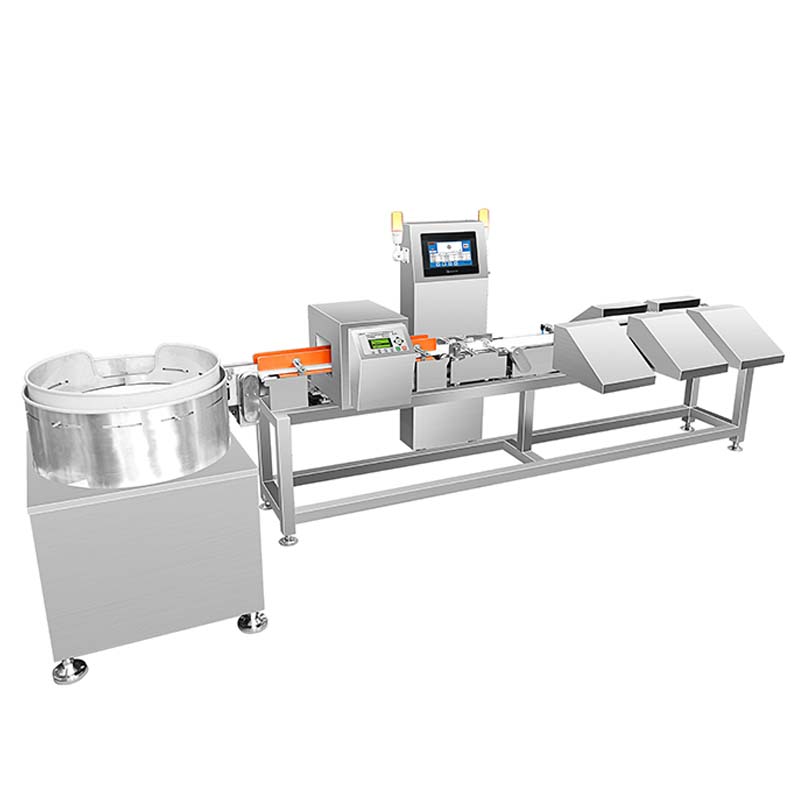
Three sections carry the belt. A short speed-up section settles the item at belt speed; the weighing section is where the load cell reads it; the rejection section is where the verdict is carried out.
The cell samples continuously, so the weight is a curve across the whole pass, not one snapshot. The controller takes the stable part, compares it with the target and tolerance held for the item, and decides good or no-good. Then it turns mechanical: the reject device fires, or the alarm reports.
210 mm of belt is the constraint that defines this build, and it is deliberate: boxed food, bagged snacks, jars, sachets, blister packs, pump bottles and small hardware up to 280 × 200 mm and 1000 g a piece.
A stainless frame and a food grade belt suit food and beverage, pharmaceutical and healthcare packing, daily chemical and electronics alike; only the stored programme changes. It is not the frame for large cartons or heavy crates, and we build those too.

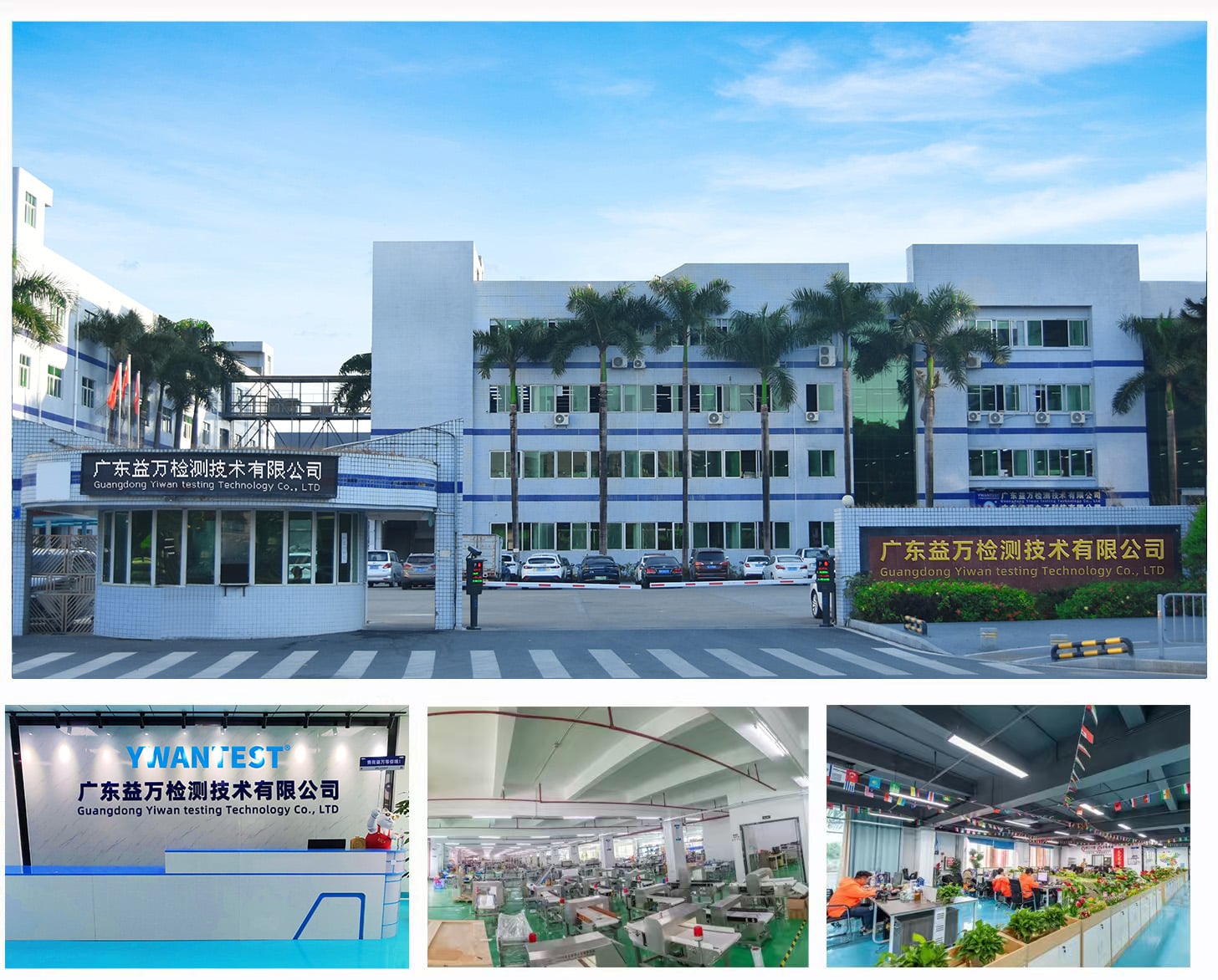
Every unit is assembled, wired and run on our own floor before it is crated. The hall below is where that happens, with rows of machines on the green epoxy floor and their tower lights up.
Packs, boxes, jars and bags up to 280 mm long, 200 mm wide and 1000 g each. Larger items need a wider belt and a heavier load cell.
± 0.3 g to ± 0.5 g on an item crossing at a steady speed, with a 0.1 g minimum scale.
Whichever suits the pack: a pusher for a firm pack, a flap or swing arm for a light one, an air blow where space is tight.
AC 220 V, 50 Hz, 150 W, plus air at 0.6 to 1 MPa for a pneumatic reject. USB, RS232 or RS485 for data.
1522 by 560 by 1222 mm on adjustable feet, with room at the reject end for the collection bin.
One year whole machine with parts replaced free; sea, air or express shipping; Alibaba Trade Assurance.
Not sure your pack belongs on a 210 mm belt? Send its size and weight per piece and we will come back on fit, accuracy and reject device.

 ONLINE