EN



Praecisio Qua Confidis: Omnem productum exactis pondus normis per sensus progressos adaequare, qualitatem et legibus secundum garantens.
Ad Celeritatem Paratus: Cum velocissimis productionis lineis parem tenet, centenas rerum per minutum ponderando neque tamen praecisione amissa.
Facilis Integrationis et Usus: In operationem iam existentem sicut aptatur cum simplice interfacie, tempus instituendi et doctrinae ad minimum redigens.
Data Sub Digitis Tuis: Monitoria in tempore vero et relationes plenas pro melioribus decisionibus et processuum optimisatione praebet.
Robustus et Fidus: In locis difficilibus confectus ut perenniter diem ac diem praestet.
A 210 mm belt and a 0.1 g minimum scale define this build’s purpose: weighing packs, jars and small cartons up to 1000 g, moving at 15 to 100 metres per minute, each compared against its individual target weight and either accepted or rejected.
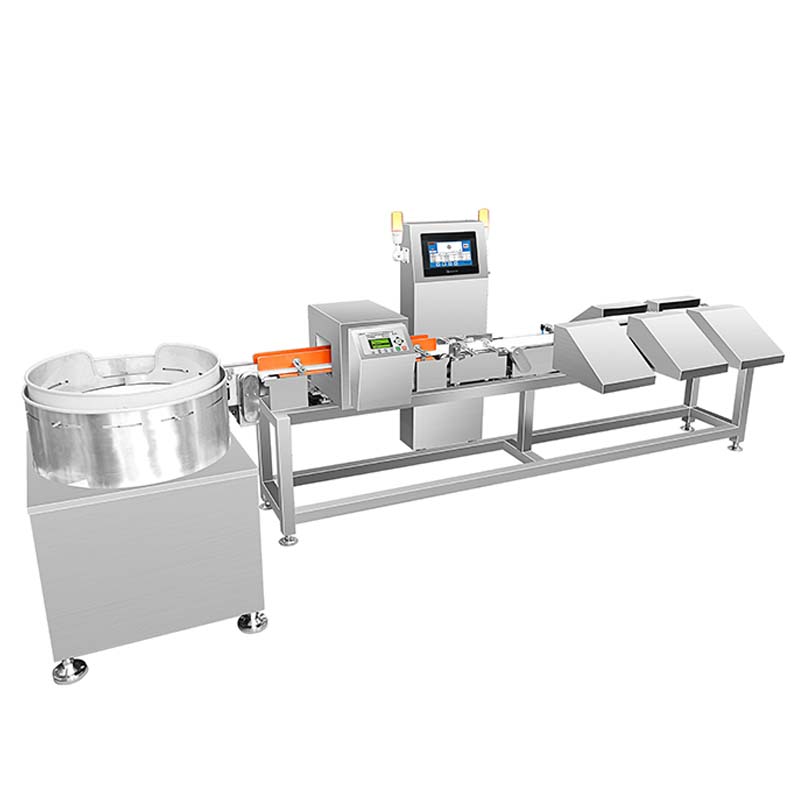
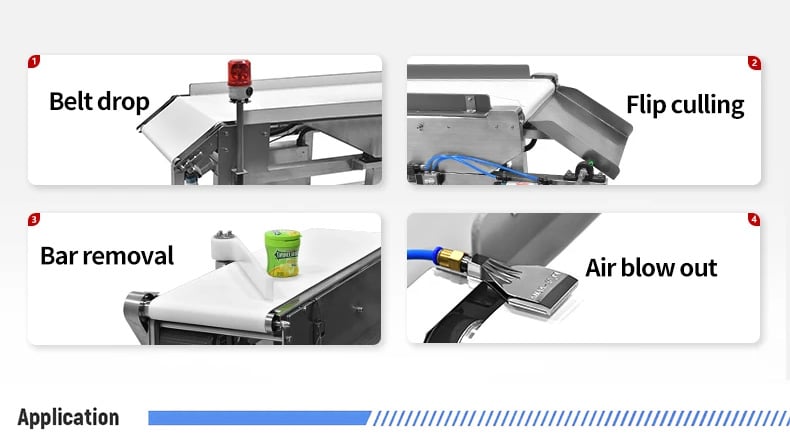
A failed pack does not stop the line. The weigher reports the verdict, and a removal device takes it off the belt while subsequent packs continue moving. Four methods are available: a pusher, a flap gate, an air blow, or a swing arm.
The unit in the clip uses the pusher, whose plate slides on two guide rods driven by a blue pneumatic line. Pneumatic devices operate on 0.6 to 1 MPa of external compressed air, regulated beneath the frame.

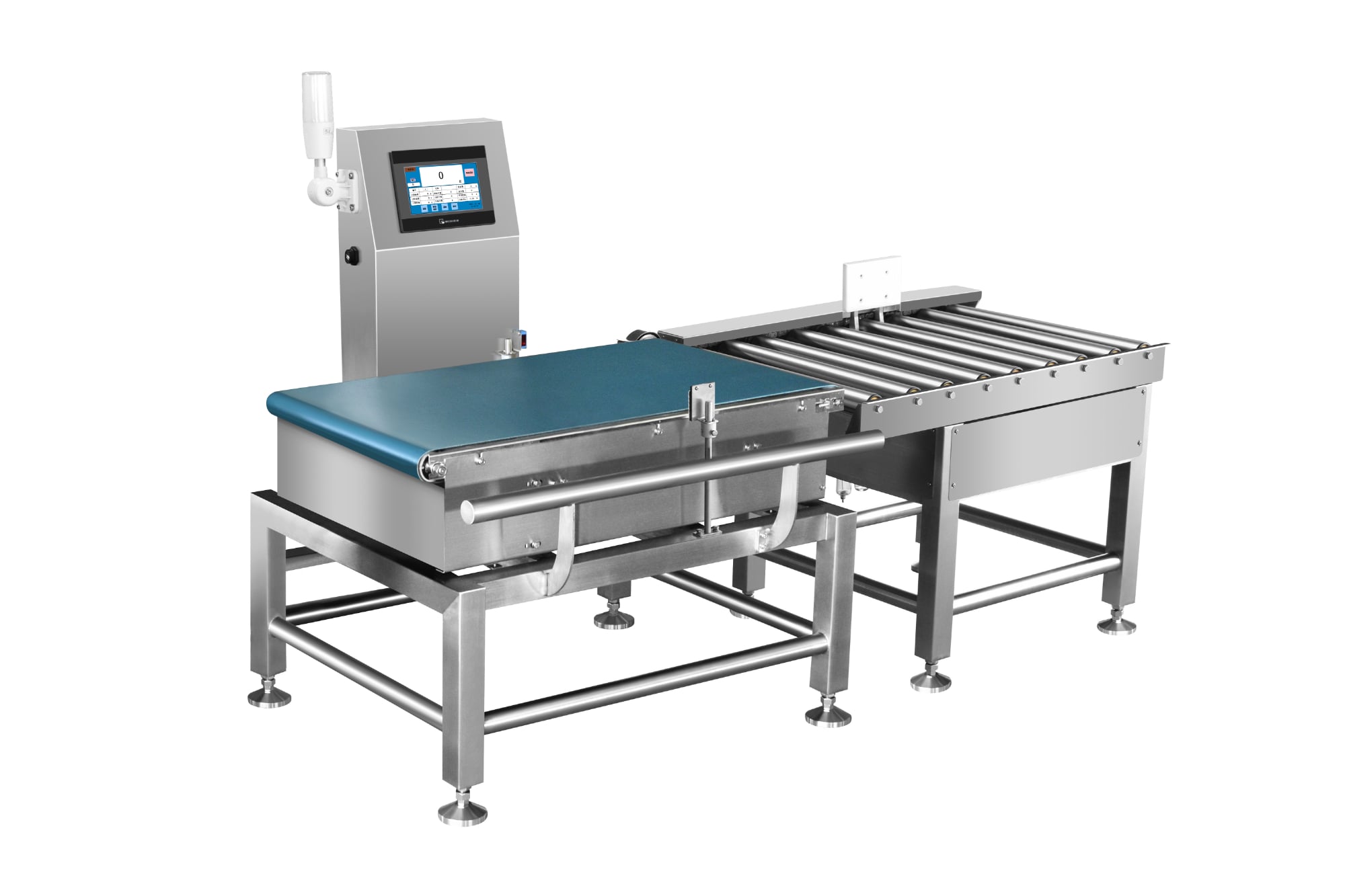
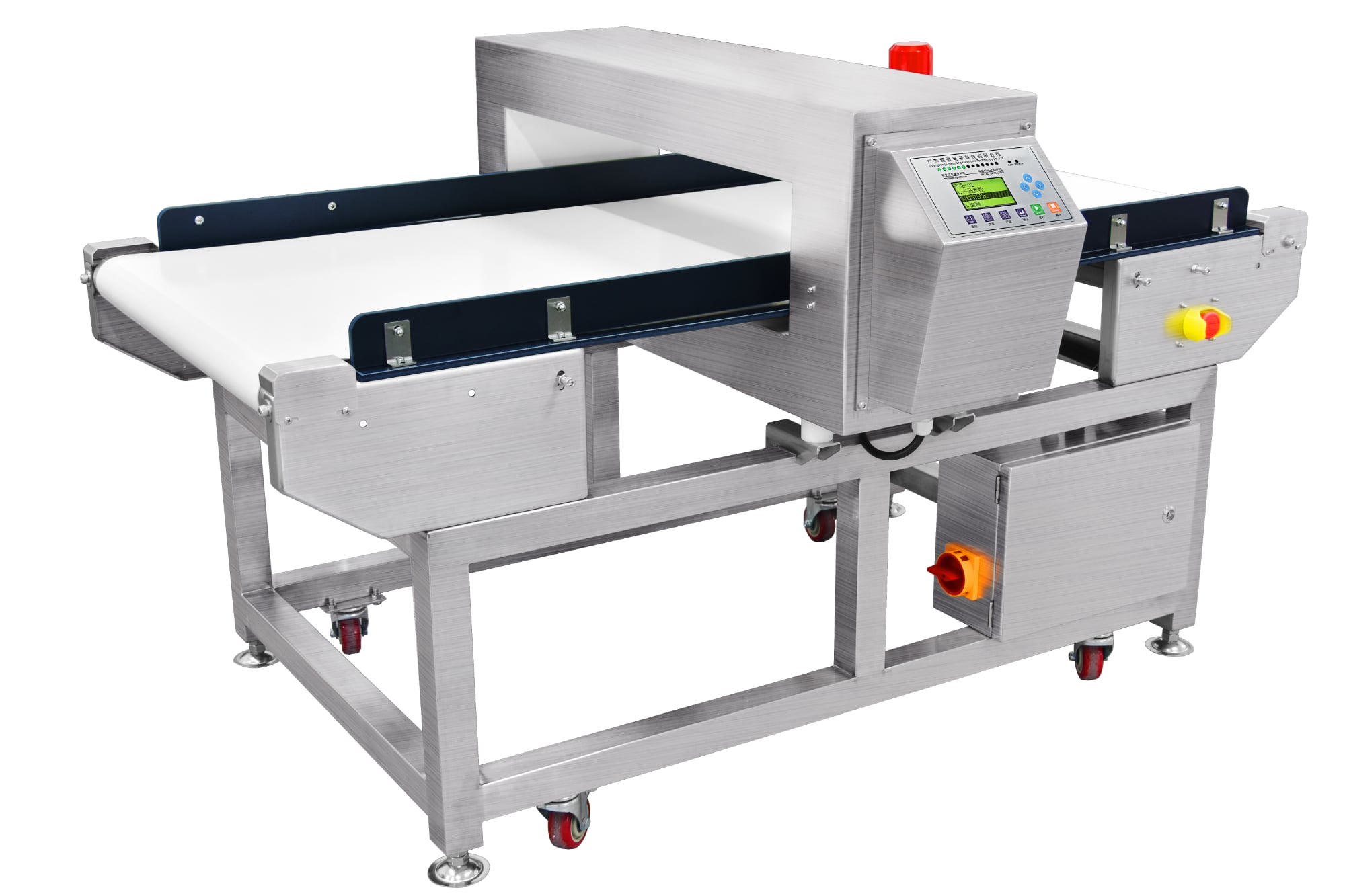
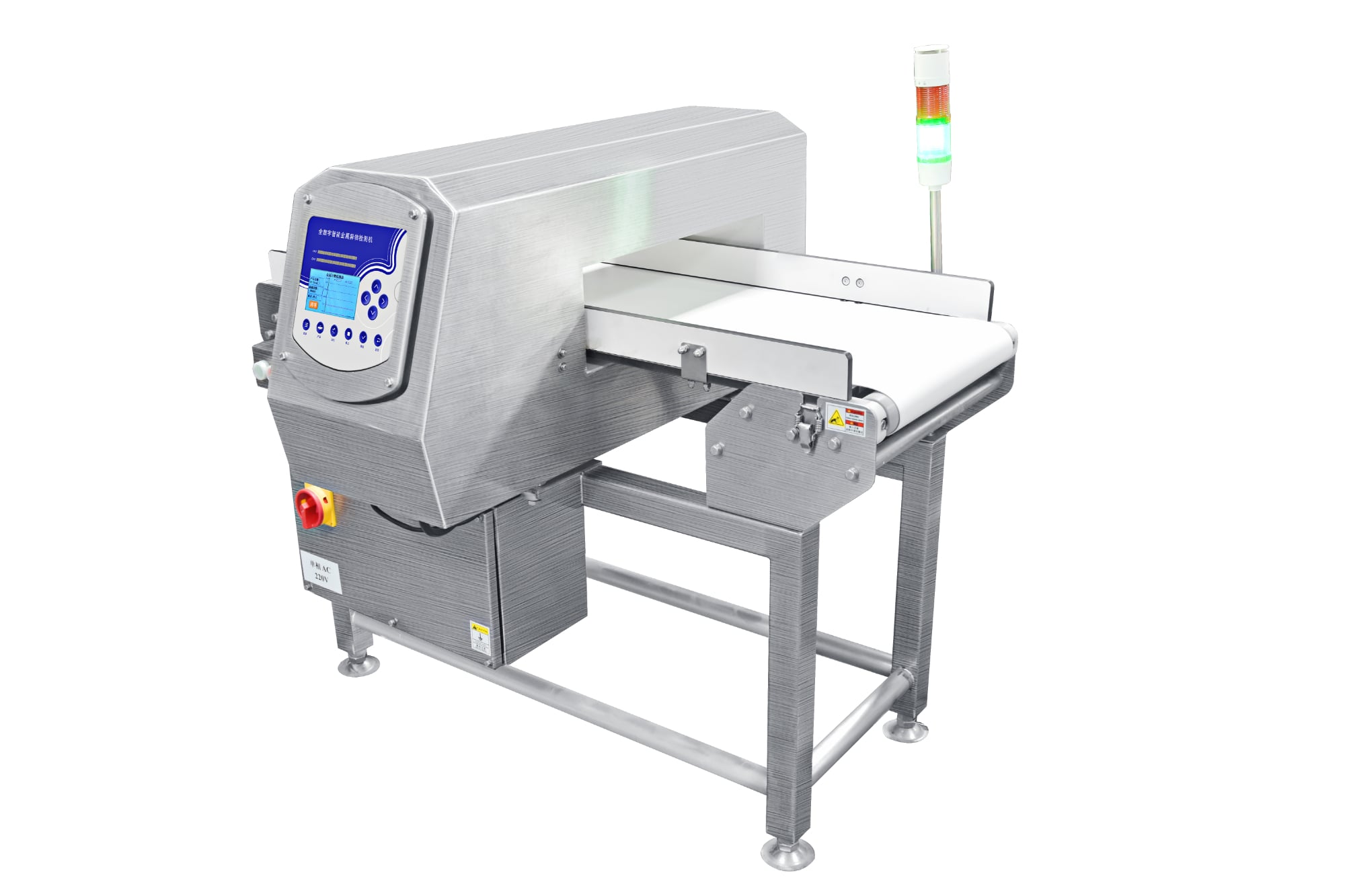
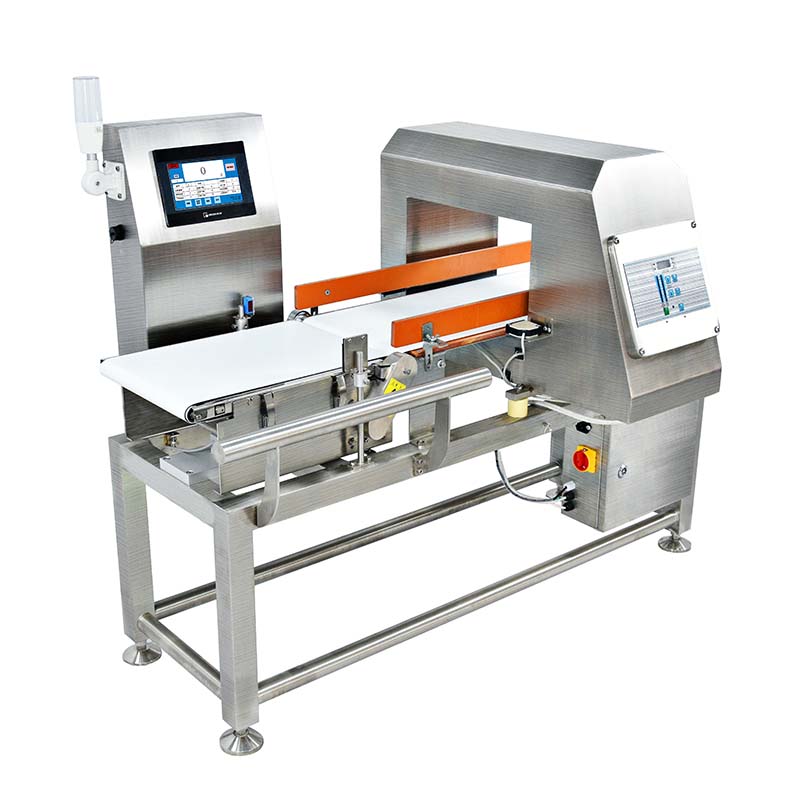
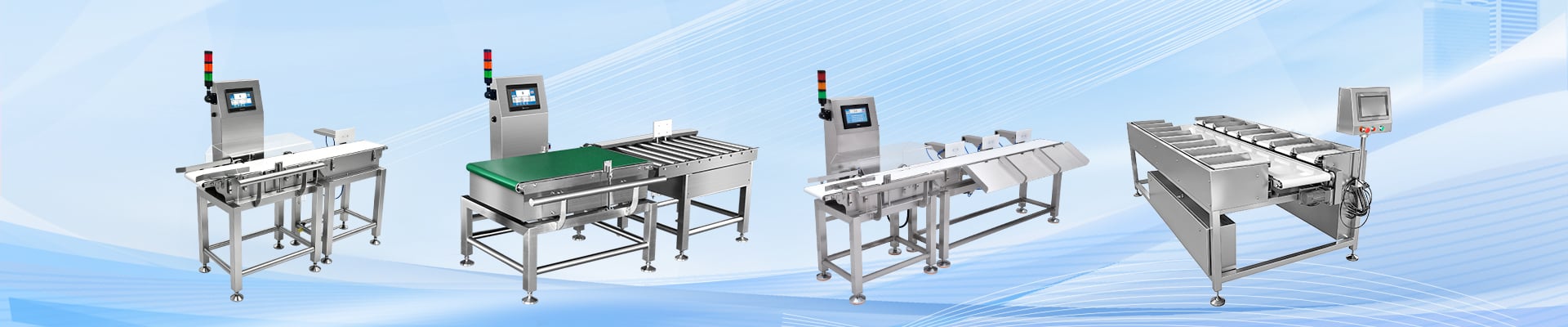
Three studio views: front-left three-quarter, right-hand side and straight on. The frame is stainless and stands on adjustable feet; the column carries the touch screen, the emergency stop and the tower light; the reject station closes the run.


Seen end on: the belt between its rails, the windshield above it, the handrail for reaching the weighing section. Seen from the rear: the cabinet on its hinges, the earth and hazard labels, and the air filter and regulator, mounted where they drain without pulling the machine out of the line.


Cingulum est PU gradus alimentarii; ubi pacheta id aptant, sectio rotae motorizatae potest in vicem applicari. Fixationes et cellula oneris ab lateribus adiri possunt.
Haec sunt numeri, ad quos construimus. Quicquid ut lineae accommodatum notatur, tecum eligitur.
| Characteristica | Specificatio Ad Primum Aspectum |
| Modellum | CQ-YWXP210 |
| Rangus ponderandi | ≤ 1000 g per articulum |
| Minima scala | 0.1 g* |
| Praecisio in pondere | ± 0,3 g usque ad ± 0,5 g In articulo transiente sectionem ponderandi celeritate constante |
| Velocitas lorum | 15–100 m/min, regolabilis |
| Perfusio | Usque ad 160 pec./min |
| Convector ponderans | 400 mm (long.) × 210 mm (lat.) |
| Maxima magnitudo articuli | ≤ 280 mm (L) × 200 mm (W) |
| Modus Reiectionis | Impulsor · valvula · insufflatio aeris · brachium oscillans, ad lineam accommodatum. Pneumatic devices run on 0.6–1 MPa external air |
| Programmata reposita | 100, cum automatica memoria discendi |
| Cellula Oneris | ZEMIC L6D16 |
| Systema moderationis | Controller celeris A/D campionis |
| Materia corporis | Acer inoxidabilis SUS 304 |
| Materialis cinguli transportantis | Cibus gradus PU |
| Fons Potentiae | AC 220 V ± 10 %, 50 Hz, 150 W |
| Dimensiones (L × L × A) | 1522 × 560 × 1222 mm |
| Interfacies | USB · RS232 · RS485 |
| Ambitus operativus | 0–40 °C, 30–95 % RH schermum coloratum tactilis septem-pollicare |
What a machine can be held to depends on the item as much as on the load cell. A firm pack crossing at a steady speed reads inside the band below; a light one bouncing on a fast belt does not.
Three things protect the reading: a windshield over the weighing section so draughts cannot load it, an infrared sensor watching each item as it crosses, and a tapered shaft that brings the belt back to centre. Zero tracking runs continuously, and 100 stored programmes hold the settings for each item.
Tres sectiones portant fasciam. Brevis sectio accelerationis statuit rem ad velocitatem fasciae; sectio ponderationis est ubi cellula ponderis eam legat; sectio rejectionis est ubi sententia exequitur.
Cellula continue exempla capit, itaque pondus est curva per totum transitum, non unum momentaneum. Controller pars stabilis accipit, eam cum target et tolerantia pro re habita comparat, et iudicat bonam an non bonam. Deinde in mechanica vertitur: dispositivum rejectionis ignitur, aut alarma nuntiat.
210 mm fasciae est limitatio quae hanc structuram definit, et hoc consciens est: ciborum in scatulis, saccularum, vasorum, saccularum, blister-pacchorum, pompa-bottolarum et parvi apparatus usque ad 280 × 200 mm et 1000 g singula.
Framum ex accipitro et fascia ad cibos et potiones, pharmaca et sanitatem, chemicas cotidianas et electronicas aequaliter idonea est; tantum programma immotum mutatur. Non est haec framum pro magnis cartonibus aut gravibus casis, quos etiam fabricamus.

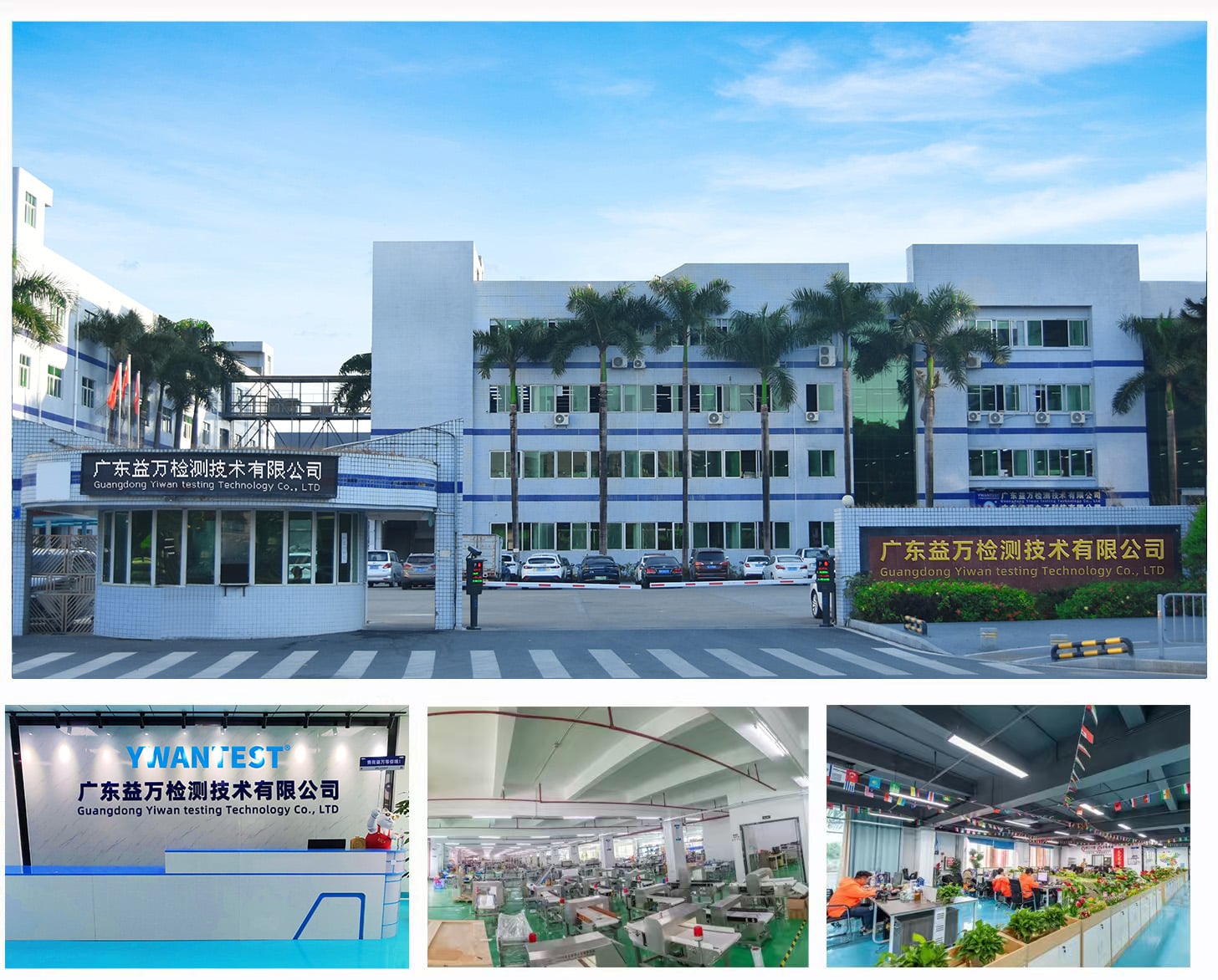
Every unit is assembled, wired, and run on our own floor before it is crated. The hall below is where that happens, with rows of machines on the green epoxy floor and their tower lights lit.
Packs, boxes, jars, and bags up to 280 mm long, 200 mm wide, and 1000 g each. Larger items require a wider belt and a heavier load cell.
± 0.3 g to ± 0.5 g on an item crossing at a steady speed, with a 0.1 g minimum scale.
Whichever suits the pack: a pusher for a firm pack, a flap or swing arm for a light one, an air blow where space is tight.
AC 220 V, 50 Hz, 150 W, plus air at 0.6 to 1 MPa for a pneumatic reject. USB, RS232 or RS485 for data.
1522 per 560 per 1222 mm super pedibus regolabilibus, cum spatio ad extremum reiciendi pro cista collectionis.
Unus annus pro tota machina cum partibus gratis substituendis; transmissio maritima, aerea vel expressa; Alibaba Trade Assurance.
Non certus es an tuum pachetum in cingulo 210 mm collocari possit? Mitte dimensiones et pondus per singulum pachetum, et nos tibi rescribemus de idoneitate, praecisione et apparatu reiciendi.

 INTERRETIALIS