EN


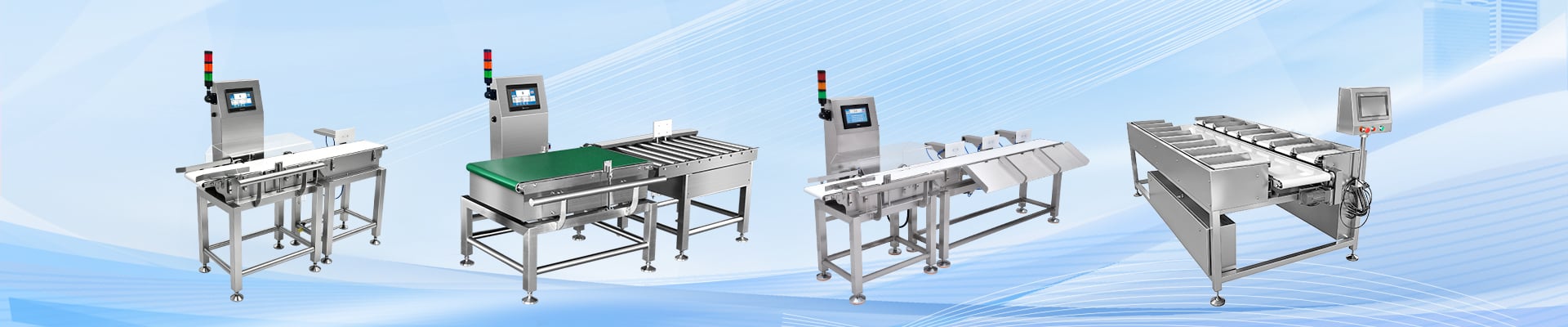

Summa Accurritas: Omnem productum adstrictis pondus normis per technologiam sensoriam progressam efficit, qualitatem et conformitatem garantans, simulque damna minuens.
Maxima velocitas: Lineas magni voluminis facile tractat, centenas usque ad millia rerum singulis minutis examinans, ut productivitatem tuam generalem augeas.
Facilis Integratio et Operatio: Modularis structura plane in lineam iam existentem inseritur. Facies interretialis facilis parvam institutionem requirit, celerem praeparationem et operationem lenem garantans.
Built ad Last; Robusta constructio duris in locis industrialibus resistit, fidam diuturnamque praestantiam cum minimis interruptionibus praebens.
Doctae Perceptiones ex Datis: Monitoria tempore vero et relationes subtiliores tibi claram perceptionem praebent de tendentiis productionis, ut celeriter decisiones informatas capias et processus optimes.
Energeticum Parcissimum: Componentibus paucis energiae egentibus facta est, ut expensas operativas minuas et impactionem ambientalem contrahas.
A 3 kg range with a 0.1 g scale, on a belt 450 mm long and 300 mm wide running at 15 to 90 m/min. The pack this frame is built around is a bag of something that pours: rice, pulses, seeds, pellets, dried fruit, where the product moves inside the bag and the bag changes shape between one pack and the next. Weigh the pack against the target held for it, and take off the one that is short.
Saccus granorum non est solidus. Productum in eo movetur, saccus deprimetur dum sedet, et forma quae ad sectionem ponderandam pervenit numquam est eadem forma quae a repleto discessit. Ideo scala 0.1 g et fascia ±0.5 usque ad ±1 g potius quam crassior: in sacculo 2 kg defectus qui capi debet paucos grammata est, et scala crassior saccum, non repletionem, legeret.
Punctum zero continue sequitur pro eadem causa. Pulvis oryzae, mica super cingulum relicta, aut mutatio tensionis cinguli omnia punctum zero per turnum mutant, et in hac tanta fine mutatione tamdiu reportaretur ut amissio producti.
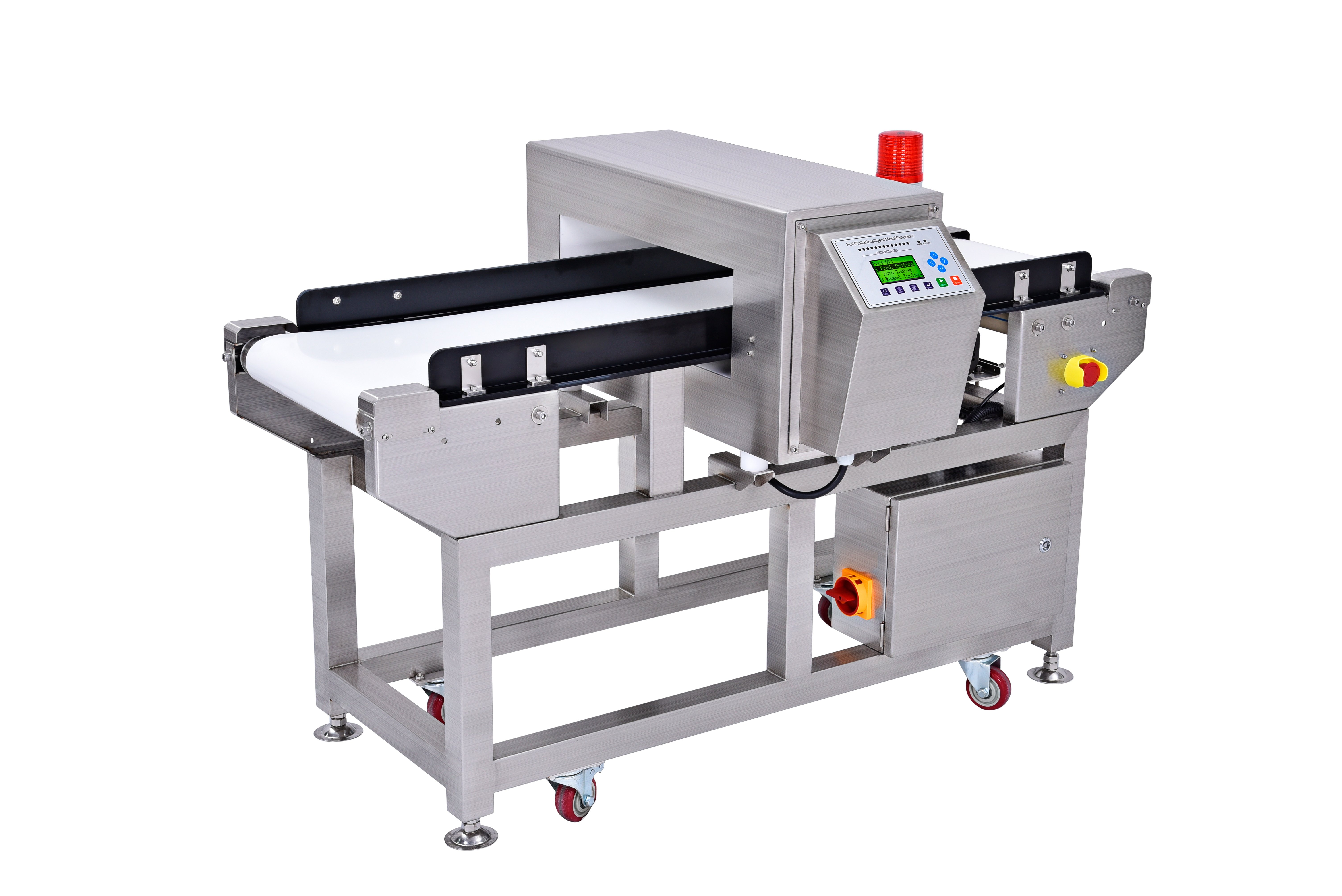
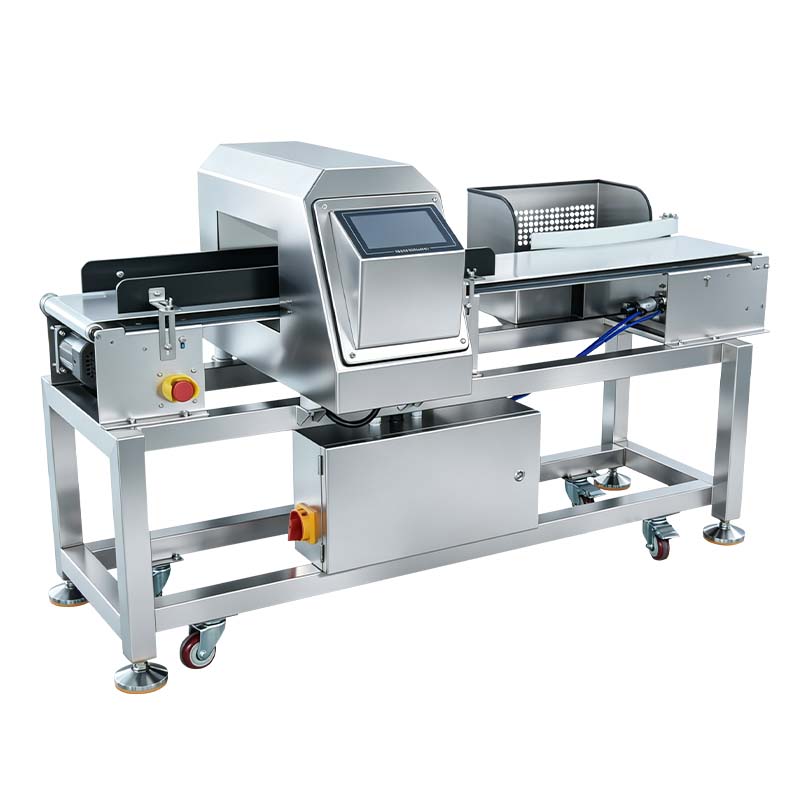
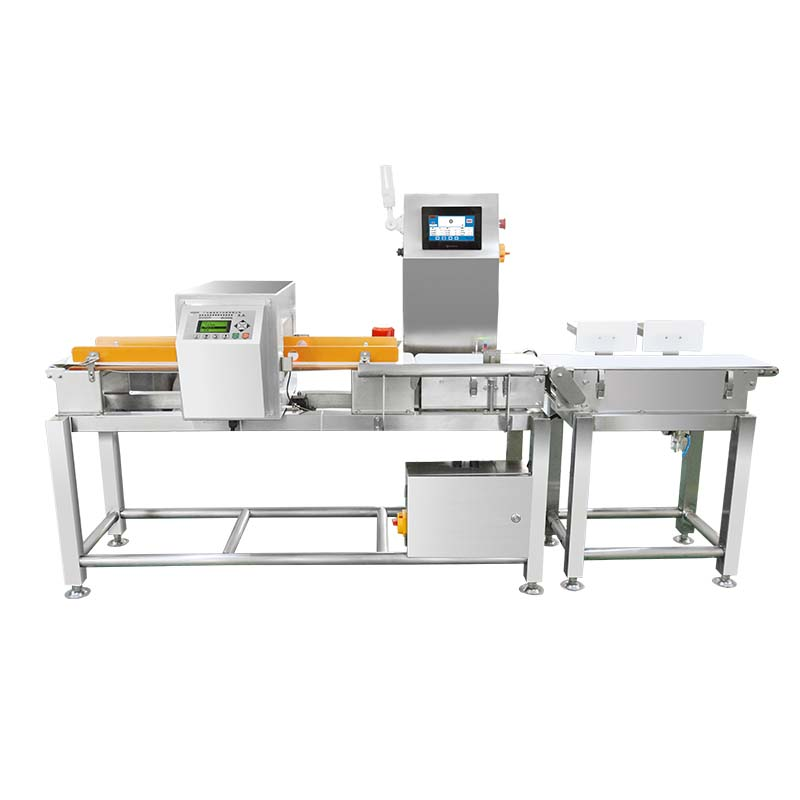
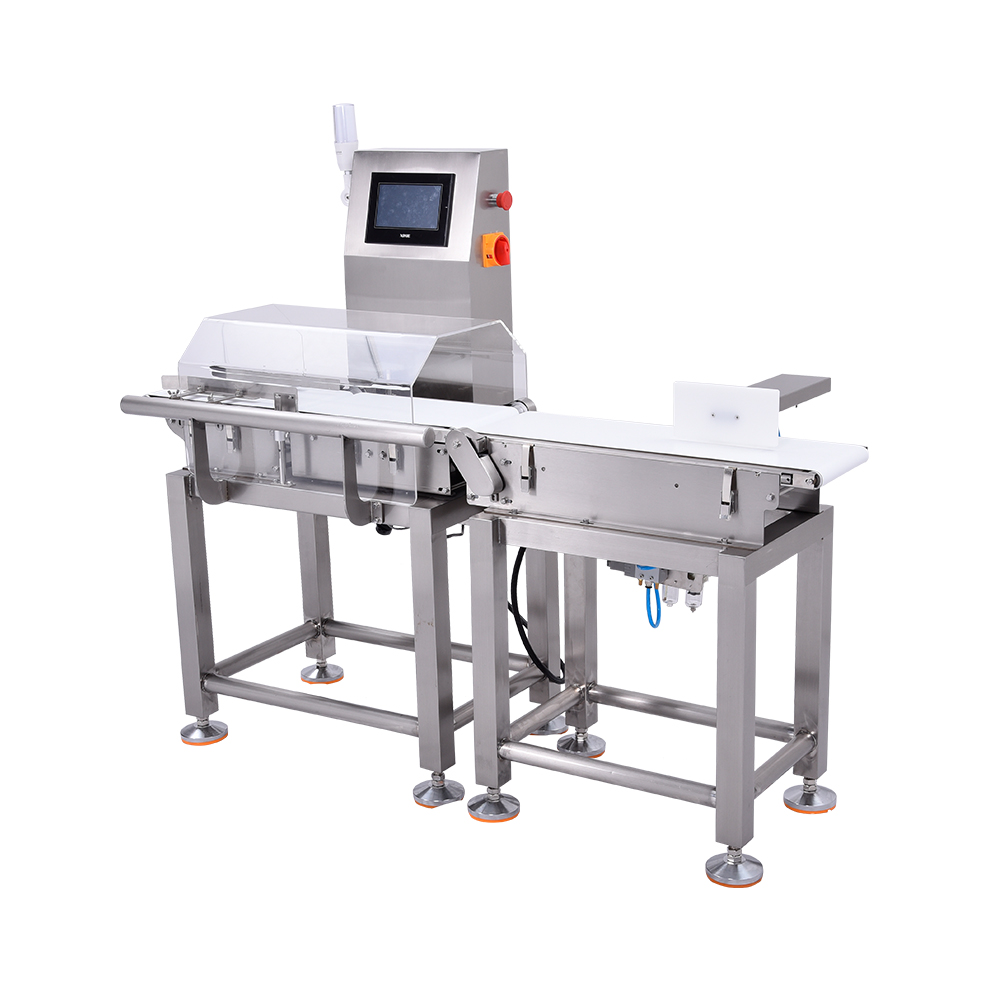
Duae ferreae structurae ex accipitro fabricatae, quae in linea coniunguntur, tres sectiones cinguli sustinent: sectionem introductoris quae saccum a tuo sigillatore accipit, brevem sectionem ponderandam ubi cellula eum legit, et sectionem rejectionis in extremo. Divisio cursus magis refert in sacculo quam in casside — sacculus adhuc sedens dum ad cellulam pervenit leviter legit.

Quattuor apparatus reiciendi in hoc frame offeruntur: pulsator transversus cingulum, lamella, insufflatio aerea, aut brachium oscillans. In sacculo graminis sigillato pulsator est solutio communis — totum sacculum recte removet, ubi insufflatio aerea, quae ad sacculum levis convenit, 2 kg non movet. Omnes quattuor sunt pneumatici, et machina suum proprium filtrum et regulatorem habet.


| Characteristica | Dētaillia Technica / Praestātiō |
| Modellum | CQ-YWXP300 |
| Rangus ponderandi | ≤ 3000 g per articulum |
| Minima scala | 0.1 g* |
| Praecisio in pondere | ± 0,5 g usque ad ± 1 g In superpositione quae sectionem ponderationis transversat celeritate constante |
| Velocitas lorum | 15–90 m/min, regulabilis |
| Perfusio | Usque ad 80 pecia/min |
| Convector ponderans | 450 mm (L) × 300 mm (W) |
| Maxima Magnitudo Producti | ≤ 300 mm (L) × 290 mm (W) |
| Modus Reiectionis | Impulsor · lamella · flatus aeris · bracchium oscillans Ad lineam et ad pachetum aptatum |
| Programmata productorum servata | 100, cum automatica memoria discendi |
| Cellula oneris et regula | Cellula oneris ZEMIC L6D16 Controller celeris A/D campionis |
| Materia corporis | Acer inoxidabilis SUS 304 |
| Materialis cinguli transportantis | Cibus gradus PU |
| Control and data | schermum coloratum tactilis septem-pollicare USB · RS232 · RS485 |
| Fons Potentiae | AC 220 V ± 10 %, 50 Hz, 400 W |
| Suppētītiō Aeris Externae | 0,6–1 MPa For the pneumatic rejection device |
| Dimensiones (L × L × A) | 1806 × 855 × 1180 mm |
| Ambitus operativus | 0–40 °C, 30–95 % RH |
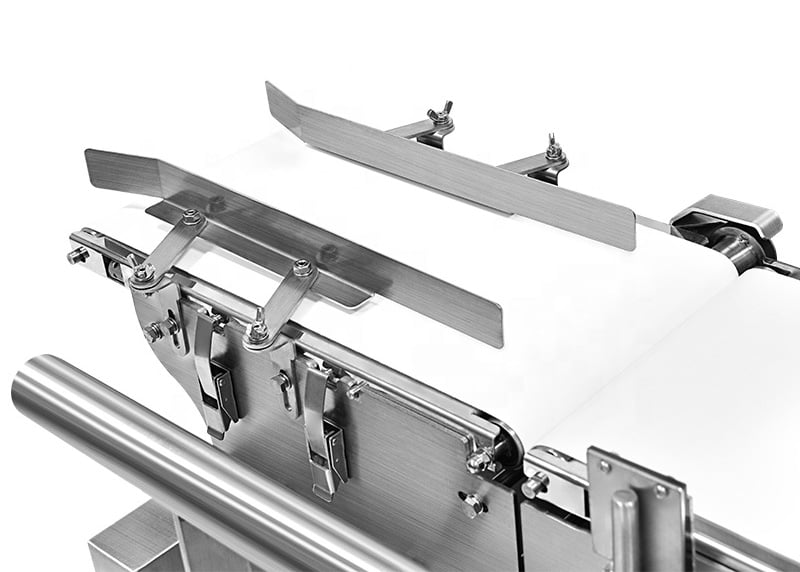
The side plates along the belt are slotted and lock with hand screws, so the channel can be set to the bag you are running without tools. That matters on a bagged line: a bag that wanders sideways crosses the cell at an angle, and an angled bag reads wrong. The electricals sit in a lockable stainless cabinet on the rear of the weighing frame, and the air filter and regulator hang within reach.

The 3 kg range on a 450 × 300 mm belt is for packs up to 300 × 290 mm, at up to about 80 bags a minute: rice, pulses, sugar, seeds, dried fruit, frozen pieces, small hardware in bags. It suits a bagging line where the failure that matters is a bag a few grams light — enough to fail a net-content check, not enough to show on a coarse scale.
It is not the frame for sachets and stick packs, nor for cartons and sacks in the tens of kilograms. Send the bag sizes and weights you run and we will say whether one frame covers them.
Every unit is assembled, wired and run on our own floor before it is packed — the clip above was shot there, with the rest of the build behind it. It splits into its two frames for shipping and travels in export crates on pallets, by sea, air or international express. Whole machine one year, with parts replaced free inside it.
That is the case it is built for. The weighing section is short and separate from the infeed, so the bag crosses it after the worst of the settling.
Bags and packs up to 300 mm long, 290 mm wide and 3000 g each, crossing at a steady speed.
A pusher takes it off across the belt, or a flap, an air blow or a swing arm can be fitted instead. All four are pneumatic and the machine carries its own regulator.
100 stored programmes, each with its own target and tolerance, recalled from the touch screen or learned from a run of good bags.
AC 220 V, 50 Hz, 400 W; aer compressus pro reiciendi instrumento; et planus solum ubi stat.
Bag size, weight per piece and line speed is enough for us to come back on fit, accuracy and how a short bag should leave your line.

 INTERRETIALIS