EN


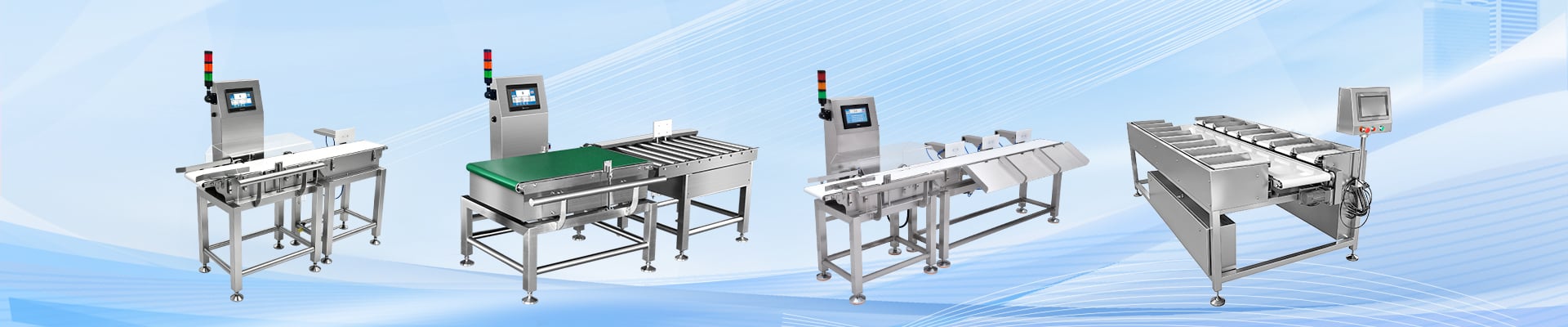
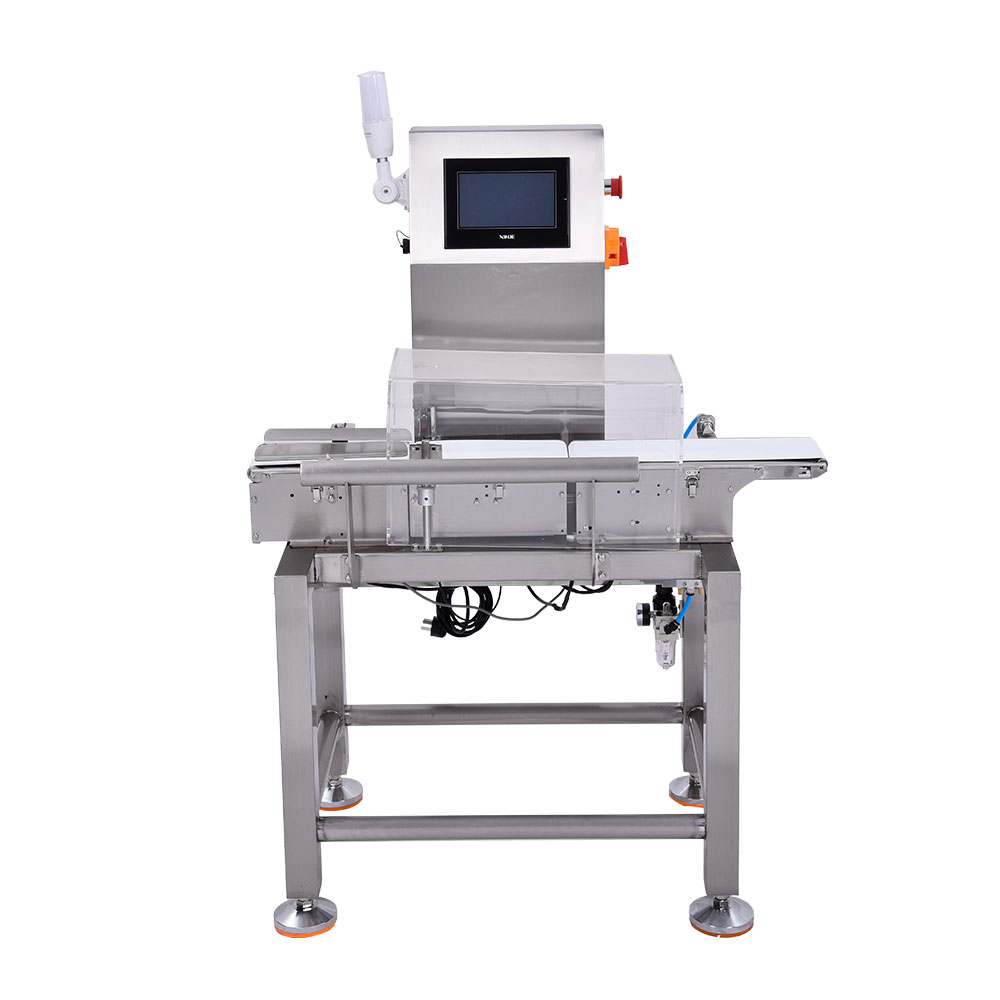
Belt 250 × 120 mm pro pachetis usque ad 200 g, pensata ad ± 0.05–0.1 g.
| Sacheta et pacheta baculiformia | Unum pachetum simul, usque ad 100 pacheta per minutum. |
| Sacci de thea, tabellae et parvae partes | Usque ad 100 × 100 mm singula, ad 10–60 m/min. |
| Tenens lectionem subtilem | Parabrisa impedit ventos ab sectione ponderandi, et axis conicus prohibet cingulum a deviando lateribus. |
Mitte nobis unum pachetum et eius pondus. Dicemus tibi si hoc telum potest illud ponderare.
A 0.01 g scale and a 200 g ceiling put this build in the micro range: sachets, stick packs, tea bags, tablets and small hardware, weighed one at a time on a 250 × 120 mm belt at 10 to 60 m per minute. Product larger than 100 × 100 mm belongs on a wider frame in the XP range. The job is deliberately narrow — weigh the pack against the target held for it, and hand the verdict to the reject device your line carries.
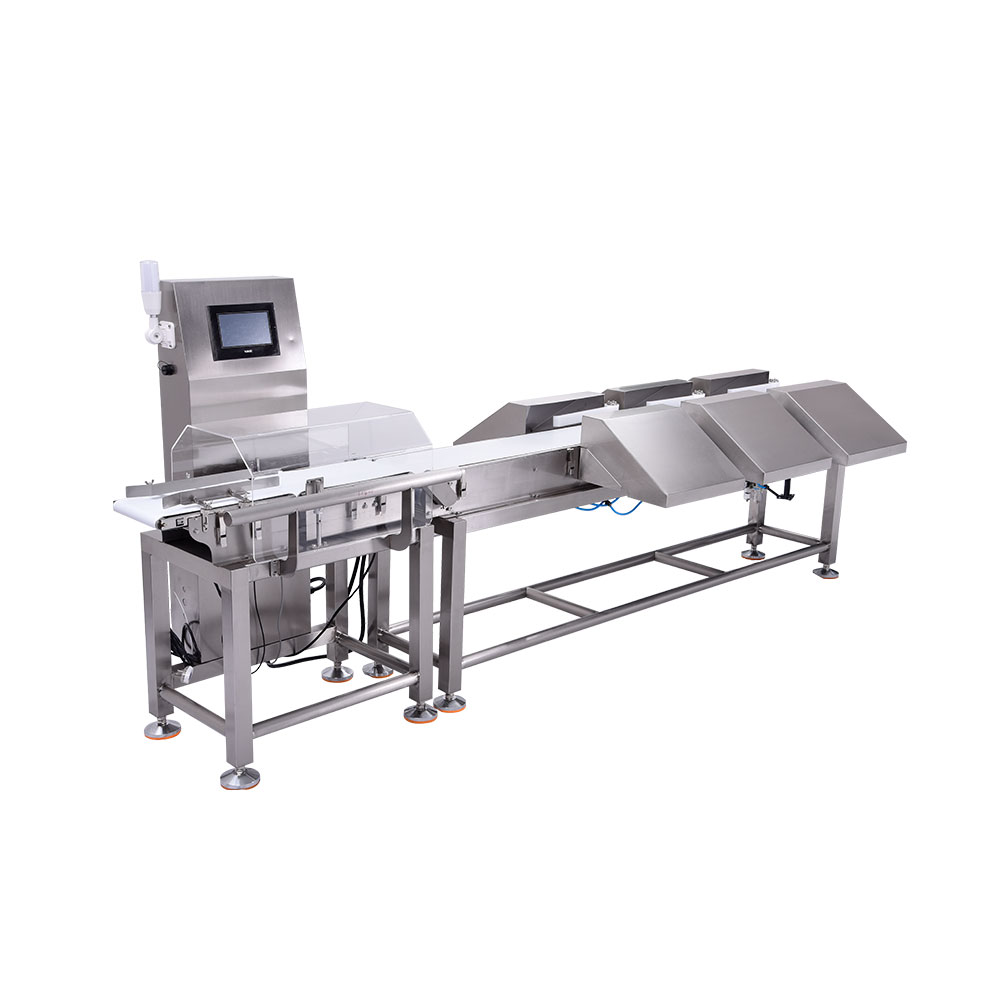
A failed sachet does not have to stop the line. The weigher reports the verdict and a removal device takes that pack off the belt while the packs behind it keep moving. Four methods are offered on this frame: a pusher travelling across the belt, a flap, an air blow, or a swing arm — chosen with you against the pack, the belt speed and the space you have.
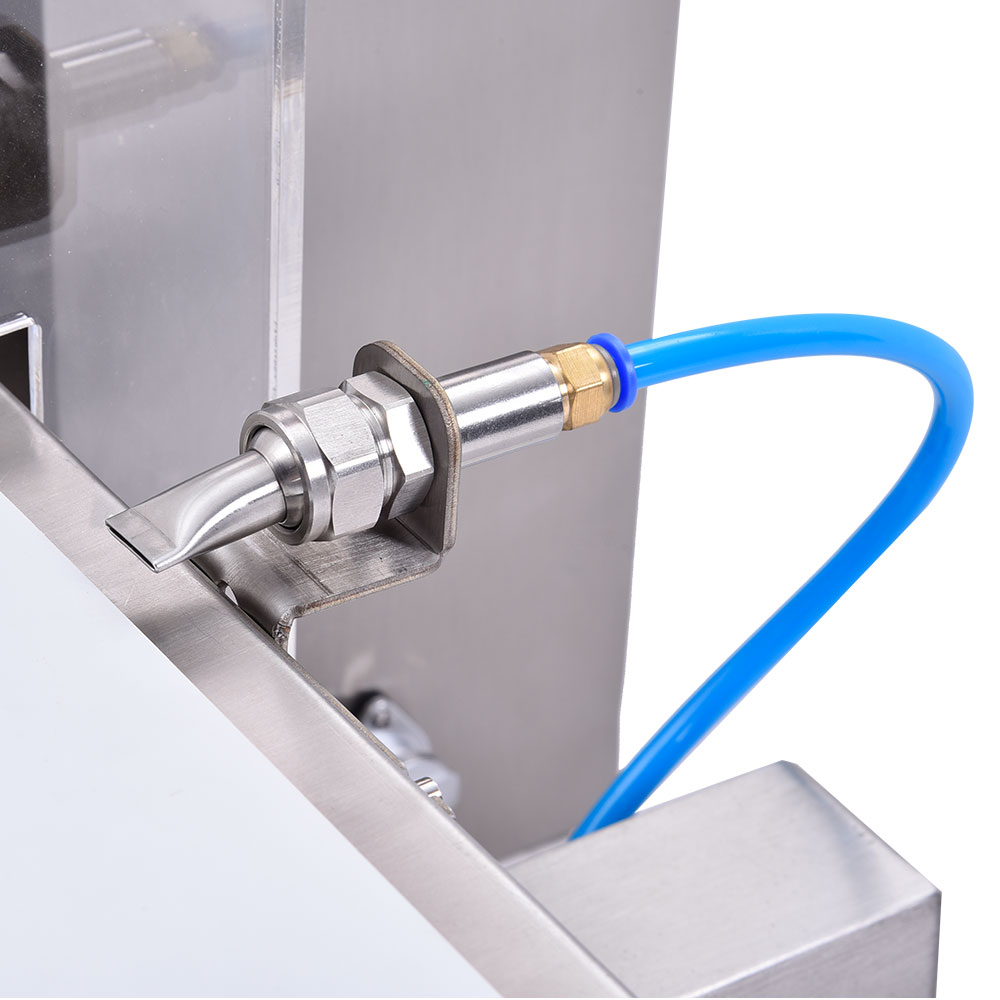
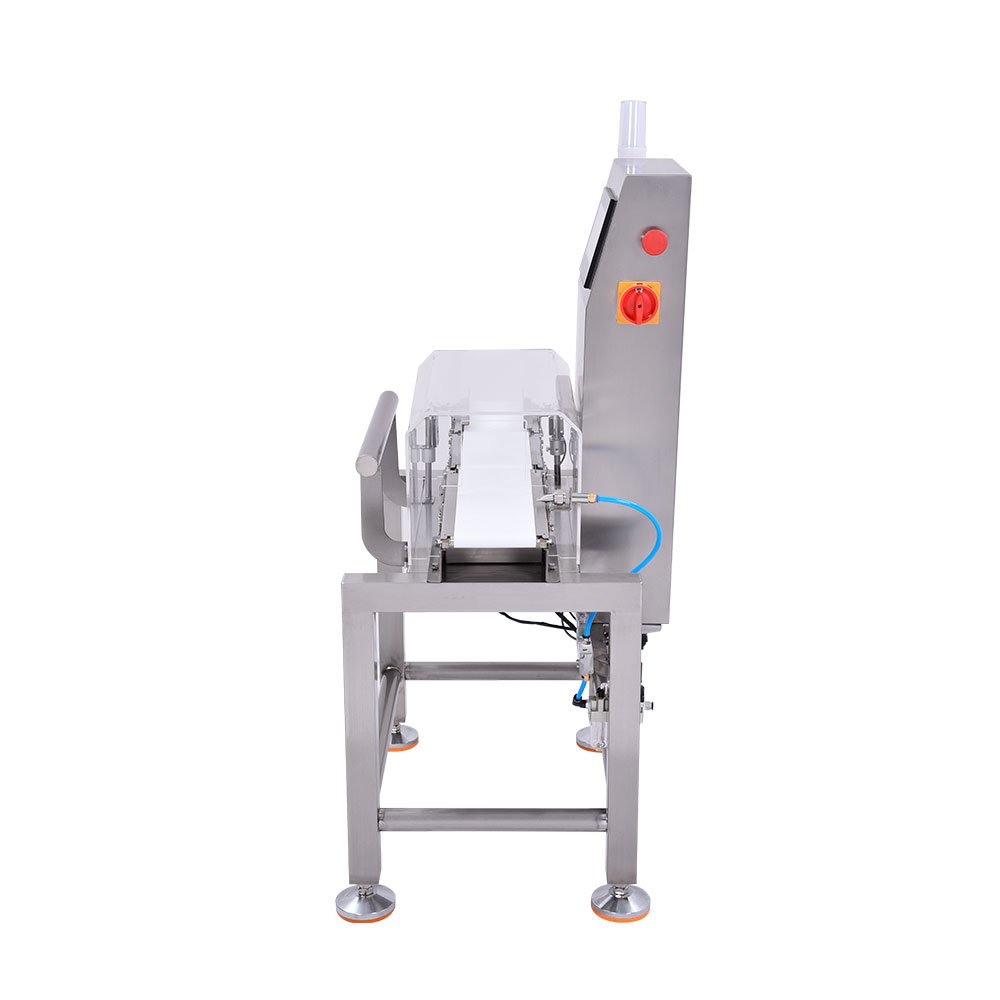
The unit in the clip carries the air blow: a flat nozzle at the belt edge strikes the failed sachet off and into the tray below. The nozzle, its bracket and the air line all sit outside the weighing section.
| Characteristica | Dētaillia Technica / Praestātiō |
| Modellum | CQ-YWXP1010 |
| Rangus ponderandi | ≤ 200 g per item |
| Minima scala | 0.01 g |
| Praecisio in pondere | ± 0.05 g to ± 0.1 g In superpositione quae sectionem ponderationis transversat celeritate constante |
| Velocitas lorum | 10–60 m/min, regulabilis |
| Perfusio | Up to 100 pcs/min |
| Convector ponderans | 250 mm (long.) × 120 mm (lat.) |
| Maxima Magnitudo Producti | ≤ 100 mm (L) × 100 mm (L) |
| Modus Reiectionis | Impulsor · valvula · insufflatio aeris · brachium oscillans, ad lineam accommodatum. |
| Programmata productorum servata | 100, cum automatica memoria discendi |
| Cellula Oneris | ZEMIC L6D16 |
| Systema moderationis | Controller celeris A/D campionis |
| Corpus et inclosure. | Accipiter inox SUS 304, IP54 |
| Materialis cinguli transportantis | Cibus gradus PU |
| Fons Potentiae | AC 220 V ± 10 %, 50 Hz, 90 W |
| Dimensiones (L × L × A) | 900 × 500 × 1250 mm |
| Interfacies | USB · RS232 · RS485 |
| Ambitus operativus | 0–40 °C, 30–95 % RH schermum coloratum tactilis septem-pollicare |
Cingulum, ad quod machina tenetur, pendet non solum a cellula oneris, sed etiam a pacco: paccus stabilis, qui transiret cingulum velocitate constante, ad praecisionem infra indicatam legitur; paccus levis, qui super cingulum velox saltat, aliud opus est.
Tria res hanc subtilissimam lectionem protegunt. Paries vitreus transparens super sectionem ponderandi stat, ne aurae eam onerent. Sensor infrarubrus paccum observat dum transit. Axis conicus cingulum ad medium revocat dum vertitur, ne ad unam partem deviet. Tracking zero continuo agitur, cum manu aut automatico nullo ponendo, et usque ad 100 programmatum conservatorum singulorum productorum parametra servat.
In micro-ponderatore, aptationes eventum decernunt: paries vitreus super cellulam oneris, sensor qui transitum notat, et reditus qui cingulum verum tenet.
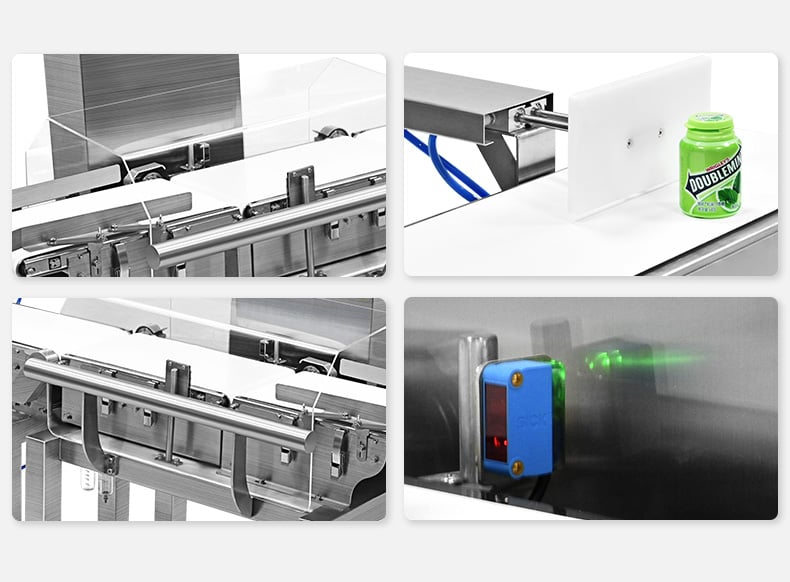
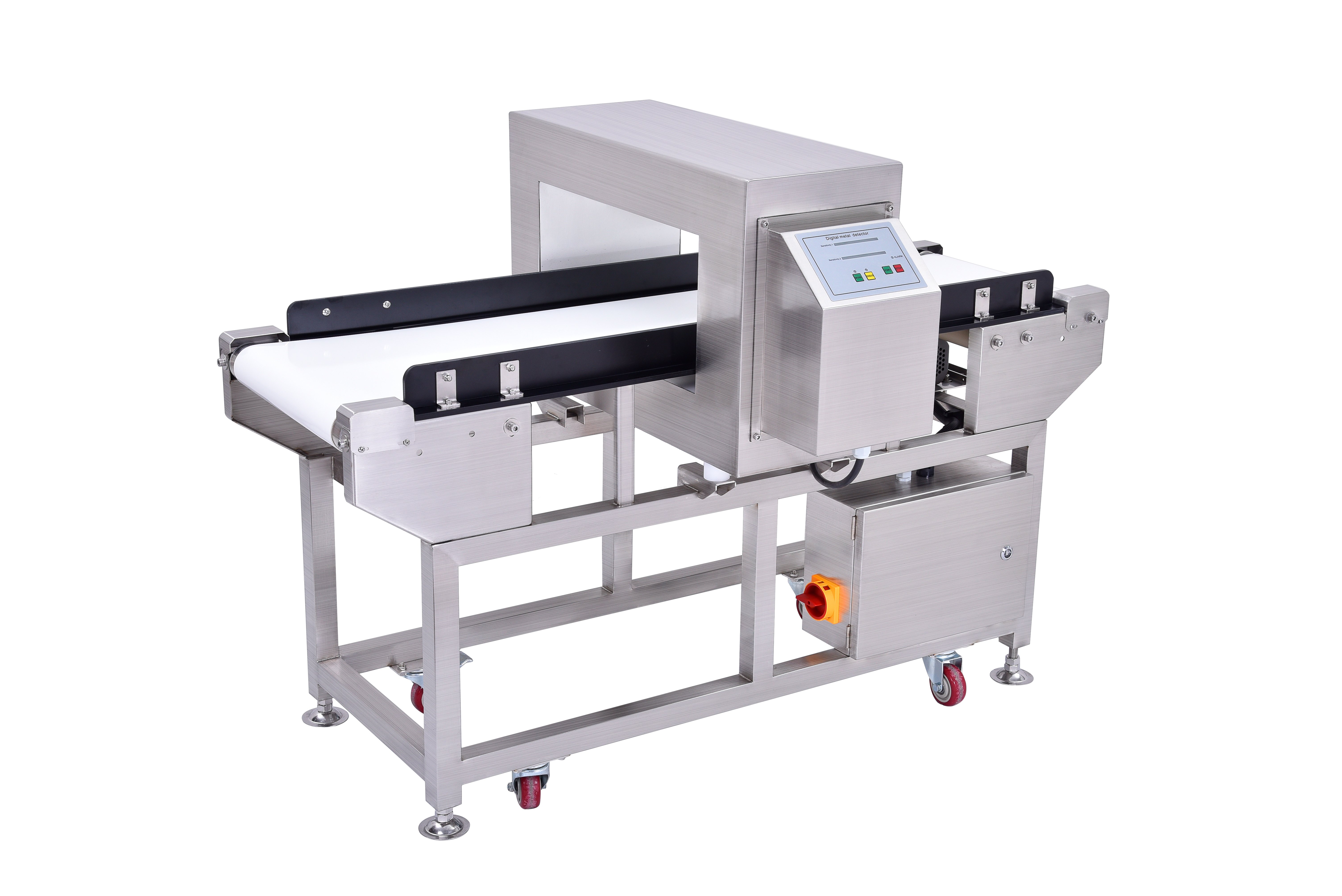
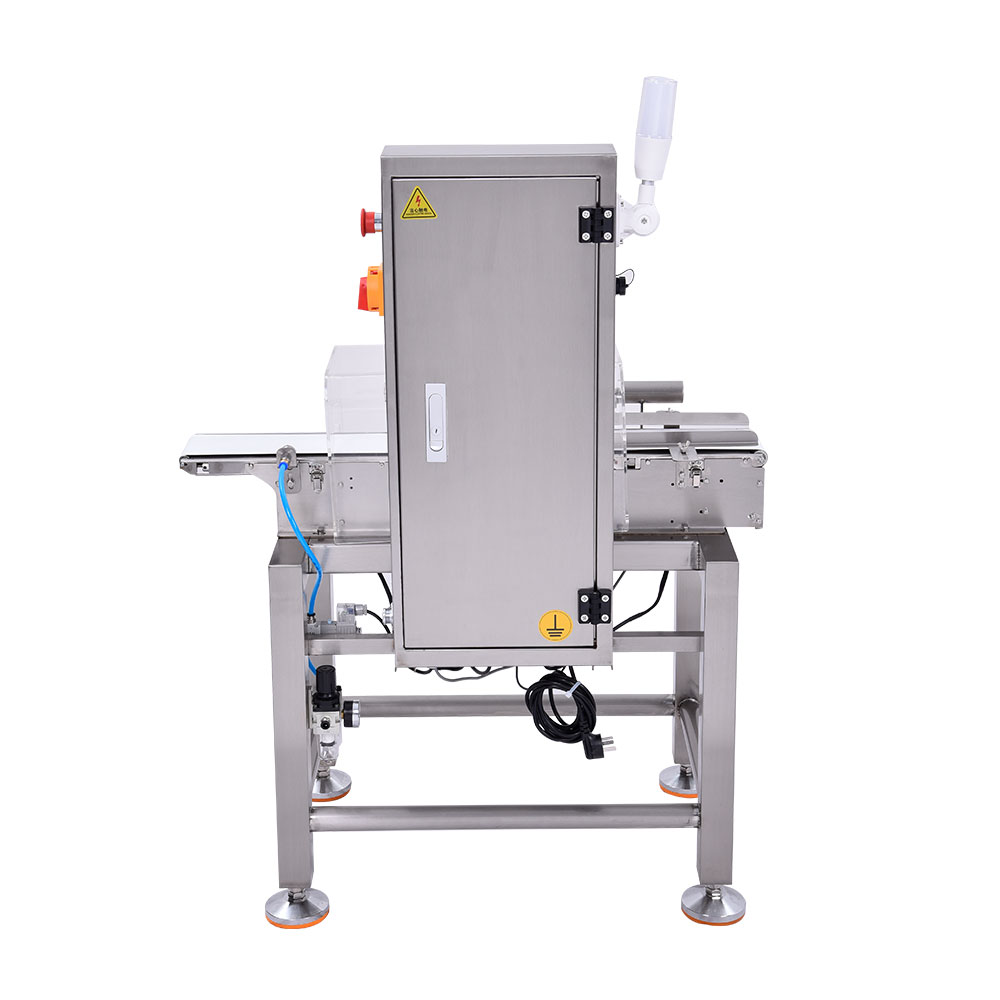
Cornu totum ex accipitro inox est, cingulum inter railes eius currit, et machina super pedibus regulabilibus stat. Porta armarii a cardinibus aperitur ad servitium.
Cornu cingulum in tribus sectionibus portat. Brevis introductio pachetum stabilizat; sectio ponderationis est ubi cellula ponderis eum legit; sectio rejectionis est ubi sententia executur.
Cellula ponderis continue exempla capit, itaque pondus est curva per totam transitum capta, non unum momentaneum. Software pars stabilem eius capit, eam cum obiectivo et tolerantia pro producto habita comparat, et bonum aut NG iudicat. Ex eo decisio mechanica est: dispositio reiciens ignitur, aut alarma nuntiat et pachetum manu tollitur.
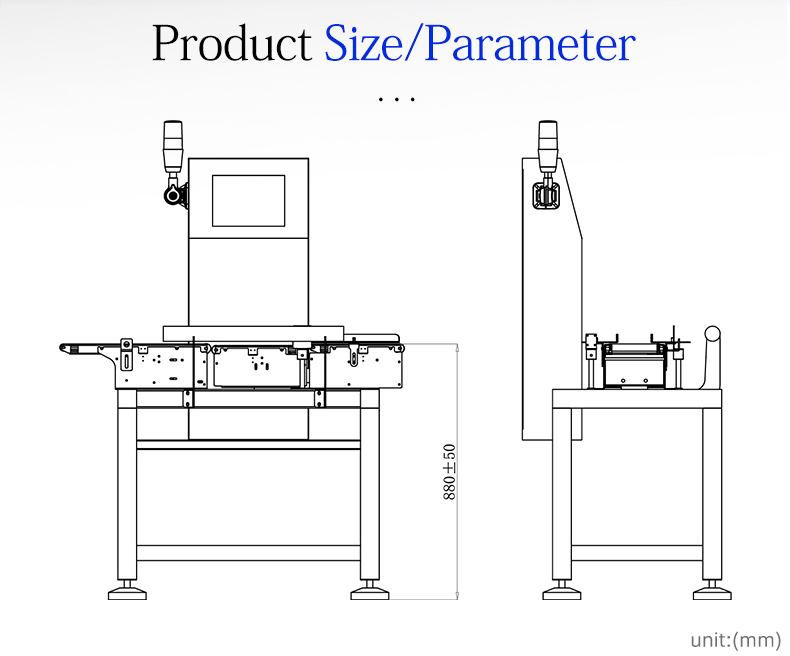
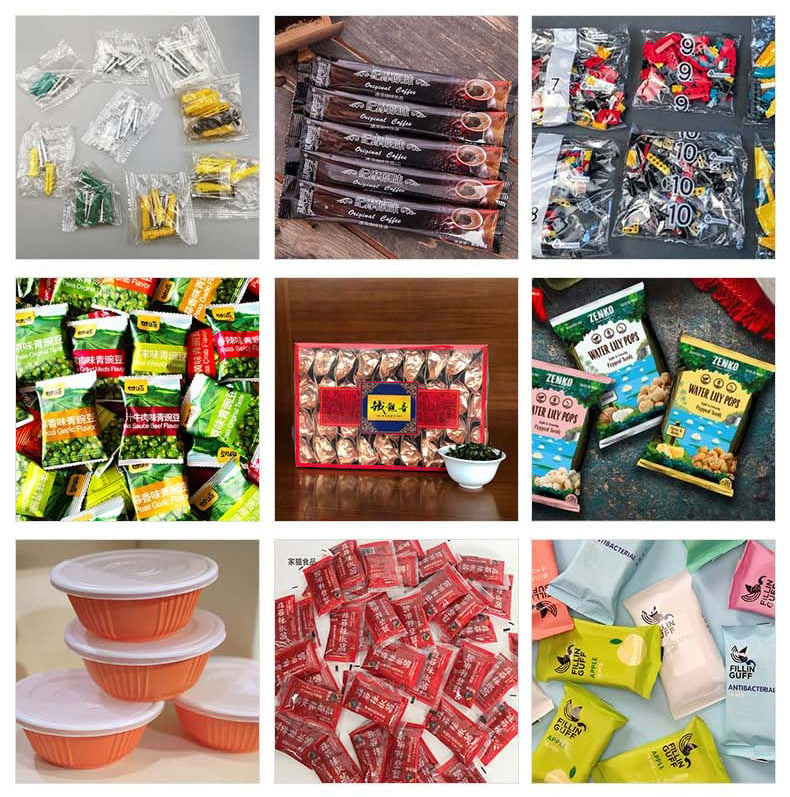
The 250 mm belt is for small packs, one at a time: sachets and stick packs, tea bags, tablets and blister packs, small bottles and light hardware, up to 100 × 100 mm and 200 g a piece.
A stainless frame and a food grade PU belt suit food and beverage, pharmaceutical and healthcare packing, daily chemical and electronics — only the stored programme changes. It is not the frame for cartons or heavy casūs , which need a wider belt and a heavier load cell.
Every unit is assembled and run on our own floor before it is packed.
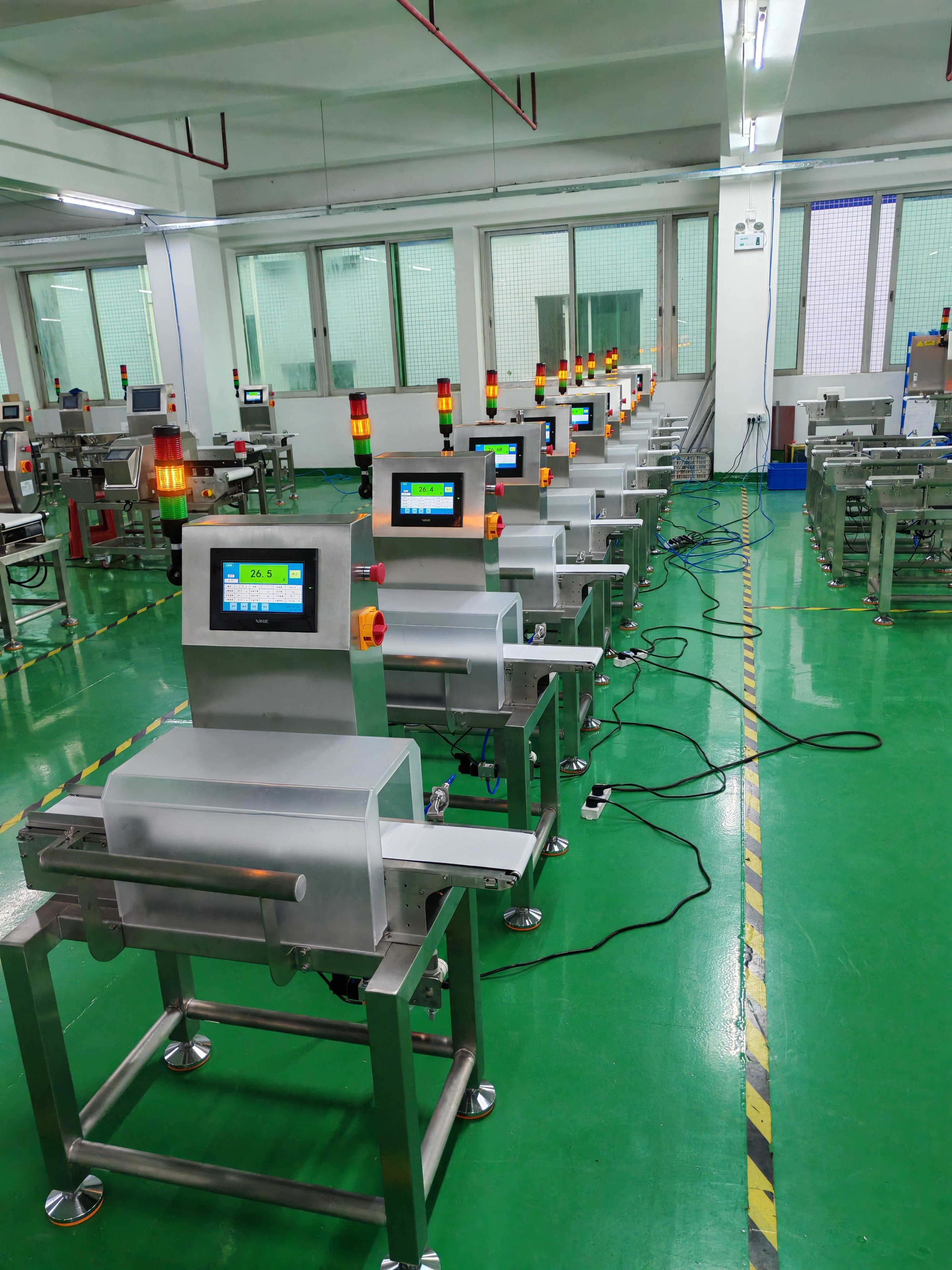
Sachets, stick packs, tea bags, tablets, and small parts up to 100 mm long, 100 mm wide, and 200 g each. Larger or heavier products require a wider belt and a heavier load cell.
± 0.05 g to ± 0.1 g for a pack crossing the weighing section at steady speed, with a minimum scale of 0.01 g. Tell us what you are weighing, and we will specify the maximum load this frame can handle.
A pusher, a flap, an air blow, or a swing arm—whichever suits your pack and available space. The air-blow unit is mounted in the clip.
100 stored programmes with automatic learning storage, recalled via the 7-inch colour touch screen.
AC 220 V, 50 Hz, 90 W; plus compressed air if a pneumatic reject device is installed. Data output via USB, RS232, or RS485.
One-year warranty for the whole machine, including free replacement of parts. Shipping options: sea, air, or international express. Payment accepted via Alibaba Trade Assurance.
Mitte dimensiones producti, pondus per singulum et velocitatem cinguli. Nos respondebimus de aptatione, de accuratia quam tenere potes, et de instrumento reiciendi.

 INTERRETIALIS