EN


Home > > Check Weigher
Precision Weighing
High-Speed Roller Conveyor
Robust & User-Friendly
Energy Efficient & Sustainable
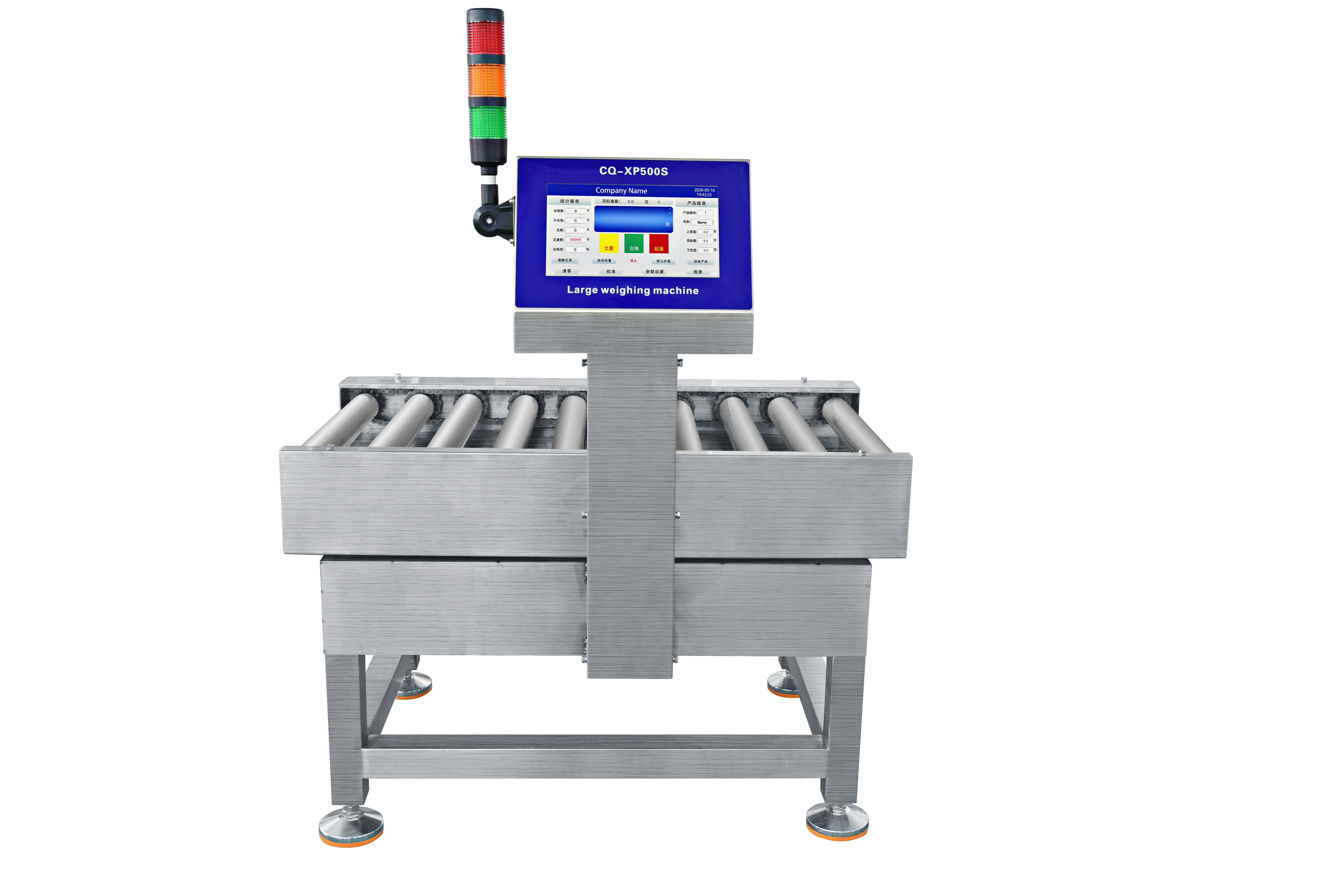
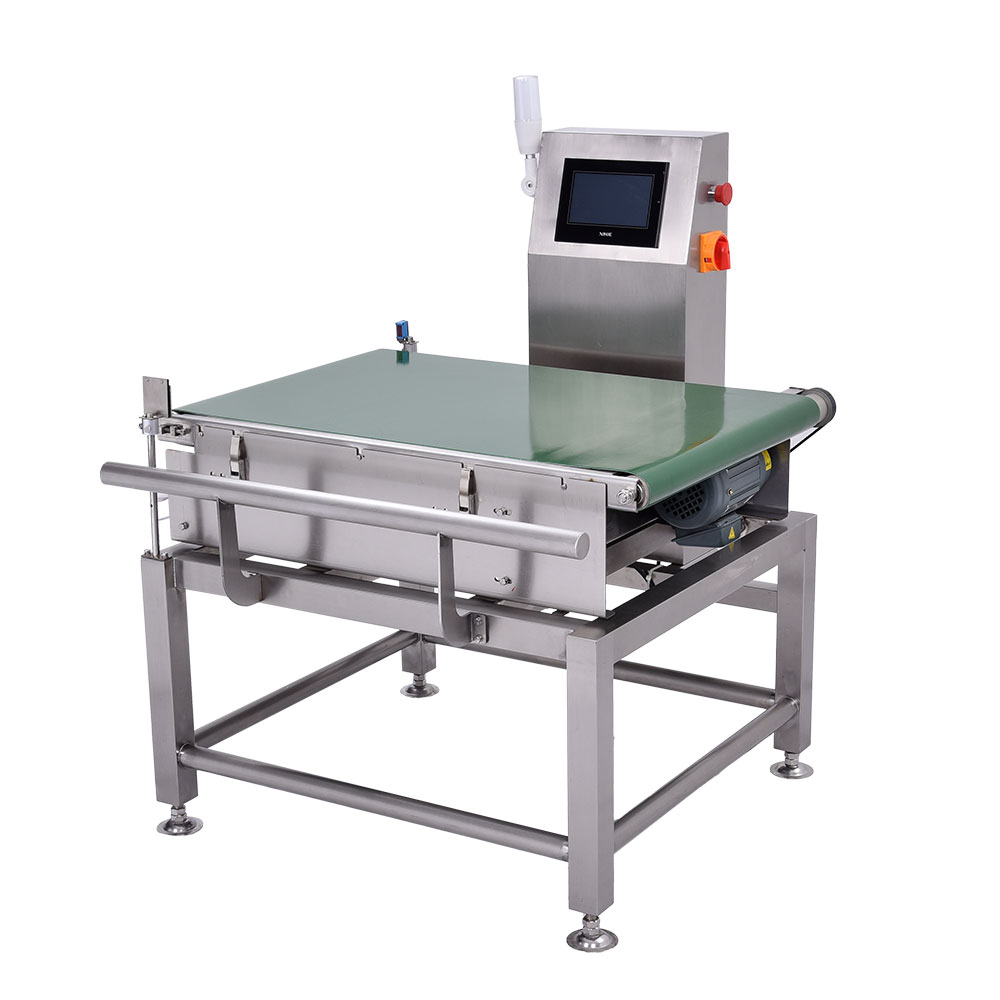
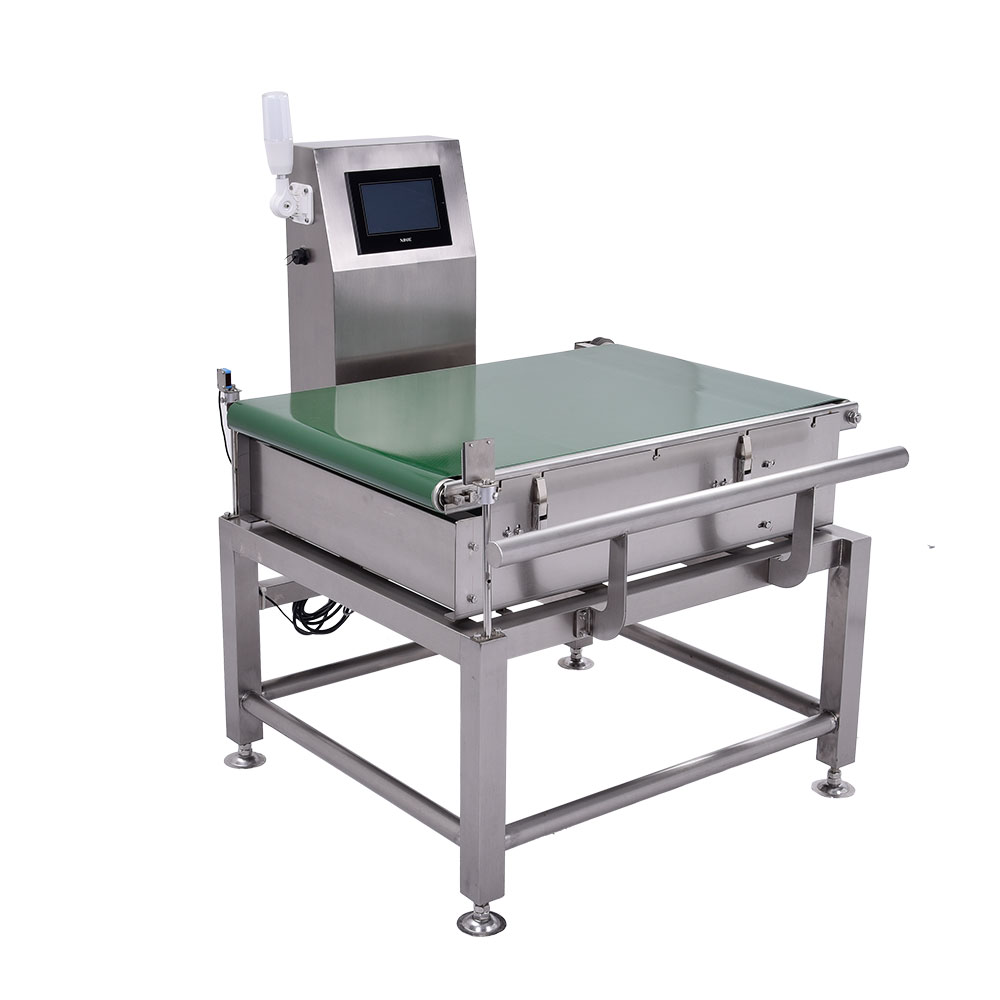
A 60 kg range with a 1 g minimum scale puts this frame at the heavy end of the line-up, while the 900 × 600 mm belt and a 10 to 30 m/min belt speed keep it at production pace. It is built for cartons, sacks and boxed goods that arrive from a sealer and leave on a roller takeaway. The job is narrow: weigh each pack against the target held for it, report the verdict, and stop the belt on a pack that is out.
This build does not throw a pack off the belt. On a carton that can weigh 60 kg a pusher is the wrong tool, so the weigher reports the verdict on the signal tower lamp and stops the belt: the pack that failed is taken off by hand while the run is held.
In the clip the lamp on the column goes red as a carton is weighed short and the frame marks it NG. Nothing is thrown sideways and nothing has to be caught downstream. If your line needs automatic removal, say so when you send the details.
| Feature | Technical Details / Performance |
| Model | CQ-YWXP600 |
| Weighing range | ≤ 60 kg per item |
| Minimum scale | 1 g |
| Weighing accuracy | ± 5 g to ± 15 g On a pack crossing the weighing section at a steady speed |
| Belt speed | 10–30 m/min, adjustable |
| Throughput | Up to 30 pcs/min |
| Weighing conveyor belt | 900 mm (L) × 600 mm (W) |
| Maximum product size | ≤ 650 mm (L) × 590 mm (W) |
| Reject system | Light alarm and belt stop The failed pack is taken off by hand |
| Stored product programmes | 100, with automatic learning storage |
| Load cell | ZEMIC L6D16 |
| Control system | High-speed A/D sampling controller |
| Body material | SUS 304 stainless steel |
| Conveyor belt material | Food grade PVC |
| Control and data | 10-inch colour touch screen USB · RS232 · RS485 |
| Power supply | AC 220 V ± 10 %, 50 Hz, 400 W |
| Dimensions (L × W × H) | 900 × 1000 × 1070 mm |
| Working environment | 0–40 °C, 30–95 % RH |
The band depends on the pack, not only on the load cell. A carton that arrives square and crosses the weighing section at a steady speed reads as below; a sack that drops on or comes in at an angle wants a slower belt. The 1 g scale is there so a missing bottle shows up long before the total drifts out of tolerance.
Zero tracking runs continuously, with manual or automatic zero clearing following the drift as the belt turns. Up to 100 stored programmes keep the settings for each pack, recalled from the 10-inch colour touch screen, and the learning function stores a target from a run of good packs.
The weighing belt is 900 mm long and 600 mm wide in food grade PVC, so a carton up to 650 × 590 mm sits wholly on it with room to settle. Speed is adjustable from 10 to 30 m/min, which lets you trade throughput against the settling time a heavy pack needs.
The frame is normally the weighing station of a line rather than a stand-alone machine: the pack comes in from the sealer, crosses the weighing section, and leaves onto a roller takeaway. On a heavy carton line that takeaway is roller rather than belt, because a roller run carries the load.
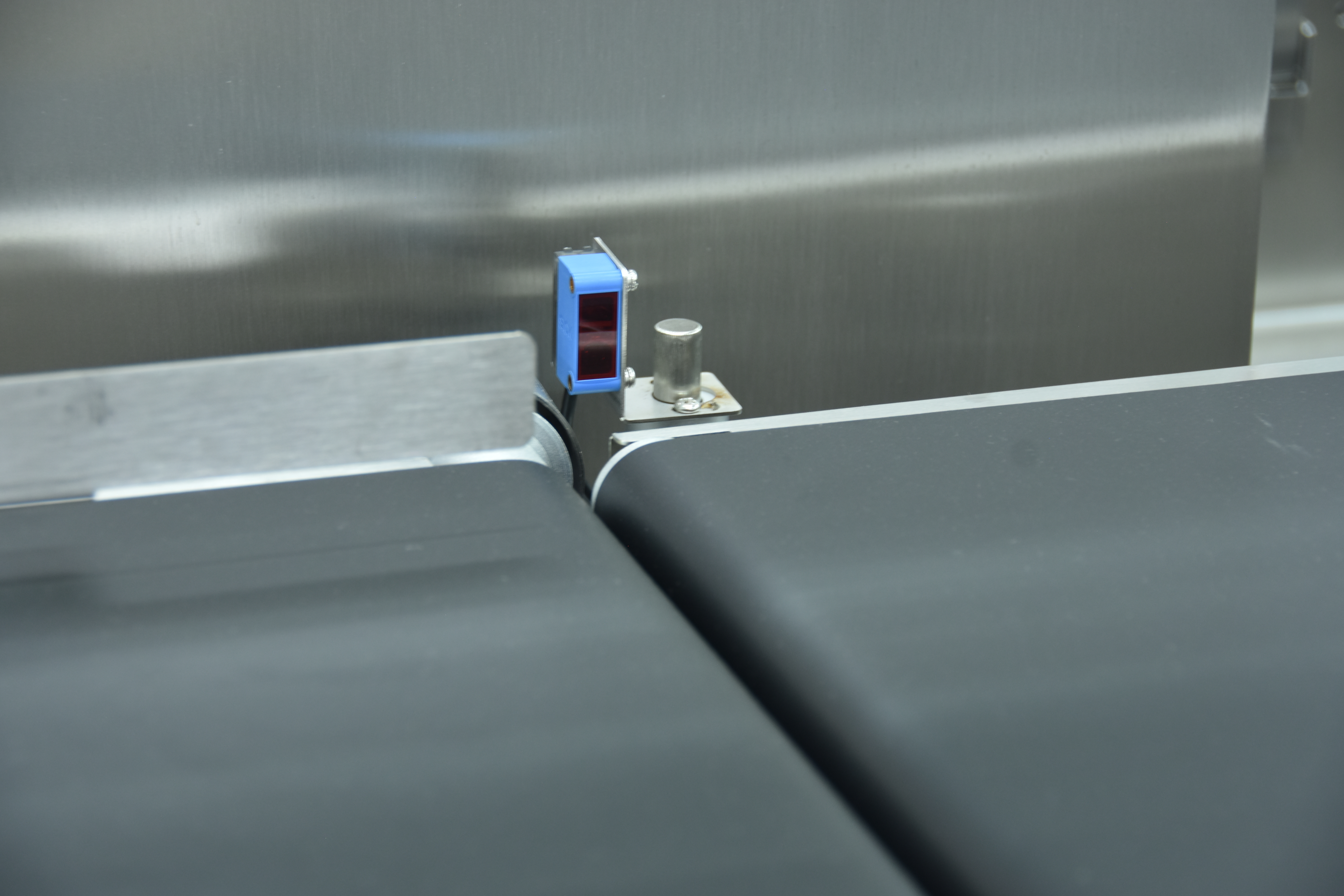
The frame carries the belt in sections: the pack is seen arriving, the weighing section is where the load cell reads it, and the verdict is carried out at the end.
The cell samples continuously, so the controller holds a curve taken across the whole pass rather than one snapshot. The software takes the stable part of it, compares it with the target and tolerance stored for the pack, and decides good or NG. Then the belt stops and the lamp on the column reports, so the failed pack is lifted off before the run continues.
Weight records come out through USB, RS232 or RS485, so the data can go to a printer, a PLC or a line system. If you need a particular format, say so early — it is a configuration choice, not a rebuild.
The 60 kg range with the 900 × 600 mm belt is for cartons, sacks, drums and boxed goods up to 650 × 590 mm and 60 kg a piece, at up to about 30 packs a minute — packing halls where the check is the last guard before the pallet — a missing bottle, a short fill, a box that should never have been closed.
It is not the frame for sachets, small pharmaceutical packs or anything weighed in fractions of a gram — those want a narrower belt and a finer scale. Nor is it intended for pallet loads. If you are between two builds, send the pack size and the weight per piece and we will say which frame the job belongs on.
Every unit is assembled and run on our own floor before it is packed.
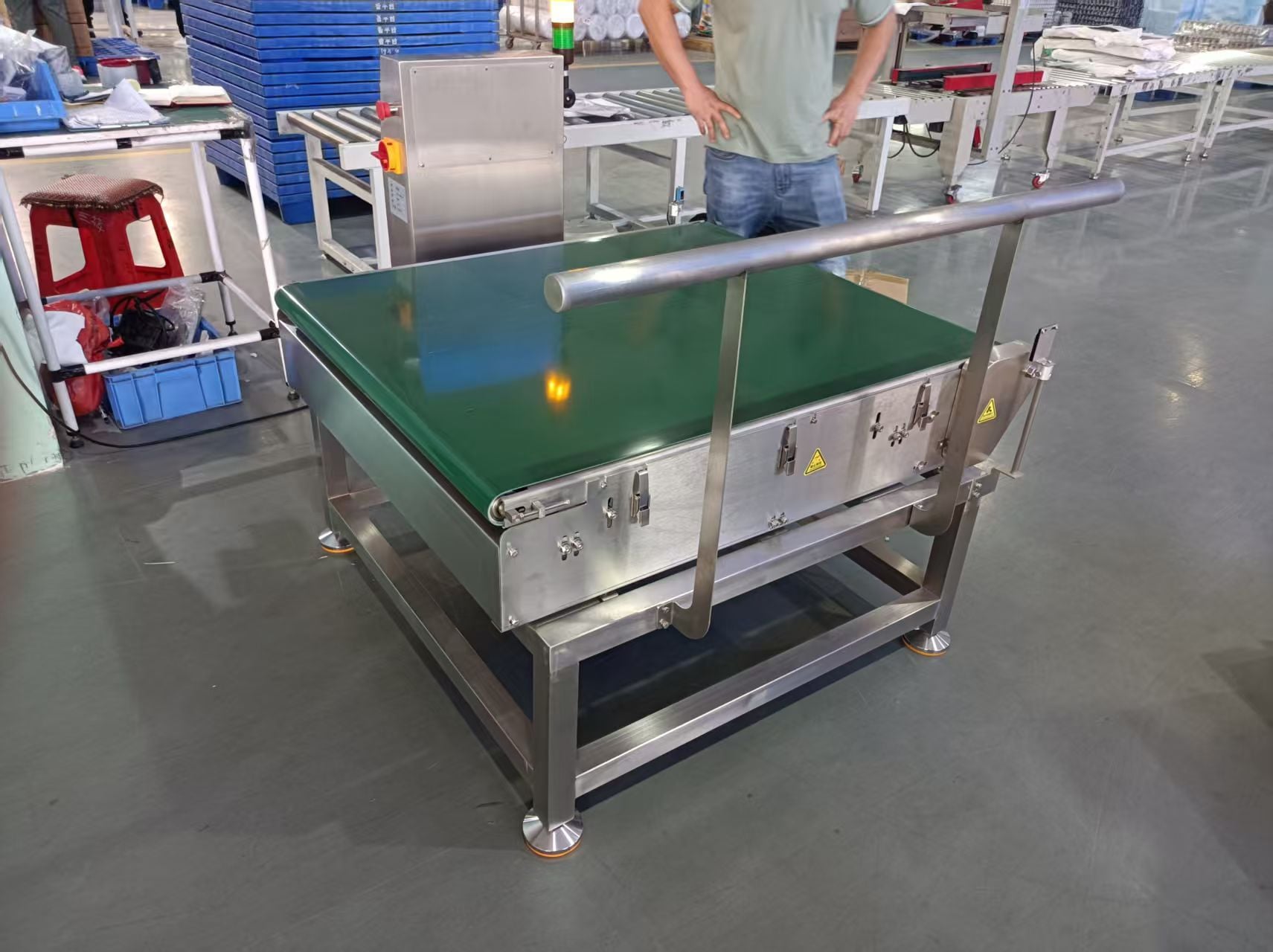
Cartons, sacks, drums and boxed goods up to 650 mm long, 590 mm wide and 60 kg each, crossing at a steady speed.
± 5 g to ± 15 g on a pack crossing the weighing section at a steady speed, with a 1 g minimum scale. Tell us what you are weighing and we will say what this frame can hold.
On this build the signal tower lamp reports the fault and the belt stops, so the pack is taken off by hand — which suits a heavy carton. If you need automatic removal, tell us.
100 stored programmes with automatic learning storage, recalled from the 10-inch colour touch screen.
AC 220 V, 50 Hz, 400 W, and a level floor to sit it on. Data comes out through USB, RS232 or RS485.
Whole machine one year, with parts replaced free inside it. It ships by sea, air or international express, and payment can go through Alibaba Trade Assurance.
Send the pack size, the weight per piece and your belt speed. We will come back on fit, on the accuracy you can hold and on how a failed pack should leave your line.

 ONLINE