 EN
EN



Metal Detector or X-Ray: Where Each One Pays Off
Most buyers arrive with the question already framed: metal detector or X-ray inspection. It is not a cheap machine against a good one, and not two brands measuring the same thing.
A metal detector measures conductivity. X-ray inspection measures density. Each one is blind to what the other sees.
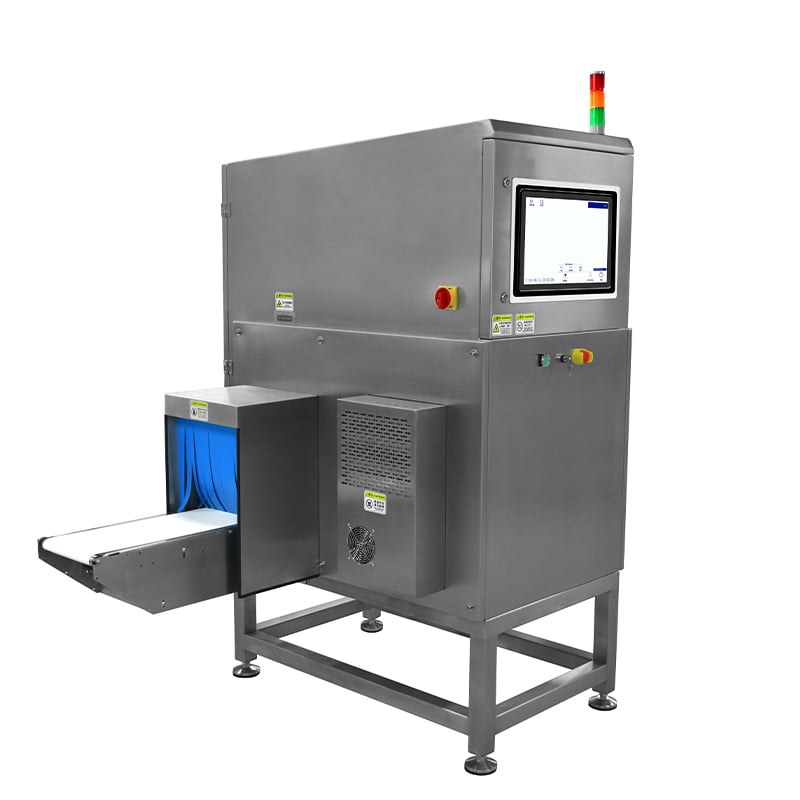
Two different measurements
A metal detector puts an electromagnetic field across the opening and records what a conductive object does to it. X-ray inspection sends a beam through the pack and measures how much reaches the far side. One responds to conductivity and magnetic permeability, the other to density.
- Salt and water. A wet or heavily salted product swamps a metal detector, because the product conducts and the machine has to separate that from the fragment. X-ray inspection is indifferent: it does not care whether the pack is a salted sausage or a dry biscuit.
- Packaging. Foil, metallised film and metal containers block or confuse a metal detector; X-ray inspection goes through them.
- What is being looked for. A metal detector sees metal; X-ray inspection sees density, so it also sees glass, ceramic, stone and bone.
What each machine catches, by the numbers
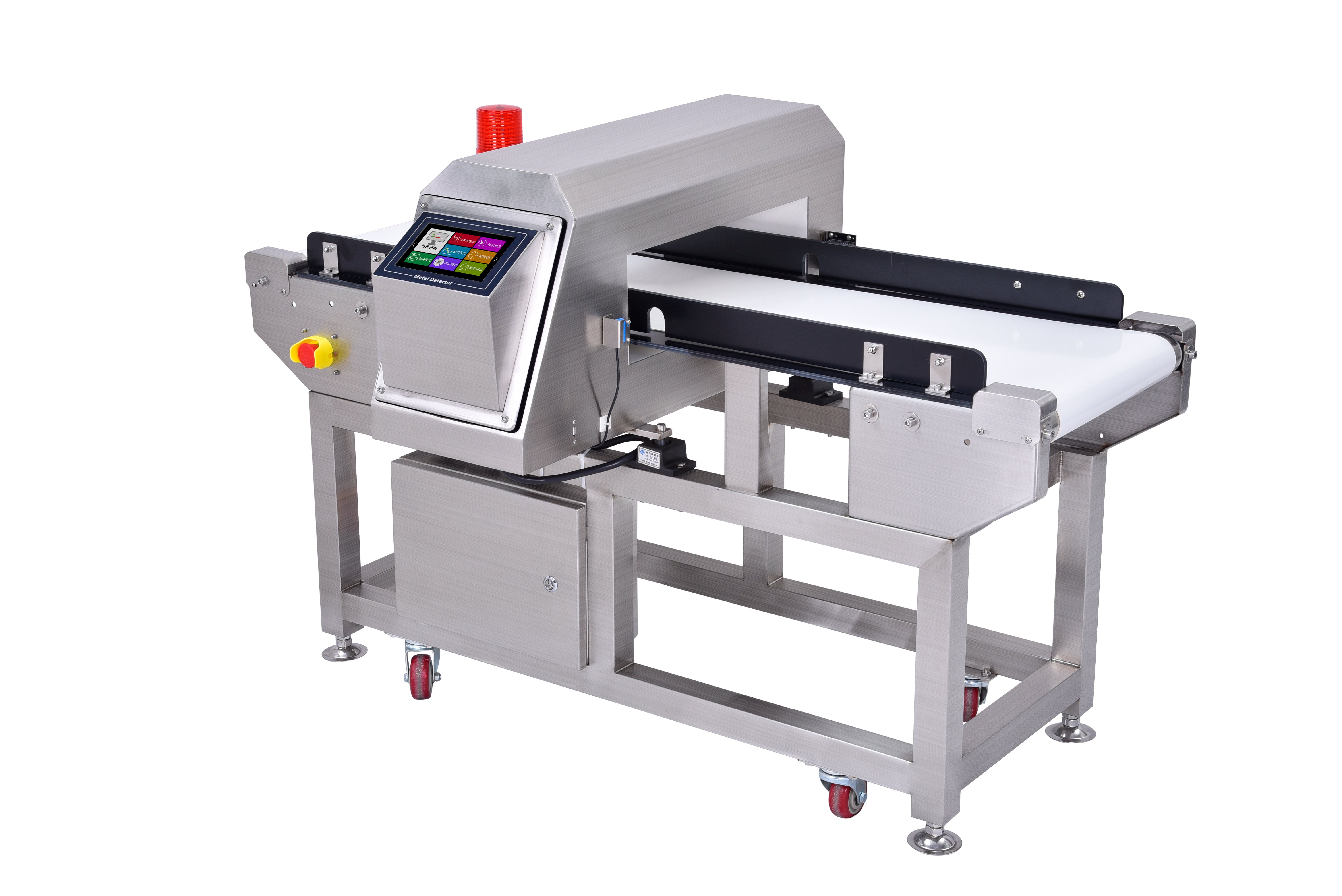
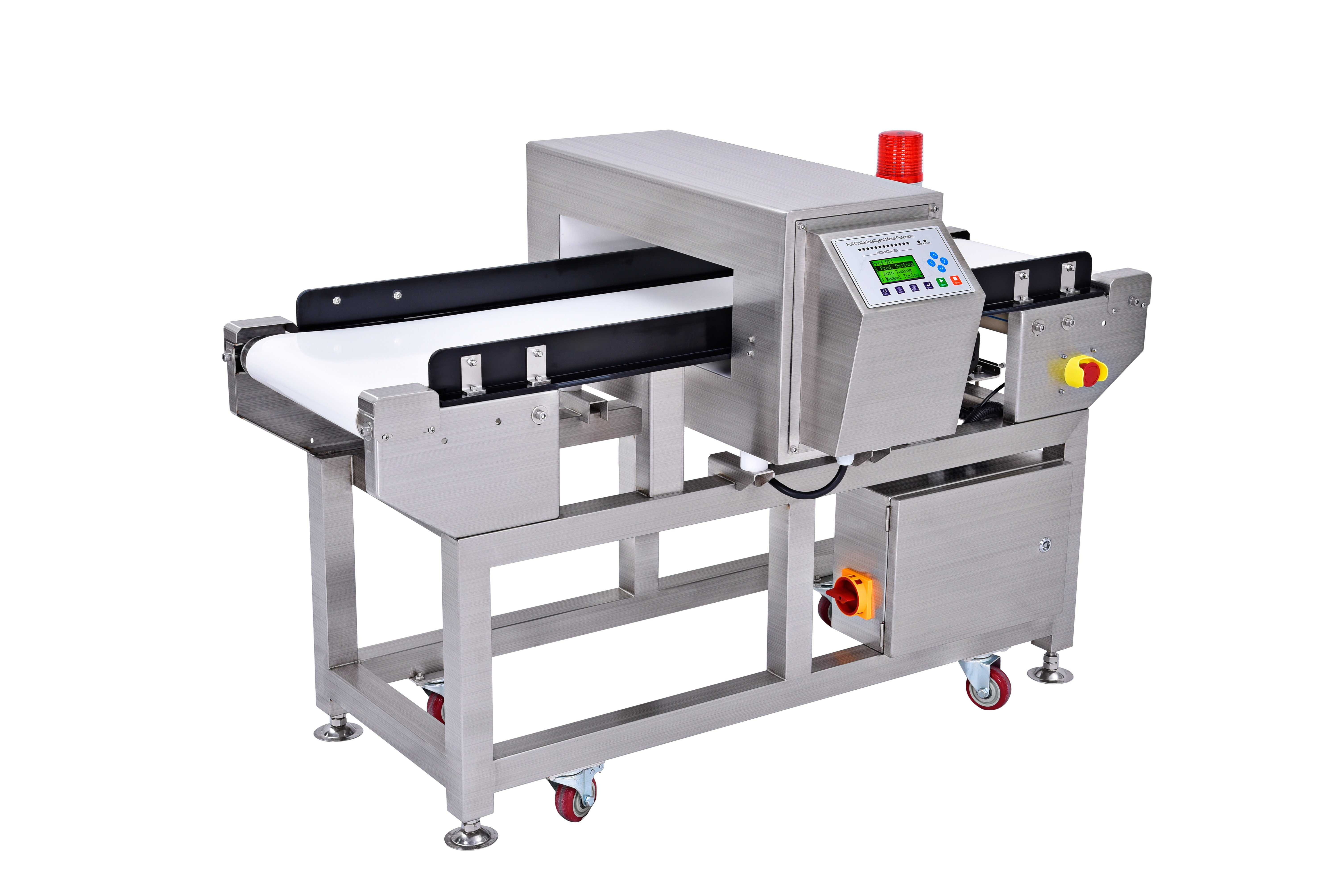
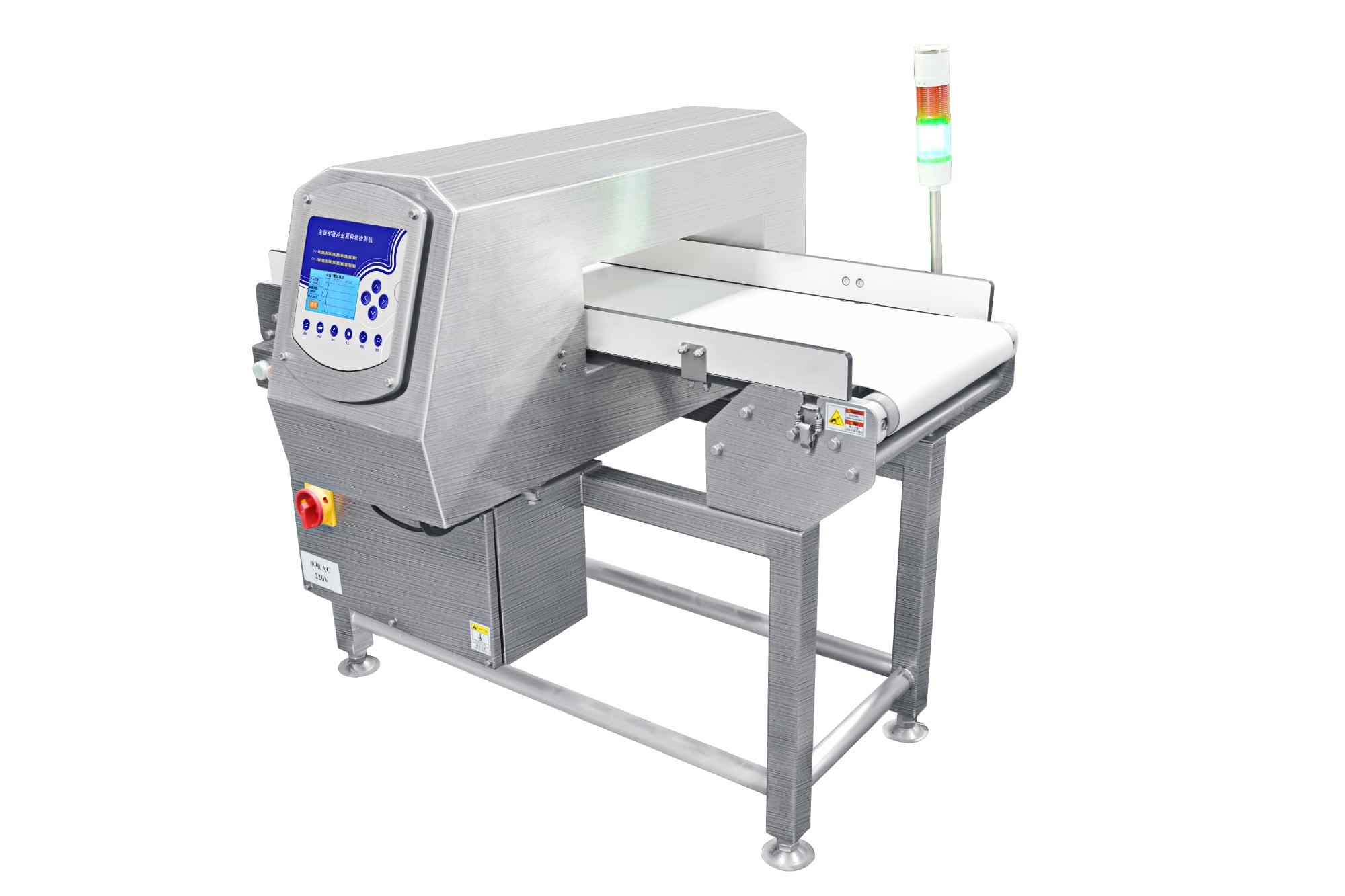
Start with the metal detector, because its sensitivity floor depends on the aperture. The CQ-YW910K has seven aperture sizes:
| Aperture code | 4010 | 4012 | 4015 | 4020 | 4025 | 4030 | 4035 |
|---|---|---|---|---|---|---|---|
| Channel height | 100 mm | 120 mm | 150 mm | 200 mm | 250 mm | 300 mm | 350 mm |
| Fe | 0.8 mm | 1.0 mm | 1.2 mm | 1.5 mm | 2.0 mm | 2.5 mm | 3.0 mm |
| Non-ferrous | 1.2 mm | 1.5 mm | 2.0 mm | 2.5 mm | 3.0 mm | 3.5 mm | 4.0 mm |
| Stainless 304 | 1.5 mm | 2.0 mm | 2.5 mm | 3.0 mm | 3.5 mm | 4.0 mm | 4.5 mm |
At the tightest aperture it catches 0.8 mm of iron; at 350 mm, 3.0 mm. Stainless goes from 1.5 to 4.5 mm.
X-ray inspection does not publish a moving floor. On the four models below, the figures do not move with the tunnel:
| Machine | SUS 304 | Ceramic | Glass |
|---|---|---|---|
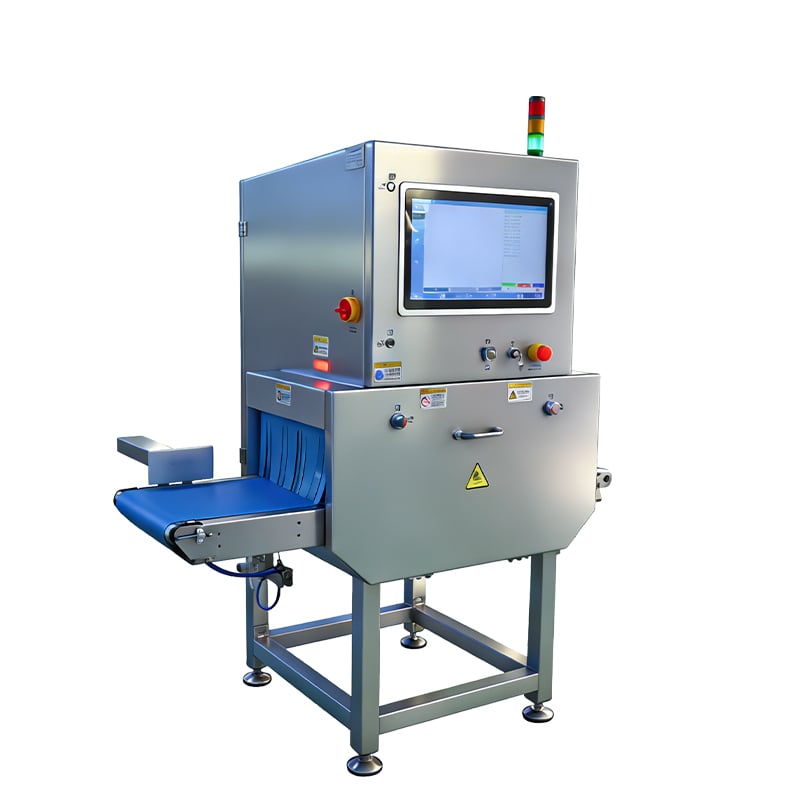
| CQ-YW900, cans and bottles, 250 x 300 mm tunnel | 0.6 mm | 1.0 mm | 2.0 mm |
| CQ-YW700 large tunnel, 400 x 200 mm | 0.6 mm | 1.0 mm | 2.0 mm |
| Industrial 5030, 500 x 300 mm tunnel | 0.6 mm | 1.0 mm | 2.0 mm |
| CQ-YW6040, 600 x 400 mm tunnel | 0.6 mm | 1.0 mm | 2.0 mm |
Four conclusions follow. On stainless, X-ray inspection wins on paper: 0.6 mm against 1.5 mm at the metal detector's tightest aperture. On iron no comparison can be made, because our X-ray pages publish no iron figure. Ceramic and glass have no metal detector column, and a metal detector cannot read them. And the figure follows the model, not the tunnel: the finer CQ-YW800 publishes 0.4 mm on the same 400 x 200 mm tunnel.
Packaging decides more often than the hazard
Foil, metallised film and metal containers are cases where the choice is made for you. A standard metal detector loses non-ferrous and stainless detection behind foil and keeps iron only, which is why that range has a ferrous-only model; the mechanism is in our article on foil packaging.
A steel can or a foil lid goes further: the pack is a conductor with no gap in it, and no metal detector setting gets past it. X-ray inspection is the only route.
On plain film, paper or board the packaging imposes nothing, and the decision returns to the hazard.
Where X-ray quietly pays off: wet, salty and frozen
When the product is wet or salted, the usual answer is a more expensive metal detector. The cheaper route is sometimes to stop fighting it.
X-ray inspection measures density, so a frozen block, a brine-filled tray and a dry biscuit are one problem, not three. On a line that is wet, salted or running through wide temperature swings, the real comparison is often between a top-of-range metal detector and an ordinary X-ray system, which can come out ahead on capability and price.
What X-ray sees that a metal detector cannot
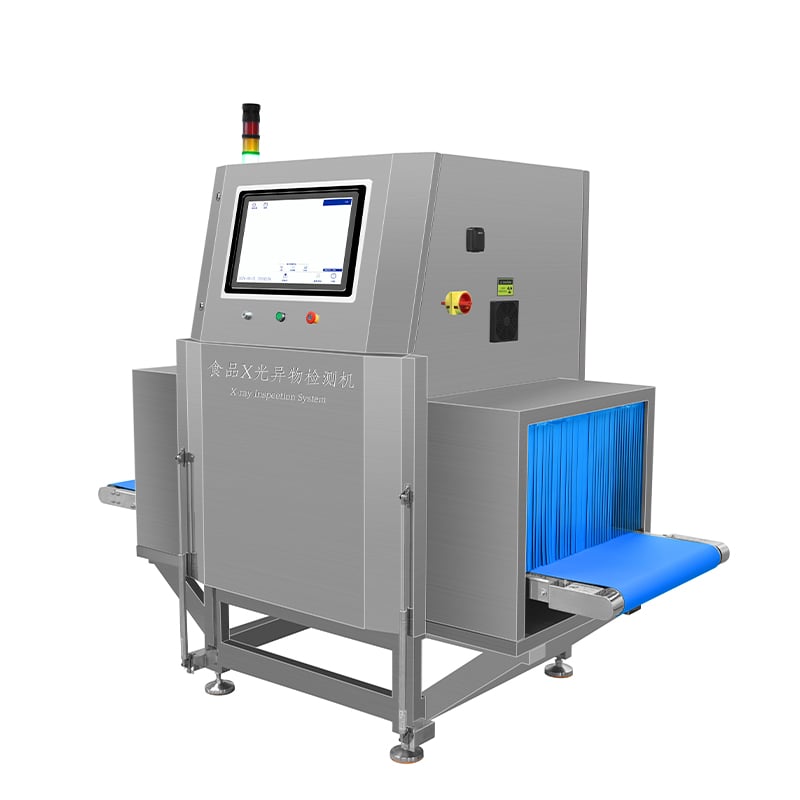
Beyond glass, ceramic, stone and bone, X-ray inspection answers questions that are not about foreign bodies. Our CQ-YW900 checks the liquid level in every can and bottle that passes; the same image gives shape, quantity, shielding and sealing-clip checks.
A metal detector reports one thing: that conductive material is present, within an aperture of a known size. X-ray inspection reports an image.
Where the metal detector still wins
Three places.
Cost and infrastructure. A metal detector has no radiation source, no shielding enclosure and none of the periodic safety work an X-ray carries. That paperwork depends on your market, and belongs on your list of questions.
Speed. X-ray inspection runs 10 to 70 m/min with an adjustable belt; the metal detector above runs at 25 to 30 m/min with no belt-speed adjustment. On a fast line that difference decides the project.
Floor space. The CQ-YW910K is 1500 x 850 x 950 mm at a 700 mm working height; the CQ-YW900 is 2480 x 1219 x 1794 mm. X-ray inspection wants more length and more headroom.
Three questions, and then the answer
- What has to be caught? If the list includes glass, bone, stone or ceramic, or if you also have to catch a missing item, it is X-ray inspection. A metal detector cannot be made to see any of them.
- What is the pack? Foil, metallised film, a can or a jar mean X-ray inspection. Behind foil a ferrous-only machine is the fallback, but it sees iron only; a sealed steel can leaves none.
- What is the product? A wet, salted or frozen product pushes against the metal detector and pulls toward X-ray.
If all three answers are easy — a dry product in plain film, with metal the only hazard — the metal detector is cheaper to buy and keep, and holds 0.8 mm of iron.
The two ranges
Metal detectors: CQ-YW910K, the rest of the range in our food metal detector guide. X-ray inspection: CQ-YW900 for cans and bottles, CQ-YW700 for large tunnels, the Industrial 5030 for heavy packs, CQ-YW6040 at 20 kg — the whole range sits under X Ray Machine.
Frequently asked questions
Can an X-ray system replace a metal detector?
Only where the metal detector cannot do the job: foil, cans, or a hazard that includes glass, bone or stone. Where it does work, it is cheaper to buy and keep.
Which one detects stainless steel better?
X-ray inspection, on the published figures: 0.6 mm on SUS 304 against 1.5 mm for the metal detector at its smallest aperture. Stainless is the hardest metal for a metal detector usually non-magnetic, and a poor conductor.
Can a metal detector inspect foil or canned packs?
On foil it becomes a ferrous-only instrument: iron and steel, nothing else — the case the CQ-YW806 was built for. A steel can is worse: the pack itself is a continuous conductor, and X-ray inspection is the only route left.
Why is X-ray inspection easier on wet or salty products?
Because it does not read conductivity. A brine-filled tray and a dry biscuit call for the same settings, where a metal detector separates a large product signal from a small fragment signal.
What do you need before quoting?
The pack and its material, the product and its temperature, the line speed, and the hazards you have to close. With those we can say which machine answers them.
The two machines are not interchangeable, so the question is not which is better. It is which one is allowed to answer your hazard.
Send us the pack, the product and the hazard, and we will tell you which side the job falls on.
 Hot News

 ONLINE