 EN



Checkweigher or Weight Sorter: Which Fits Your Line?
A check weigher and a weight sorter both weigh, and both sit on a conveyor. One decides whether a pack may leave the factory; the other decides which grade a pack belongs to. Buying one when the line needed the other is an expensive way to find out.

One verifies, the other classifies
A check weigher is a gate. Every pack is weighed against a target and a tolerance, and the ones outside the tolerance are removed and recorded. The output is one decision per pack, and the evidence that the decision was made.
A weight sorter is a switchyard. Packs are weighed and then sent to one of several destinations, usually because each destination is a different grade, a different price band or a different customer specification. The output is a destination per pack.
Both weigh to a fraction of a gram, and neither replaces the other.
What a check weigher is asked to prove
The job is compliance and waste: no short-weight pack leaves, no overfill walks out of the door, and the reject decision is on record. Our CQ-YWXP400 check weigher is built for a packing hall that runs more than one pack size:
| Parameter | CQ-YWXP400 |
|---|---|
| Weighing range | ≤ 15 kg per item |
| Minimum scale | 1 g |
| Weighing accuracy | ± 1 g to ± 5 g |
| Belt speed | 10–60 m/min, adjustable |
| Throughput | Up to 60 pcs/min |
| Weighing belt | 620 x 400 mm |
| Maximum product | ≤ 450 x 390 mm |
| Rejection | Pusher, flap, air blow, swing arm |
| Stored programmes | 100, with automatic learning |
| Control | 7-inch colour touch screen, USB / RS232 / RS485 |
| Power | AC 220 V ± 10 %, 50 Hz, 400 W |
| Air supply | 0.6–1 MPa for the reject device |
| Dimensions | 2146 x 1110 x 1231 mm |
Everything in that table answers one question — inside the tolerance, or outside it. The hundred stored programmes exist so the check weigher can change pack without a rebuild; the four rejection devices exist so the same frame can remove a box, a bag or a bundle.
What a weight sorter is asked to do
A sorter appears where weight is a grade rather than a pass mark: produce sized into bands, portions matched into a batch, packs routed to different retail specifications. Our own description of the weight sorter puts it as separating products automatically against predetermined weight parameters, and the weight grading machine page adds the rest: multiple categories, load cells, and each item routed to its destination.
Two things follow from that. The number of destinations is a specification in its own right — a sorter with two outlets is not a small version of one with six. And a sorter's report is about distribution, not compliance: it tells you how many packs landed in each band.
Where each one sits on the line
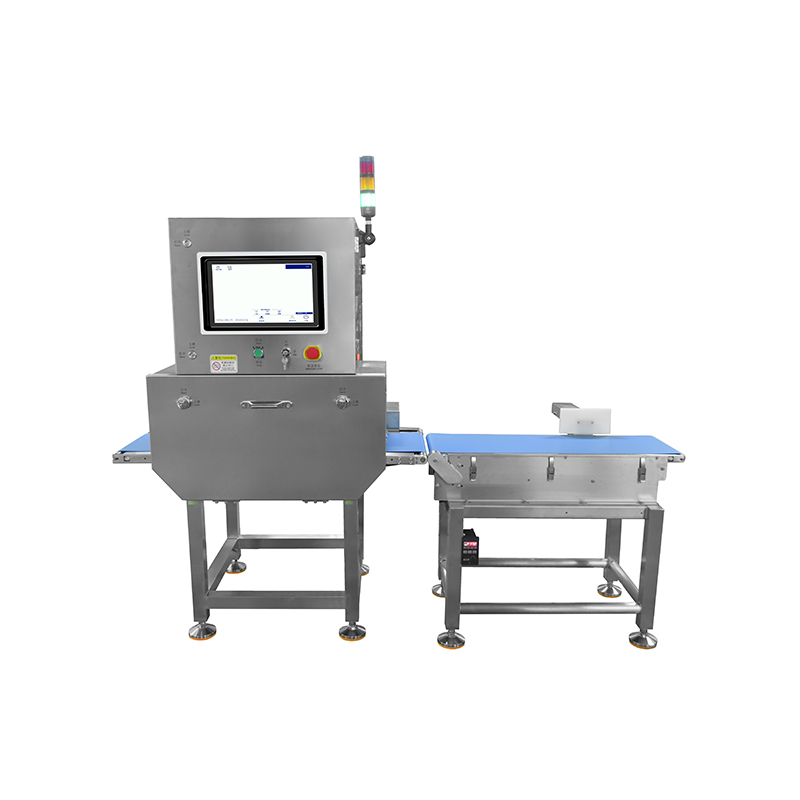
A check weigher goes where the pack is finished and the decision is final — after the filler or the wrapper, before the case. Its reject device needs somewhere to put a failed pack, which is why our check weigher carries the reject section on its own legs: the cylinder firing never reaches the weighing cell.
A sorter goes where the weight decides the route — at intake for produce, at the discharge of a multihead weigher, or wherever two specifications leave the same machine. If the line has one destination, a sorter has nothing to switch.
The three numbers that decide it
- Range and resolution, together. The 1 g above is the minimum scale the check weigher can resolve; the accuracy you get is ± 1 to ± 5 g across the 15 kg range. Hold both against the lightest pack you run, because that is where resolution runs out first.
- Throughput against belt speed. 60 packs a minute on this check weigher is a function of pack length and belt speed, not a separate dial. A pack longer than the weighing section allows takes longer to cross it, and the rate falls.
- Number of destinations. One reject outlet, or six grades. This number moves the price more than the weight range does.
What neither machine does
- A check weigher does not grade. It can tell you a pack is 12 g light; it will not tell you which of six bands the pack belongs to.
- A sorter does not produce a per-pack compliance record against a target and a tolerance. It produces a distribution.
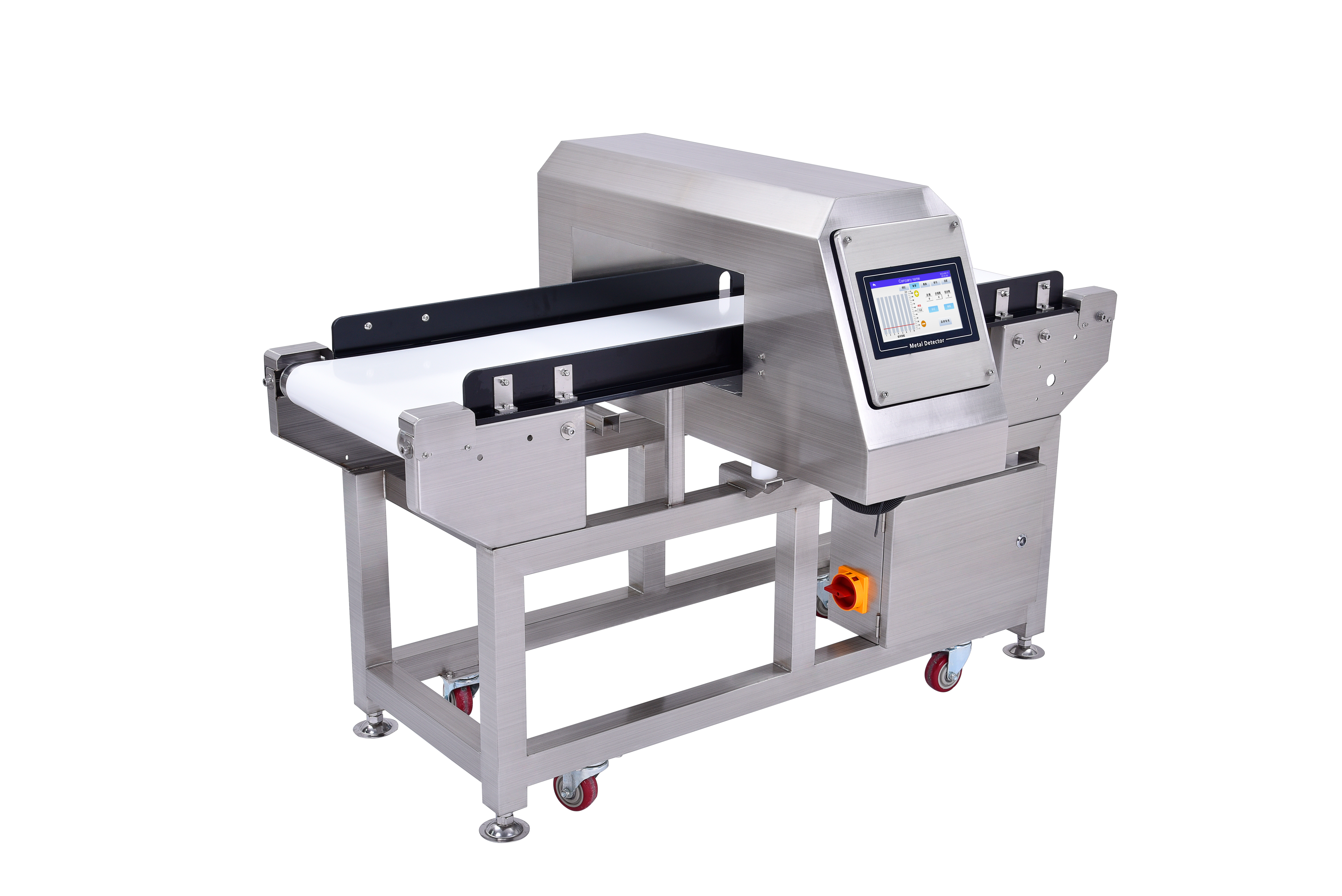
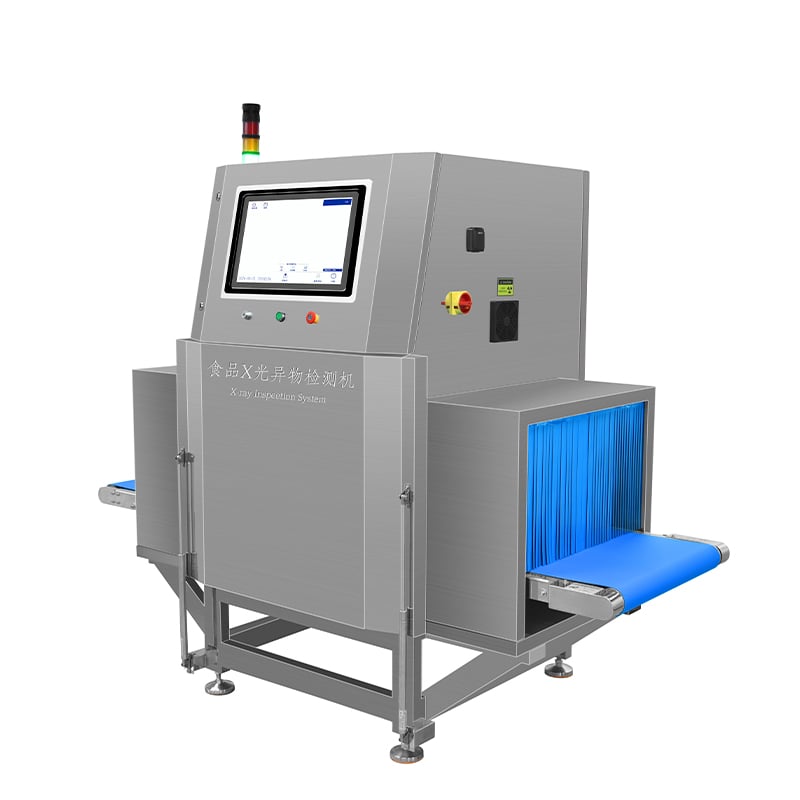
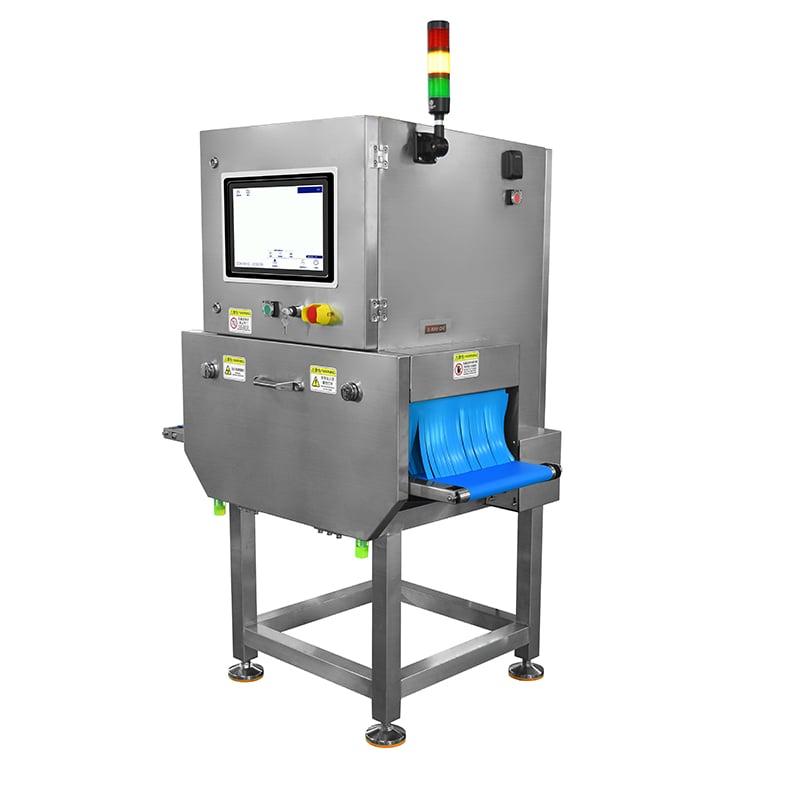
- Neither of them finds a fragment of metal or a piece of glass. That is metal detection or X-ray inspection, and it is a separate decision made on the same belt.
- Neither one replaces a metal separator upstream, where the product is still powder or granules inside a pipe.
How to write the specification
Send five things and the check weigher quotation stops being a range:
- The lightest and the heaviest pack, in grams or kilograms.
- The tolerance you have to hold, and where it comes from — a regulation, a customer or your own filler.
- Line speed or packs per minute, and the pack size that crosses the belt.
- How a failed pack should leave: pushed, blown, dropped, or diverted to a grade.
- The environment: washdown or dry, ambient temperature, and the compressed air available.
Those are the five things our own enquiry form for the check weigher CQ-YWXP400 asks for.
The range
Check weighers: CQ-YWXP400 for mixed light and heavy packs on one frame, YW-XP600 for customised and OEM builds, and the small-pack class in our bakery checkweighing case. Sorting: weight sorter, weight grading machine and logistics sorter for cartons and parcels. The two category pages sit under Check Weigher and Sorter.
Frequently asked questions
Can a check weigher sort packs into grades?
Not into grades. It sends a pack to a reject outlet or leaves it on the line, which is one decision. Grading into several bands is a sorter's job, and the destination count is what separates the two machines.
How fine can a check weigher weigh on small packs?
Finer than the frame in the table above. Our bakery case ran a checkweigher at ± 0.1 g and 200 pieces a minute on bread and pastry packs — a narrower belt and a finer load cell than the 15 kg frame. Tell us the pack weight and the tolerance and we will say which class fits.
Do I need a check weigher and a sorter?
Only if the line has two jobs: a compliance gate and a routing decision. Plenty of lines need the gate and nothing else, and a sorter bought for a single-destination line has nothing to switch.
Does a check weigher replace a metal detector?
No. Weight and foreign-body detection answer different questions on the same belt. A line that needs both carries two machines in series, or one integrated metal detector and check weigher.
What if my pack is longer than the weighing section?
Send the pack length with the enquiry. The XP400 check weigher takes packs up to 450 mm on a 620 mm weighing belt; anything longer needs a longer frame or a slower belt, and the throughput figure moves either way.
Two machines, two questions: may this pack leave the factory, and where does the pack belong. Settle those two separately before you ask for a price, and the quotation will be for one check weigher instead of two half-machines.
Send us the pack range and the tolerance, and we will tell you which of the two you actually need.


 Hot News


 ONLINE