 EN


How to Choose a Rejection System for Your Inspection Line
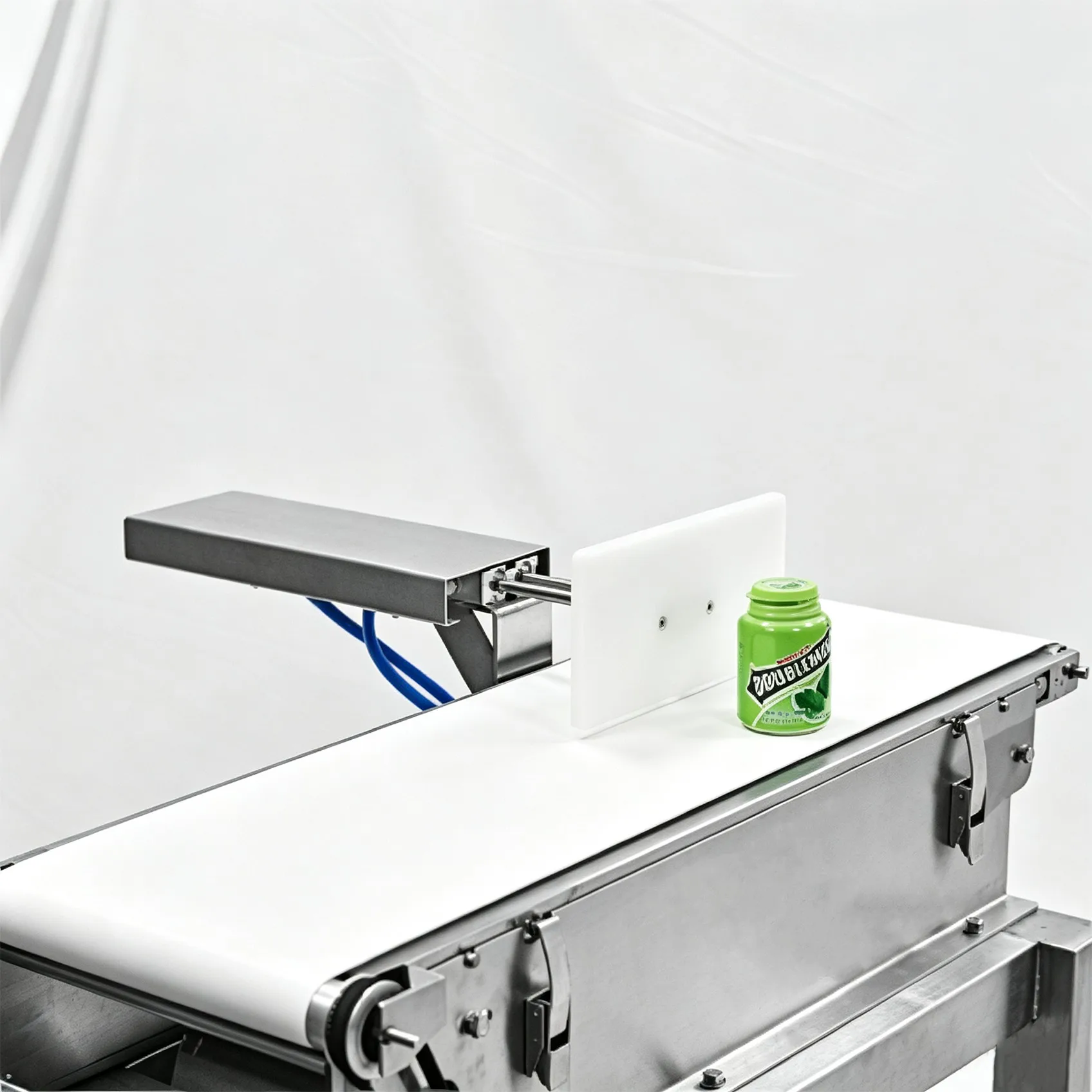
The rejection device removes a bad pack from the belt. Without it, a metal detector or X-ray system only tells you that your product is contaminated. It removes nothing.
We fit five rejection devices on our checkweighers. Which one you can use depends on the belt speed and the space beside the belt. Both are usually fixed before anyone asks about the rejection system.
What a Rejection System Has to Do
A rejection system has three jobs, in this order:
- Remove the pack the machine just rejected.
- Leave the good packs on the belt.
- Fit the line: space, belt speed, and available compressed air.
Job three is decided last, and it is the job that has no space left.
Why job three is decided too late
Weight, product and price come up in the first meeting. Space comes up in the week of installation, when the frame is drawn and the legs are ordered. If the drawing has no room beside the belt, you cannot add it afterwards. This is a layout problem, and it has to be solved on the drawing.
The Five Rejection Devices We Offer
These are the rejection devices on our own specification sheets. Our checkweighers are quoted with four; the X-ray systems add the fifth.
| Device | How it moves the pack | What it suits |
|---|---|---|
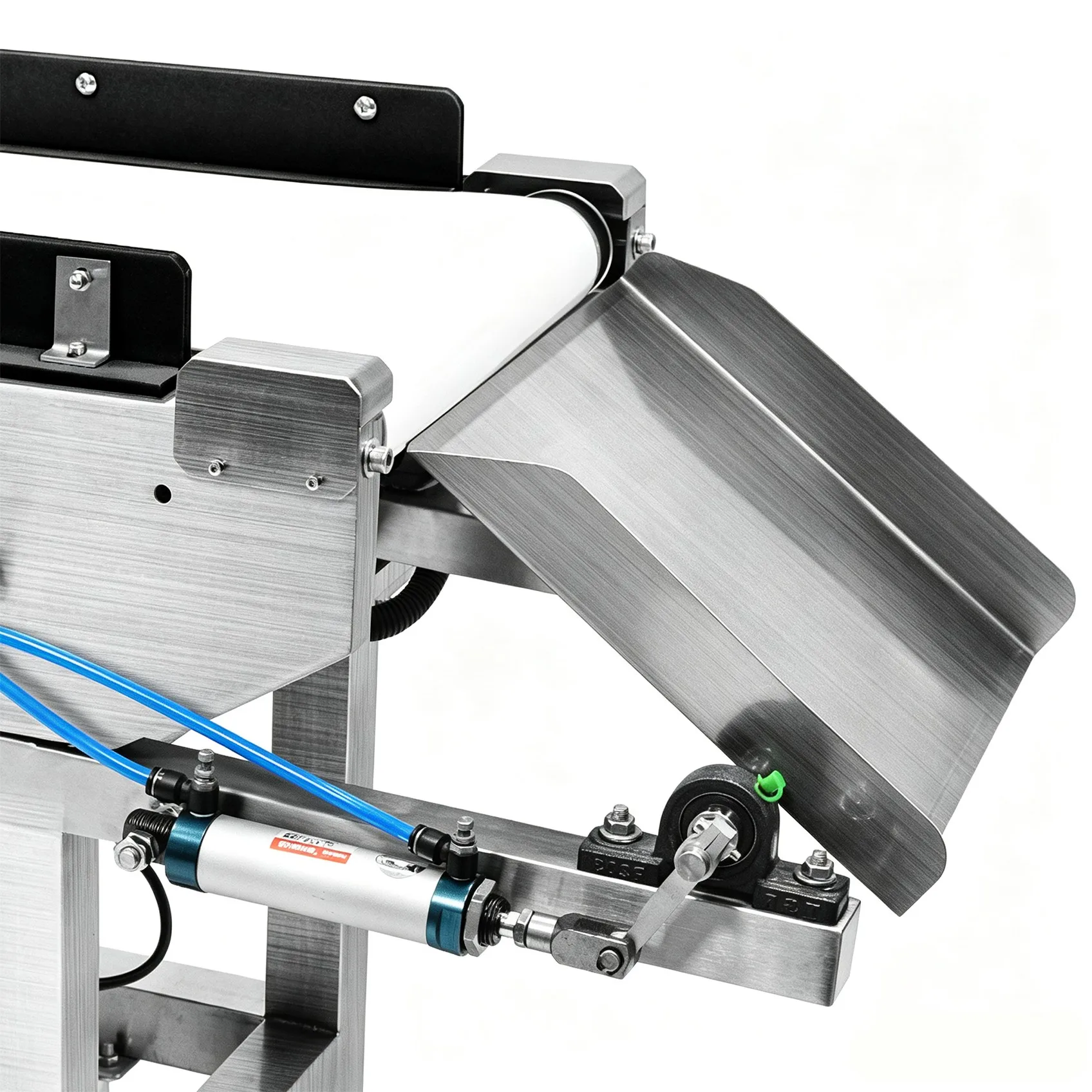
| Pusher | A plate crosses the belt and pushes the pack off the side | Boxes and rigid packs, medium to heavy |
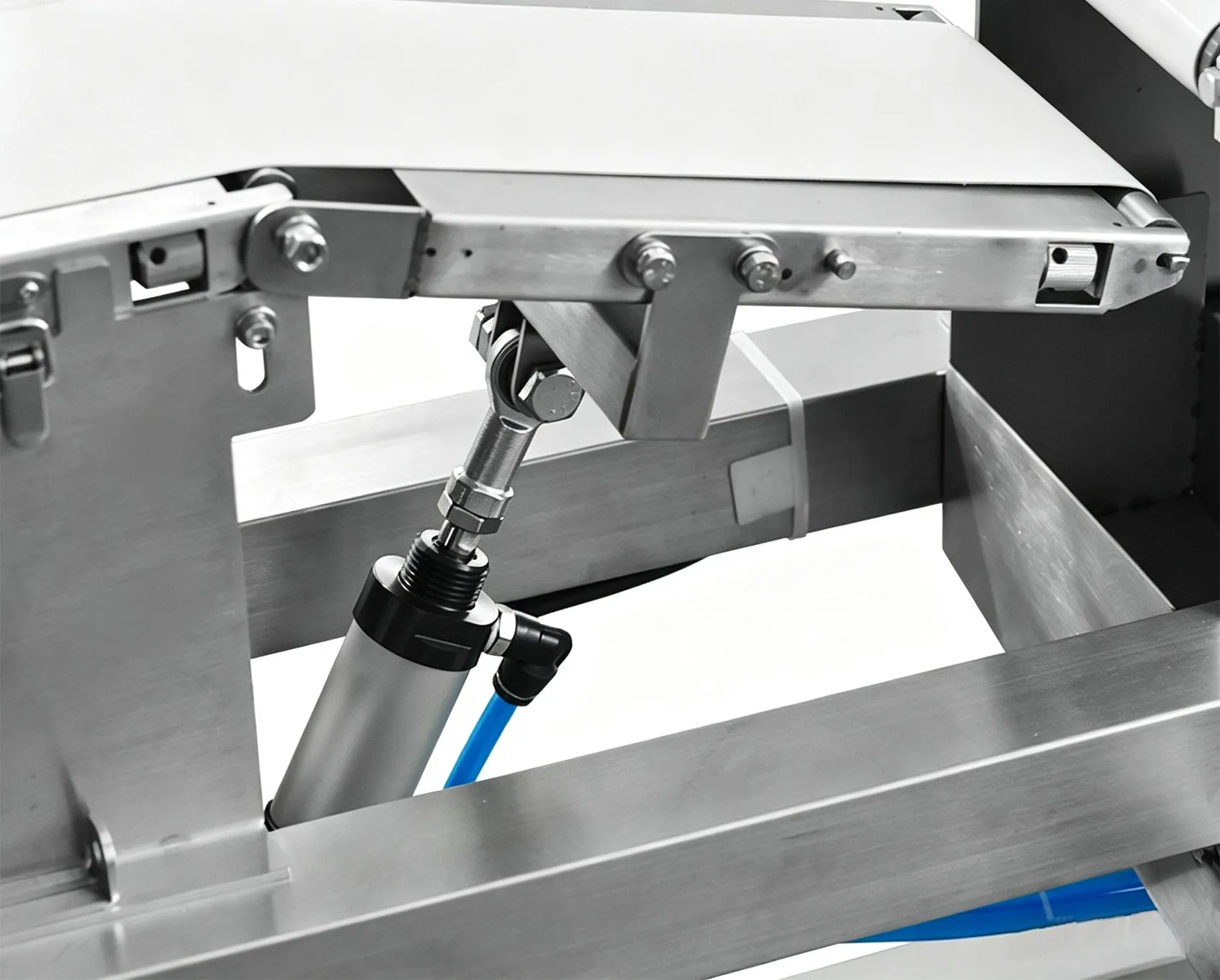
| Flap | A gate or a belt section drops down under the pack | Bags and soft packs, short drop |
| Air blow | A nozzle blows the pack off the belt | Light packs and small items, at speed |
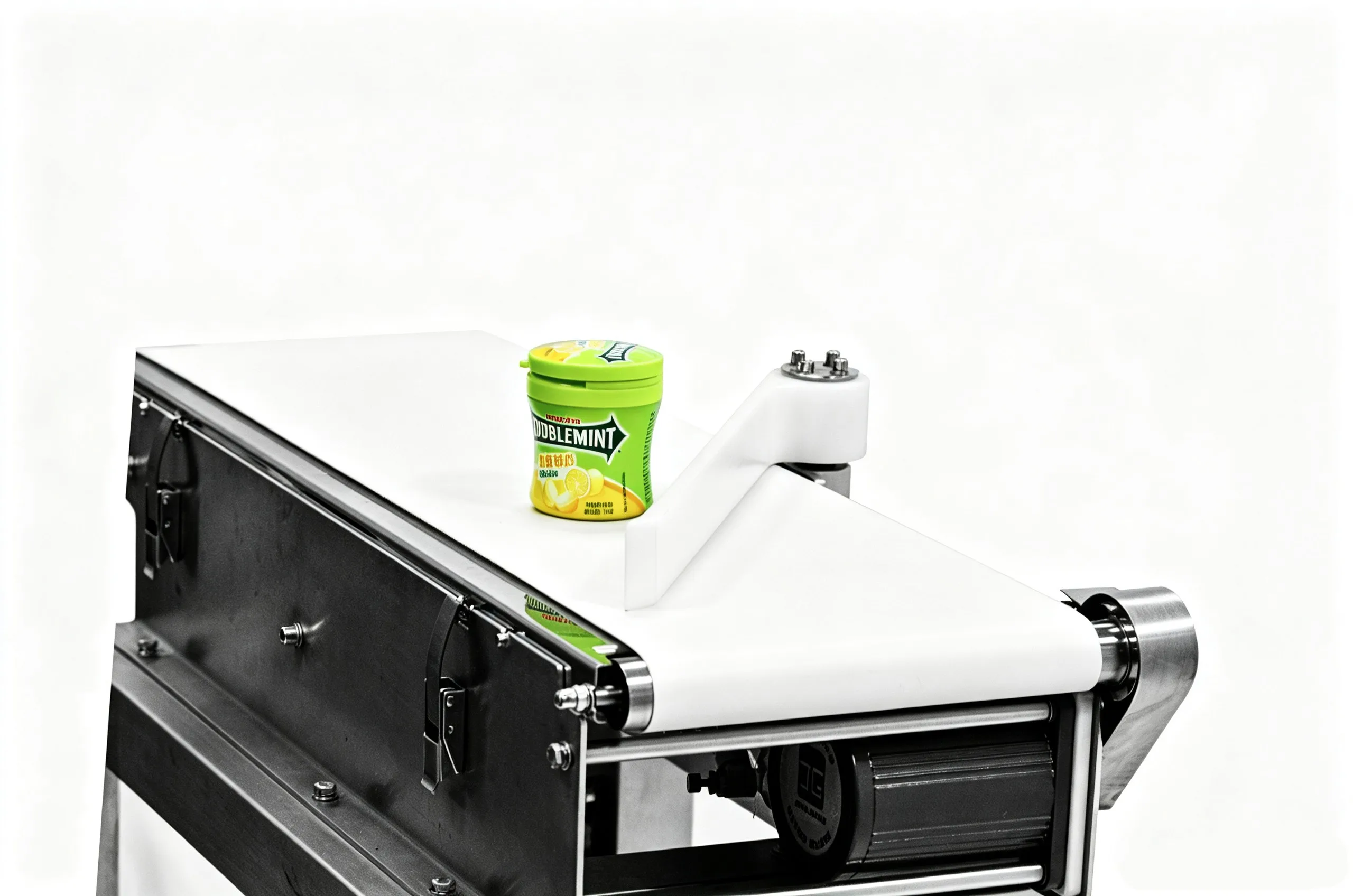
| Swing arm | An arm sweeps the pack off the side | Small packs, moderate speed |
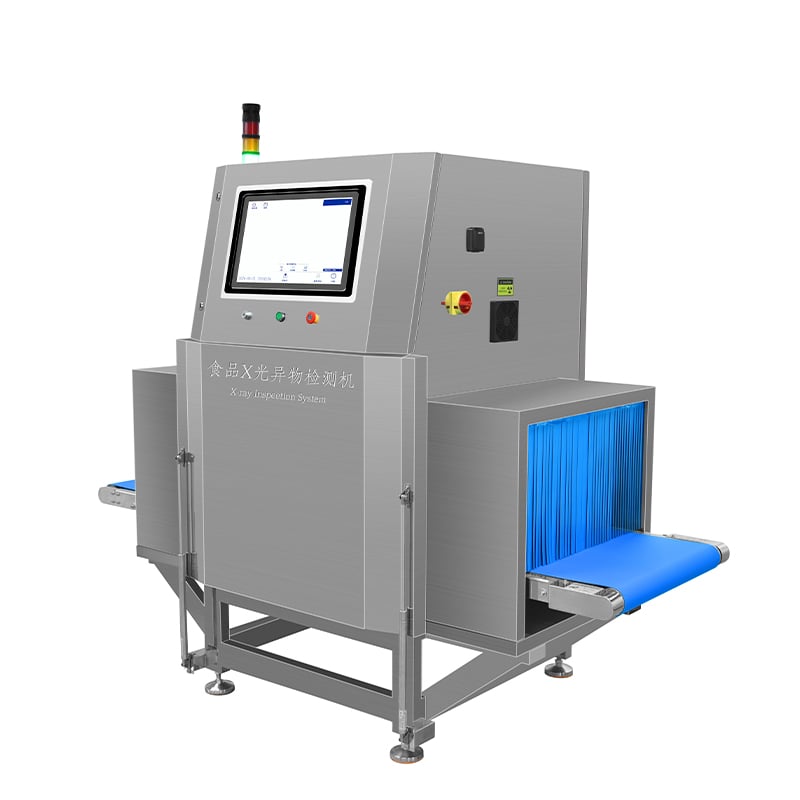
| NG shutdown | The belt stops and the pack is taken off by hand | Lines where a reject bin is not allowed |
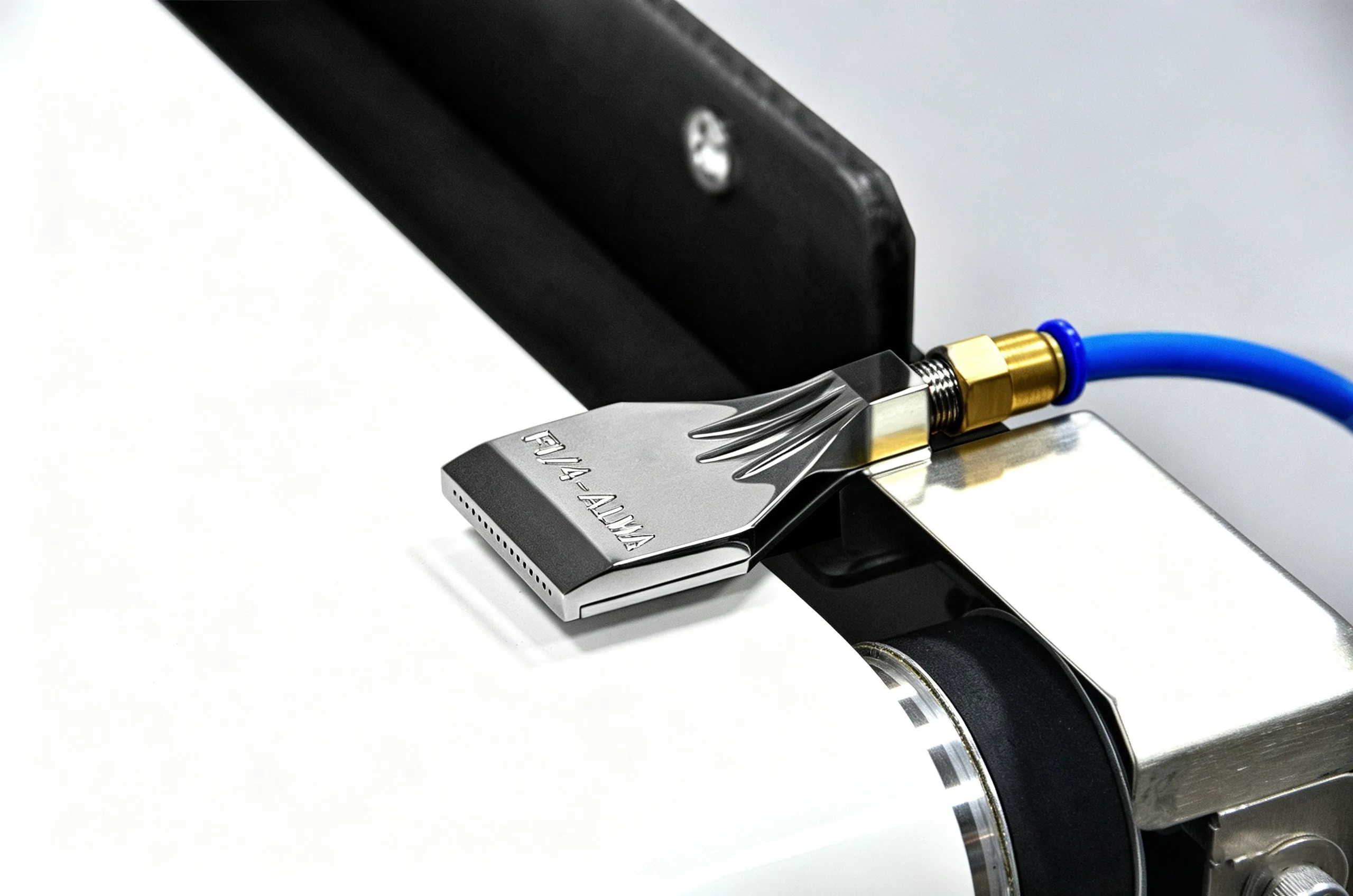
The five rejection devices differ in how much contact they make with the pack. Air blow touches the pack least, and a pusher touches it most. This matters more than the price difference between them. A flap needs drop height below the belt; a swing arm needs clear space beside it. If your drawing has neither, those two are already ruled out.
How Belt Speed and Pack Spacing Decide Your Rejection System
The time a rejection device has to work in is the gap between two packs divided by the belt speed. If packs are 100 mm apart and the belt runs at 60 m/min, the device has about 100 ms to finish its stroke. At a tight spacing, only a pusher or a swing arm can still finish in time.
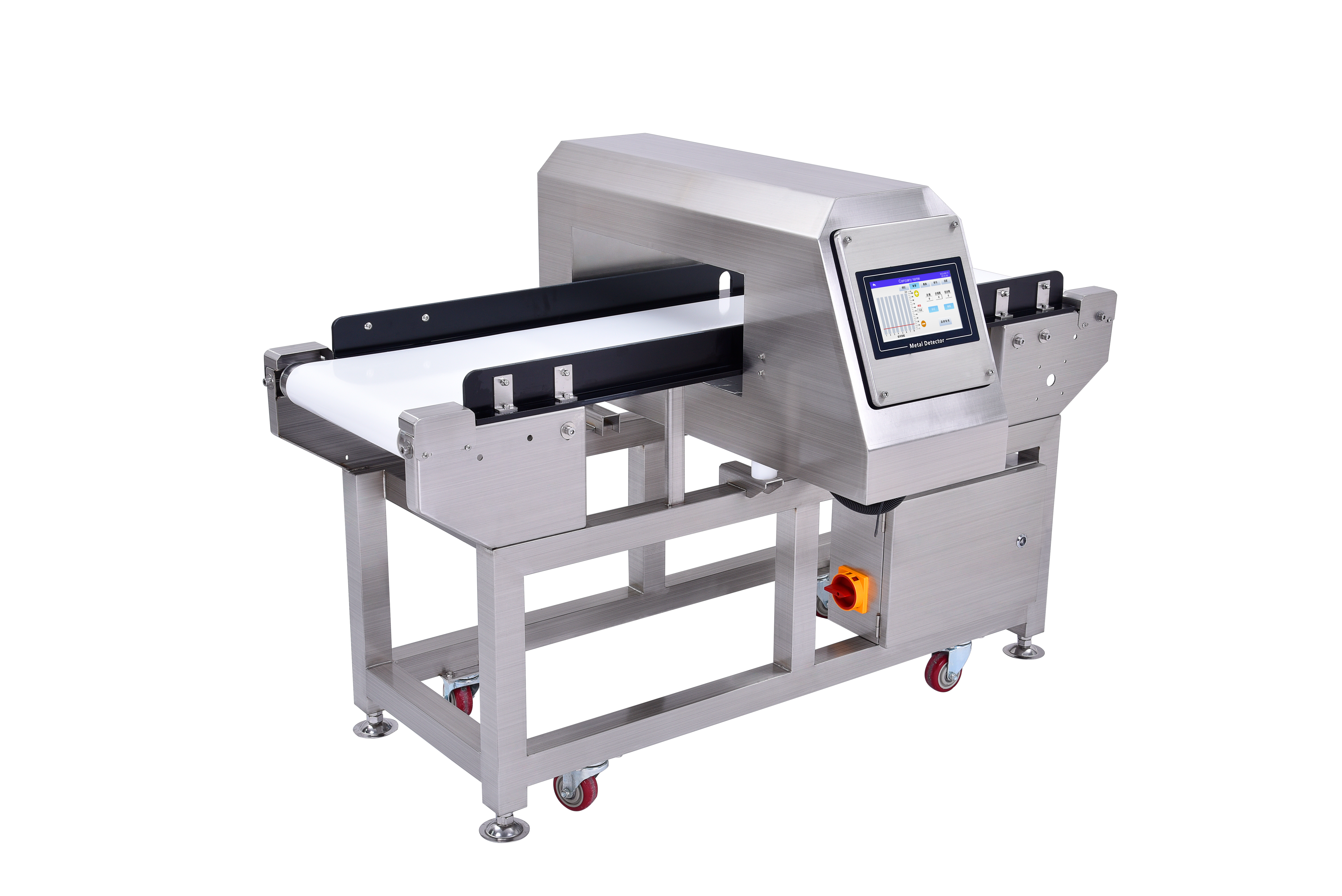
Our checkweigher belt is adjustable from 10 to 60 m/min, so you can slow it down and give the device more time. The metal detector in the same range runs at 25 to 30 m/min, and its belt speed cannot be adjusted. On that machine the time is fixed.
Why a fixed belt speed limits your choice
On an adjustable-belt machine you can slow the belt down. On a fixed-speed machine you cannot. If the time available is 90 ms, a pusher has 90 ms. Nothing on site will give it more.
Choose the Rejection Device from the Pack, Not the Machine
Air blow is the fastest rejection device we fit, but it cannot move a 20 kg carton. A pusher moves that carton, but it will bruise a soft bun. A flap suits a bag that can take a short drop. A swing arm suits a small pack that cannot take a side impact.
Start with the pack: its weight, shape and how much contact it can survive. Then check which rejection devices the machine can drive. Most buyers do it the other way round.
Where the Rejected Pack Goes
Removing the pack and dealing with the pack are two separate problems. A reject bin beside the belt solves the first and creates the second: someone has to empty it, and you need a way to know it was emptied.
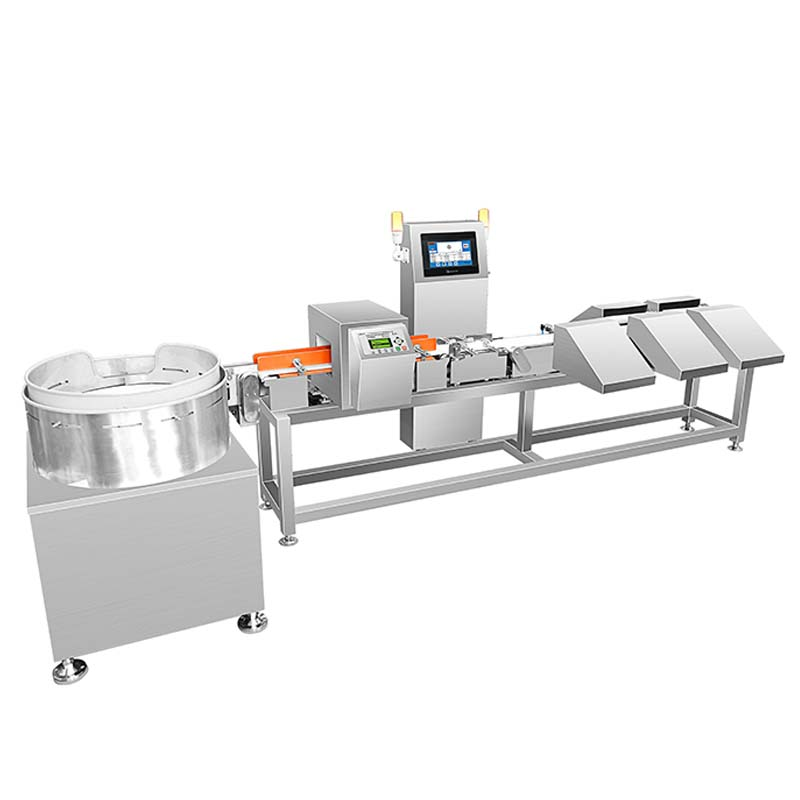
If a bin is not allowed, you have two options: NG shutdown, or a reject lane that carries the pack to a locked box. For bagged food, our 4020 series uses a sinking, split-type frame: the reject section has its own legs, so the main frame does not take the impact.
Why the bin causes audit failures
When the bin is full, the next rejected pack falls on the floor, and the machine still reports that it removed the pack. This is the part of a rejection system that fails in an audit, not in production.
How to Check That the Rejection Device Worked
The rejection device is mechanical, and it fails in ways you can predict. A pusher loses air pressure and stops crossing the belt. An air blow nozzle picks up water and starts blowing packs off at an angle. A swing arm works loose on its pivot.
None of these show on the machine's display. It reports what it detected, not what left the belt. This is the most common problem we hear about in audits.
The fix: count the packs on the reject path
Fit a sensor on the reject path, count the packs in and the packs out, and set an alarm on the difference. We have separate notes on reject verification sensors and on automatic rejection timing.
Test this before you sign off
Run the pack you actually reject — the wet one, the frozen one, the sticky one — through the device twenty times at production speed. Fewer than twenty off the belt fails.
Four Questions to Answer Before You Ask for a Price
- How fast is the belt, and how far apart are the packs? These two numbers give the time your device has to work in.
- What does the pack weigh, and what is it made of? Weight decides between air blow and a pusher. Material decides how much contact the pack can take.
- Where does the rejected pack go? A bin, a reject lane, a locked box, or nowhere.
- What air and floor space can the plant give? Our checkweigher is quoted with an air supply of 0.6 to 1 MPa for the rejection device. A pusher or swing arm also needs clear space beside the belt.
Answer these four and your rejection system is easy to choose. Leave them to the quotation stage and your supplier chooses for you.
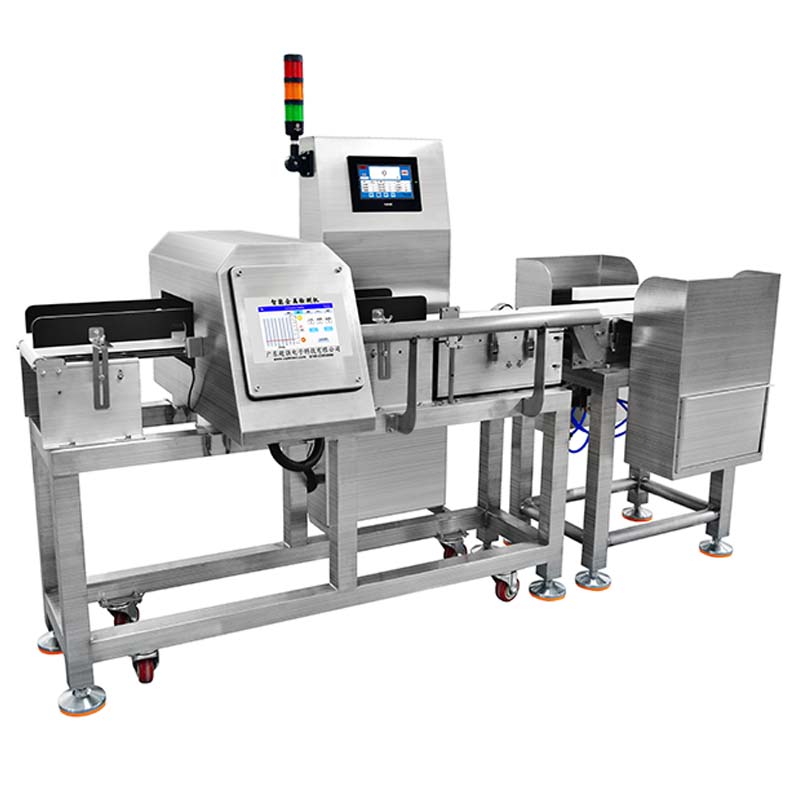
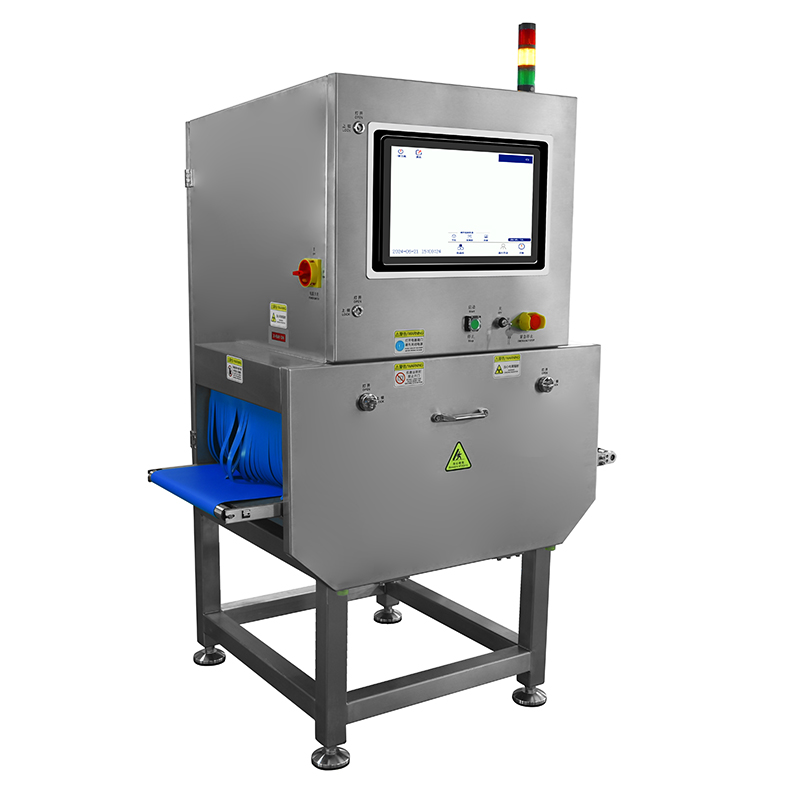
Our range: the CQ-YWXP400 checkweigher is quoted with pusher, flap, air blow or swing arm; the CQ-YW6040 X-ray system adds NG shutdown. Metal detection runs on the CQ-YW910K, whose belt is fixed at 25 to 30 m/min.
Frequently asked questions
Can a rejection system be added later?
Usually not. The device is easy to add; the space and the compressed air are not. A line drawn without a reject station normally has no room for one. Put the rejection device into the first layout drawing.
Which rejection system is the fastest?
Air blow, if the pack is light enough. The real limit is the time available, not the device. On a heavy pack, a pusher is faster because the air cannot move it at all. A swing arm sits between the two.
Does a rejection system need compressed air?
Air blow and most pushers do. Our checkweigher is quoted with a supply of 0.6 to 1 MPa for the rejection device. A flap needs less air. NG shutdown needs none.
What if a rejected pack must not be thrown away?
Then use NG shutdown: the belt stops and the pack is taken off by hand. On a high-speed line this stops the whole line, not just one pack.
How do I prove a rejection system works?
Fit a sensor on the reject path and count the packs in and the packs out. The difference is your evidence, and it is the first thing a retailer audit asks for.
The rejection device is the cheapest part of the inspection line, and it decides whether the line is protected at all. Settle the belt speed, the pack, the destination and the air before you order.
Send us the belt speed, the pack and the space beside the belt. We will tell you which rejection device fits your line.

 Hot News

 ONLINE