EN


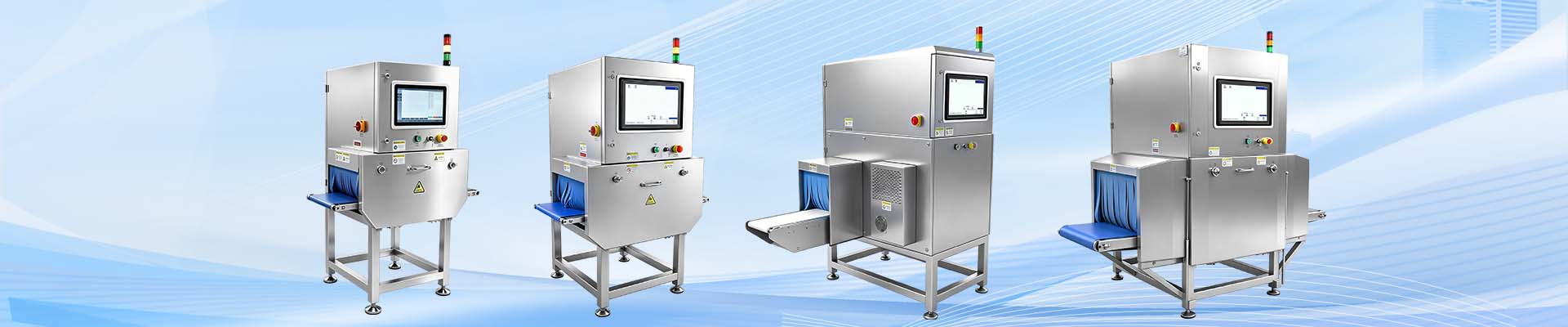
Home > > X Ray Machine
0.4 mm is measured with the machine running empty. In your pack it will be a different number.
| Sausages | Our own bench run found 0.8 mm steel through the pack. |
| Pharma cartons | Every pack decision is logged, and the log leaves through LAN or USB. |
| Reject method | The machine can stop the line, or take the pack out itself. Four devices to choose from. |
Send us the pack and what is inside it. We will tell you what the machine can find.
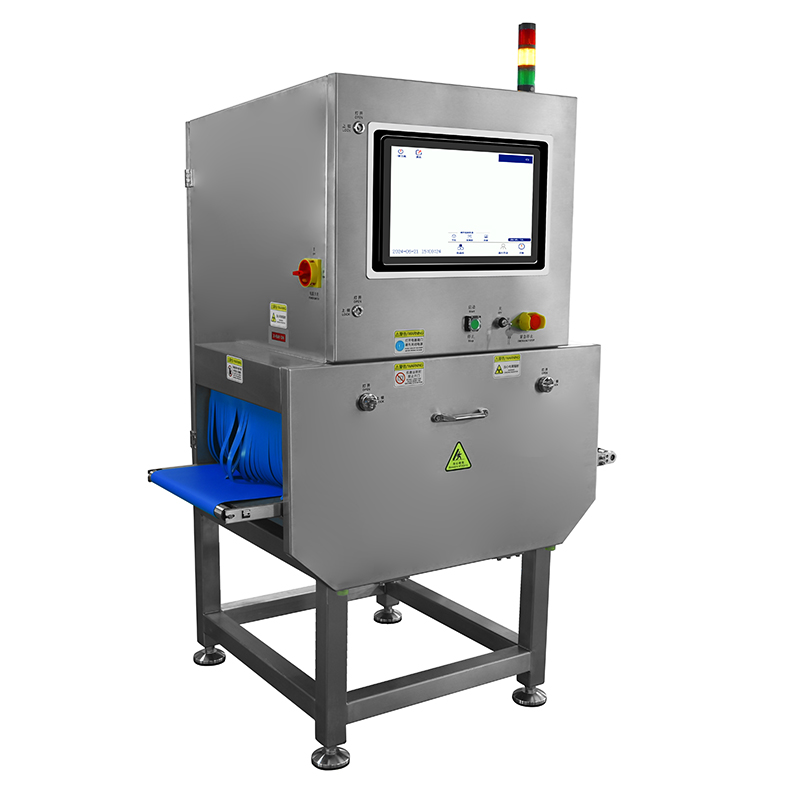
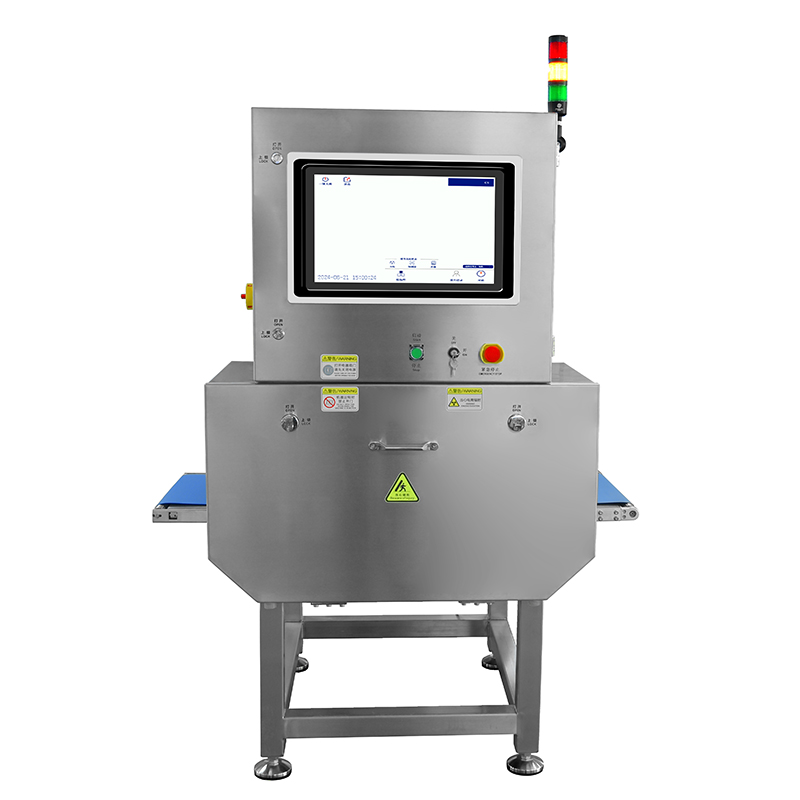
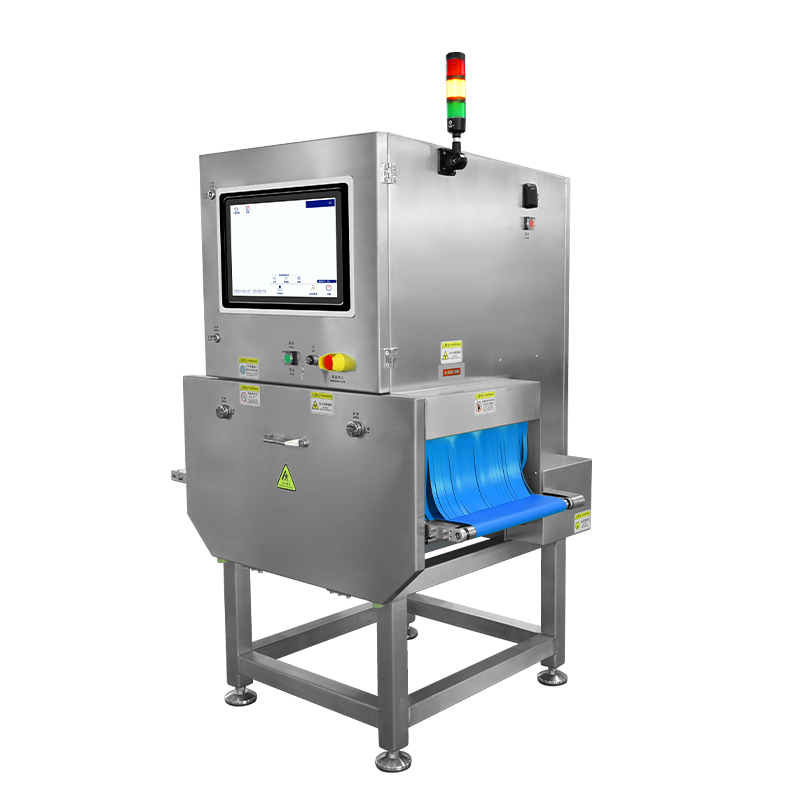
Two things decide whether this X-ray machine suits a line: what will pass through its tunnel, and how finely it can see. This is the intelligent 4020 build of the CQ-YW800 — 0.4 mm of stainless steel on an empty belt — with a choice made before it ships: stop a failed pack, or take it off the belt.
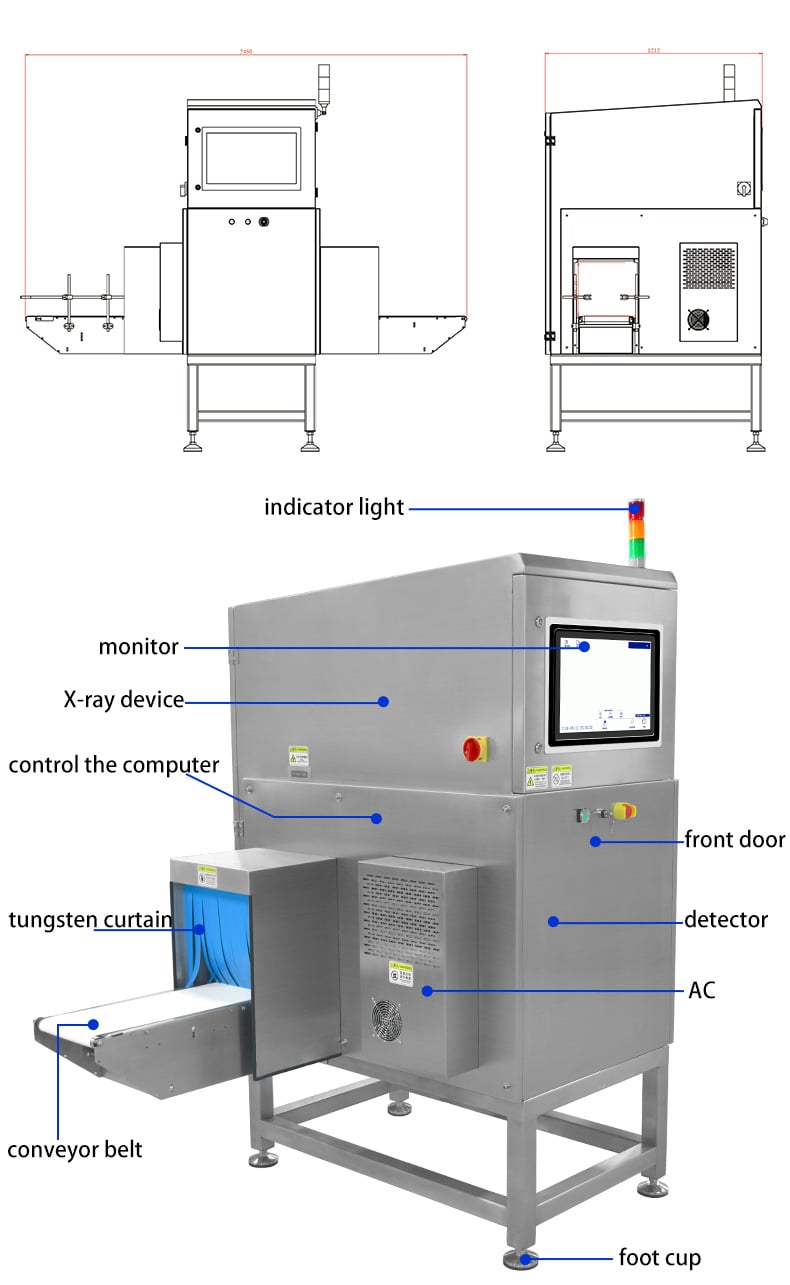
A failed pack has to go somewhere. Built for shutdown, the belt stops on an NG X-ray image and the alarm calls an operator. Built for removal, a device on the frame takes the pack off the belt and the line keeps moving. Which is better depends on whether your line can absorb a manual intervention or would rather not stop.
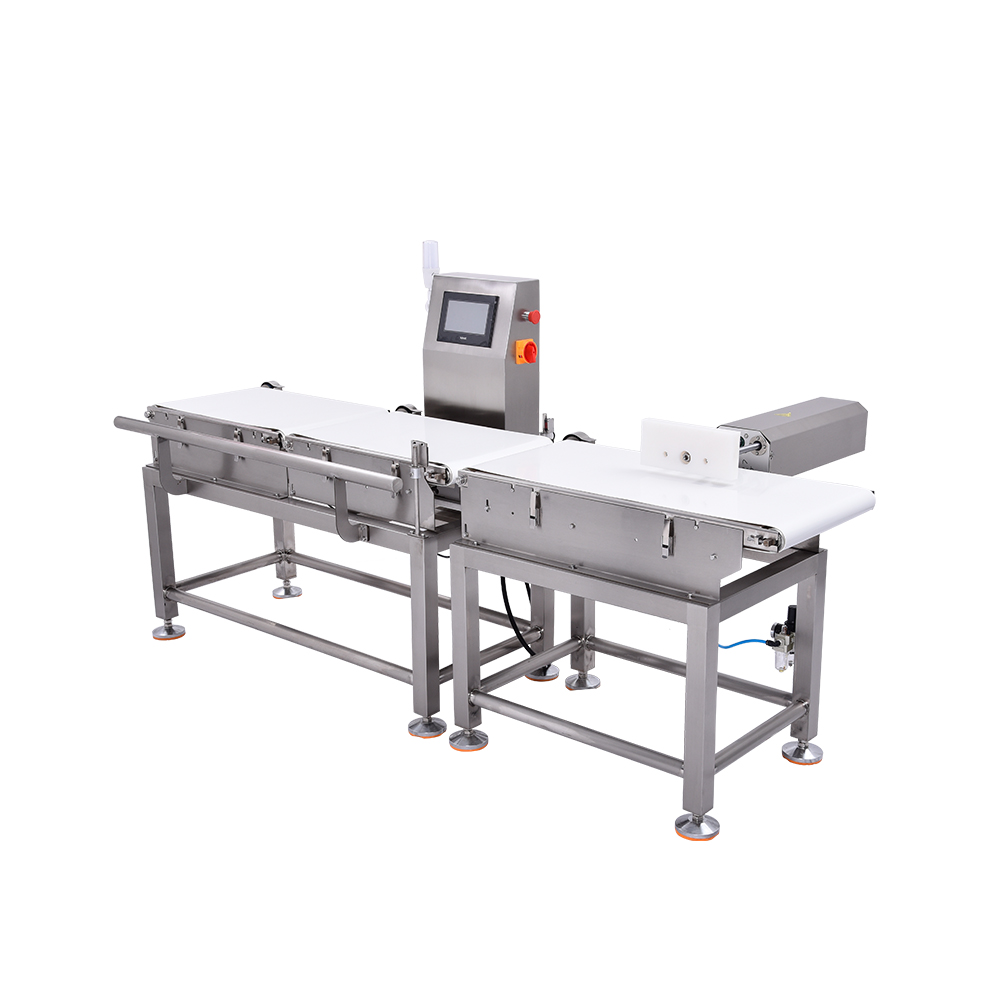
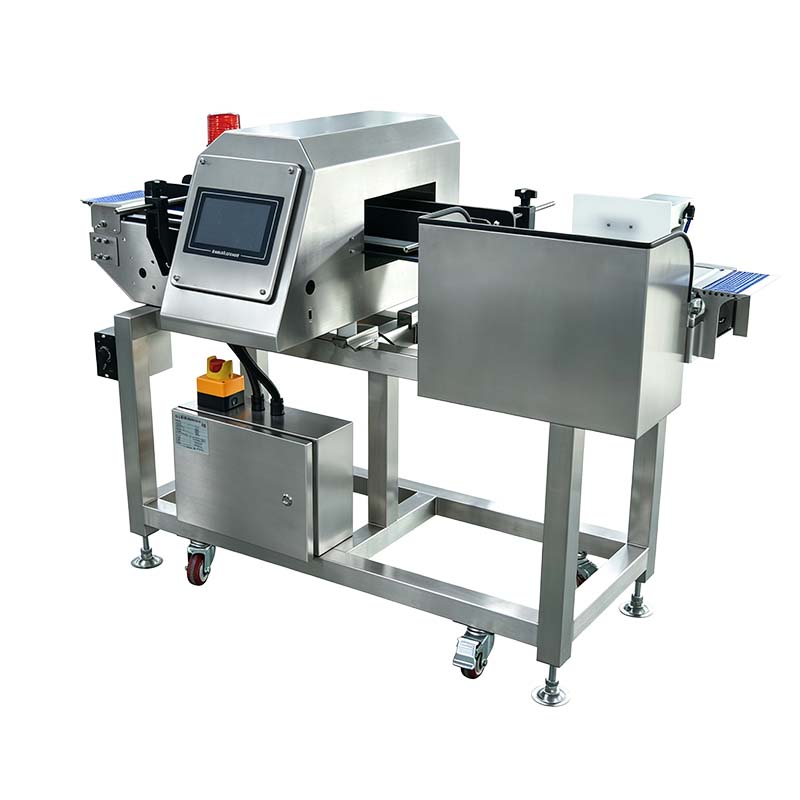
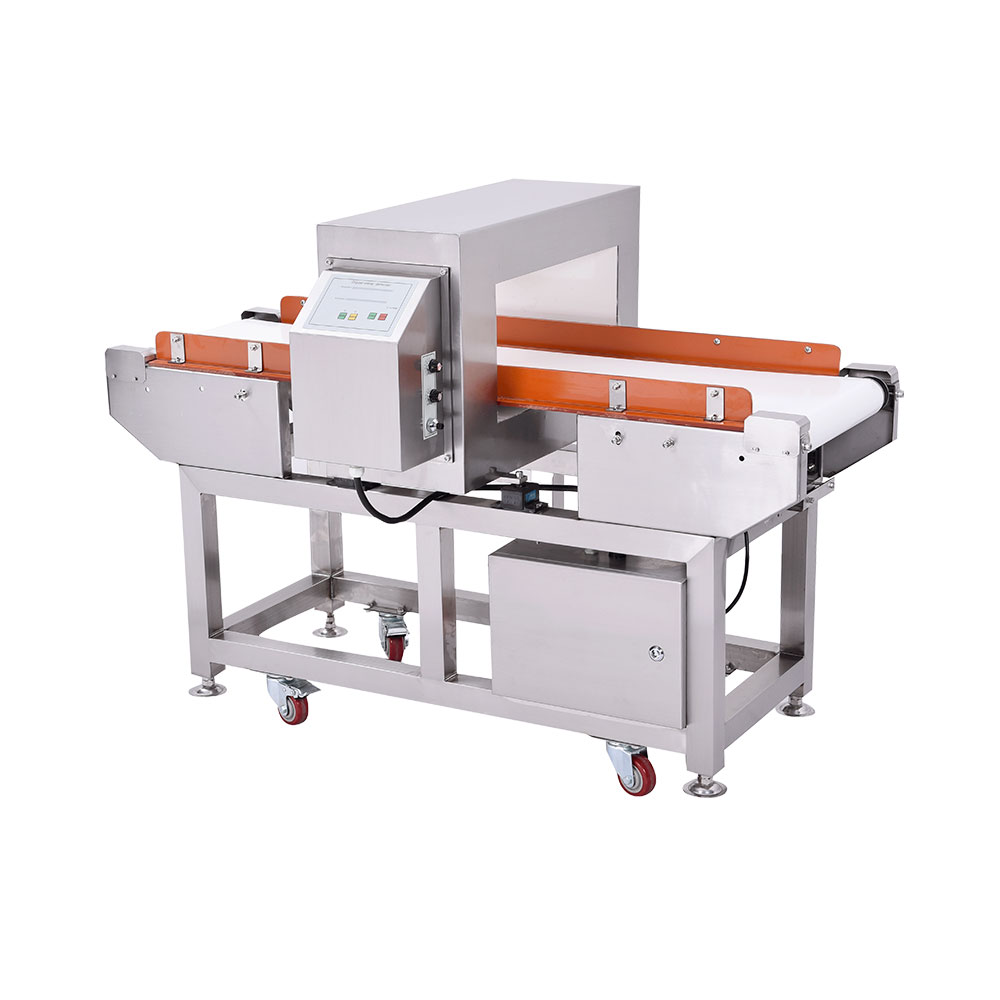
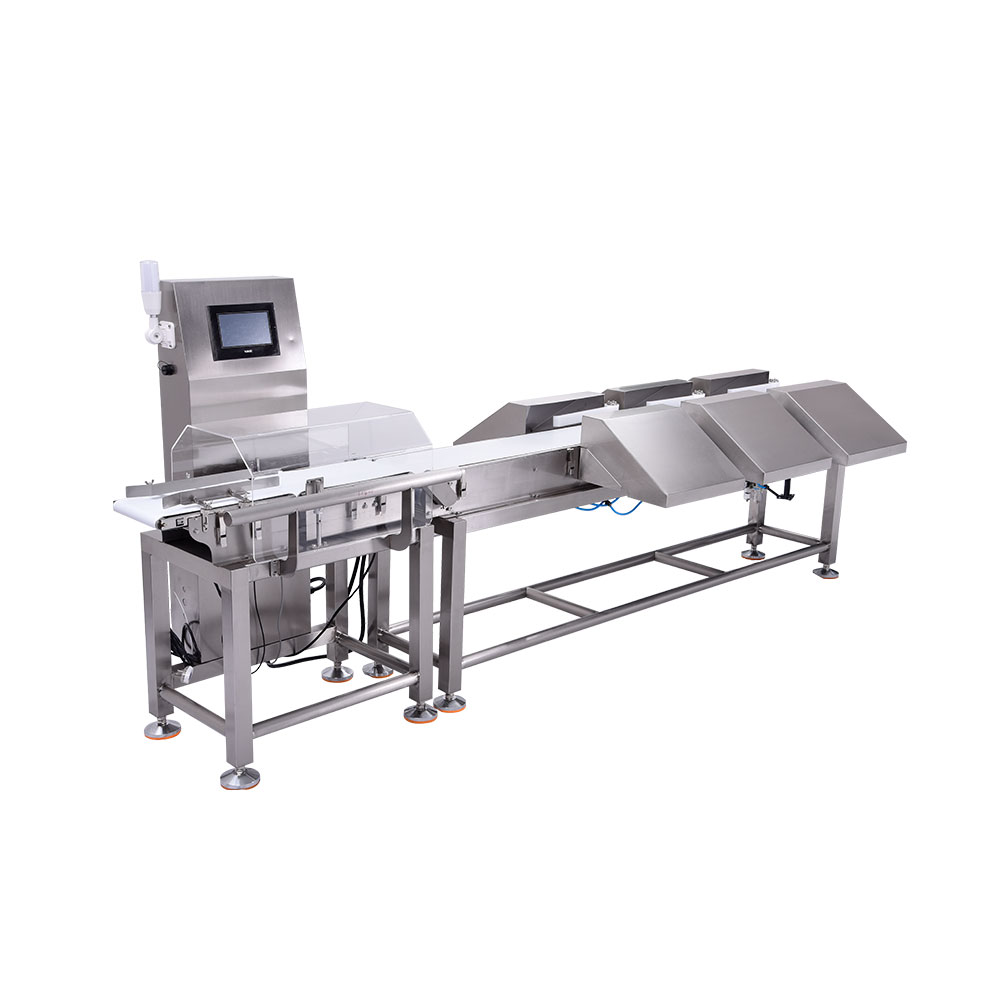
Four removal devices fit this 4020 frame, and the right one is a property of the pack: a heavy box and a light bag do not leave a belt the same way.
Fitted on order. Tell us the pack and we will say which of the four we would fit — and whether shutdown suits you better.
| Feature | Technical Details / Performance |
| Model / series | CQ-YW800 — Intelligent 4020 Series |
| Detection accuracy (min. sphere) | 0.4 mm SUS 304 · 1.0 mm ceramic · 2.0 mm glass Empty belt, no product in the beam |
| Tunnel size (W × H) | 400 mm × 200 mm |
| Max. product size | ≤280 mm (W) × 200 mm (H) · or ≤400 mm (W) × 60 mm (H) |
| Belt speed | 10–70 m/min, adjustable |
| Load capacity | Up to 5 kg (11 lbs) per pack |
| Rejection method | NG shutdown · automatic removal (pusher, flap, air blow, swing arm) |
| X-ray source | 150 W / 240 W / 350 W, selectable |
| Machine dimensions (L × W × H) | 1224 × 990 × 1845 mm (+100 mm) |
| Product formats | Bagged · boxed · bulk |
| Construction | SUS 304 frame, food-grade PU belt |
| Power supply | AC 220 V, 1.5 kVA, 50/60 Hz |
| Alarm | Audible and visual |
| Ambient temperature | −15 °C to +45 °C |
| Data interface | LAN port · USB port |
| Display & operation | Touch screen, touch input |
| Display language | Chinese, English and others |
The X-ray figure on the sheet is measured with nothing but air in the beam, and the manual records it that way: 0.4 mm of stainless steel, 1.0 mm ceramic, 2.0 mm glass. Inside a pack, what the X-ray beam has to cross and how thick it is both change. Through a sausage the machine above flagged 0.8 mm.
Specified on an empty belt, no product in the beam.
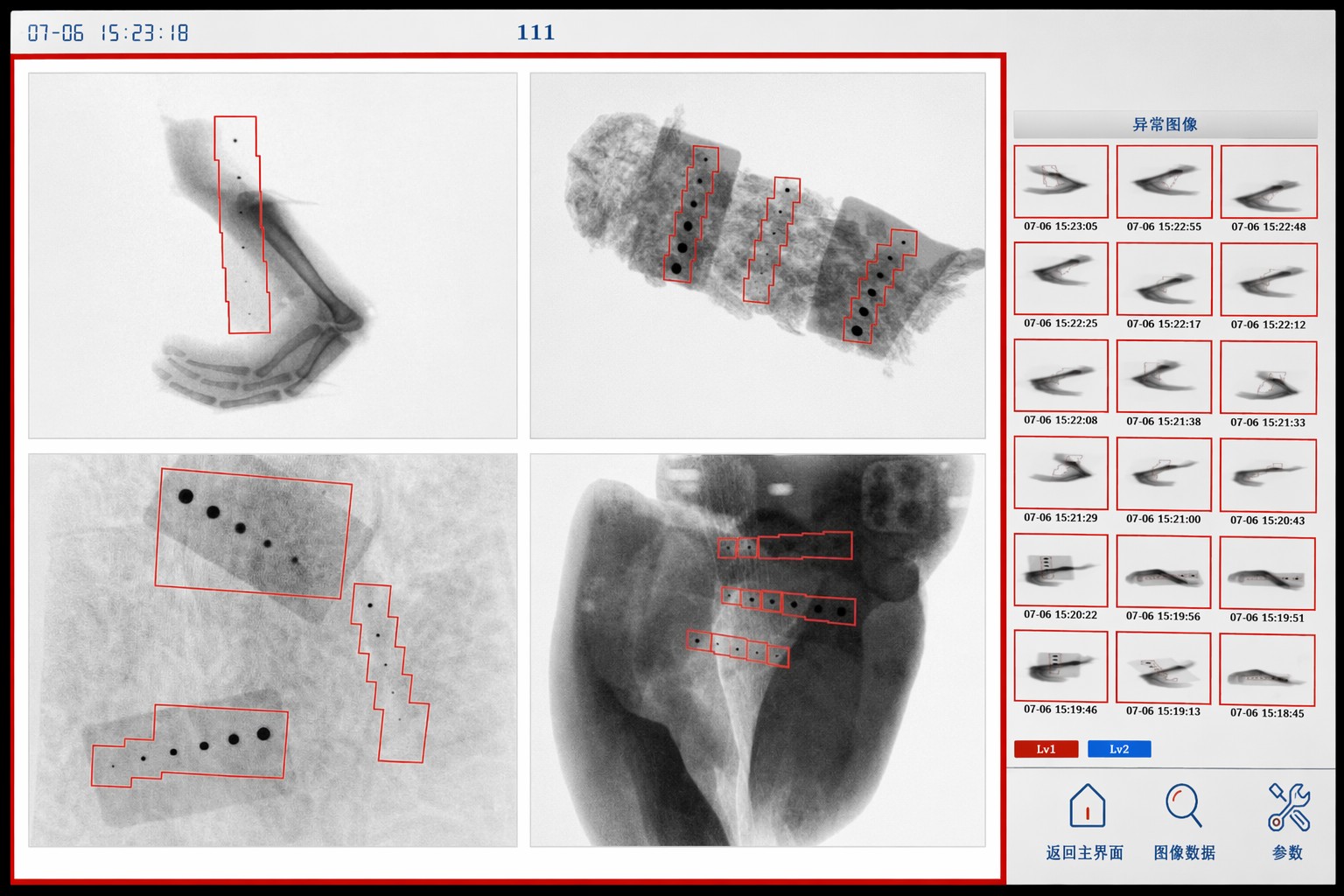
That is what a shift looks at — and a log you can open months later, when a customer asks about a batch.
The verdict comes from a picture of the pack inside the tunnel, so several questions settle on one pass.
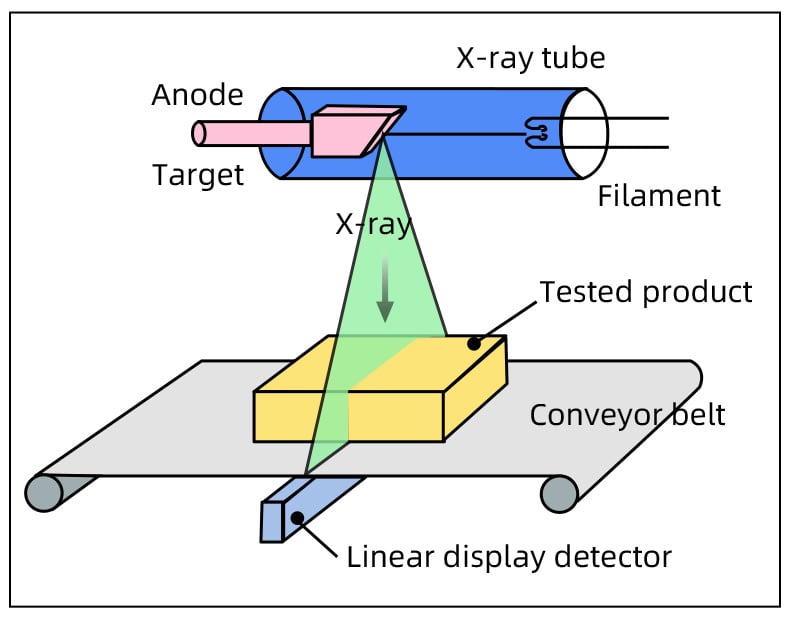
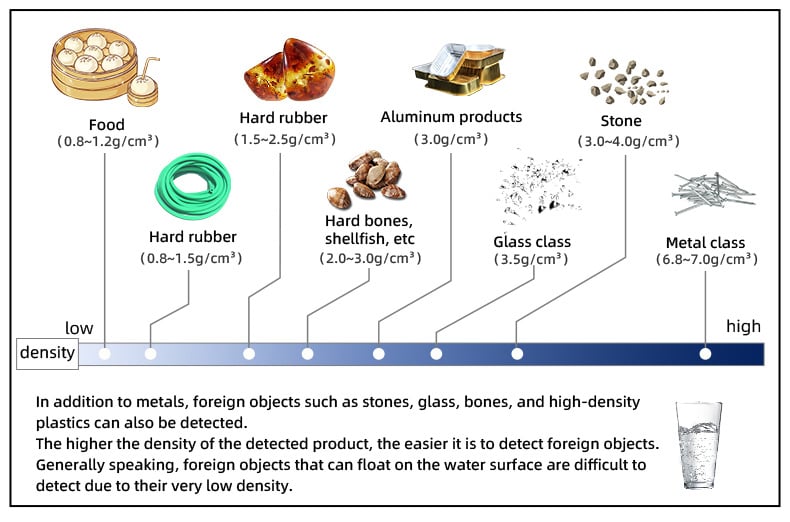
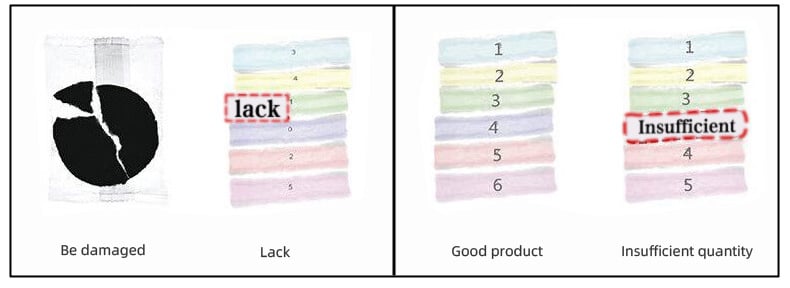
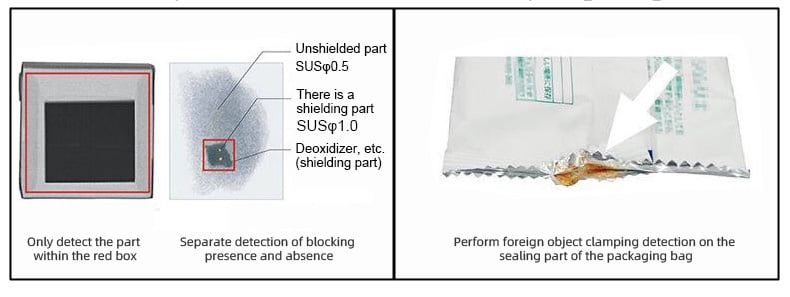
The tube fires a fan of X-rays down across the belt; the detector on the far side measures how much survives the pack, and the software draws the difference as a greyscale image. Dense matter eats more of the beam, so contamination sits darker than the food around it.
Everything after that is judgement: the image is compared with the settings held for that product, the machine calls good or NG, and the pack stays or leaves.
Because the call is on a picture, contamination, shape, count, shielding and the seal all come from one pass — with the live image on the touchscreen and every verdict logged.
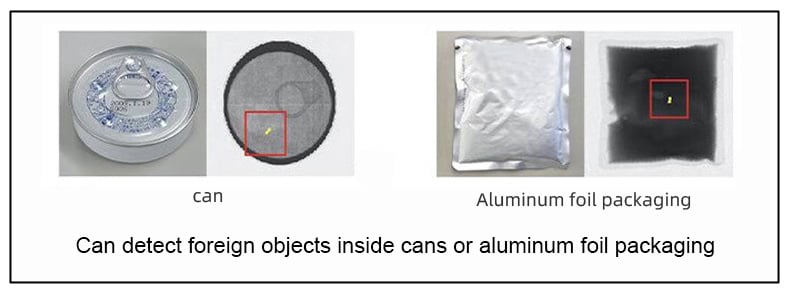
The awkward packs are the ones this machine exists for. A foil pouch or a metal container cannot be checked by a metal detector, because the packaging answers for the product; an X-ray image is not fooled that way, nor by contamination that is stone, glass, bone or dense plastic.
The other half is people. Hand-checking a line at 70 m/min costs labour and still misses things, and a fragment that gets through becomes a complaint. Moving the X-ray check into the line turns both into a log entry.
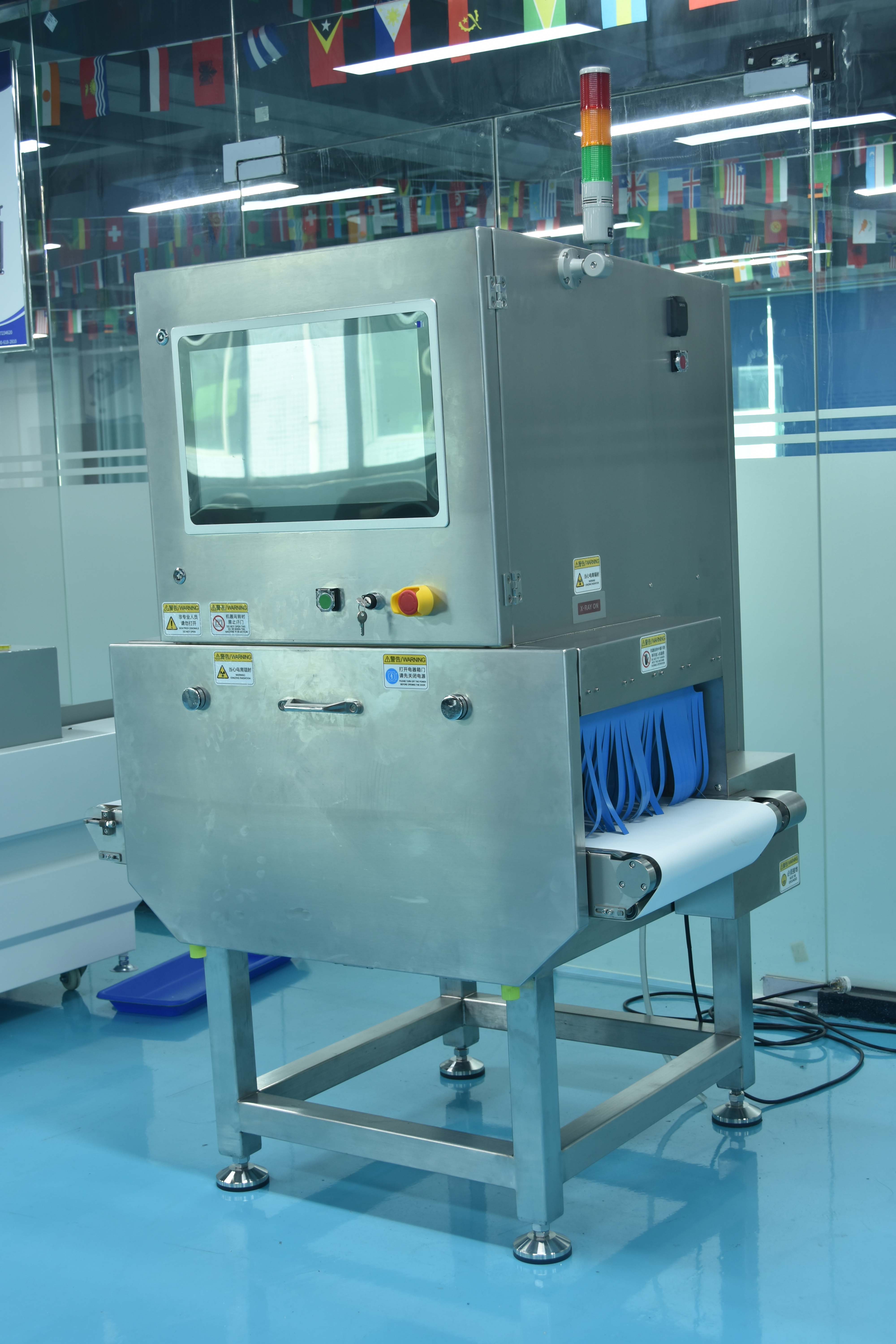
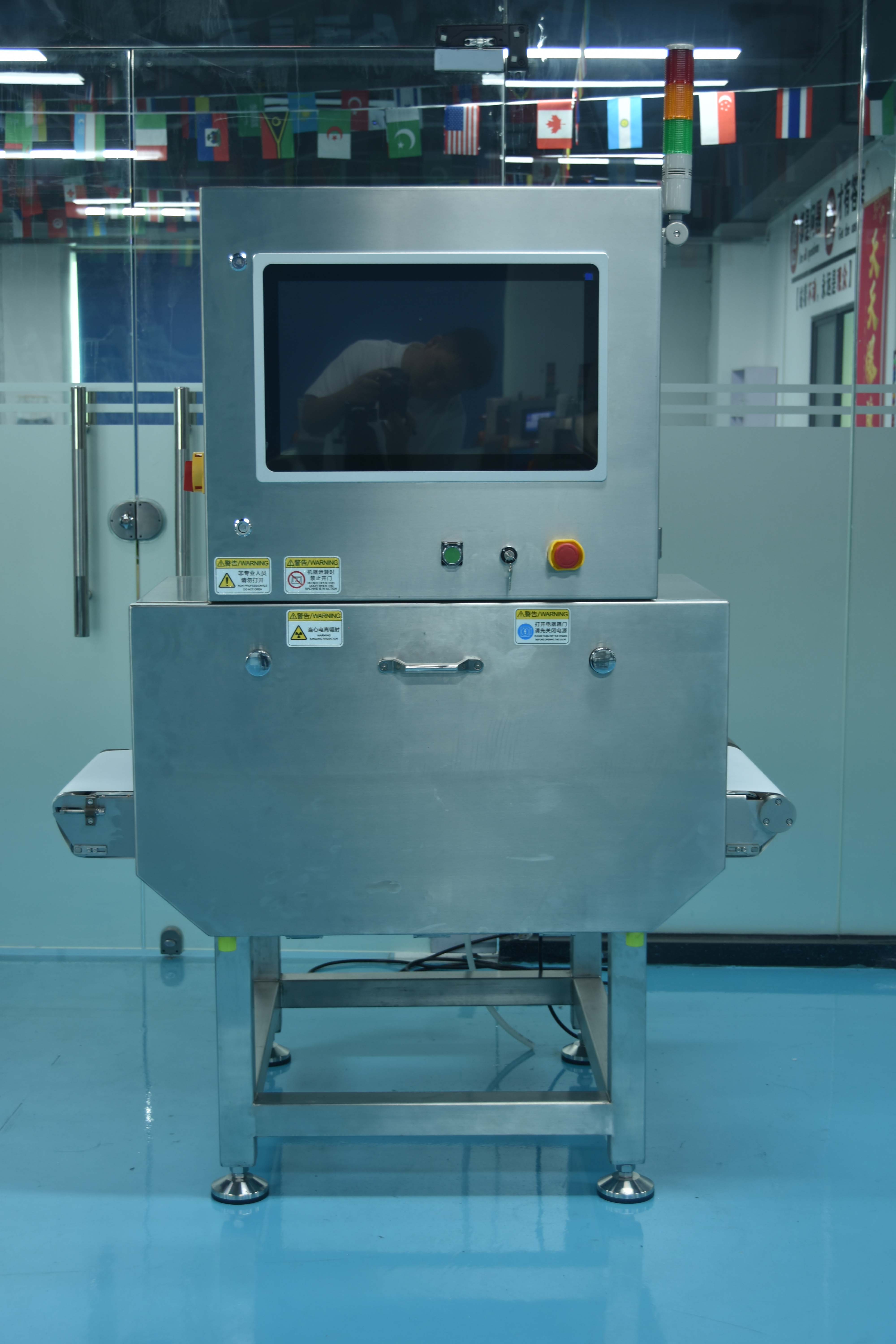
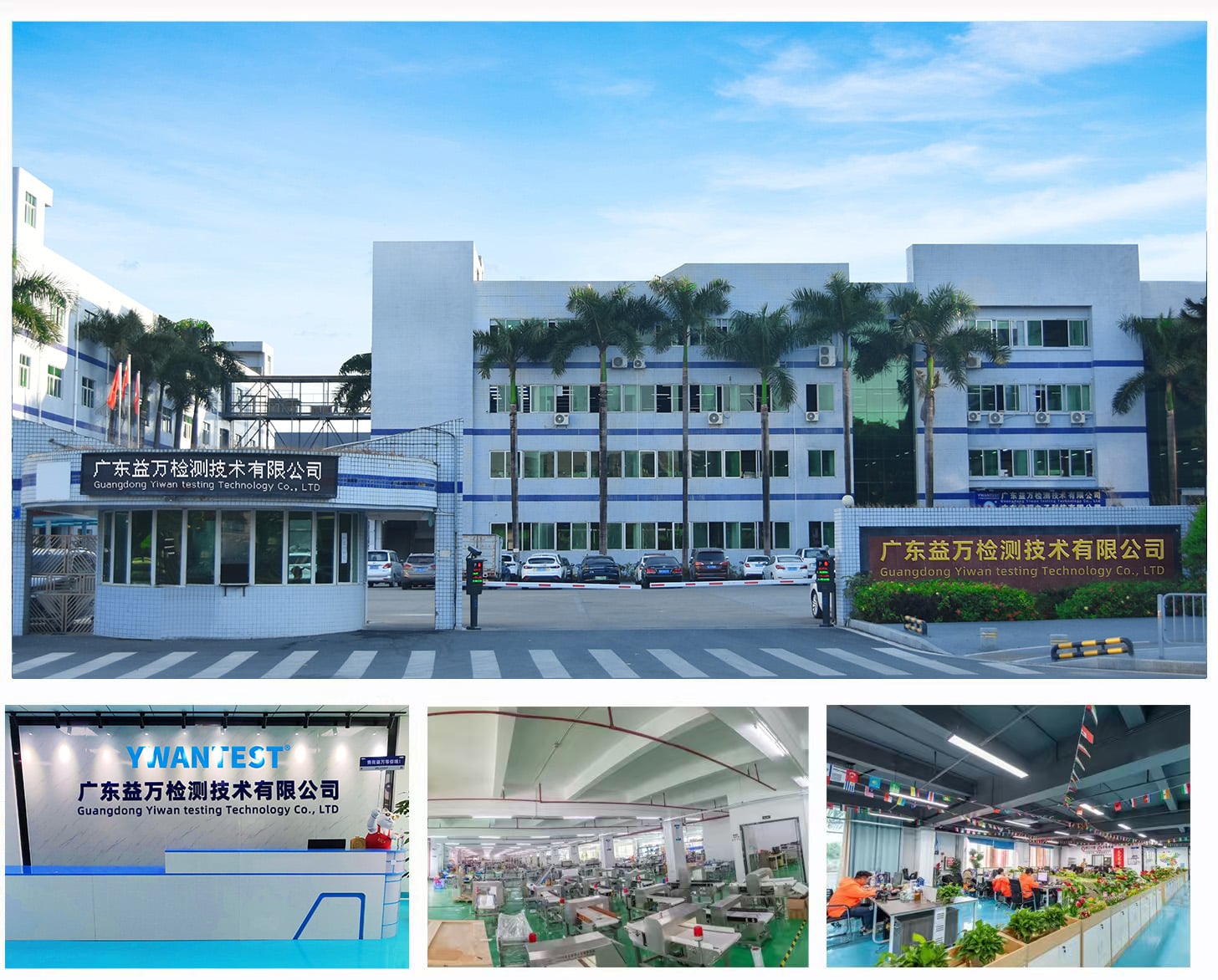
Machines are assembled, wired and run in at our own plant in Dongguan. Below: the site, and a 4020 system after run-in.
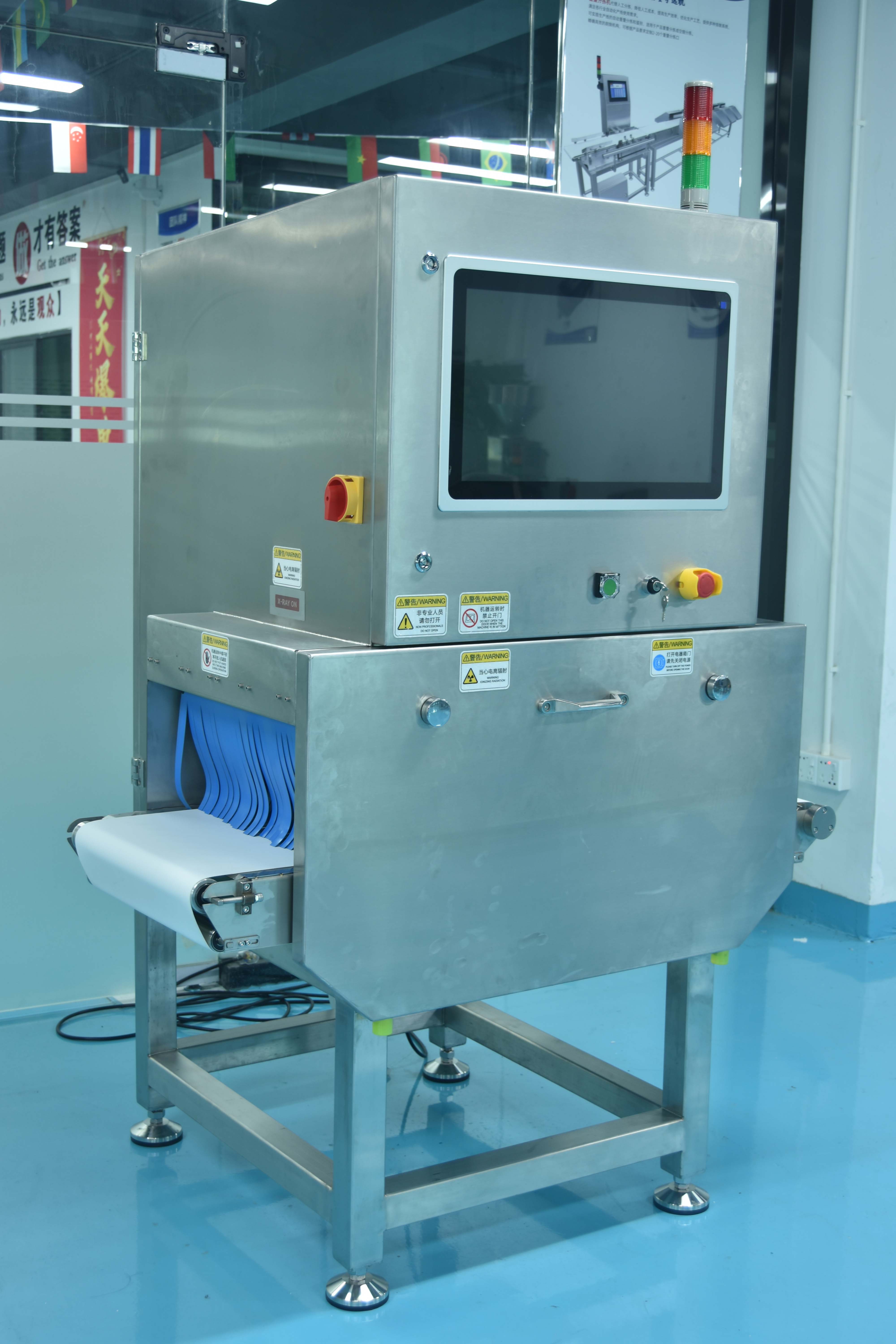
The tunnel is 400 × 200 mm; the largest pack is 280 × 200 mm upright or 400 × 60 mm flat, up to 5 kg.
Nothing in the beam: 0.4 mm SUS 304, 1.0 mm ceramic, 2.0 mm glass; through a sausage, 0.8 mm.
Either. Shutdown stops the belt and sounds the alarm; removal clears the pack with a pusher, flap, air blow or swing arm.
Yes. The X-ray image forms through the pack, so the packaging does not answer for the product as on a metal detector.
10 to 70 m/min, adjustable, at up to 5 kg a pack.
A LAN port and a USB port. Each verdict is logged with its image, and the touchscreen shows the live frame.
Send the pack, the weight and your belt speed. We will come back on fit, on which removal device suits it, and on whether shutdown would serve you better.

 ONLINE