EN


Home > > Check Weigher
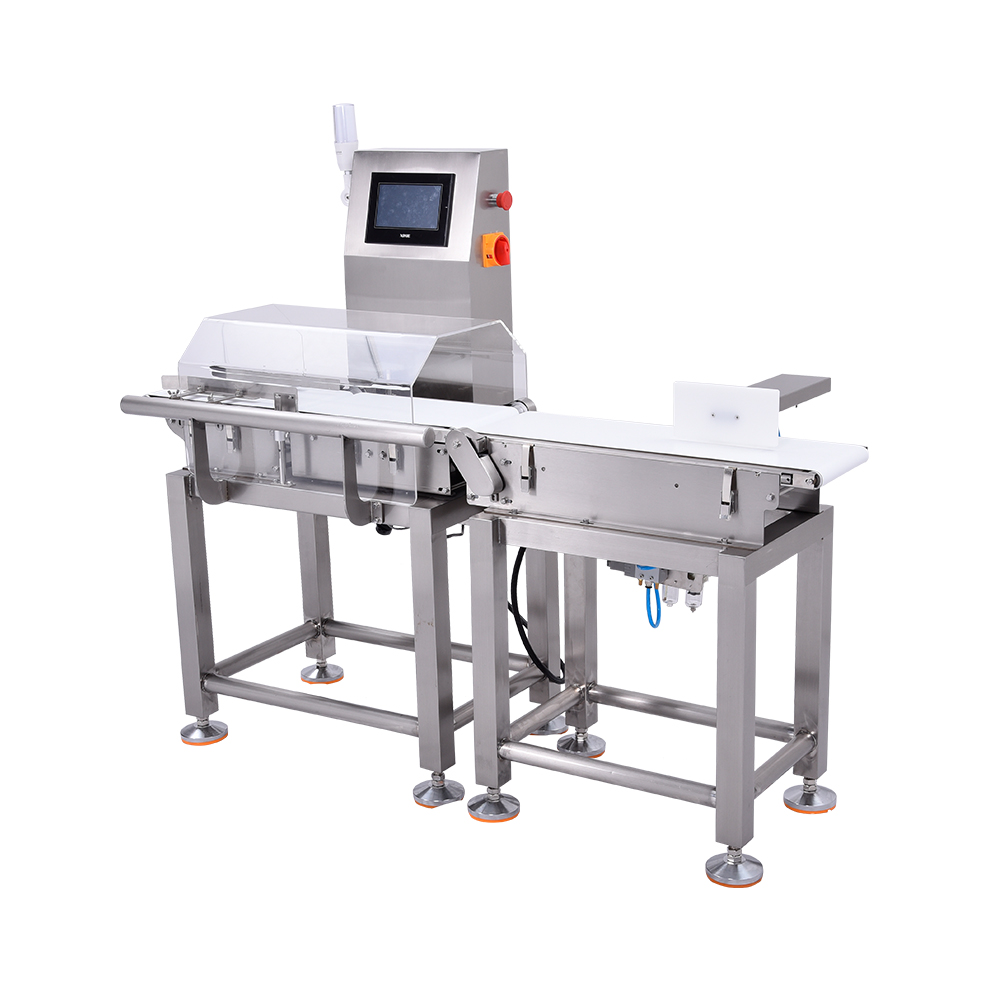
The 210 mm belt carries packs up to 1000 g. On a steady pass, weight reads down to ± 0.3 g.
| Boxed food | Cartons up to 280 × 200 mm cross the belt in line. |
| Bagged snacks and powders | Up to 160 packs a minute, weighed as they move. |
| Jars and bottles | A 0.1 g minimum scale reads the shortfall in a small fill. |
Tell us your heaviest pack. We will confirm it clears the 210 mm belt at the speed you run.
A 210 mm belt and a 0.1 g minimum scale set this build’s working window: packs, jars and small boxes up to 1000 g, crossing at 15 to 100 m per minute. The job is deliberately narrow — weigh the pack against the target held for it, and hand the verdict to the reject device your line carries.
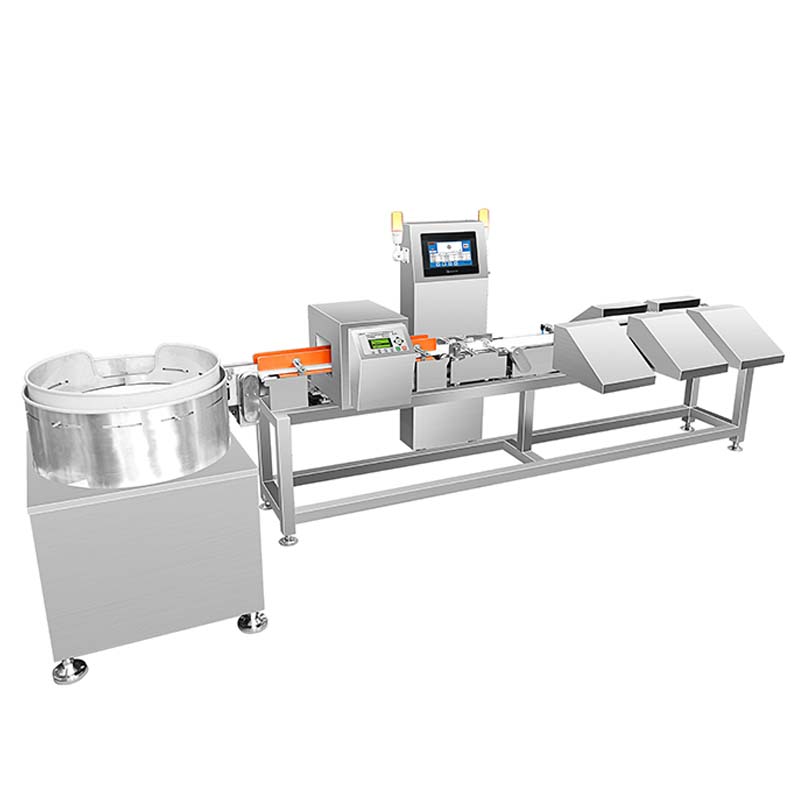
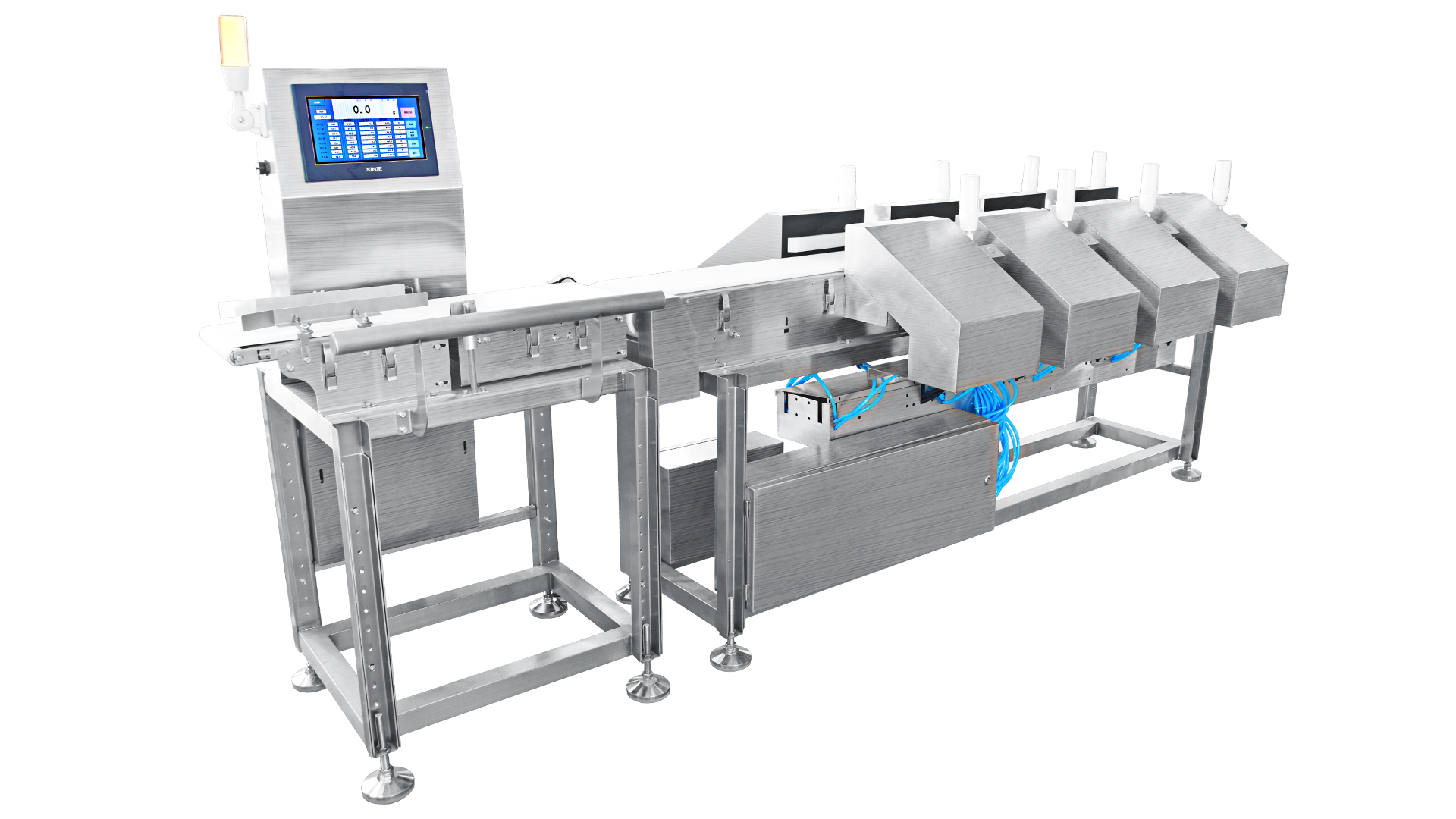
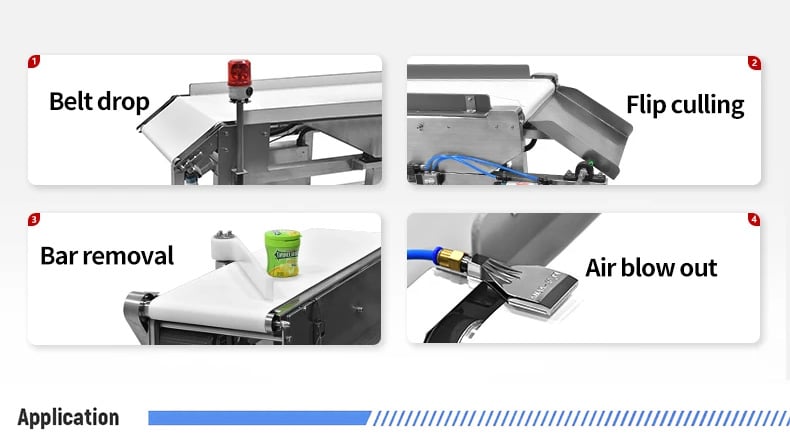
A failed pack does not have to stop the line. The weigher reports the verdict and a removal device takes that pack off the belt while the packs behind it keep moving. Four methods are offered: a pusher travelling across the belt, a flip gate, an air blow, or a drop-out section — chosen with you against the pack, the belt speed and the space you have.
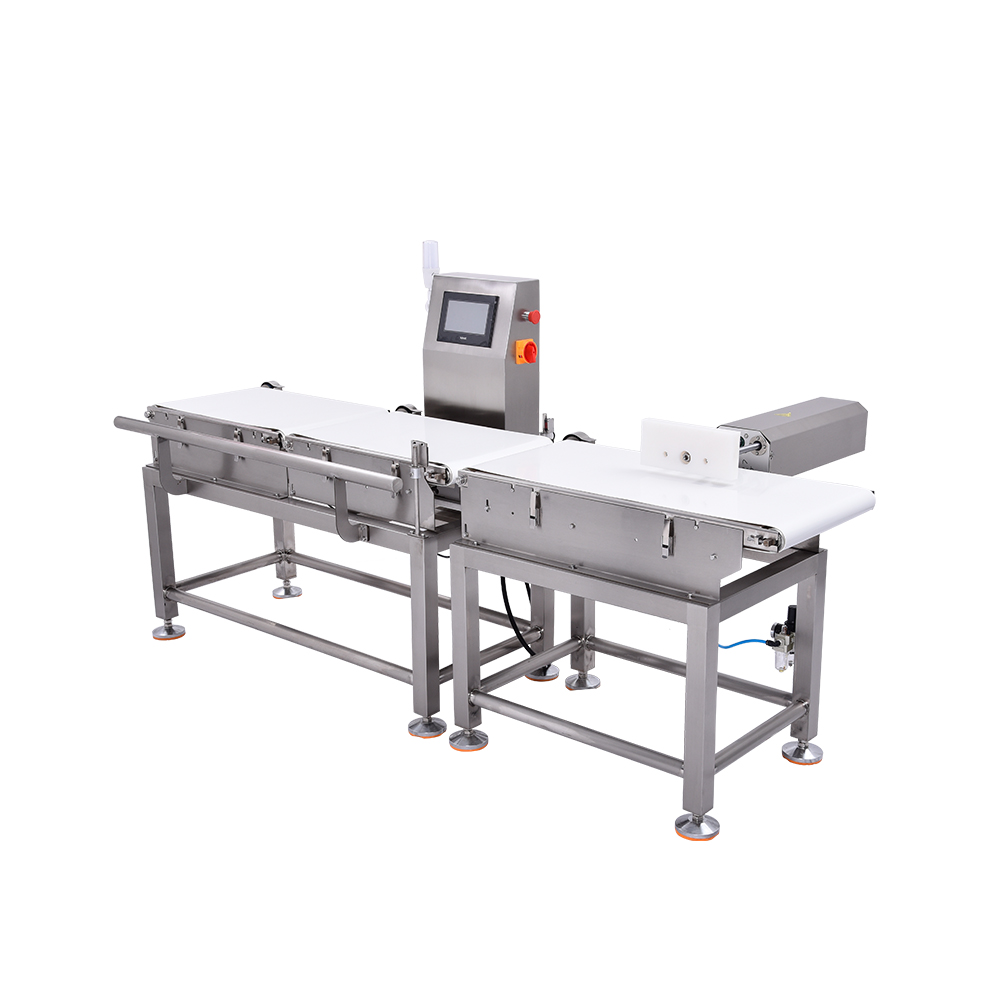
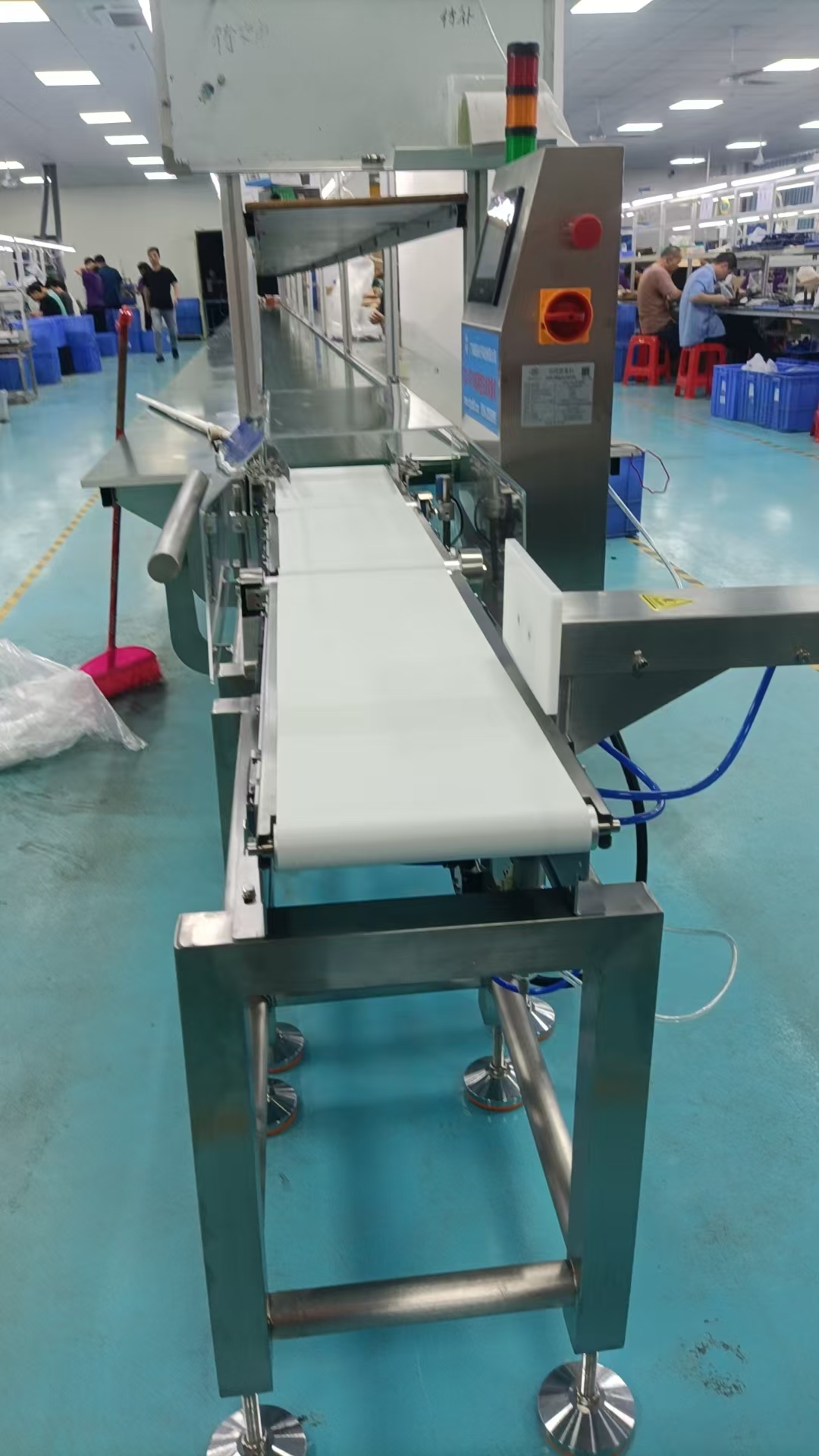
The unit in the clip carries the pusher: the plate sweeps the failed pack into the tray at the end of the run. Pneumatic devices run on 0.6 to 1 MPa external air, regulated under the frame.
| Feature | Technical Details / Performance |
| Model | CQ-YWXP210 |
| Weighing range | ≤ 1000 g per item |
| Minimum scale | 0.1 g |
| Weighing accuracy | ± 0.3 g to ± 0.5 g On a pack crossing the weighing section at a steady speed |
| Belt speed | 15–100 m/min, adjustable |
| Throughput | Up to 160 pcs/min |
| Weighing conveyor belt | 400 mm (L) × 210 mm (W) |
| Maximum product size | ≤ 280 mm (L) × 200 mm (W) |
| Rejection method | Pusher · flap · air blow · swing arm, matched to the line Pneumatic devices run on 0.6–1 MPa external air |
| Stored product programmes | 100, with automatic learning storage |
| Load cell | ZEMIC L6D16 |
| Control system | High-speed A/D sampling controller |
| Body material | SUS 304 stainless steel |
| Conveyor belt material | Food grade PU |
| Power supply | AC 220 V ± 10 %, 50 Hz, 150 W |
| Dimensions (L × W × H) | 1522 × 560 × 1222 mm |
| Interface | USB · RS232 · RS485 |
| Working environment | 0–40 °C, 30–95 % RH 7-inch colour touch screen |
The band the machine can be held to depends on the pack, not only the load cell: a stable pack crossing at a steady speed reads to the accuracy below; a light pack bouncing on a fast belt is a different job.
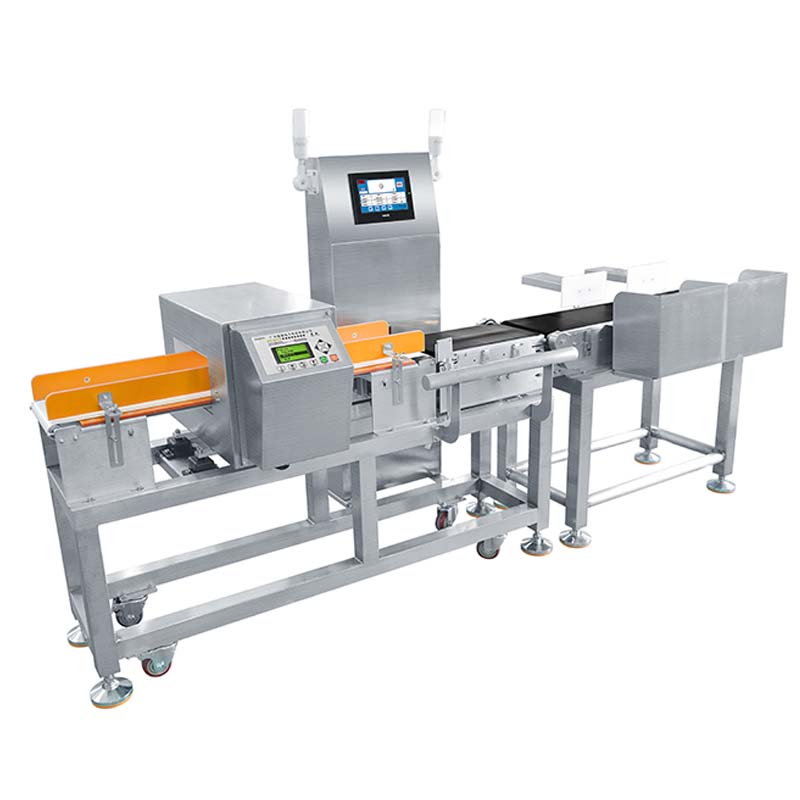
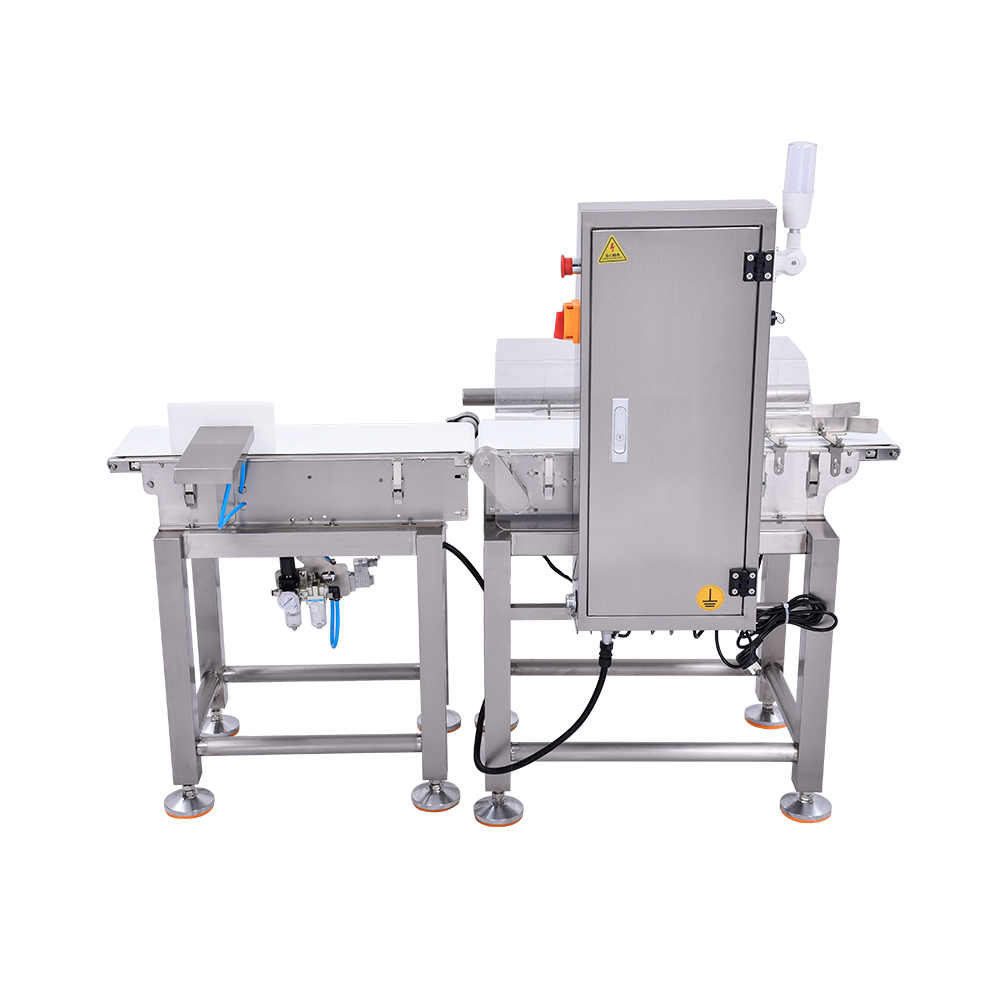
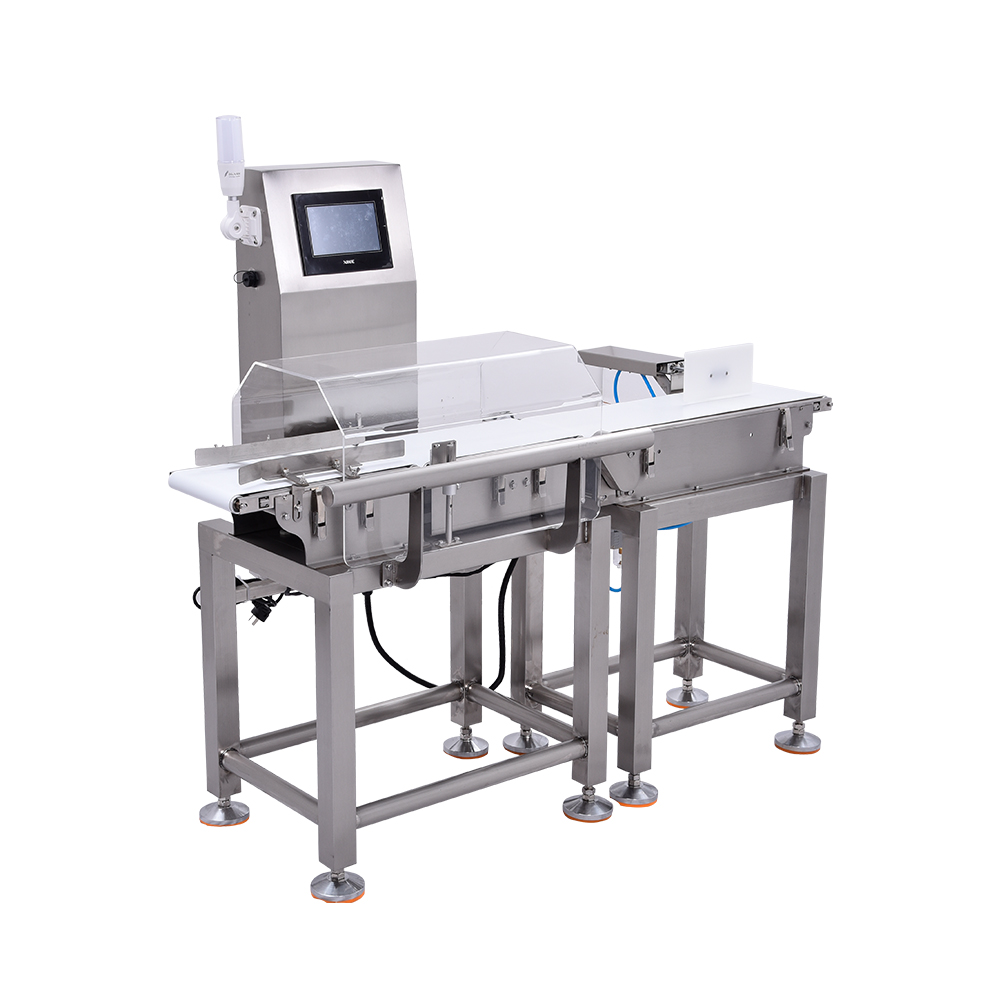
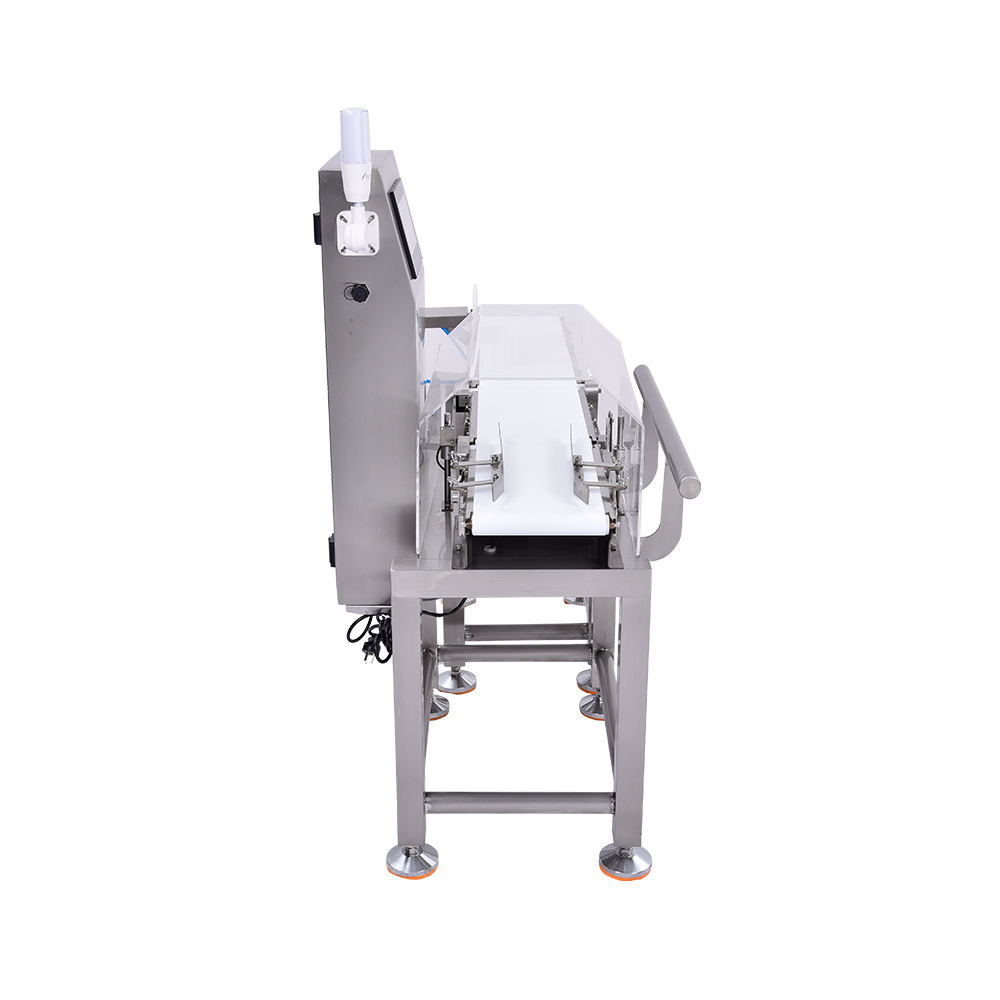
Three things protect the reading. A transparent windshield stands over the weighing section so draughts do not load it. An infrared sensor watches the pack as it crosses. A tapered shaft brings the belt back to centre as it turns, so it cannot drift to one side. Zero tracking runs continuously, with manual or automatic zero clearing. Up to 100 stored programmes save the settings for each product.
The fittings that keep a check weigher accurate on a real line are not the ones on the specification sheet: the windshield, the sensor, the belt return and the frame hardware. All four are here.
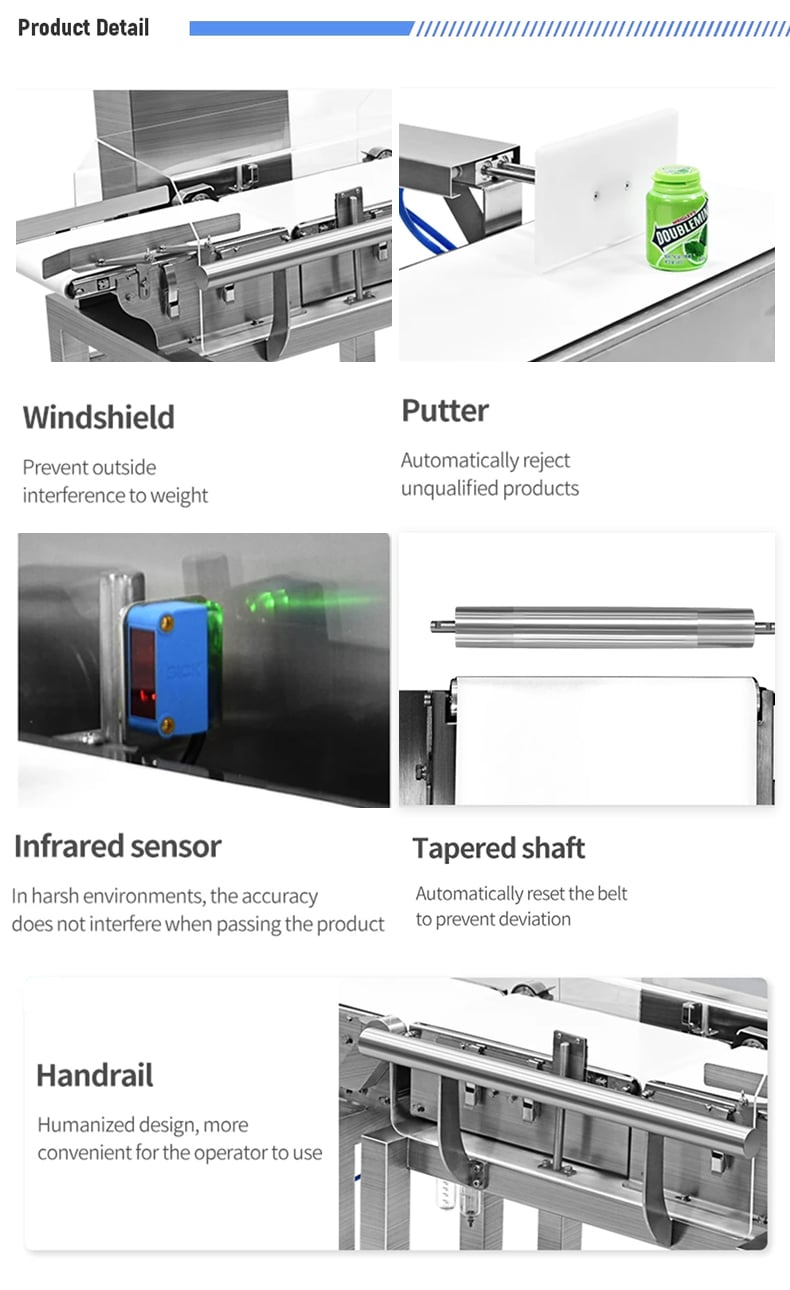
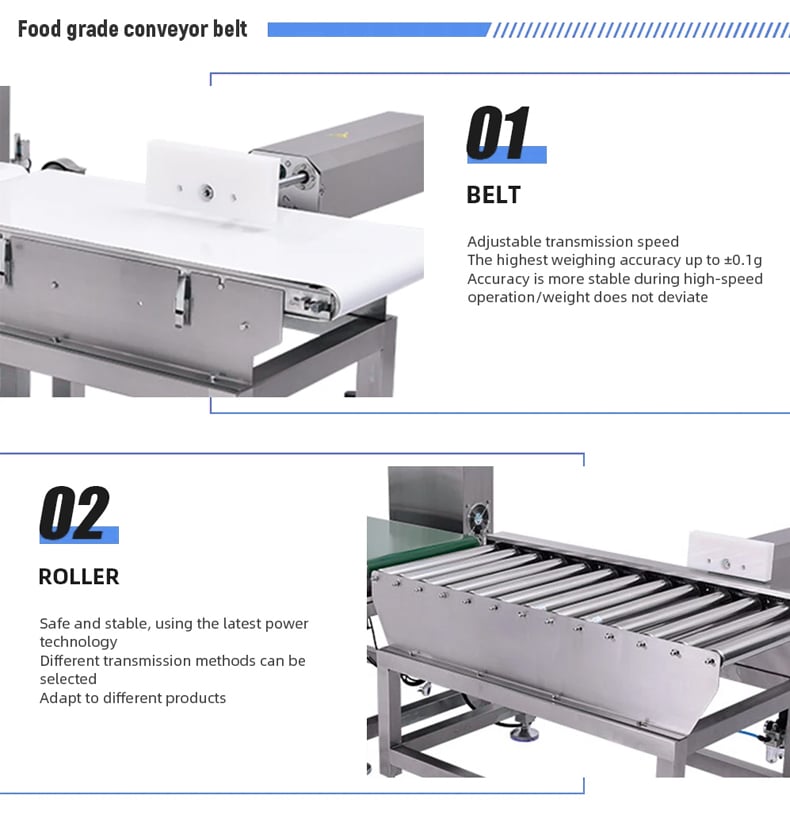
The frame is stainless throughout, the belt runs between aluminium rails, and the machine stands on adjustable feet. Fasteners, the load cell and the frequency converter are reachable from the sides.
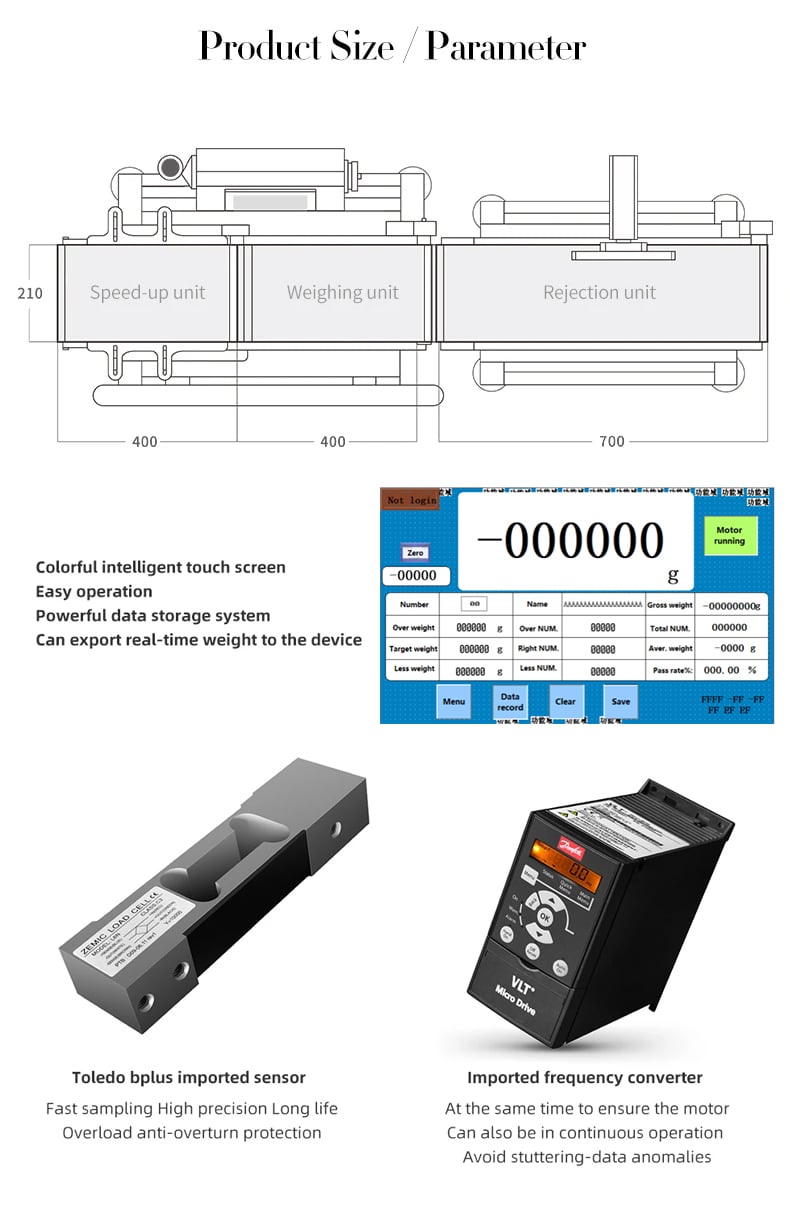
The frame carries the belt in three sections. A short speed-up section settles the pack; the weighing section is where the load cell reads it; the rejection section is where the verdict is carried out. The lengths are fixed by the model, so the pack has room to settle before it is weighed.
The load cell samples continuously, so the weight is a curve taken across the whole pass rather than one snapshot. The software takes the stable part of it, compares that with the target and the tolerance held for the product, and decides good or NG. From there the decision is mechanical: the reject device fires, or the alarm reports and the pack comes off by hand.
The 210 mm belt is for small and medium packs: boxed food, bagged snacks and powders, jars, sachets, blister packs and small hardware, up to 280 × 200 mm and 1000 g a piece.
A stainless frame and a food grade PU belt suit food and beverage, pharmaceutical and healthcare packing, daily chemical and electronics — only the stored programme changes. It is not the frame for large cartons or heavy cases, which need a wider belt and a heavier load cell.

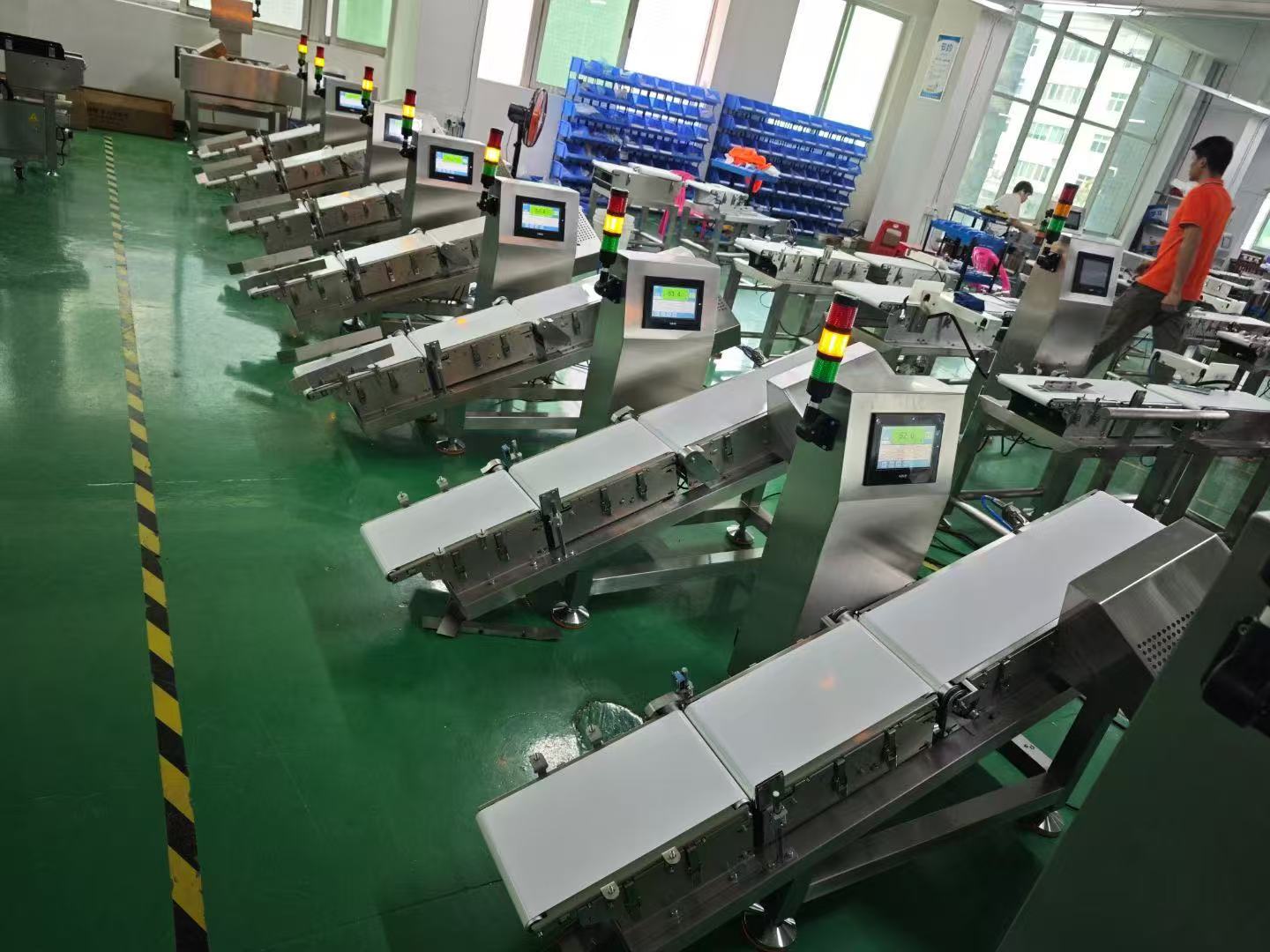
Every unit is assembled and run on our own floor before it is packed.
Packs, boxes, jars and bags up to 280 mm long, 200 mm wide and 1000 g each. Larger or heavier product needs a wider belt and a heavier load cell.
± 0.3 g to ± 0.5 g on a pack crossing the weighing section at a steady speed, with a 0.1 g minimum scale. Tell us what you are weighing and we will say what this frame can hold.
A pusher, a flap, an air blow or a swing arm, whichever suits the pack and the space you have. Pneumatic devices run on 0.6 to 1 MPa of external air.
100 stored programmes with automatic learning storage, recalled from the 7-inch colour touch screen.
AC 220 V, 50 Hz, 150 W. Compressed air at 0.6 to 1 MPa only for the pneumatic reject options. Data comes out through USB, RS232 or RS485.
Whole machine one year, with parts replaced free inside it. It ships by sea, air or international express, and payment can go through Alibaba Trade Assurance.
Send the product size, the weight per piece and your belt speed. We will come back on fit, on the accuracy you can hold and on the reject device.

 ONLINE