 EN
EN



Metal Separator vs Conveyor Metal Detector: How to Pick
Most free-fall metal separator enquiries start with a pipe size: "we need a 100 mm line." That is a dimension, not a specification. Two machines bolt onto the same 100 mm flange and differ by a factor of two in what they detect — and that is fixed by the geometry, not by a setting.
This guide covers when a free-fall metal separator is right, what the bore lets you promise, and which of our four models fits the job.
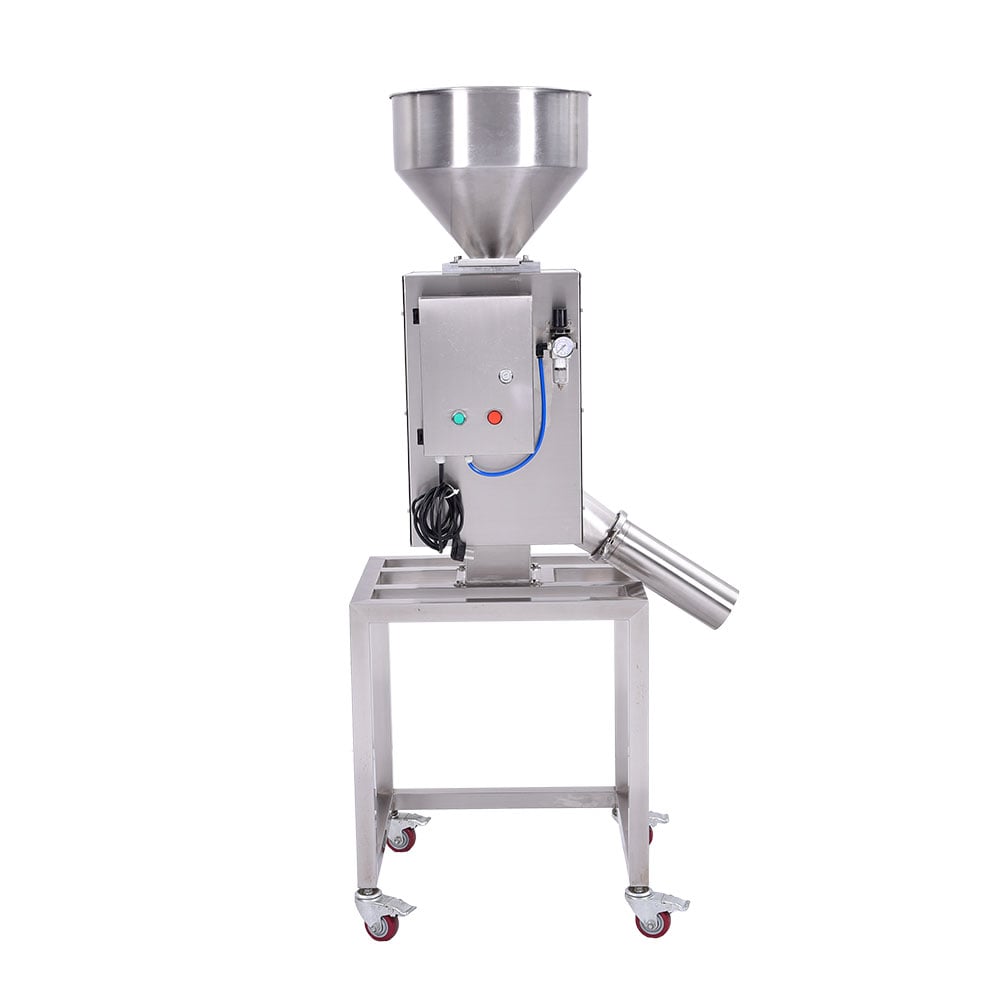
Free-Fall Metal Separator vs Metal Detector: Two Places in the Line
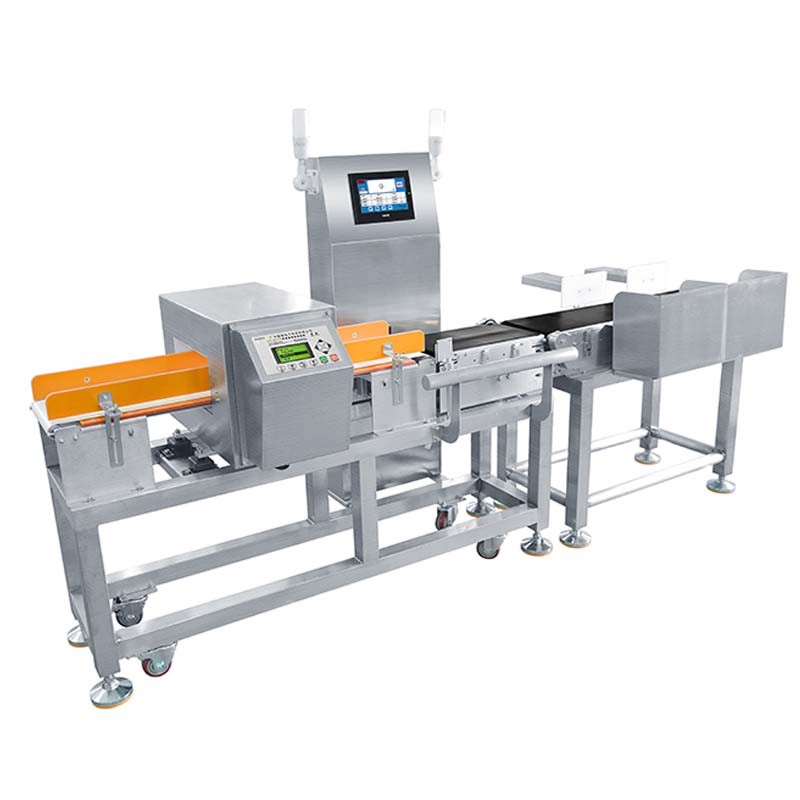
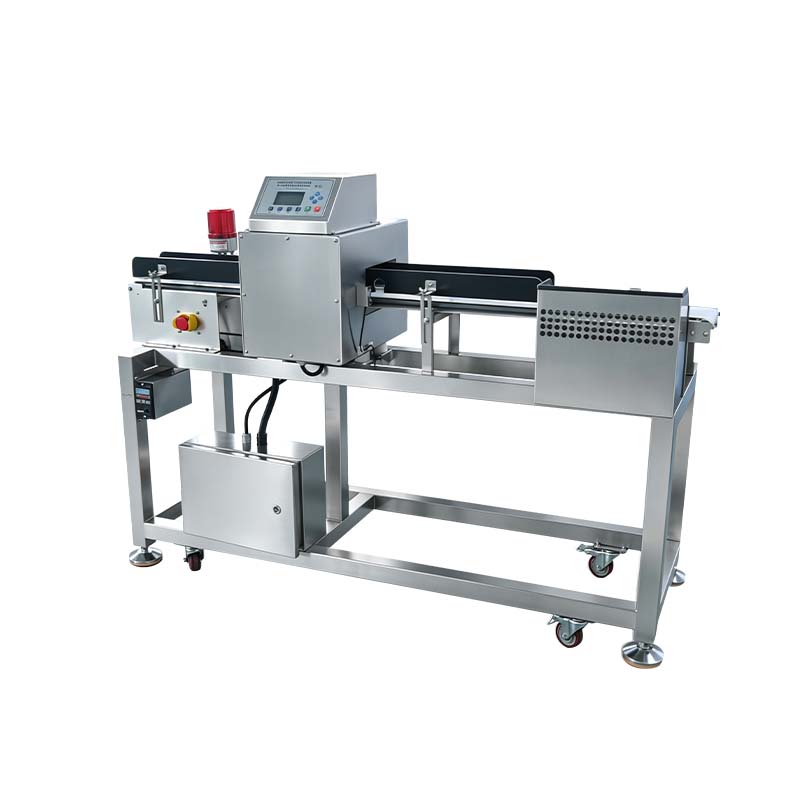
A conveyor metal detector presents the product on a belt, through a rectangular aperture formed by coils above and below. Rejection removes the item — air blast, pusher, flap or belt sinking.
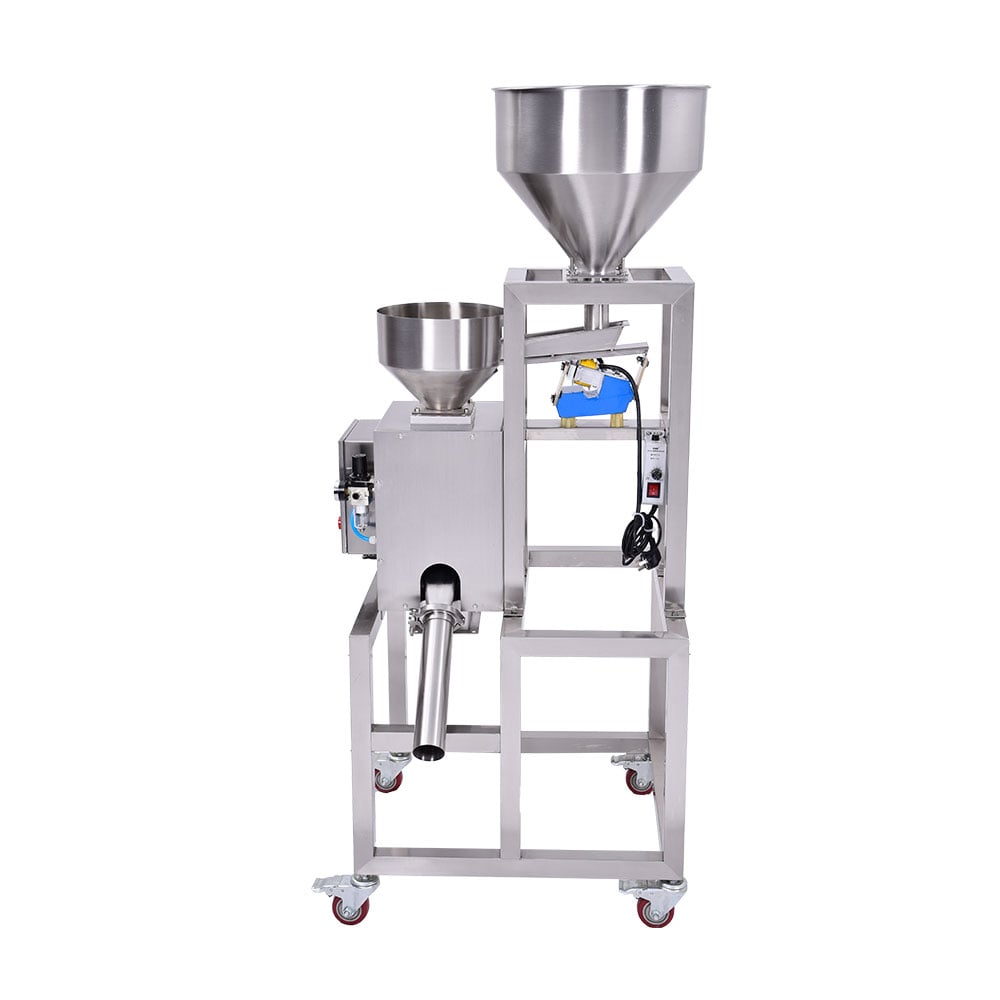
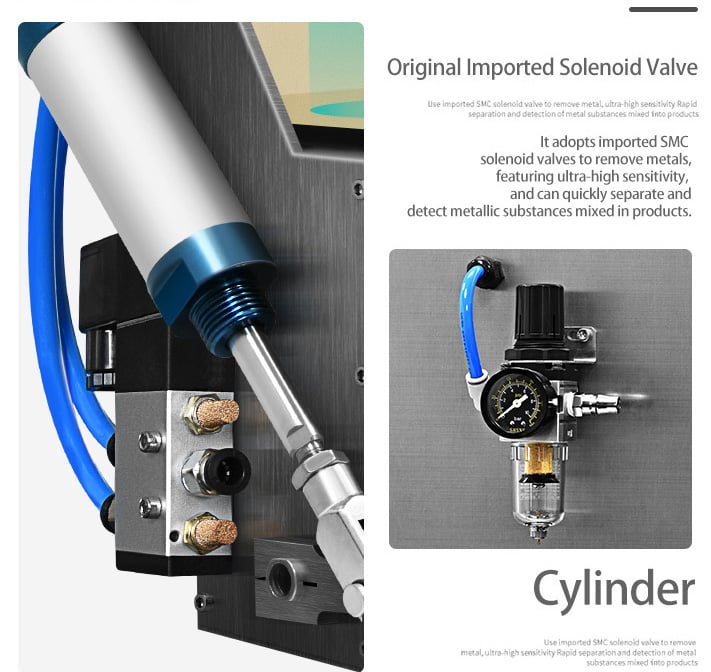
A free-fall metal separator has no belt. It is a flanged vertical section of pipe in a gravity chute or a pneumatic line: product falls through a round bore lined with a non-metallic channel and ringed by the detection coil, and a solenoid valve diverts the material passing at that instant to the reject outlet.
That decides everything downstream: on a belt you control how much product sits in the field, in a pipe you do not — so the bore, not the electronics, sets what the machine can promise.
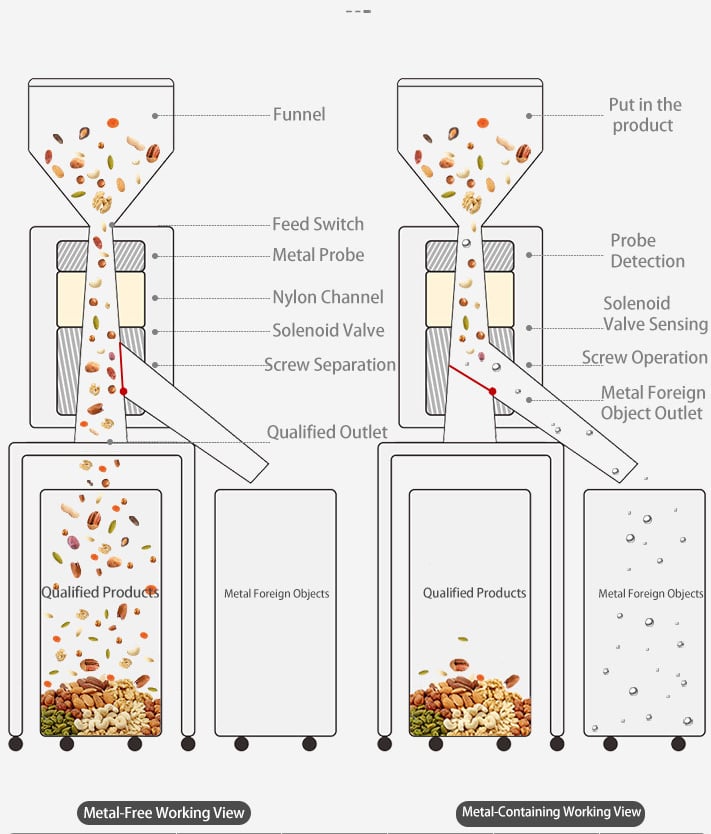
The Bore Is the Sensitivity Ceiling
Every free-fall metal separator comes down to its aperture table — and that table, not the best number on the marketing page, is what an auditor will read:
| Model | 30 mm | 50 mm | 70 mm | 100 mm | 150 mm |
|---|---|---|---|---|---|
| CQ-S01 Fe (mm) | 0.3 | 0.4 | 0.6 | 0.8 | 1.5 |
| CQ-S01 SUS (mm) | 0.5 | 0.8 | 1.0 | 1.2 | 2.0 |
| CQ-S02 / S03 / S04 Fe (mm) | 0.5 | 0.5 | 0.8 | 1.0 | 1.5 |
| CQ-S02 / S03 / S04 SUS (mm) | 1.0 | 1.2 | 1.5 | 2.0 | 3.5 |
| Max capacity (kg/h) | 300–400 | 700–800 | 1000–1500 | 2000–2500 | 5000 |
Sensitivity only gets worse as the bore widens, and the stainless column is worse than iron at every bore. Both are bench values on an empty machine; on your product the limit moves with the material, the environment and where the metal sits, so confirm it against your test piece.
The same law applies on belts: the published CQ-YW806 spec table gives 0.8 mm iron at a 100 mm channel height and 3.0 mm at 350 mm.
Throughput and Sensitivity Cannot Both Be Maximised
Capacity is the column most projects miss. It is tied to bore, which is tied to sensitivity, so a throughput target silently sets the best sensitivity available to you.
Five tonnes an hour needs the 150 mm bore, where no model guarantees better than 1.5 mm iron. If your hazard analysis names a 1.0 mm iron test piece, five tonnes an hour on one separator is not a machine you can buy — split the stream across two narrower units, or move the inspection point to where the material flows more slowly. Settle that before you ask for a price: we must catch X mm of Y at Z kg/h.
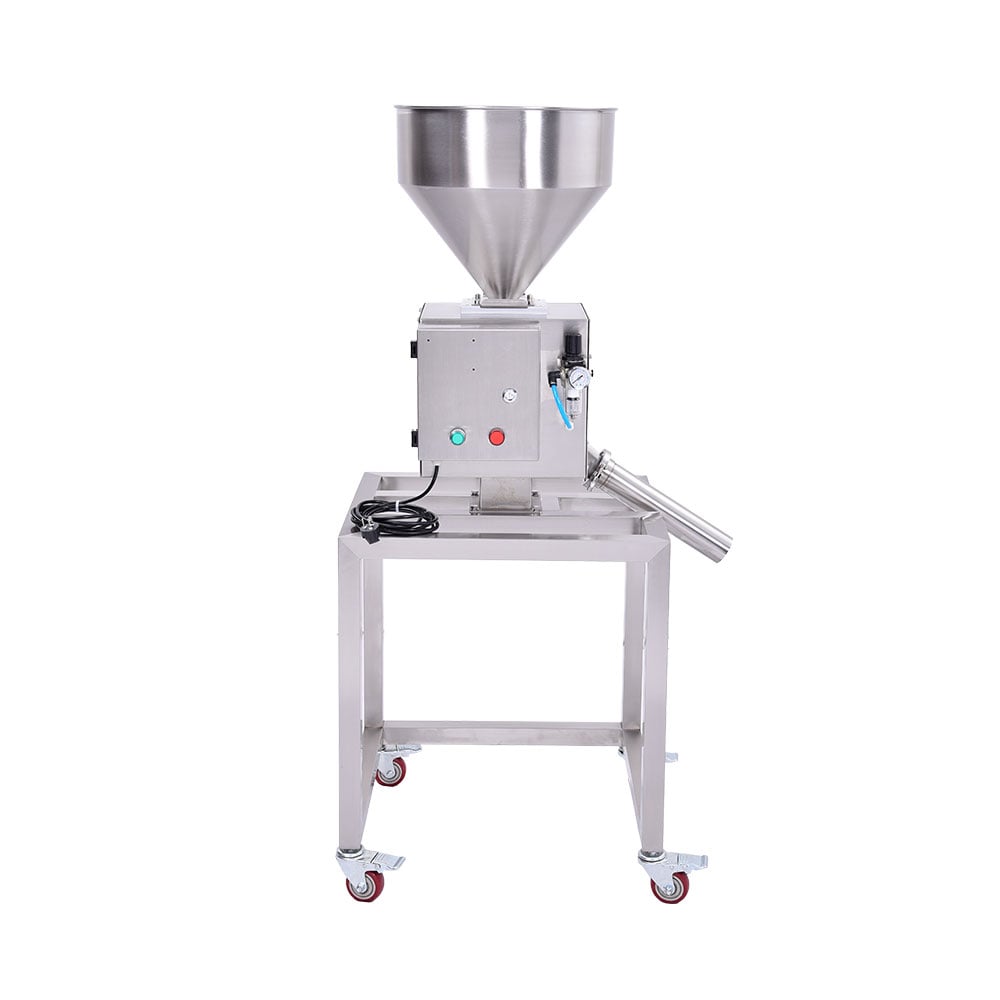
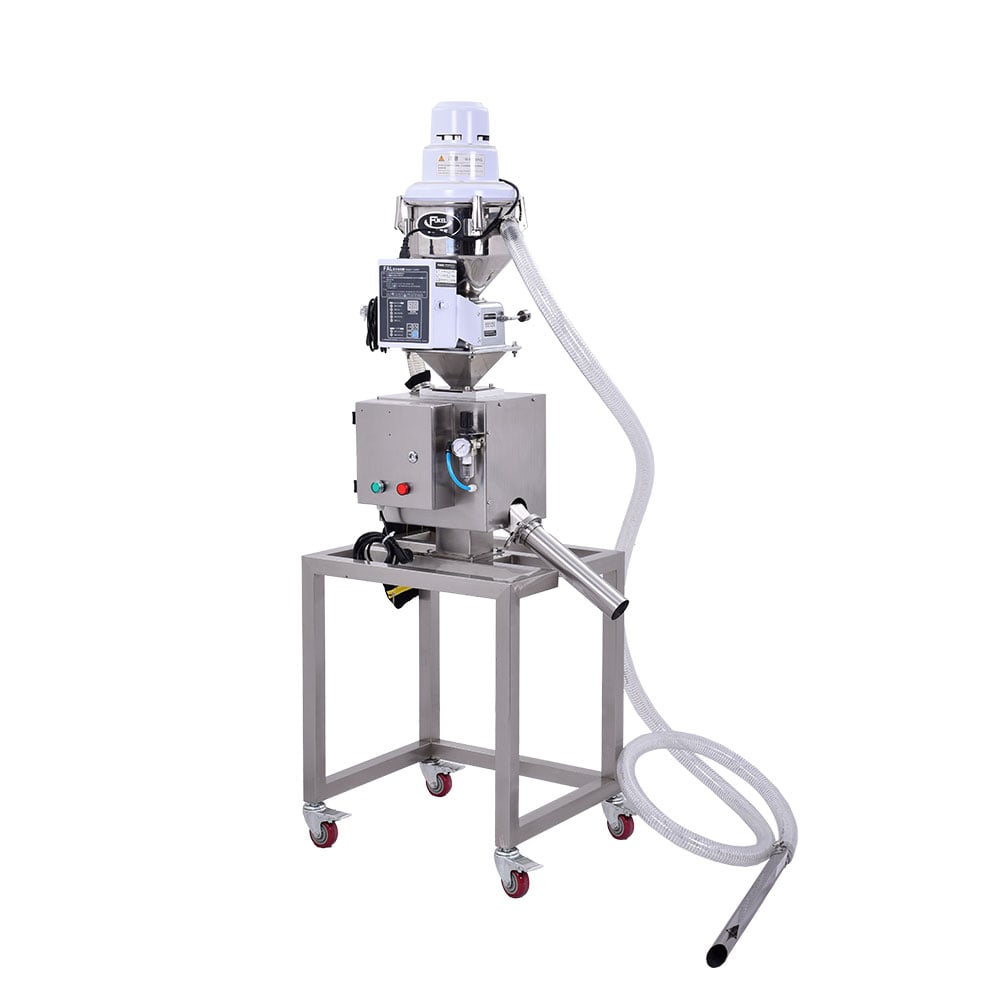
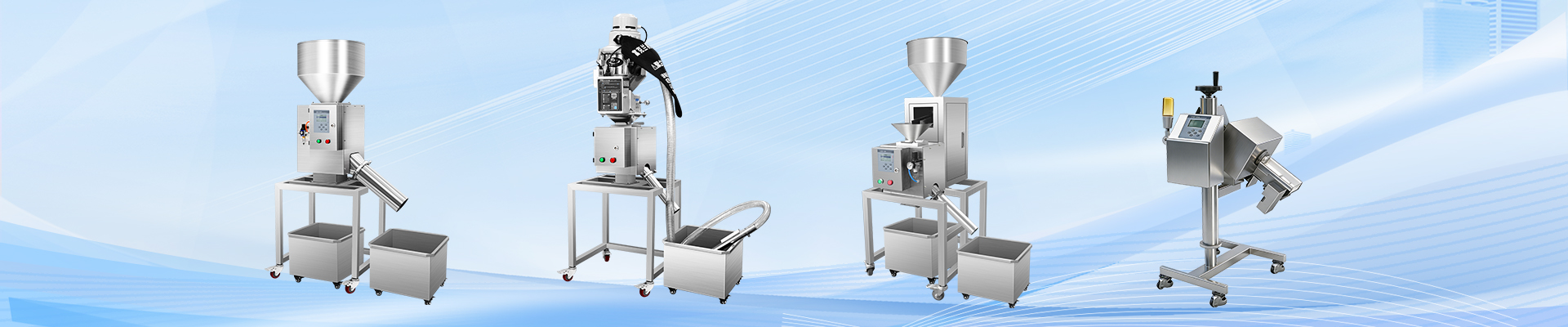
Our Four Metal Separator Models
All four free-fall metal separators share one detection principle and one pneumatic rejection; what changes is precision and how the material reaches the bore.

When Only a Free-Fall Metal Separator Will Do
A free-fall metal separator is the only option when the product cannot go on a belt at all:
- The material is a powder, granule or pellet that will not present in a single layer.
- It is already moved by gravity or air, so there is no belt to mount a detector around.
- You need to inspect at the raw-material intake or before packing, so contamination is caught before it is blended into a clean batch.
The inlet bore can match your existing spool piece — on a retrofit that saves a week of pipework.
When a Conveyor Metal Detector Is the Right Answer
A belt machine is not the inferior choice; it answers a different question:
- The contamination you fear may come from the packing line itself, so the sealed pack is what must be inspected.
- The product is discrete, so you reject the single item rather than divert a quantity of bulk material.
If the pack is foil or metallised film, a standard balanced-coil machine will not see through it — see our ferrous machines for foil packaging.
Four Mistakes We See in Free-Fall Metal Separator Specifications
- Specifying the bore and not the model. At 100 mm two of our models hold different stainless limits, 1.2 mm and 2.0 mm, and both fit the same flange.
- Quoting the headline figure without its bore. 0.3 mm iron belongs to the 30 mm bore of CQ-S01, not to the 150 mm line.
- Installing the free-fall metal separator after mixing. Put the inspection point as early as the process allows.
- Assuming one rejection equals one particle. The diverter acts on a flowing stream, so a rejection carries material with it — ask how much, and where it goes.
Using Both Ends Together
On a line that turns bulk material into a packed product, the two machines are not alternatives: the intake separator catches incoming contamination and wear from your crushers and sieves; the end detector catches what the packing line adds.
If the budget covers only one, choose by where your contamination actually comes from; your reject records decide faster than any rule.
Frequently Asked Questions
How does a metal separator differ from a conveyor metal detector?
A free-fall metal separator is a flanged vertical section in a gravity or pneumatic line: product falls through a round bore and the material around a detected particle is diverted. A detector inspects product on a belt and rejects the item.
Can a free-fall metal separator detect stainless steel?
Yes, but at a worse limit than iron: at a 100 mm bore our standard models hold 1.0 mm iron and 2.0 mm stainless, while CQ-S01 holds 0.8 mm and 1.2 mm. Read the SUS column if your hazard analysis names stainless.
What pipe bore do I need for 2 tonnes per hour?
The 100 mm bore is rated at 2,000–2,500 kg/h, with guaranteed figures of 1.0 mm iron and 2.0 mm stainless on the standard models. Confirm both on a sample, because capacity is quoted for free-flowing product only.
Can a free-fall metal separator be fitted into an existing pneumatic line?
Yes — it is a flanged vertical section, and the inlet bore can match your existing spool piece. We need the flange size, the height available, the air supply and the reject destination.
What information do you need before you can quote or test?
The material and particle size, your throughput, the bore or flange you have, and the test piece your hazard analysis names. For a test report, send a sample and we will tell you the smallest particle the separator stops.
Choosing between a free-fall metal separator and a conveyor metal detector is not about which is better, but about where in your process the material can be inspected — and what that position lets you promise.
Send us your material, your throughput and the test piece your hazard analysis names, and we will tell you which bore holds that figure — or that no single machine does. The four separator models are compared side by side on our metal separator page.


 Hot News

 ONLINE