 EN



Separator Metallicus vs Detector Metallicus in Conveior: Quomodo Eligere
Plurimi cadentis liberi metallum Separator quaestiones saepe incipiunt cum dimensione tubi: "necesse est nobis linea 100 mm." Haec est dimensio, non specificatio. Duo machinae ad eandem flangiam 100 mm coniunguntur et differunt per factorem duorum in rebus quas detegunt — et hoc fixum est a geometria, non ab impetu.
Haec directiva tractat quando separator metallicus cadentis liberi idoneus est, quid apertura polliceri potest, et quae ex quattuor nostris modellis ad opus conveniat.
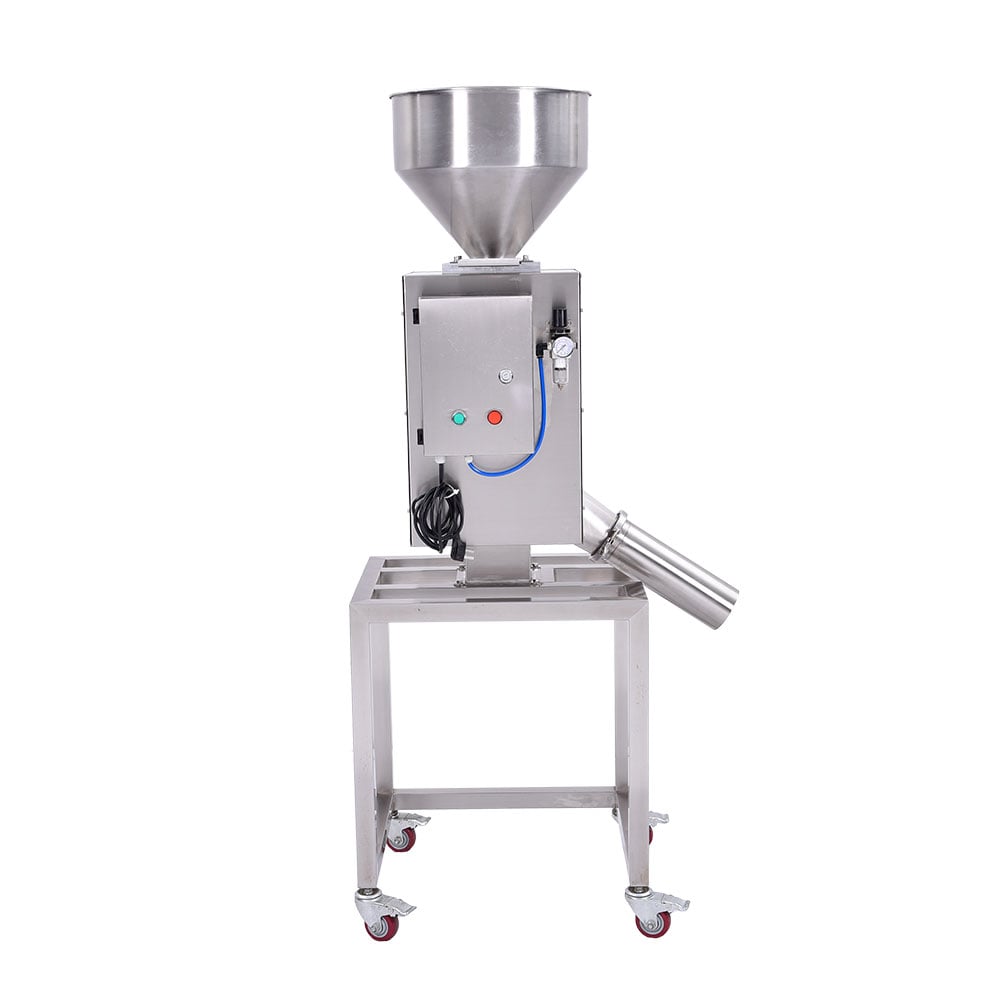
Separator Metallicus Cadentis Liberi contra Detectorem Metallicum: Duo Loca in Linea
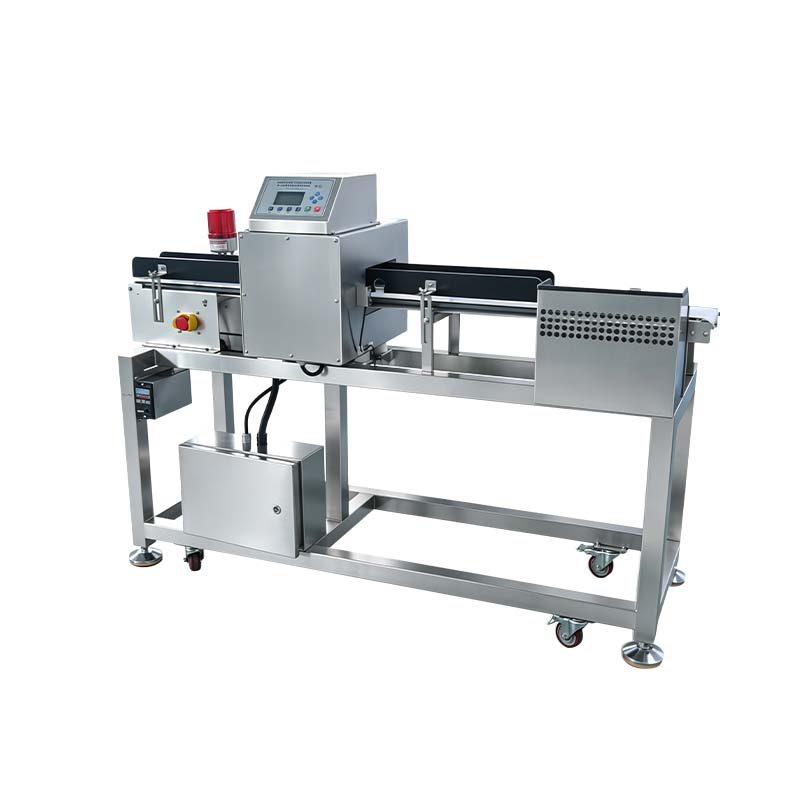
Transmissor metal Detector praebet productum super cingulo, per aperturam rectangularem formatam a spiris supra et infra. Repulsio removet rem — impetus aeris, pulsator, valvula aut subsidentia cinguli.
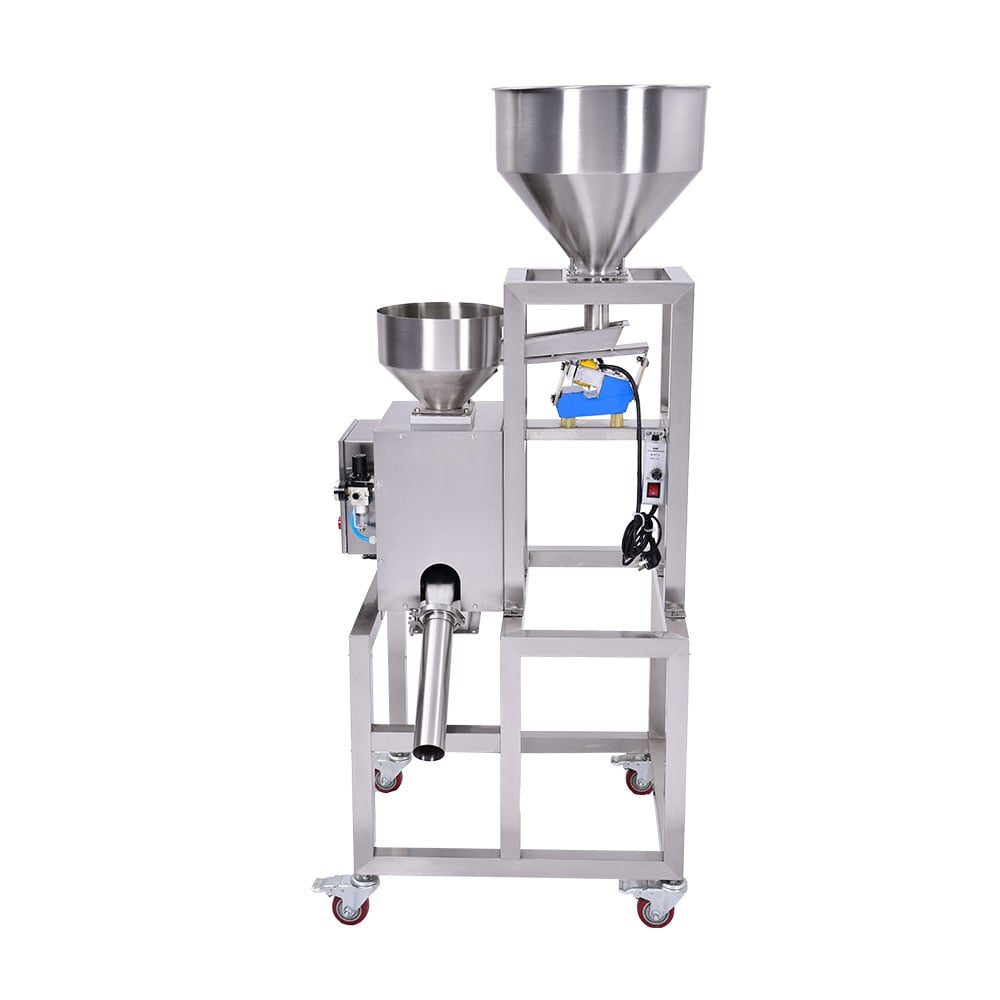
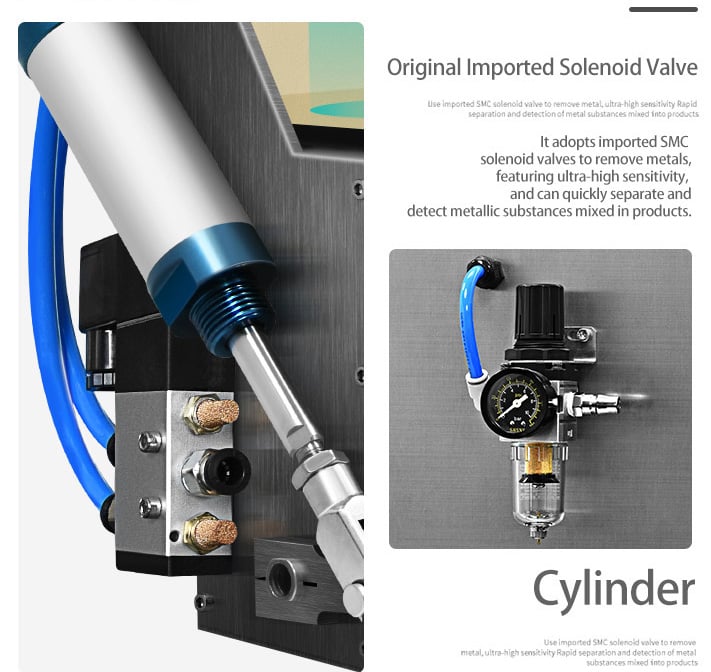
A free-fall metal separator has no belt. It is a flanged vertical section of pipe in a gravity chute or a pneumatic line: product falls through a round bore lined with a non-metallic channel and ringed by the detection coil, and a solenoid valve diverts the material passing at that instant to the reject outlet.
That decides everything downstream: on a belt you control how much product sits in the field, in a pipe you do not — so the bore, not the electronics, sets what the machine can promise.
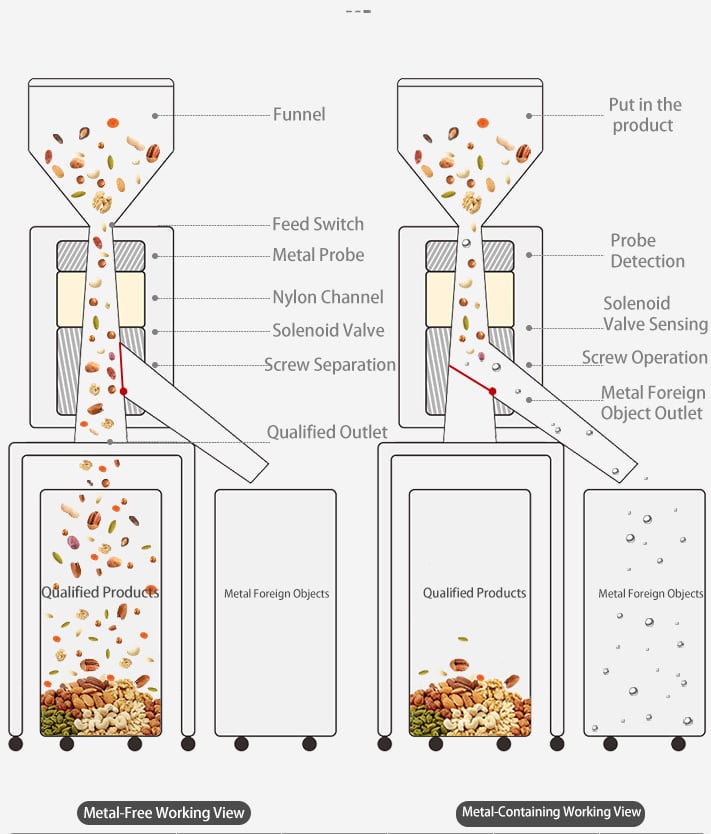
The Bore Is the Sensitivity Ceiling
Every free-fall metal separator comes down to its aperture table — and that table, not the best number on the marketing page, is what an auditor will read:
| Modellum | 30 mm | 50 mm | 70 mm | 100 mm | 150 mm |
|---|---|---|---|---|---|
| CQ-S01 Fe (mm) | 0.3 | 0.4 | 0.6 | 0.8 | 1.5 |
| CQ-S01 SUS (mm) | 0.5 | 0.8 | 1.0 | 1.2 | 2.0 |
| CQ-S02 / S03 / S04 Fe (mm) | 0.5 | 0.5 | 0.8 | 1.0 | 1.5 |
| CQ-S02 / S03 / S04 SUS (mm) | 1.0 | 1.2 | 1.5 | 2.0 | 3.5 |
| Capacitas maxima (kg/h) | 300–400 | 700–800 | 1000–1500 | 2000–2500 | 5000 |
Sensibilitas tantum deterior fit dum diameter aucta est, et columna ex ferro inoxidiabilis peior est quam ex ferro in omni diametro. Uterque valor est mensura in machina vacua; in tuo producto autem limen variat secundum materiam, ambientem et locum metalli, ideo confirmare debes eum ad tuum exemplar experimentale.
Eadem lex valet pro cingulis: tabula specificata CQ-YW806 dat 0,8 mm ferri ad altitudinem canalis 100 mm et 3,0 mm ad 350 mm.
Efficientia et sensibilitas simul maximizari non possunt.
Capacitas est columna quam plerique projectus praetermittunt. Haec vincitur ad diametrum, quae rursus vincitur ad sensibilitatem; ergo finis efficientiae silentio statuit optimam sensibilitatem tibi disponibilem.
Quinque tonnae per horam necessitant tubum diametri 150 mm, ubi nullum modello praestat ferrum minus quam 1.5 mm. Si analysi periculi tuae pars ferrea testis est 1.0 mm, quinque tonnae per horam in uno separatore non sunt machina quam emere potes — divide fluxum per duas unitates angustiores, aut move punctum inspectionis ad locum ubi materia fluit lentius. Hoc statue antequam pretium petis: necesse est ut capiamus X mm de Y ad Z kg/h.
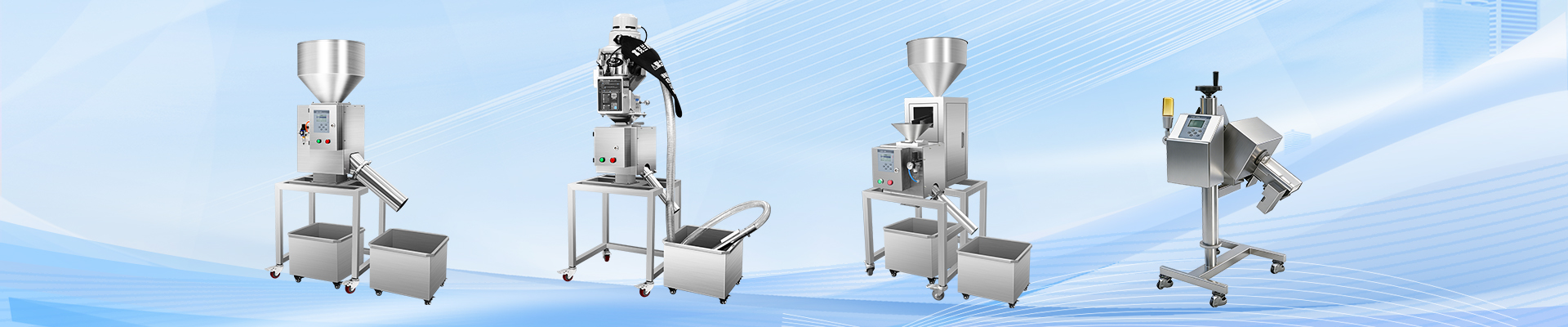
Quattuor Nostri Modellos Separatores Metallici
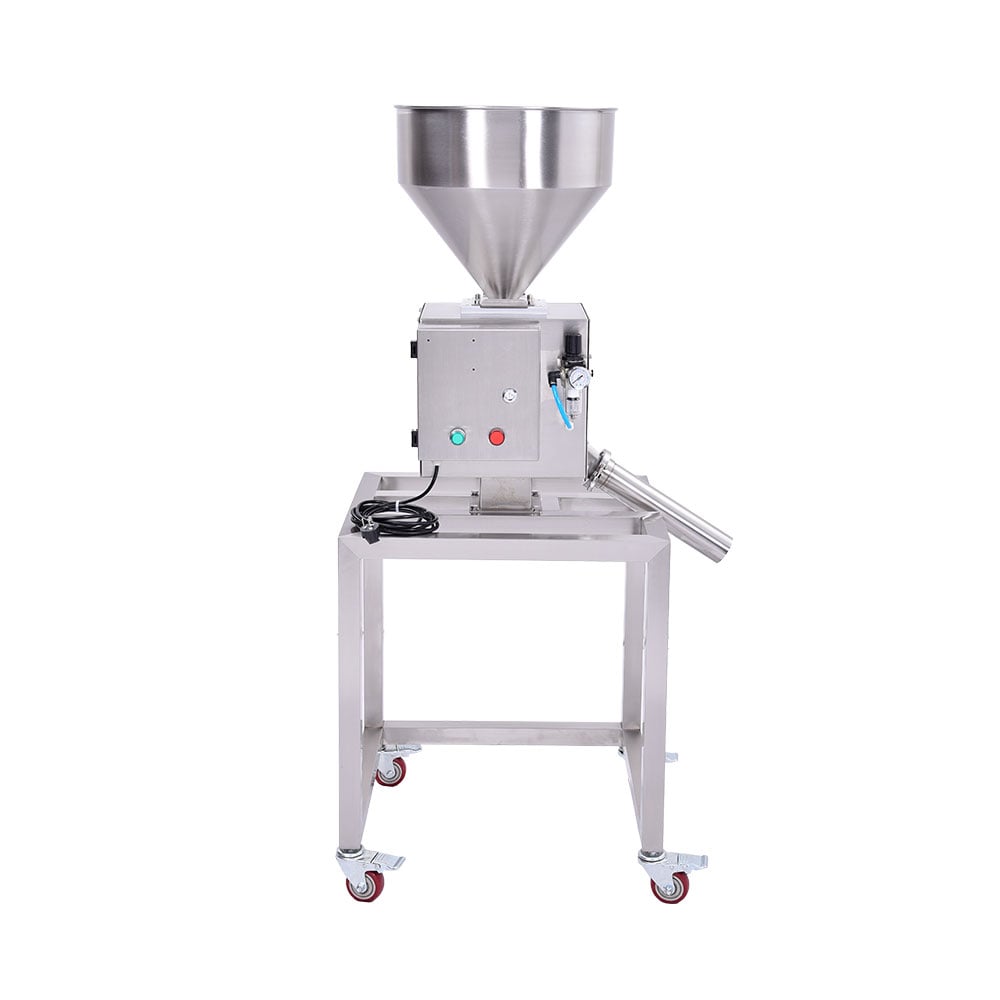
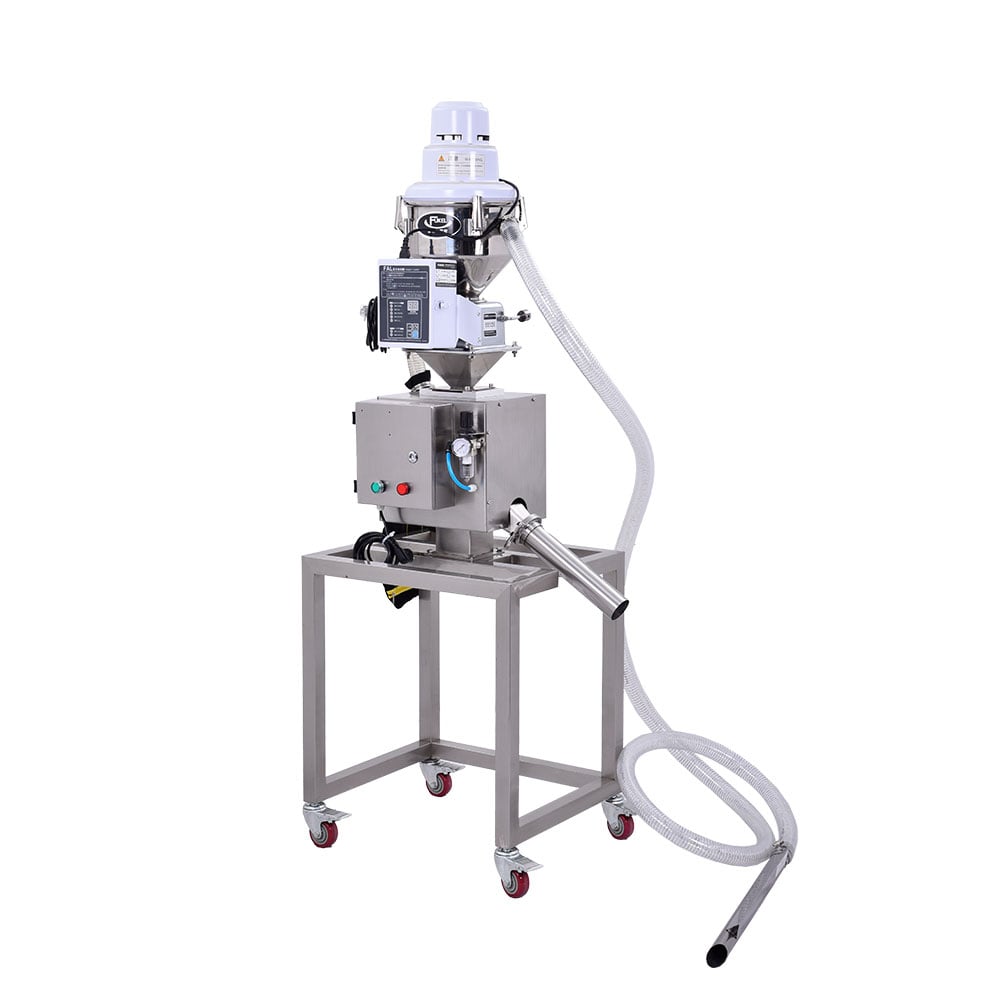
Omnes quattuor sunt liberi casus metallum separators unum principium detectionis et unam rejectionem pneumaticam habent; quod mutatur est praecisio et modus quo materia ad tubum pervenit.

When Only a Free-Fall Metal Separator Will Do
A free-fall metal separator is the only option when the product cannot go on a belt at all:
- The material is a powder, granule or pellet that will not present in a single layer.
- It is already moved by gravity or air, so there is no belt to mount a detector around.
- You need to inspect at the raw-material intake or before packing, so contamination is caught before it is blended into a clean batch.
The inlet bore can match your existing spool piece — on a retrofit that saves a week of pipework.
When a Conveyor Metal Detector Is the Right Answer
A belt machine is not the inferior choice; it answers a different question:
- The contamination you fear may come from the packing line itself, so the sealed pack is what must be inspected.
- The product is discrete, so you reject the single item rather than divert a quantity of bulk material.
If the pack is foil or metallised film, a standard balanced-coil machine will not see through it — see our ferrous machines for foil packaging .
Four Mistakes We See in Free-Fall Metal Separator Specifications
- Specifying the bore and not the model. At 100 mm two of our models hold different stainless limits, 1.2 mm and 2.0 mm, and both fit the same flange.
- Quoting the headline figure without its bore. 0.3 mm iron belongs to the 30 mm bore of CQ-S01, not to the 150 mm line.
- Installing the free-fall metal separator after mixing. Put the inspection point as early as the process allows.
- Assuming one rejection equals one particle. The diverter acts on a flowing stream, so a rejection carries material with it — ask how much, and where it goes.
Using Both Ends Together
On a line that turns bulk material into a packed product, the two machines are not alternatives: the intake separator catches incoming contamination and wear from your crushers and sieves; the end detector catches what the packing line adds.
If the budget covers only one, choose by where your contamination actually comes from; your reject records decide faster than any rule.
Quaestiones Frequenter Rogatae
Quomodo separator metalli a detectori metalli in convectore differt?
Separator metalli in libero casu est sectio verticalis flangata in linea gravitatis aut pneumatica: productus per foramen rotundum cadit et materia circa particulam detectam deviatur. Detector inspicit productum in cingulo et reicit illud.
Separator metalli in libero casu stainless steel detegere potest?
Ita, sed limites deteriora quam pro ferro: ad foramen 100 mm modelli nostri normales 1,0 mm ferri et 2,0 mm stainless steel tenent, dum CQ-S01 0,8 mm et 1,2 mm tenet. Columnam SUS legere debes si analysis periculi tuus stainless steel nominat.
Quod foramen tubi pro 2 tonis per horam necessarium est?
Foramen 100 mm ad 2.000–2.500 kg/h aestimatur, cum figuris certis 1,0 mm ferri et 2,0 mm stainless steel in modellis normalibus. Utrumque in exemplari confirmare debes, quia capacitas solum pro producto libere fluente citatur.
Potestne separator metalli in casu libero in lineam pneumaticam iam existentem inseri?
Ita — est sectio verticalis cum flangis, et orificium introductus potest ad mensuram tuae partis intermediae adaptari. Nobis desiderantur magnitudo flangis, altitudo disponibilis, subministratio aeris et locus reiciendorum.
Quae informationes ante citandum aut probandum necessariae sunt?
Materia et magnitudo particulae, fluxus tuus, orificium vel flangis quod habes, et fragmentum experimentale quod analysis periculi nominat. Ad reportum experimentalem, mitte campionem et tibi indicabimus minimam particulam quam separator retinet.
Eligere inter separatorem metalli in casu libero et detectorem metalli in convectore non de eo agit quod melius sit, sed de loco in processu tuo ubi materia inspici potest — et quid ille locus tibi promittere permittat.
Mitte nobis materiam tuam, fluxum tuum et fragmentum experimentale quod analysis periculi nominat, et tibi indicabimus quod orificium illam figuram continet — an nullam machinam singulam sufficere. metallum Separator paginam.


 Nuntii Calidi

 INTERRETIALIS