 EN



Accuracia de Checkweigher vs Capacitas: Selige le Recte Modelo
La maggior parte delle richieste inizia nello stesso modo: un pacchetto da 500 g.
Il peso è la metà più semplice. La metà che conta è quanto quel valore di 500 g può variare. Una tolleranza di 3 g e una tolleranza di 20 g corrispondono a due diversi checkweigher in linea, entrambi installabili sullo stesso telaio. Uno garantisce una banda di accuratezza di ±0,2–0,5 g; l'altro di ±1–3 g.

Cosa misura effettivamente un checkweigher in linea
Mentre il prodotto attraversa la piattaforma di pesatura, un checkweigher in linea registra la variazione del segnale della cella di carico e confronta tale variazione con la tolleranza impostata. Velocità del nastro, distanza tra i prodotti in entrata e stabilità del posizionamento del prodotto sono tutti fattori che influenzano la ripetibilità di tale confronto.
Eadem machina venit ut dynamica pensa, et multi emptores ad nos veniunt petentes pensam ponderis. In linea impachandi, est unum instrumentum cum una fascia accuratiae.
Parvus modulus non potest ferre cistulam 30 kg, et cellula oneris ad 30 kg constructa neque 0,05 g resolvit. Magnus modulus parvas deviationes non videt: in pacheto 500 g, quod 2 g deficit, illa 2 g sub limine soni huius fasciae capacitas iacent. Ergo pensa in linea eligitur a deviatione retro, numquam ab maxima pondere ante.
Scala Accuratiae Sex-Modularis
Cum capacitas crescit, fascia accuratiae dilatatur et cingulum tardius movetur. Tres figurae simul moventur, et nullus venditor tibi omnes tres simul vendere potest.
Columna accuratiae ambitum complectitur. Pars stricta requirit productum stabilem cum recta cinguli velocitate; productum quod levis, altus aut irregularis est, ad partem latiorem propius accedit.
Unum quod tabula non ostendit: ex sex checkweigheris in linea, tantum minimum usus est reiectione per aerem, et tantum illud unum construitur ad gradum IP54. Light producta opus est reiectione celeriore et mitiori quam pusher, et lineae quae lavantur saepe currunt praecise illos productos.
Capacitas in checkweigher in linea est tectum pro singulo item, non autem figura fluxus. Modello 40 kg et 60 kg ambo habent notam 30 pcs/min, et cingulum statit tectum, non autem cellula oneris.
| Modellum | Pondus Maximum | Accuratio | Minima scala | Maximus Celeritas | Dimensio materiae |
|---|---|---|---|---|---|
| CQ-YWXP1010 | 200 g | ±0,05–0,1 g | 0,05 g | 100 pcs/min | 100 × 100 mm |
| CQ-YWXP210 | 1.500 g | ±0,2–0,5 g | 0.1 g* | 160 pcs/min | 280 × 200 mm |
| CQ-YWXP300 | 3 kg | ±1–3 g | 1 g* | 80 pcs/min | 300 × 290 mm |
| CQ-YWXP400 | 15 kg | ±2–10 g | 1 g* | 60 pcs/min | 450 × 390 mm |
| CQ-YWXP500 | 40 KG | ±5–30 g | 1 g* | 30 pcs/min | 650 × 490 mm |
| CQ-YWXP600 | 60 kg | ±30–100 g | 1 g* | 30 pcs/min | 650 × 490 mm |
Quod Modelus pro Qua Linea
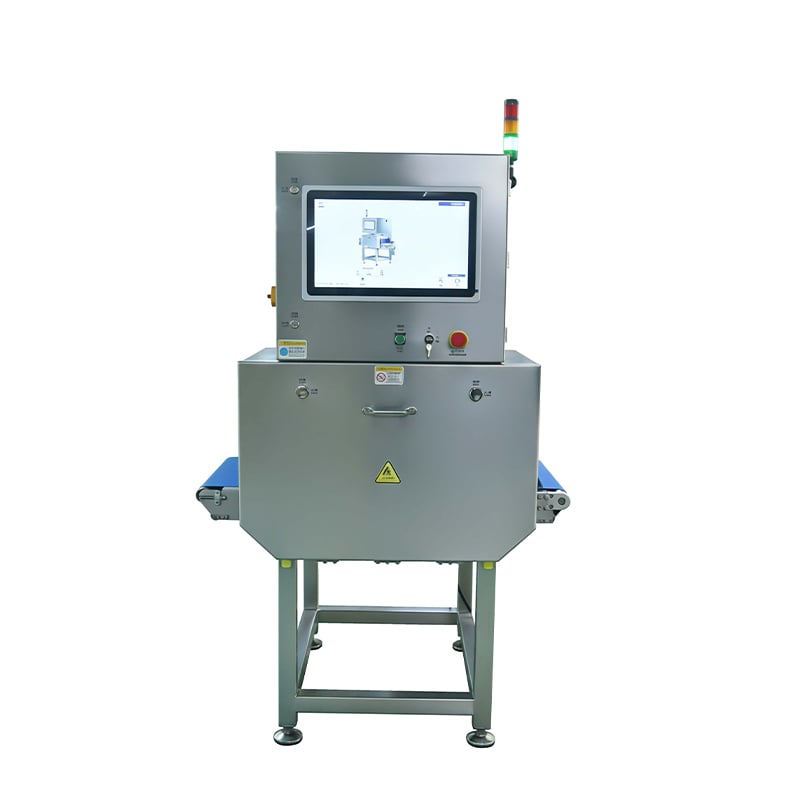
Checkweigher in linea ad summittatem huius paginae est CQ-YWXP400, fortissimus medii ambitus et is quem plures lineae eligunt. Alia quinque infra sunt, minima prima.


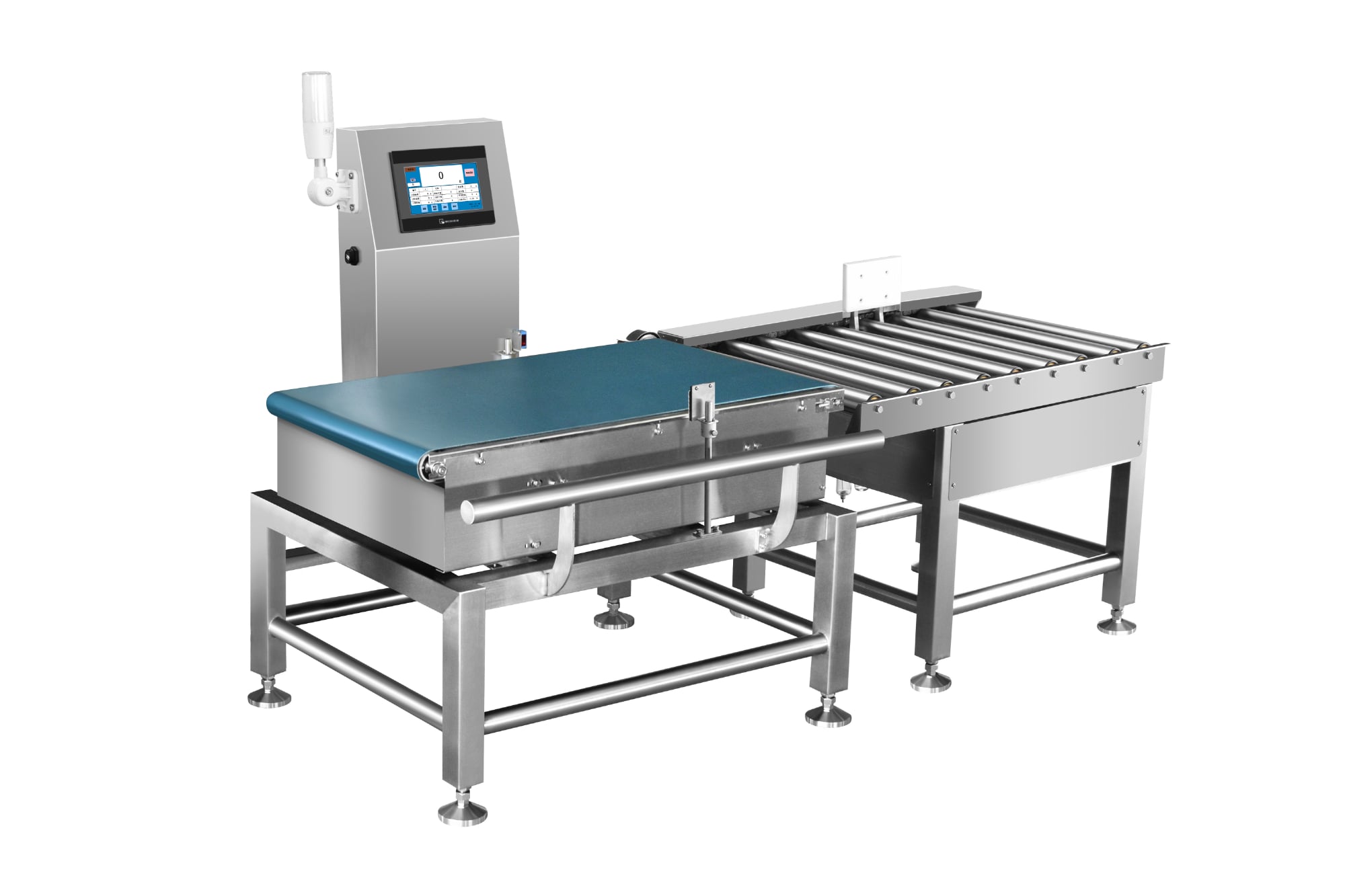

Accuracy Is Settled Before the Weigh Deck
We have two inline checkweighers sharing the same frame, the same belt, and the same load cell; yet their accuracy bands differ by a factor of three. The difference lies in what the belt does between the infeed and the weigh deck.
*Belt speed. * The signal is sampled while the product is on the deck. Run the belt fast, and fewer samples fall within that window; run below the ceiling, and you achieve the tight end of the accuracy band. Matching belt speed is always the first step during commissioning—and that is why we wrote a separate note super eo.
*Infeed spacing. * An inline checkweigher weighs one item at a time. Close the gap and two products share the deck, so the reading belongs to neither. The false rejects we hear about usually trace back to infeed spacing rather than to the rejector.
*Product stability. * A bag that shifts on the belt changes its own inertia. Guides, a short flight on the infeed and a settling run before the deck all take floor space, and they usually move the reading more than a change of model does.
*Aequatio. * Every inline checkweigher we build sits on adjustable feet rather than castors. A frame that is not levelled takes the reading with it, and "it weighs wrong" often turns out to be a foot that was never adjusted.
Where an Inline Checkweigher Specification Goes Wrong
- Quoting an inline checkweigher's accuracy without its capacity band. "±0.1 g" on its own means nothing, because ±0.1 g at 200 g and ±0.1 g at 60 kg are not the same instrument.
- Relinquishing capacity headroom for future use. The additional kilograms compromise accuracy today, on every pack, for a product you might never produce. Should that product ever appear, divide the line instead.
- Presuming the rejector maintains pace. At 160 pcs/min, intervals between items measure 375 ms, and the rejector must activate and reset within that timeframe.
- Sizing the conveyor belt for the largest pack. Material dimensions dictate belt width, and belt width determines floor space and cost. A line primarily handling 100 mm sachets ought not be sized around an infrequent 650 mm case.
Quaestiones Frequenter Rogatae
How precise is an inline checkweigher?
Ab ±0.05 g ad 200 g usque ad ±100 g ad 60 kg. Fascia capacitatis id decernit, non marca: nostrum minimum modello resolvit 0.05 g, et modello 60 kg non potest melius quam 30 g.
Num unum checkweigher in linea utramque sacculos et cartones tractare potest?
Non suademus. Elige secundum productum quod maxime tractas. Modello 15 kg non potest resolvire deviationem 0.1 g in sacculo, et modello 200 g non potest ferre cistam 15 kg.
Quam celeriter checkweigher in linea currit?
160 p.c./min in CQ-YWXP210, et 30 p.c./min in modellis 40 kg et 60 kg. Cingulum hoc maximum statuit, et infra illud currere oportet ut ad strictiorem partem fasciae accuratiae pervenias.
Num checkweigher in linea aerem compressum requirit?
Ita. Omnis rejector aerem purum et siccum ad 0.6–1 MPa requirit. Minimum modello aerem flantem utitur, et alia quinque modello pulsorem utuntur.
Quid opus est ad checkweigher in linea quotare?
Pondus et tolerantia pacheti, velocitas lineae, latitudo cinguli quam iam habetis, quo loco res reiectae diriguntur, et num area lavatur. Ultima responsio determinat gradum protectionis.
Quod reapse eligitis cum ponderatore in linea est quantitas minima deviationis quam detegere potest; et fascia capacitis hoc determinat.
Mitte nobis pondus pacheti, tolerantiam et velocitatem lineae, et indicabimus vobis quod modello hanc figuram sustinet, an utroque ponderatore in linea opus sit. Omnes sex comparantur in nostro reprehendo ponderator paginam.

 Nuntii Calidi


 INTERRETIALIS