EN


Home > > X Ray Machine
A soft pouch cannot be pushed off the side. It has to drop.
| Sauce & paste | A pusher would burst a sauce pouch. So the pack drops straight down. |
| Powder & granule | Powder shifts inside the bag. The pack drops clear without being squeezed. |
| Retrofit lines | Cabinet and conveyor are two units. The machine fits a line that cannot take one long frame. |
Tell us the pack and the fill weight. We will set the drop height to suit.
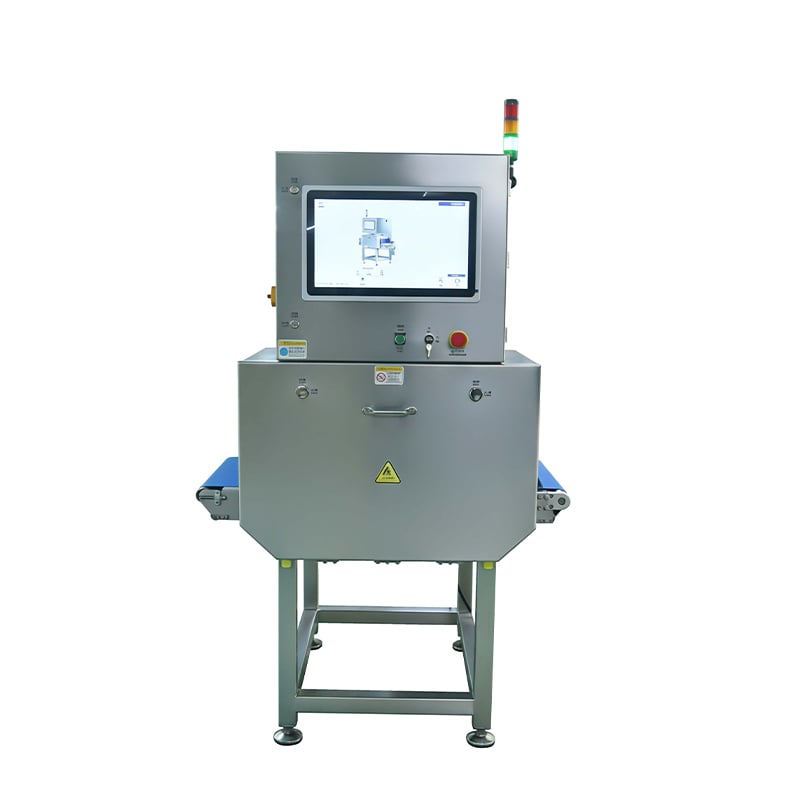
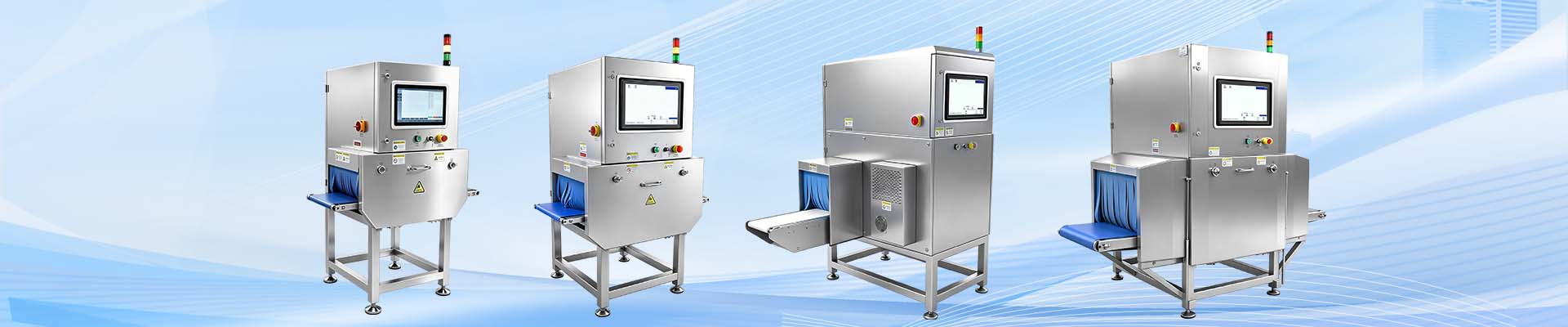
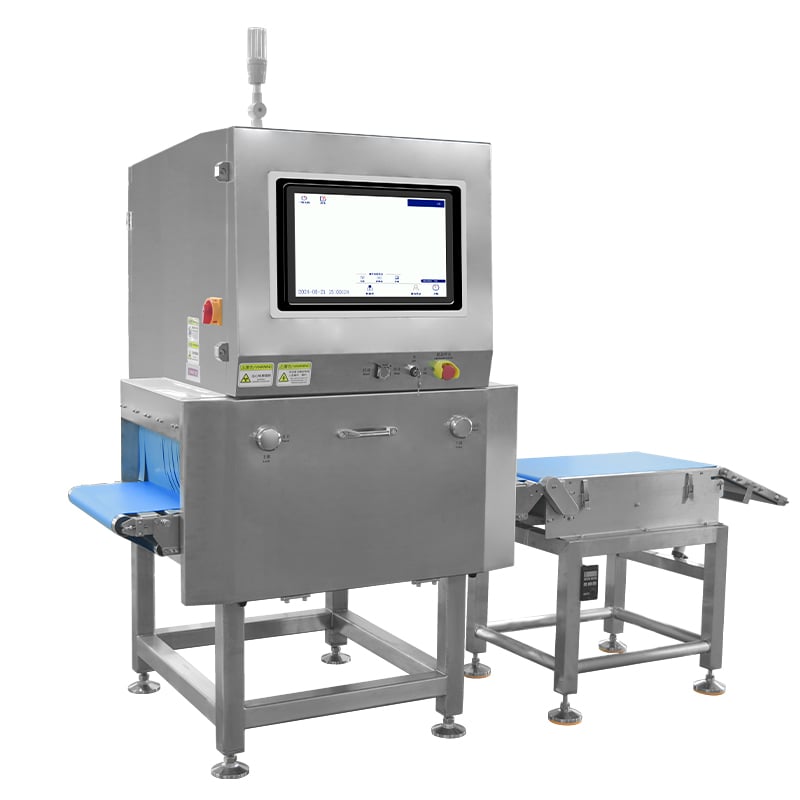
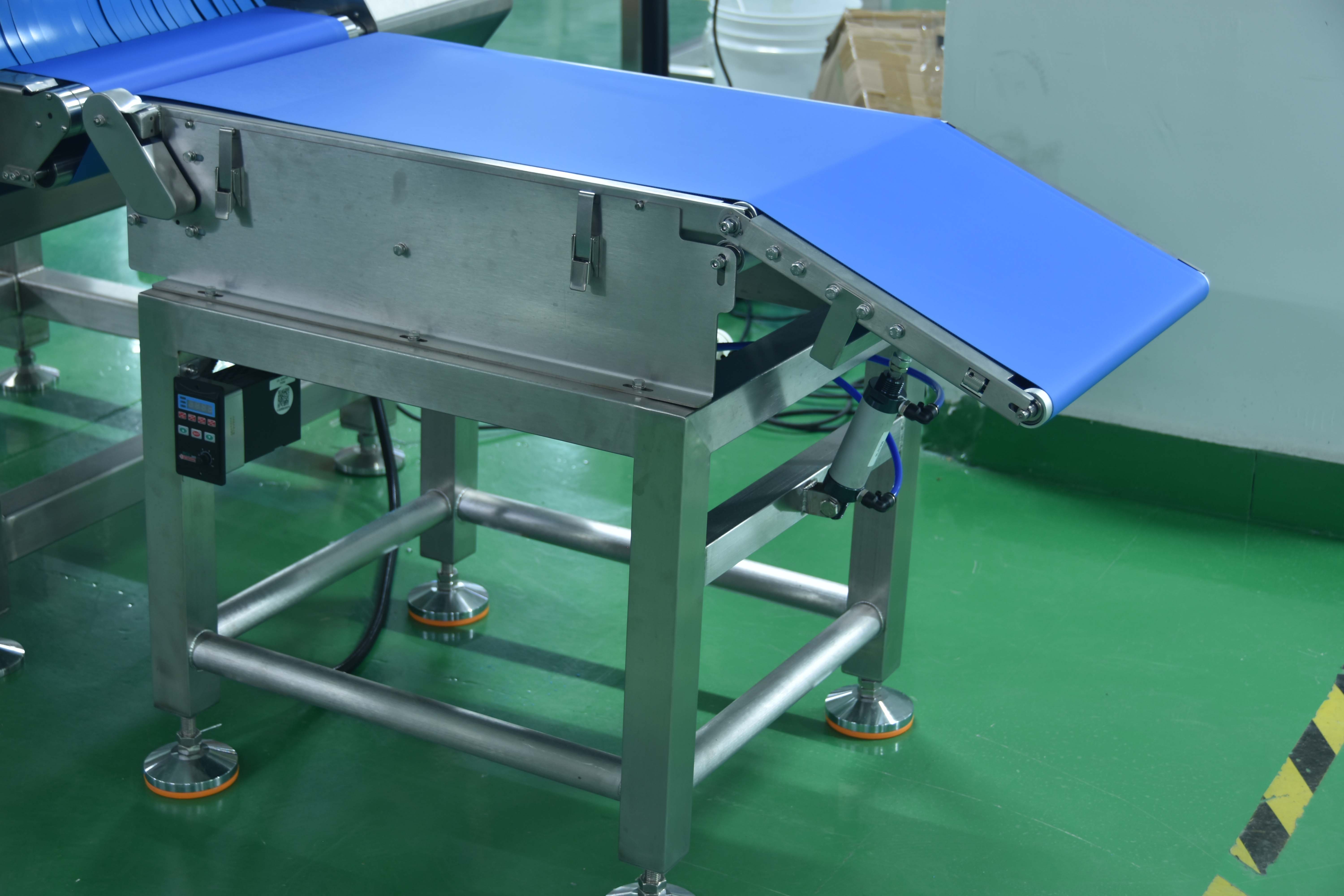
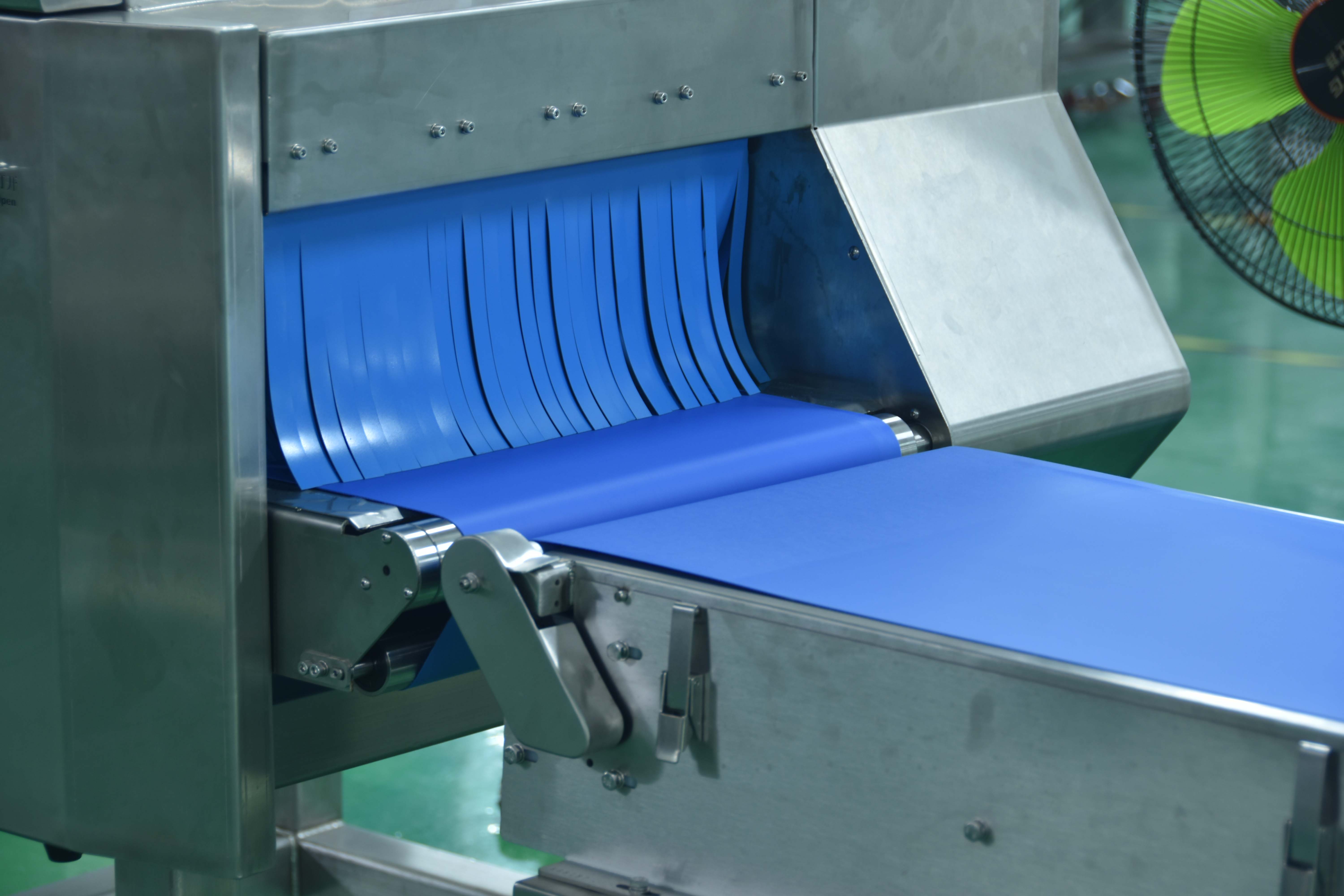
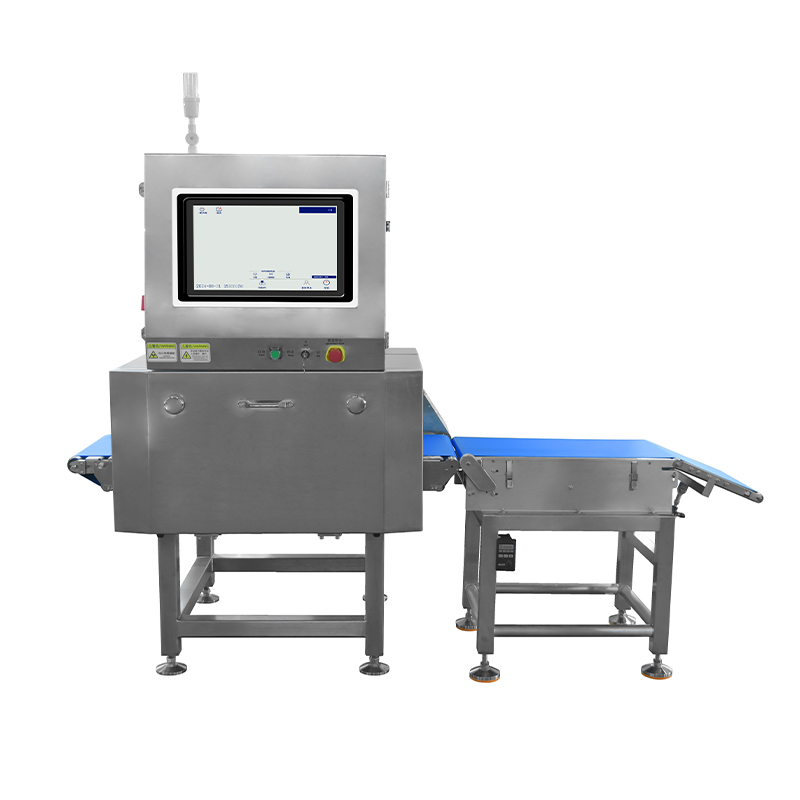
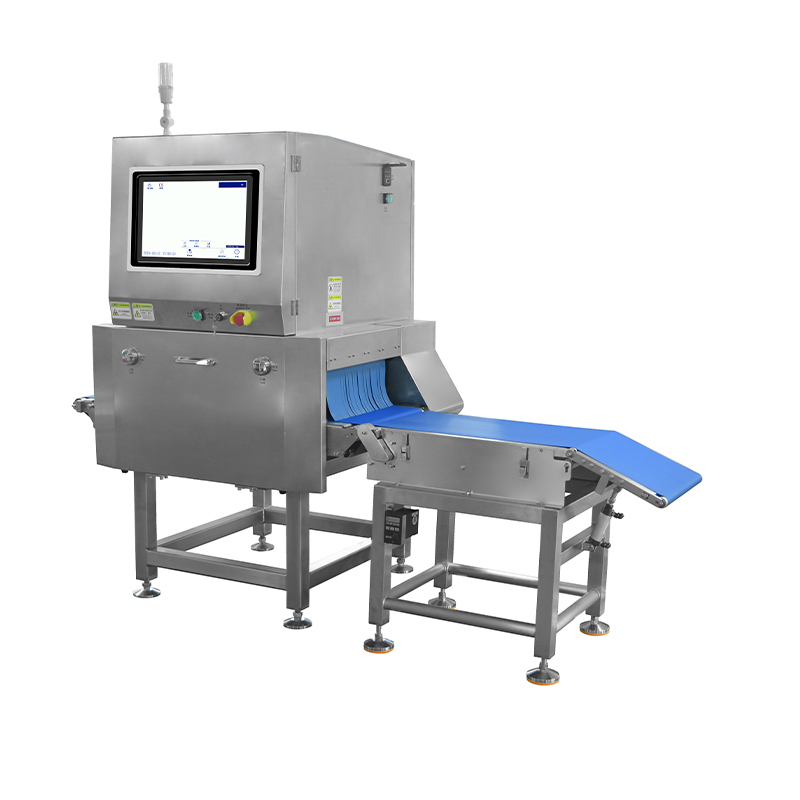
Two units, not one: the cabinet, and a separate conveyor that carries the pack away. At the end of that conveyor a hinged section swings down, so a rejected pack falls through the gap instead of being shoved off the side — which is what makes this sinking rejection x-ray machine a bagged food detector rather than a general-purpose sorter.
Where a standard machine steers a bad pack off the side, this one opens a gap underneath it. The tail of the second conveyor is a hinged section on a pneumatic cylinder: when the inspection rejects a pack, the section drops and the pack falls into the bin. Nothing touches it from the side — the factory's gentle handling, for bagged and powdery goods.
| Feature | Technical Details / Performance |
| Model / series | CQ-YW800 — 4020 split type, sinking rejection |
| Rejection system | Sinking rejection — hinged tail section drops the pack downward |
| X-ray source | 150 W / 240 W / 350 W, selectable |
| Tunnel size (W × H) | 400 mm × 200 mm |
| Max. product size | ≤280 mm (W) × 200 mm (H) · or ≤400 mm (W) × 60 mm (H) |
| Belt speed | 10–70 m/min, adjustable |
| Detection accuracy (min. sphere) | 0.4 mm SUS 304 · 1.0 mm ceramic · 2.0 mm glass Specified on an empty belt, no product in the beam |
| Load capacity | Up to 5 kg (11 lbs) |
| Frame | 2223 mm split-type frame, two units |
| Machine dimensions (L × W × H) | 2223 × 1130 × 1696 mm (+100 mm) |
| Product formats | Bagged powder · loose snacks · boxed and bulk goods |
| Construction | Full SUS 304 frame, food-grade PU belt |
| Power supply | AC 220 V, 1.5 kVA, 50/60 Hz |
| Alarm | Audible and visual |
| Ambient temperature | −15 °C to +45 °C |
| Connectivity | LAN port · USB port — real-time reporting and audit trails |
| Operator interface | Colour touch screen HMI, multi-language display |
Two different numbers get quoted for a machine like this. The one in the table is measured on an empty belt; the other through the product, which is the number that matters on your line. Both are here:
Through a loaded pack our own bench run resolved a 0.8 mm SUS ball and a 2.0 mm glass ball under a bagged sauce product. In your product the limit follows density and pack thickness.
The decision is made on a picture of the pack, not a single reading, which is why one tunnel carries a whole family of checks.
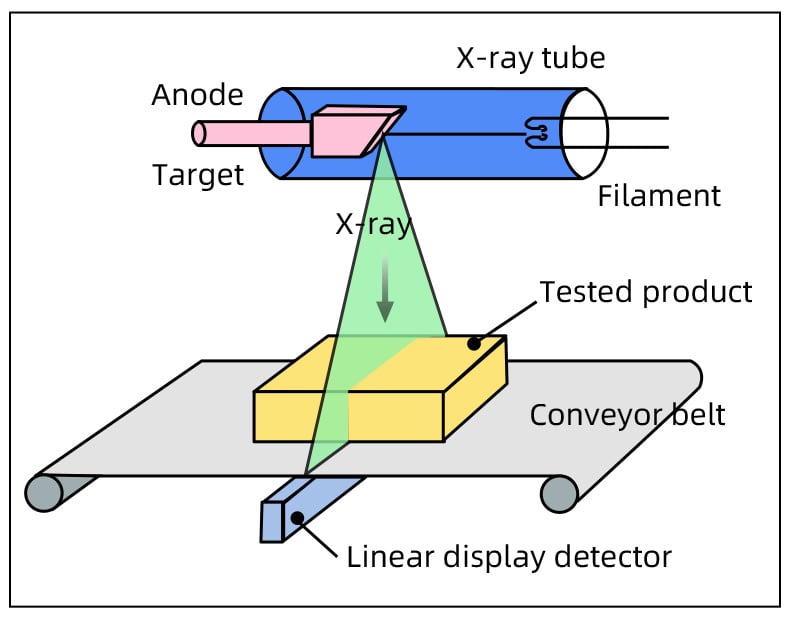
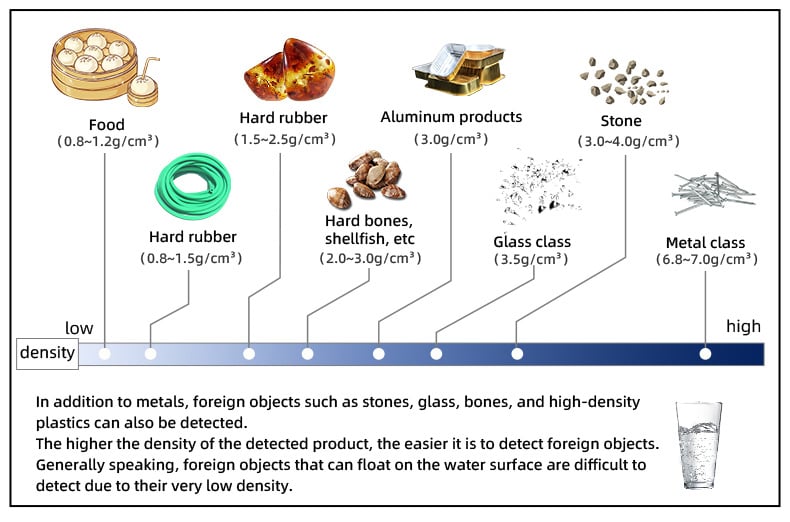
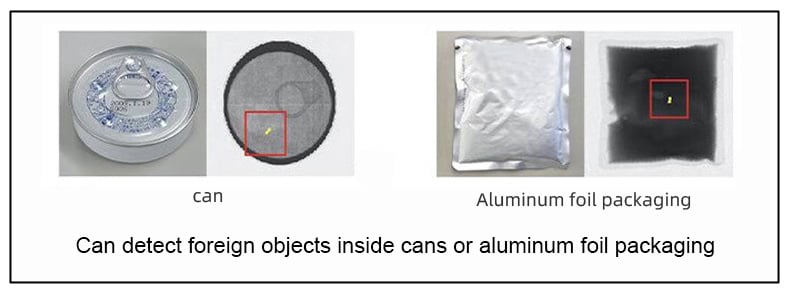
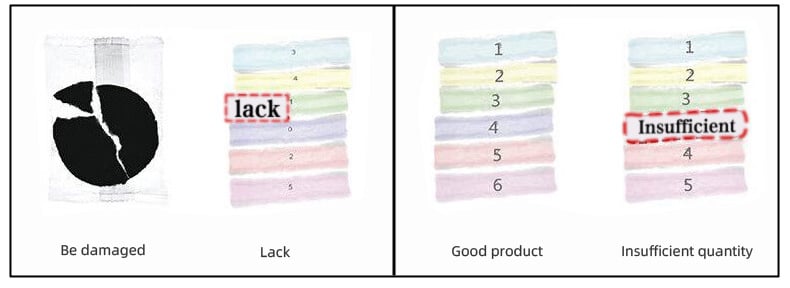
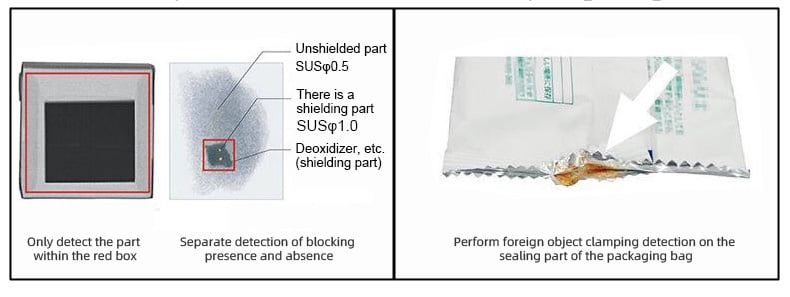
Nothing exotic happens inside the cabinet. A generator produces X-rays, the beam crosses the belt, and a detector on the far side measures how much arrived. Dense material stops more of it, so a fragment leaves a darker mark than the food around it.
The rest is software: the machine compares the image with the settings for that product, decides good or reject, and the sinking rejection section acts on it at the tail of the second conveyor. Because the judgement is made on an image, one pass carries several checks at once — foreign body, shape, count, shielding and seal — which is what makes modular x-ray inspection worth building a line around.
The touch screen shows the live image and the decision for each pack, and the log keeps it for later.
The one-line answer is anything that should not be hit. The factory lists bagged powder, loose snacks, boxed goods and bulk product, and the sinking arrangement exists for the bagged end of that list: a pouch of powder or paste holds no shape, so a sideways swipe can burst it.
A typical duty is a bagged sauce or paste pack from the filler, crossing the tunnel, then either carried on or dropped into the bin. Between 10 and 70 m/min it keeps pace with a filler.
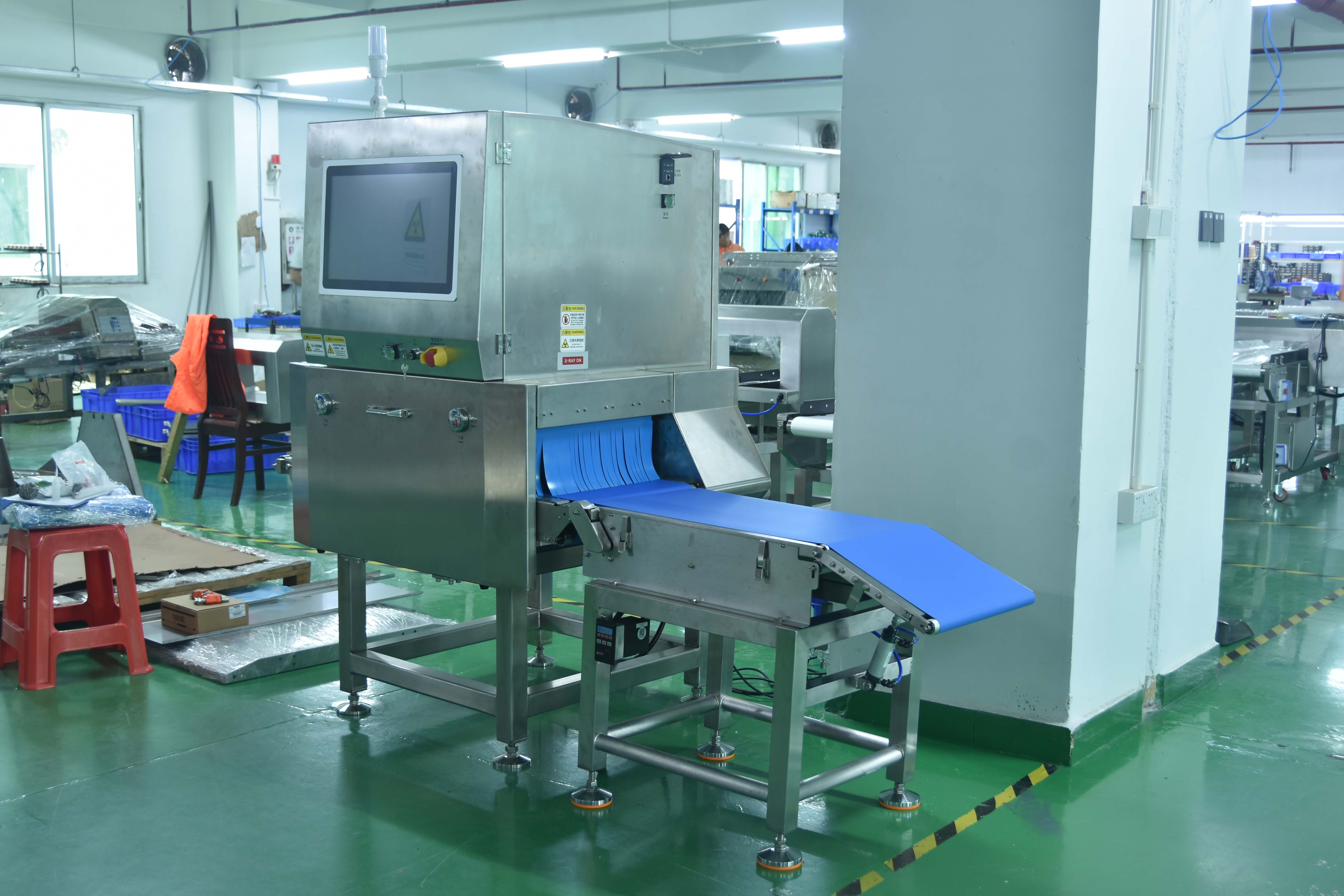
Both units are assembled, lined up and run in on our own floor before dispatch: a split machine only works if the two conveyors are aligned and levelled together. Below, one 4020 split type set up as a working line.
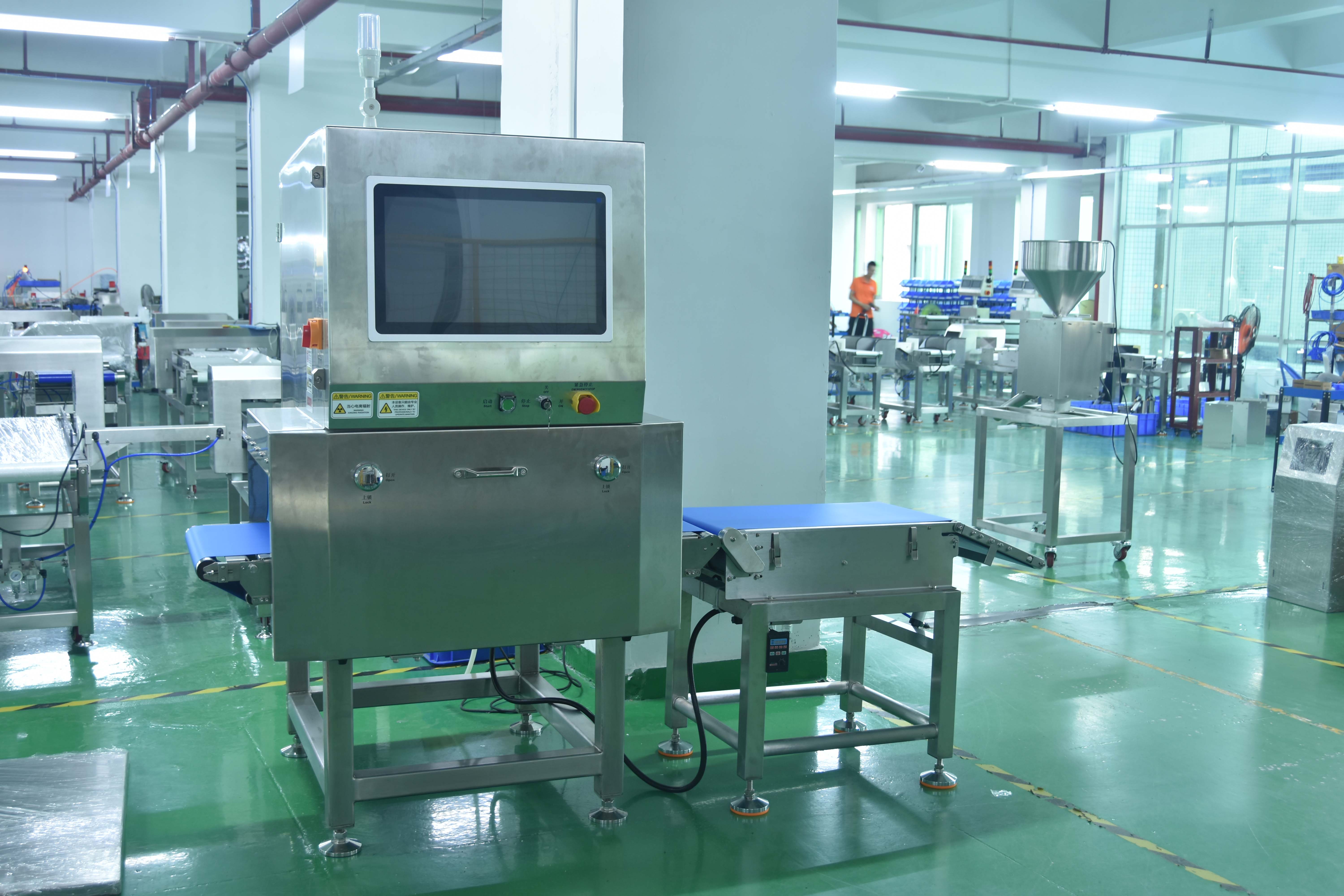
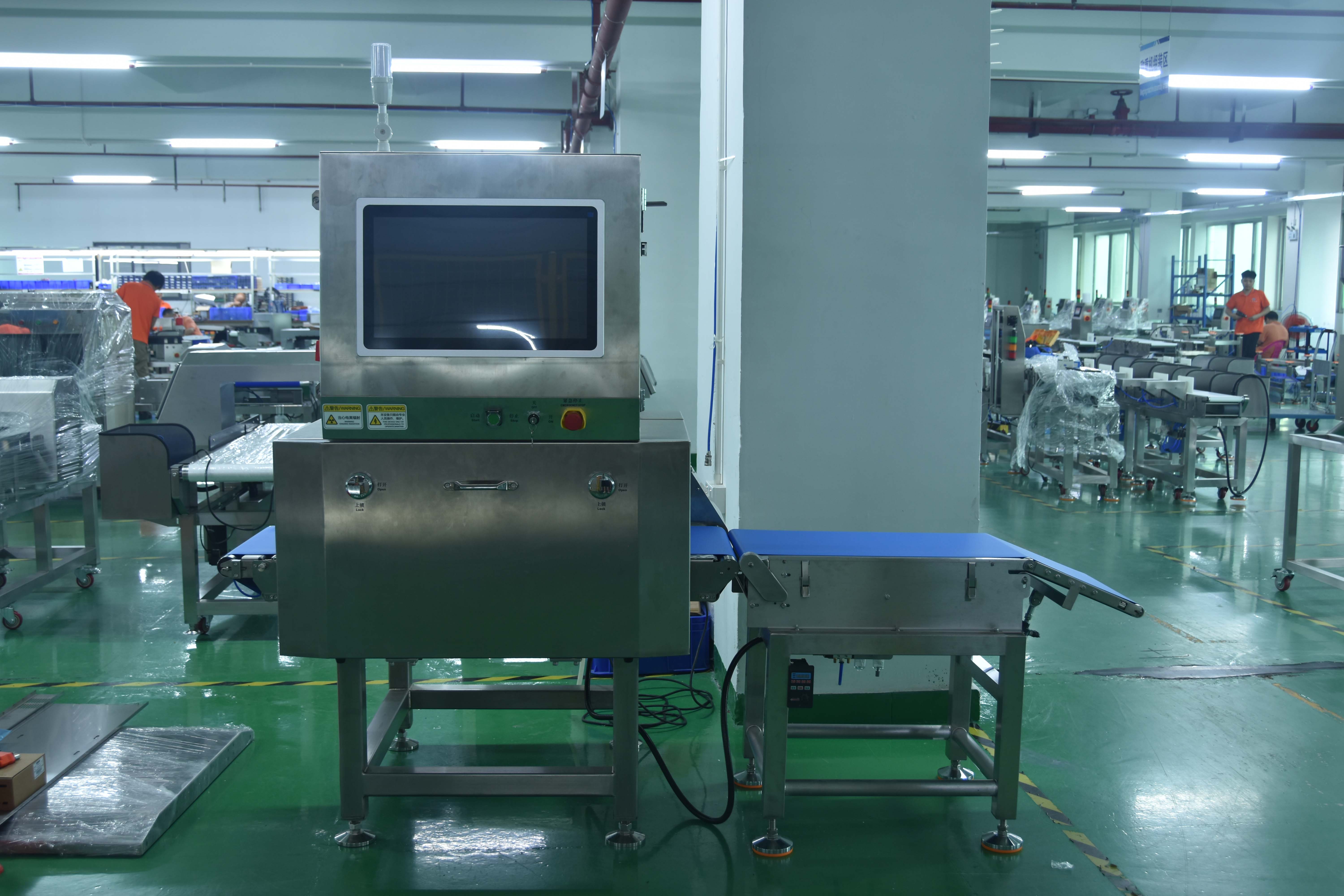
Send the pack dimensions, the contents and the speed you run at, and we will come back with the 4020 split type configuration — tunnel, frames and the drop height of the tail.

 ONLINE