EN


Home > > X Ray Machine
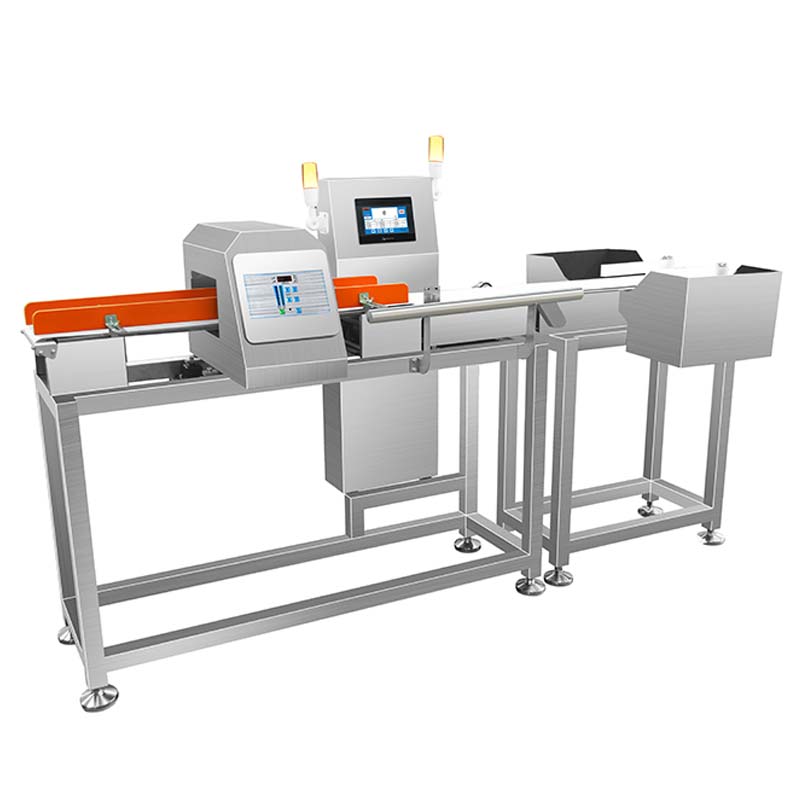
The reject section can be built into the machine, or run as a separate unit.
| Frozen meat rolls | Frozen rolls go through a 400 × 200 mm tunnel. The spec says 0.6 mm steel. |
| Bulk grain | Loose grain keeps moving. The belt carries 10 kg per pack. |
| Large snack boxes | The pusher takes wide boxes off the belt. The line does not stop. |
Tell us which way suits your line. We will build the reject section and the bin to match.
A 400 × 200 mm tunnel and a 10 kg belt decide whether your pack fits. How a failed pack leaves the line is the second decision — on this build of the CQ-YW700 the pusher is built into the machine, not bolted on behind it. Bagged, boxed and bulk product, one tunnel, one SUS 304 frame.
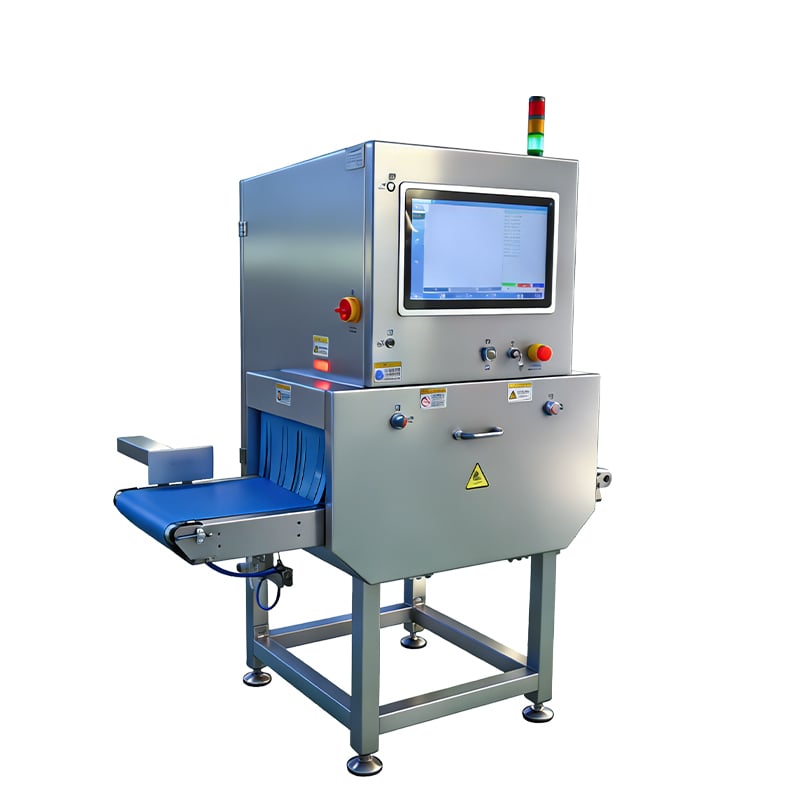
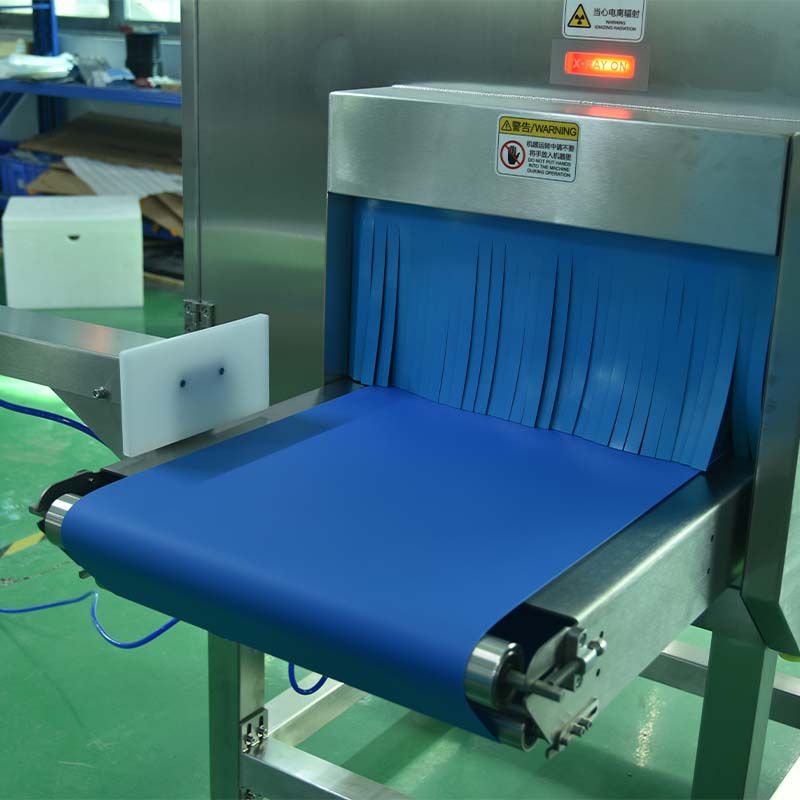
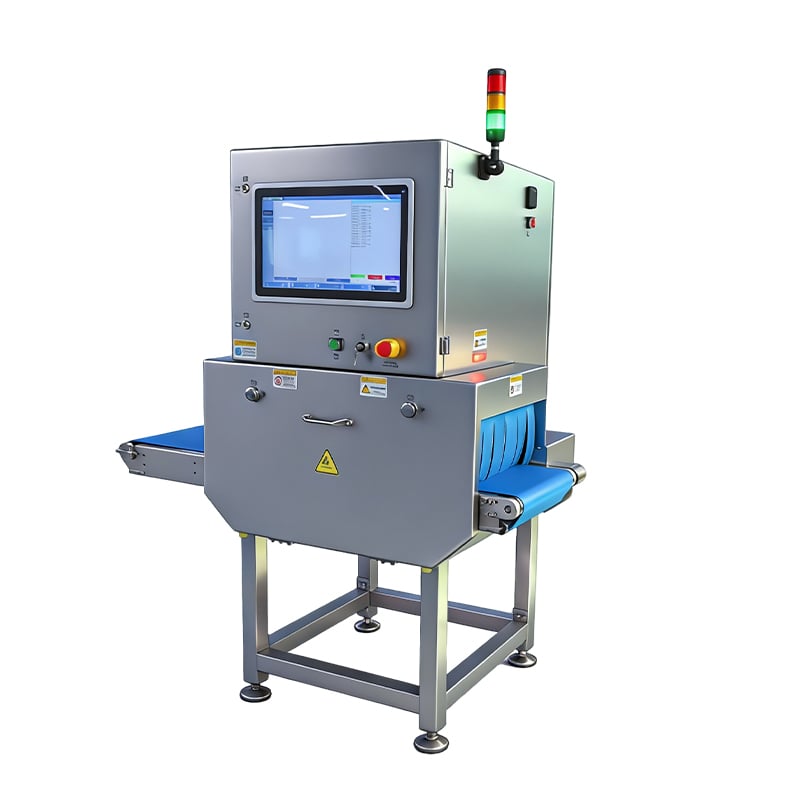
A pack that fails is pushed off the belt. The blade runs along the belt edge inside the machine frame: on an NG X-ray image it crosses the belt, moves the pack clear and the line carries on. No second conveyor, no separate reject module to find floor space for.
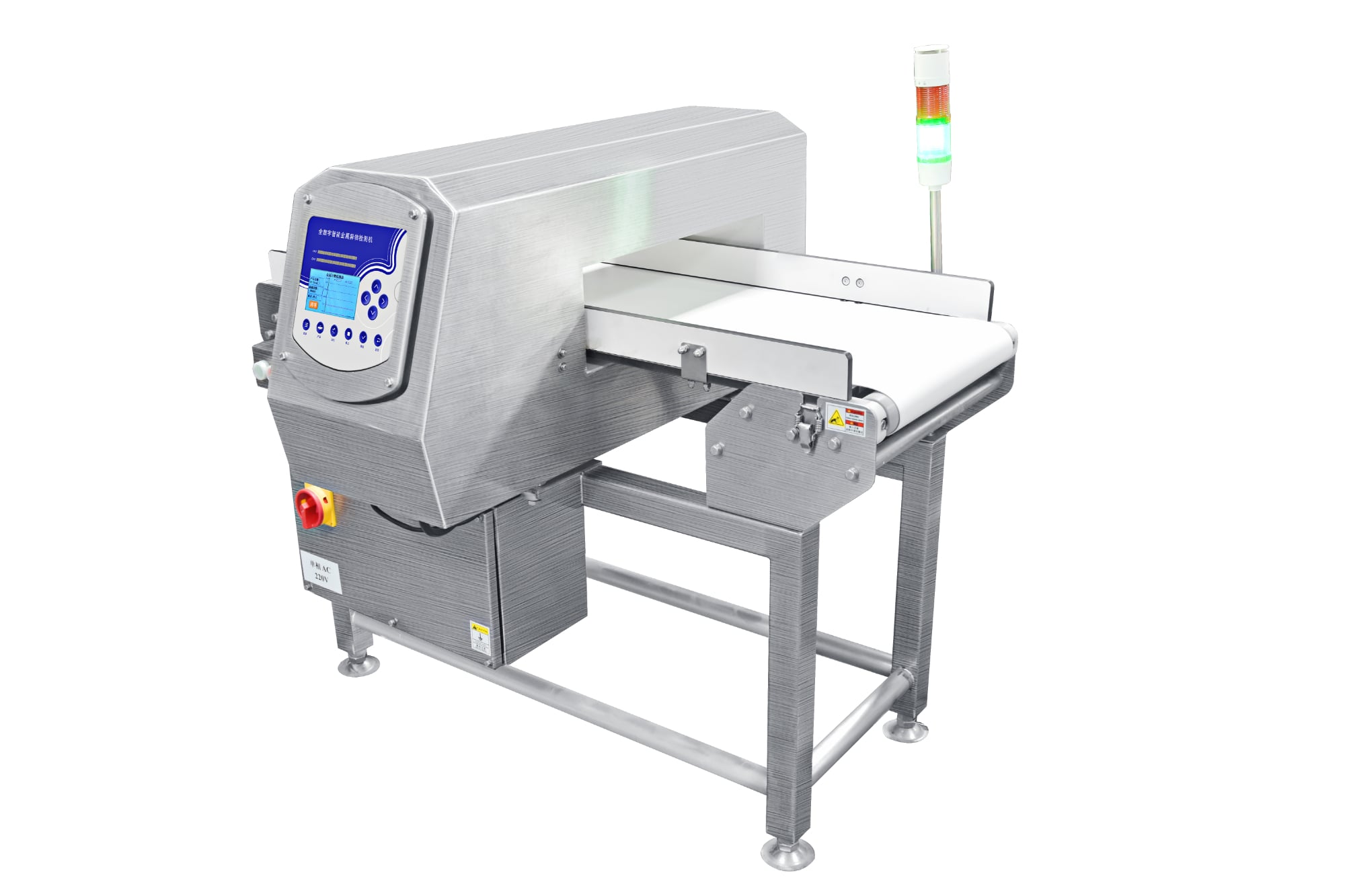
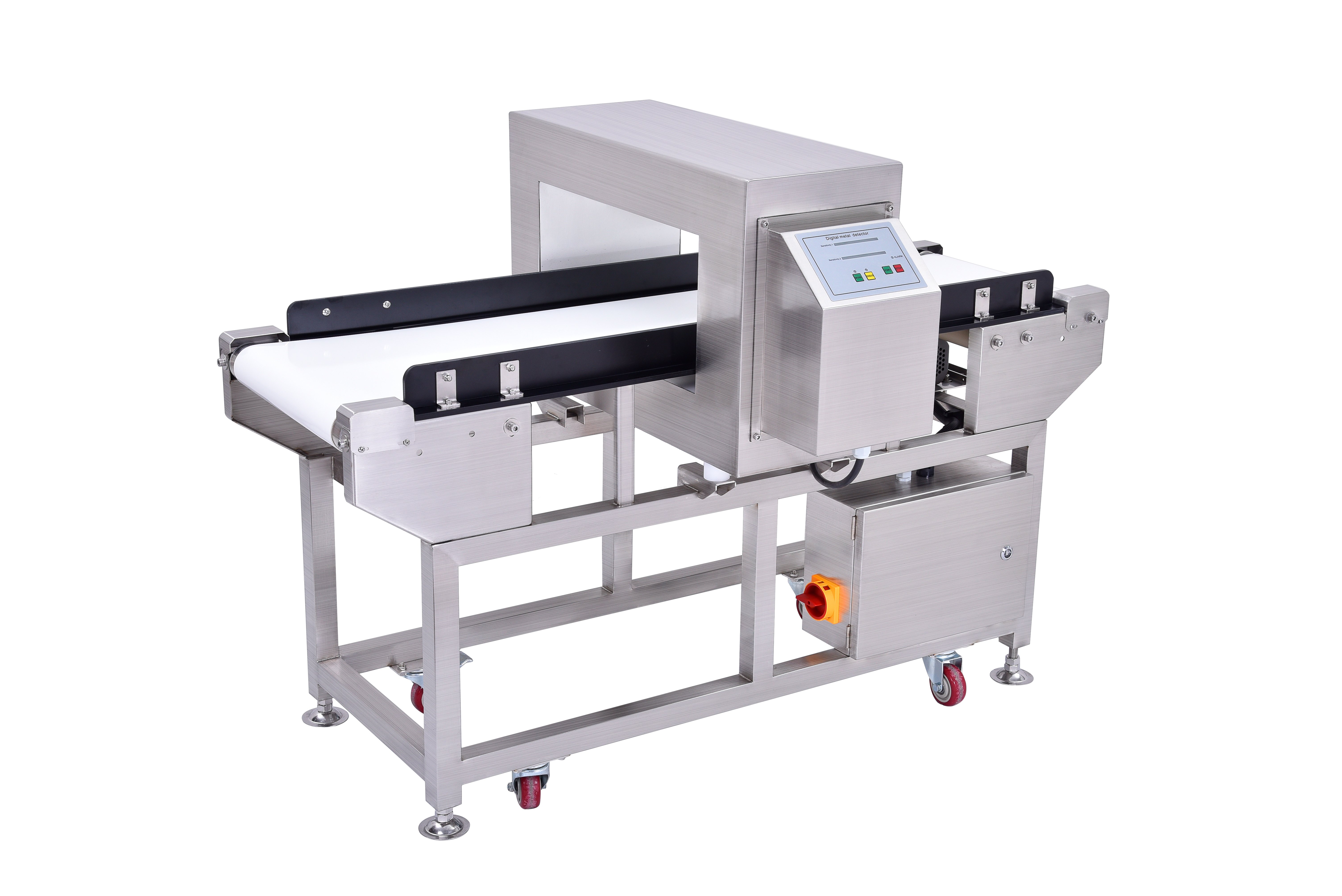
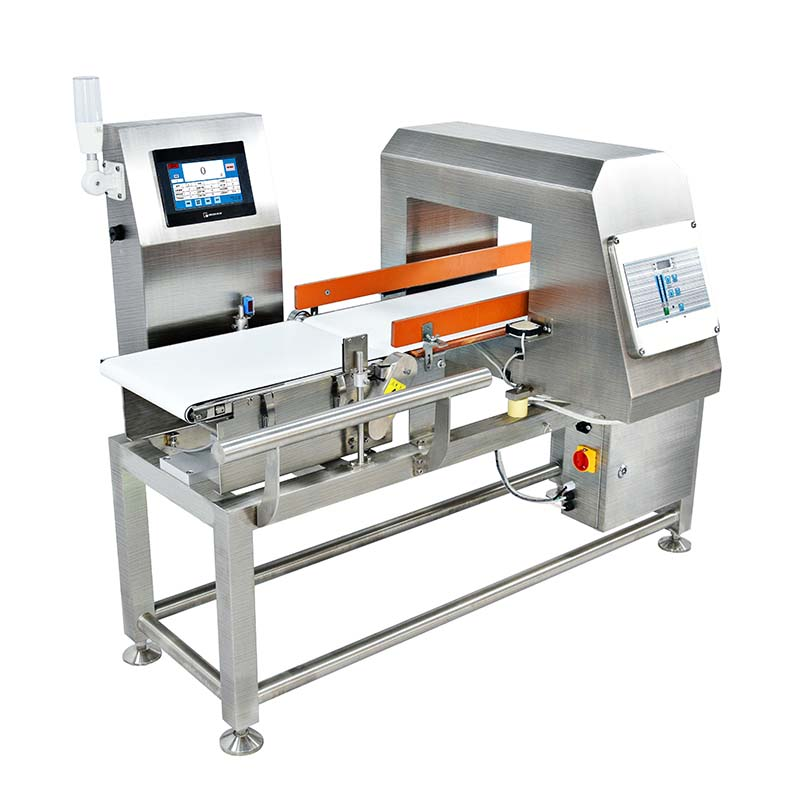
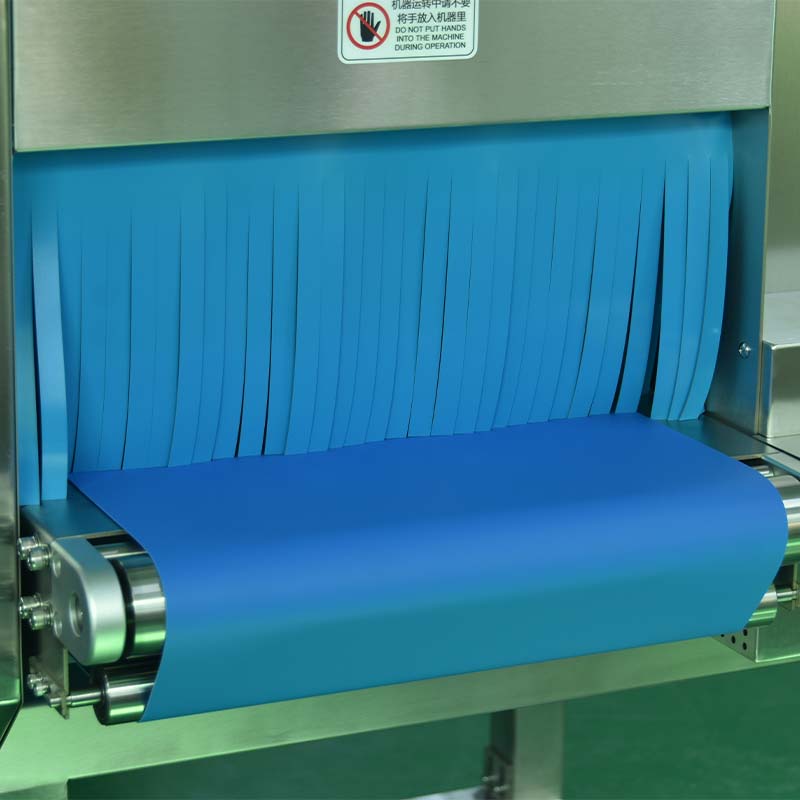
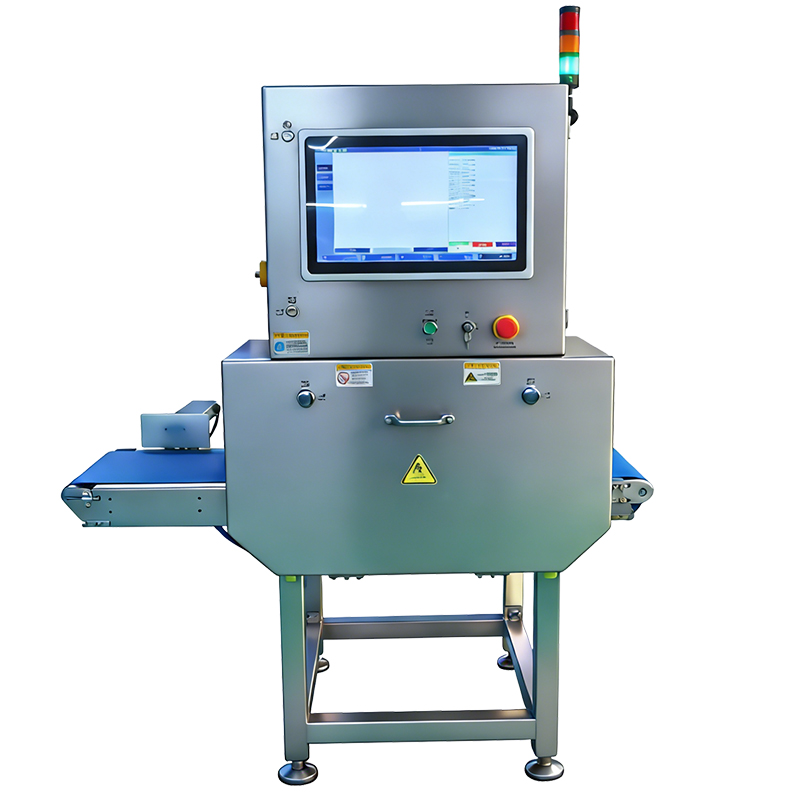
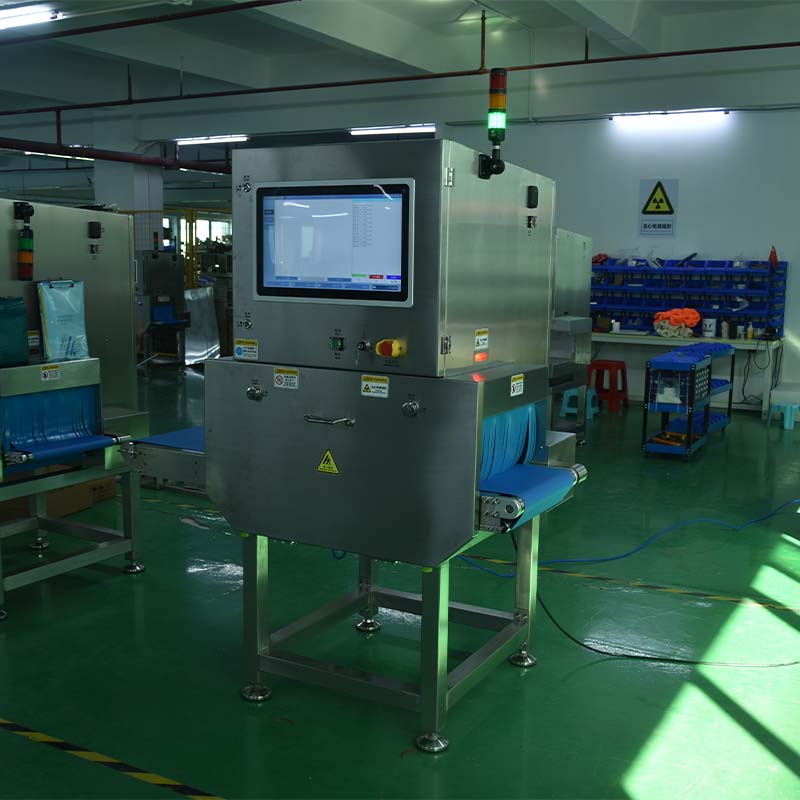
Keeping the pusher inside the same frame is what makes this build compact: one cabinet carries the X-ray source, the detector, the conveyor, the pusher and the control computer. The tunnel mouth is closed by curtain strips.
| Feature | Technical Details / Performance |
| Model / series | CQ-YW700 — 4020 integrated push-rod |
| Rejection method | Pusher exclusion, integrated |
| X-ray source | 150 W / 240 W / 350 W, selectable |
| Tunnel size (W × H) | 400 mm × 200 mm |
| Max. product size | ≤280 mm (W) × 200 mm (H) · or ≤400 mm (W) × 60 mm (H) |
| Belt speed | 10–70 m/min, adjustable |
| Detection accuracy (min. sphere) | 0.6 mm SUS 304 · 1.0 mm ceramic · 2.0 mm glass Measured on an empty belt, no product in the beam |
| Load capacity | Up to 10 kg (22 lbs) per pack |
| Machine dimensions (L × W × H) | 1500 × 990 × 1794 mm (+100 mm) |
| Product formats | Bagged · boxed · bulk |
| Construction | SUS 304 stainless steel, food-grade PU belt |
| Power supply | AC 220 V, 1.5 kVA, 50/60 Hz |
| Alarm | Audible and visual |
| Ambient temperature | −15 °C to +45 °C |
| Data interface | LAN port · USB port |
| Display & operation | Touch screen, touch input |
| Display language | Chinese, English and others |
The headline figure is measured with nothing in the beam, and the manual records it that way: 0.6 mm SUS 304, 1.0 mm ceramic, 2.0 mm glass. Inside a loaded pack the limit moves with the density and thickness of the product, which is why the same tunnel reads differently on two lines.
Specified with nothing in the tunnel.
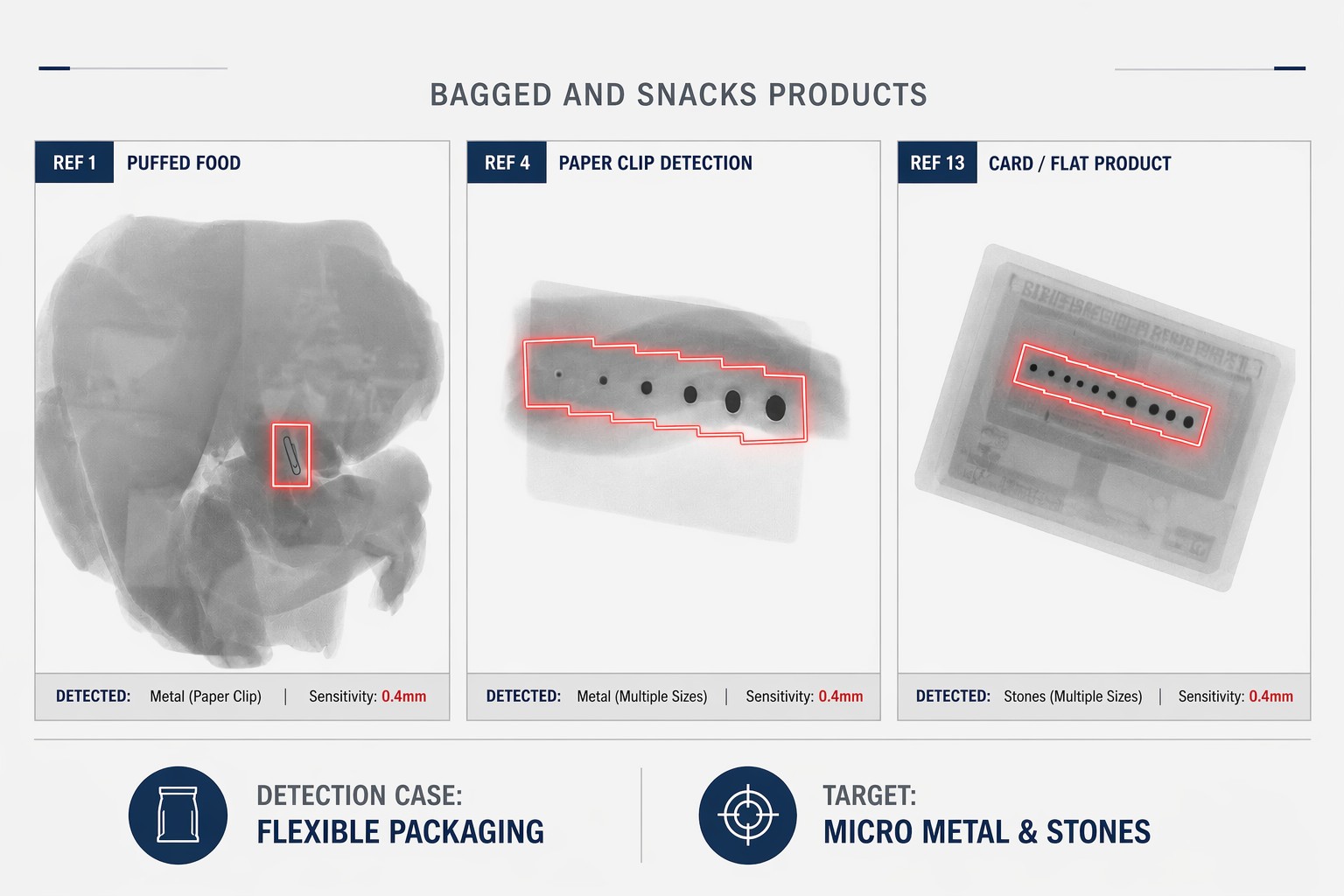
The verdict comes from a picture of the pack, not a single reading, so several checks ride on one pass.
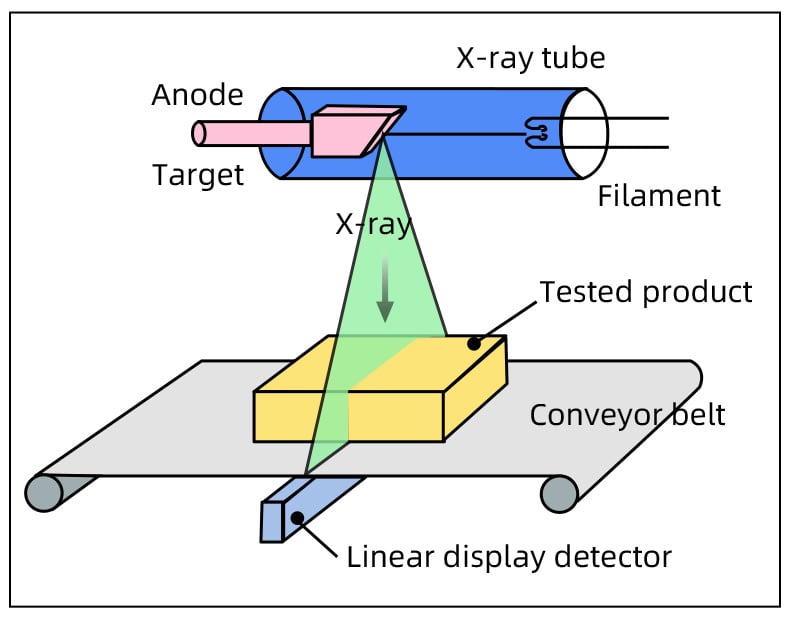
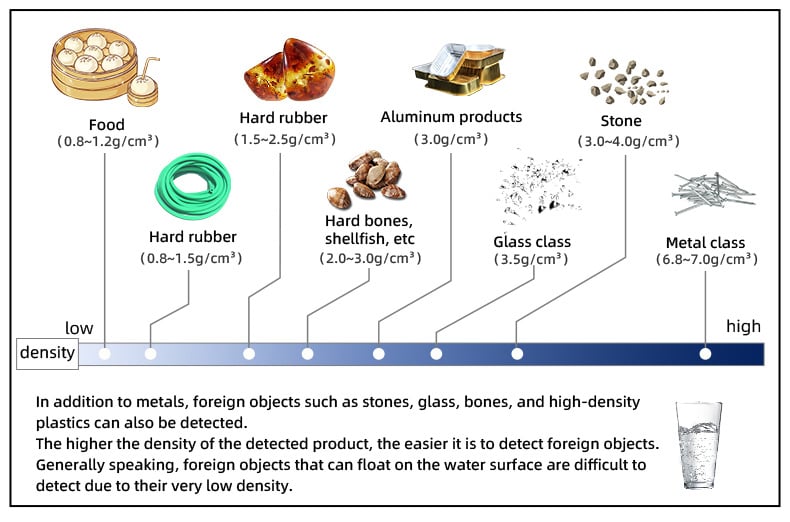
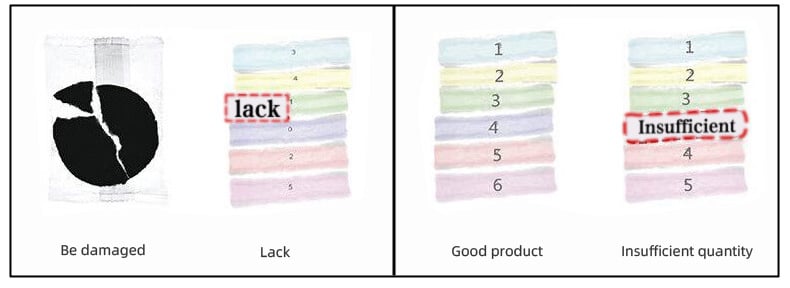
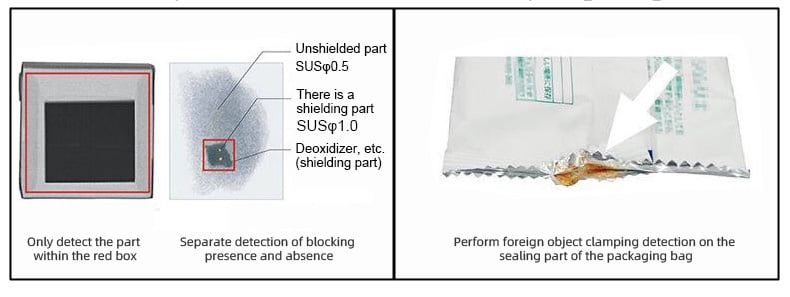
The tube fires a fan of X-rays down across the belt. The detector on the far side records how much of that fan survives the pack, and the software draws the difference as a greyscale image. Dense matter eats more of the beam and reads darker.
Everything after that is judgement. Each image is compared against the settings held for that product, the machine decides good or NG, and a failed pack leaves the belt on the pusher while the line keeps running.
Because the decision is made on a picture, contamination, shape, count, shielding and seal ride on the same pass, with the live image on the touchscreen.
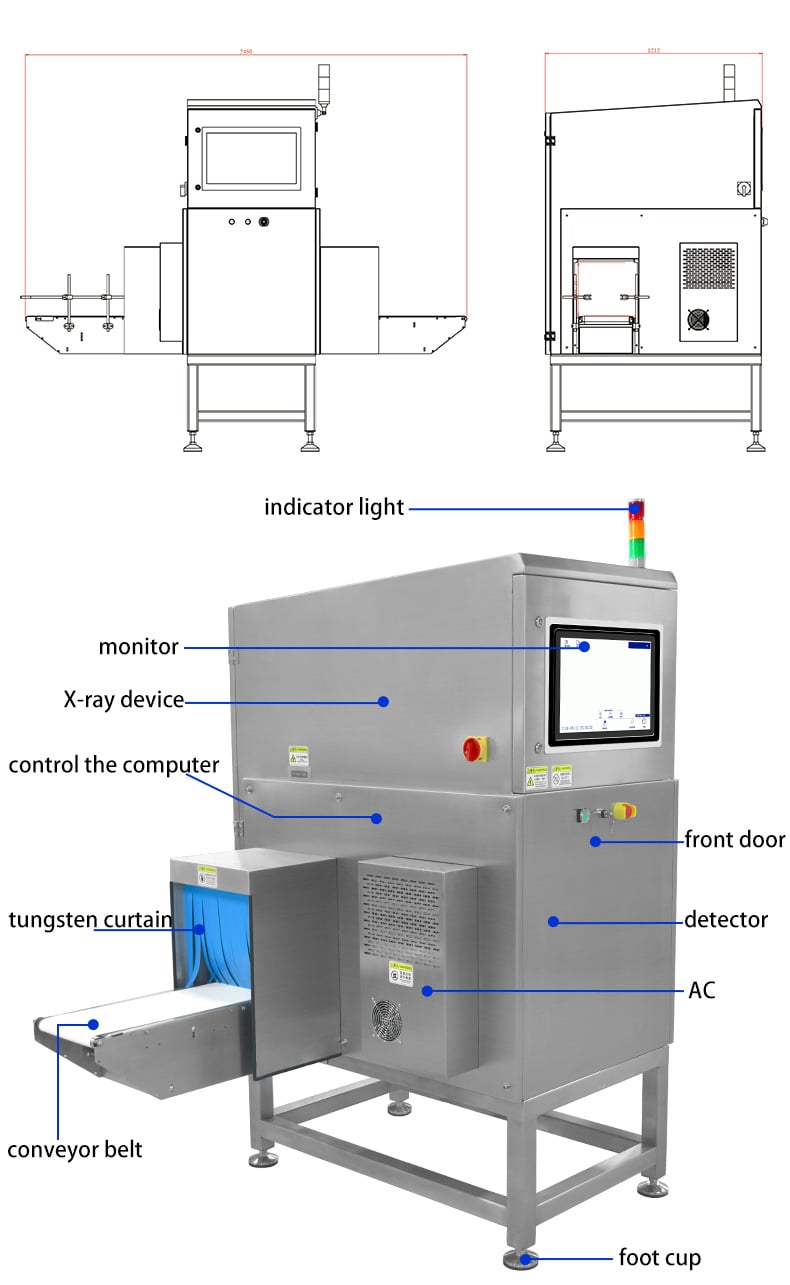
This is the build for lines that run sealed packs one after another and want the bad one gone without stopping. Bagged, boxed and bulk product: the 400 × 200 mm tunnel sets the ceiling, and the largest acceptable pack is 280 × 200 mm upright or 400 × 60 mm flat.
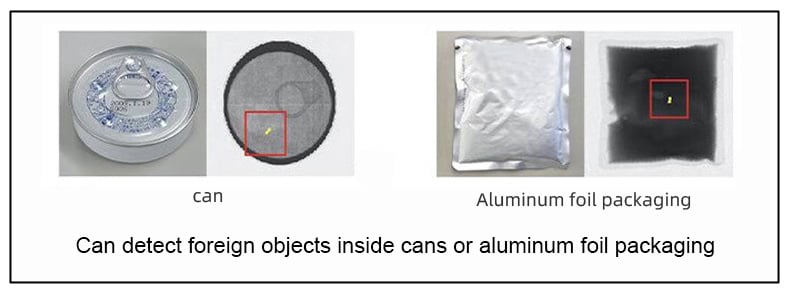
Typical work is a pack coming off filling or sealing, crossing the beam, then carrying on or being pushed aside. The decision is made inside the tunnel, so it makes no difference whether the pack is metal, foil laminate or plain film.
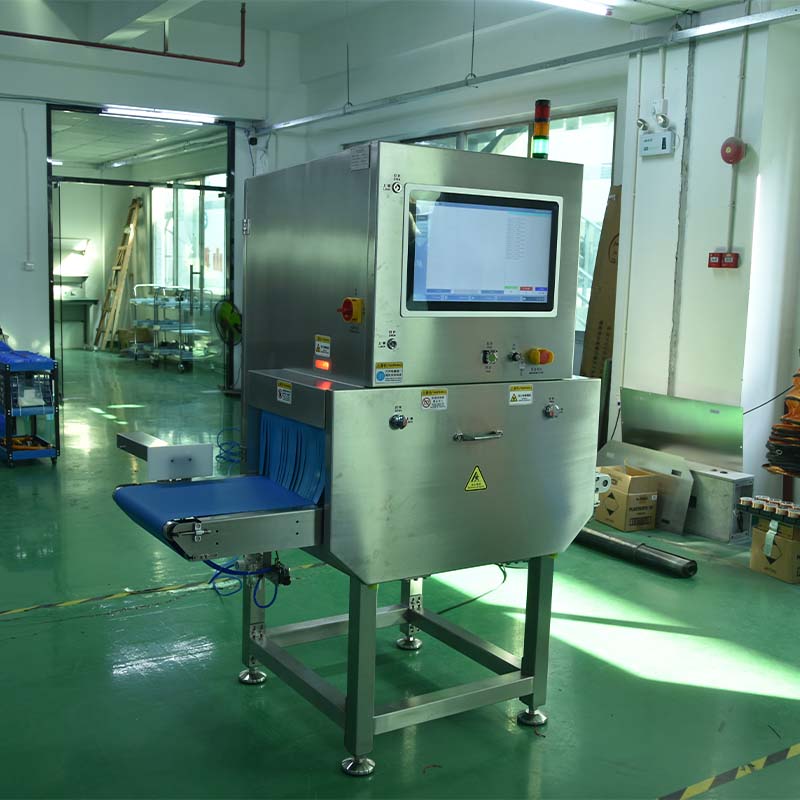
Every unit is assembled and run in on our own floor before dispatch. Below: a 4020 push-rod machine as a working line.
The tunnel is 400 × 200 mm; the largest acceptable pack is 280 × 200 mm upright or 400 × 60 mm flat, up to 10 kg.
It is pushed off. The blade sits along the belt edge inside the machine frame, so the pack clears without a second conveyor.
Nothing in the beam: the manual specifies 0.6 mm SUS 304, 1.0 mm ceramic and 2.0 mm glass. Through a pack it depends on density and thickness; our bench sheet records 0.4 mm on three cases.
Up to 10 kg per pack, at any belt speed between 10 and 70 m/min.
SUS 304 stainless steel with a food-grade PU belt, rated −15 to +45 °C, and the display runs in more than one language.
A LAN port and a USB port. The touchscreen shows the live image and the verdict, and every decision is logged.
Send the pack size, the weight per pack and your belt speed, and we will come back on fit, on the push rod and on the tunnel.

 ONLINE