EN


Sectio rejectionis in machinam incorporari potest aut ut unitas separata operari.
| Carnes congelatae rotundae | Rotuli congelati per foramen 400 × 200 mm transeunt. Specificatio 0.6 mm ferri indicat. |
| Granum in massa | Granula soluta semper moventur. Cingulum 10 kg pro pacco portat. |
| Magna cistulae obsoniorum | Impulsor cistulas latas a cingulo tollit. Linea non sistit. |
Dic nobis quae via tuae lineae conveniat. Nos sectionem reiciendam et cistulam ad hoc construemus.
Tunnulus 400 × 200 mm et cingulum onus 10 kg iudicant utrum pachymerum ad aptitudinem pertineat. Quomodo pachymerum defectuosum ex linea exeat est secunda decisio — in hac structura CQ-YW700 impellens in machina incorporatur, non autem post eam coniungitur. Pro saccis, capsulis et productis in massa: unus tunnulus, unum corpus SUS 304.
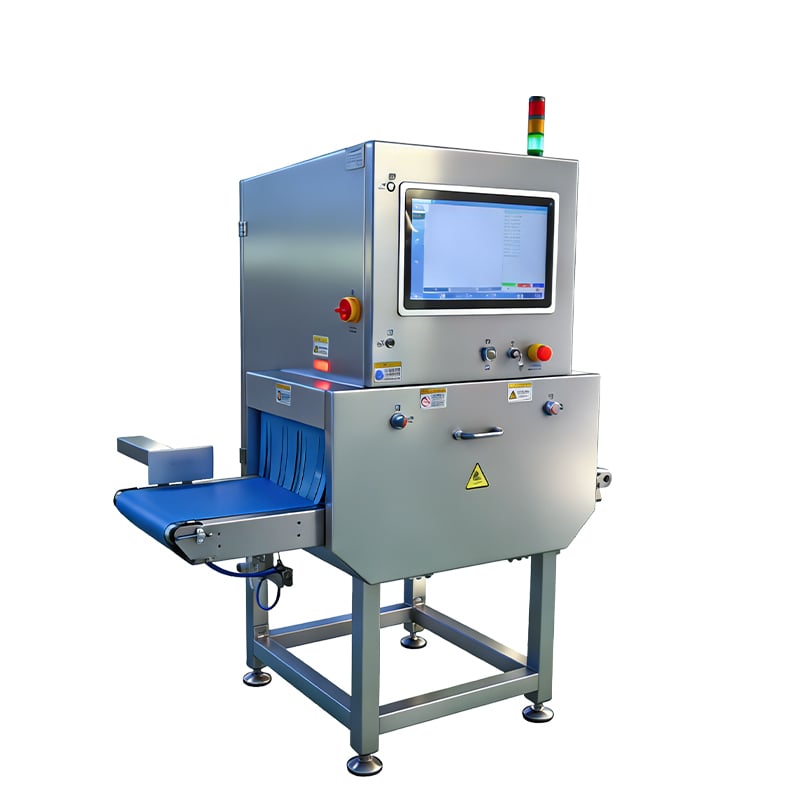
A pack that fails is pushed off the belt. The blade runs along the belt edge inside the machine frame: on an NG X-ray image it crosses the belt, moves the pack clear, and the line continues. No second conveyor, no separate reject module to find floor space for.
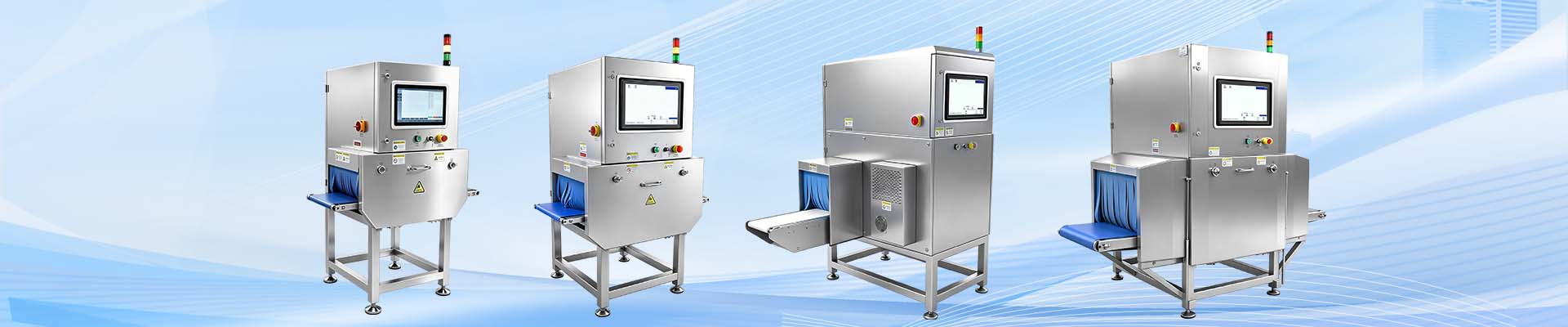
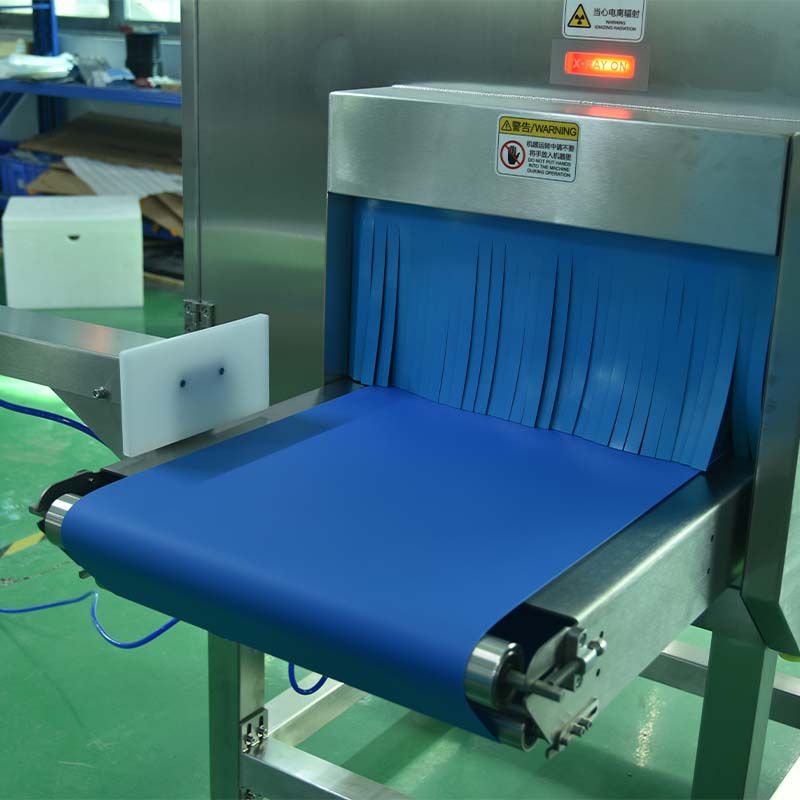
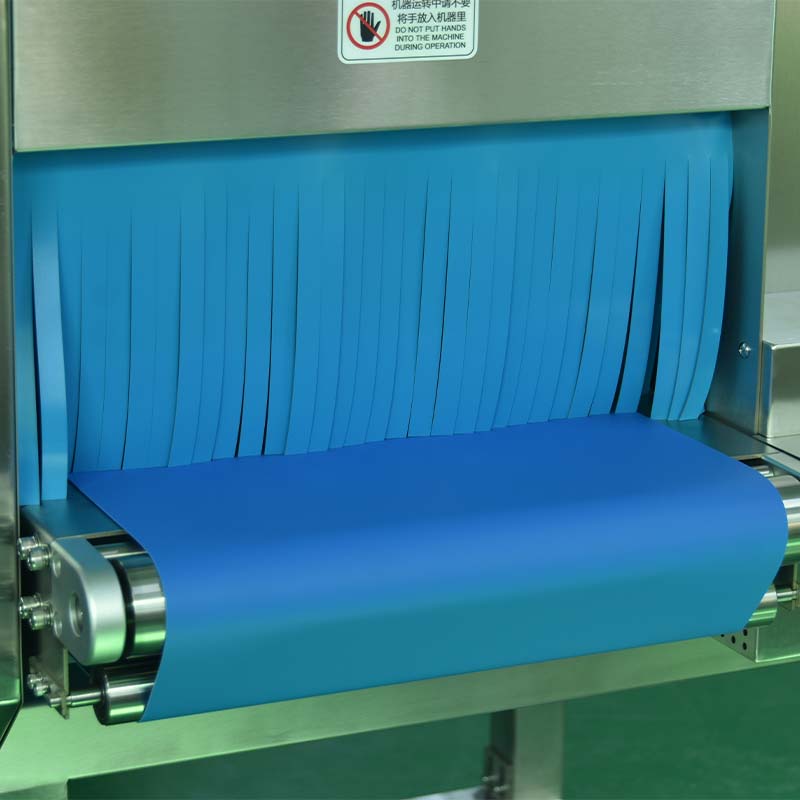
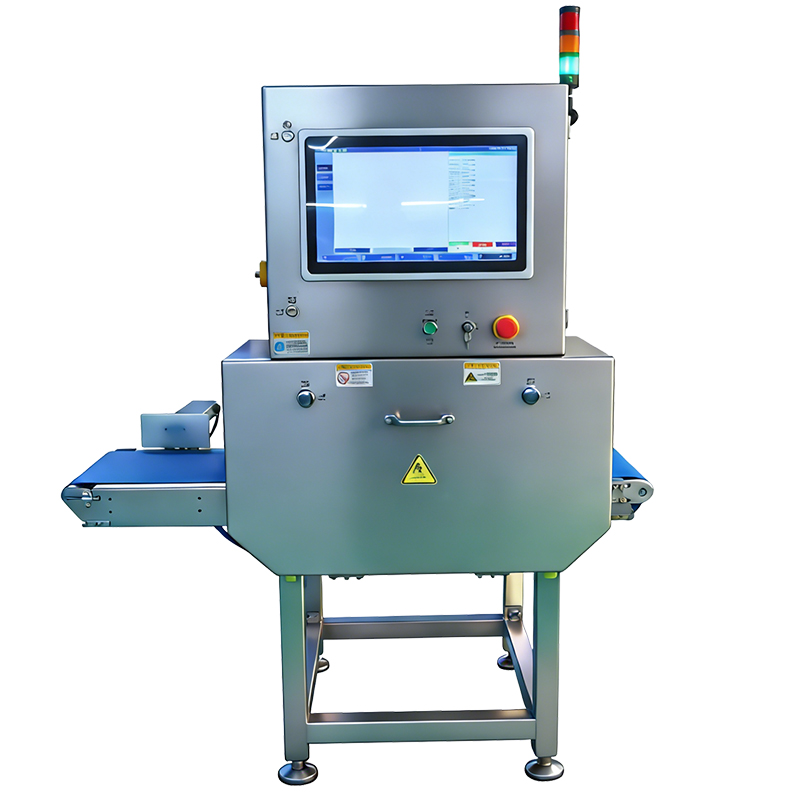
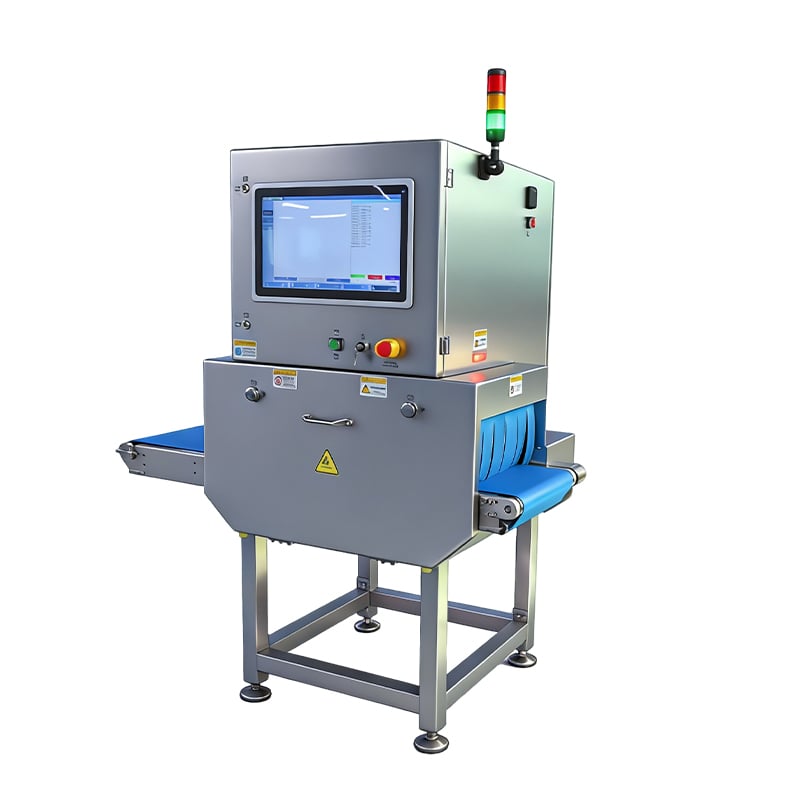
Keeping the pusher inside the same frame is what makes this build compact: one cabinet carries the X-ray source, the detector, the conveyor, the pusher, and the control computer. The tunnel mouth is closed by curtain strips.
| Characteristica | Dētaillia Technica / Praestātiō |
| Modello / serie | CQ-YW700 — 4020 integrated push-rod |
| Modus Reiectionis | Pusher exclusion, integrated |
| Fons radiorum X | 150 W / 240 W / 350 W, selecibile |
| Dimensiones del tunnel (L × A) | 400 mm × 200 mm |
| Maxima magnitudo producti | ≤280 mm (L) × 200 mm (A) · o ≤400 mm (L) × 60 mm (A) |
| Velocitas lorum | 10–70 m/min, ajustabile |
| Praecisio detectionis (minima sphaera) | 0.6 mm SUS 304 · 1.0 mm ceramicum · 2.0 mm vitrum Mensuratum in cingulo vacuo, nullum productum in fasciculo |
| Capacitas oneris | Usque ad 10 kg (22 lbs) per pachum |
| Dimensiones machinae (L × L × A) | 1500 × 990 × 1794 mm (+100 mm) |
| Formae productorum | In saccis · in cistulis · in massa |
| Construction | Acciaium inoxidabile SUS 304, cingulum PU ad usum alimentarium |
| Fons Potentiae | AC 220 V, 1.5 kVA, 50/60 Hz |
| Alarm | Audibilis et Visualis |
| Ambiens Temperature | −15 °C ad +45 °C |
| Interfacing Datorum | Portus LAN · portus USB |
| Display & operation | Touch screen, touch input |
| Display language | Chinese, English and others |
Figura principalis mensuratur cum nihil in fasciculo sit, et manuale ita eam annotat: 0.6 mm SUS 304, 1.0 mm ceramica, 2.0 mm vitrum. In pacheto onerato, limen variat secundum densitatem et crassitudinem producti, quare idem tunnellus diversimode legitur in duabus lineis.
Specificatum cum nihil in tunnello sit.
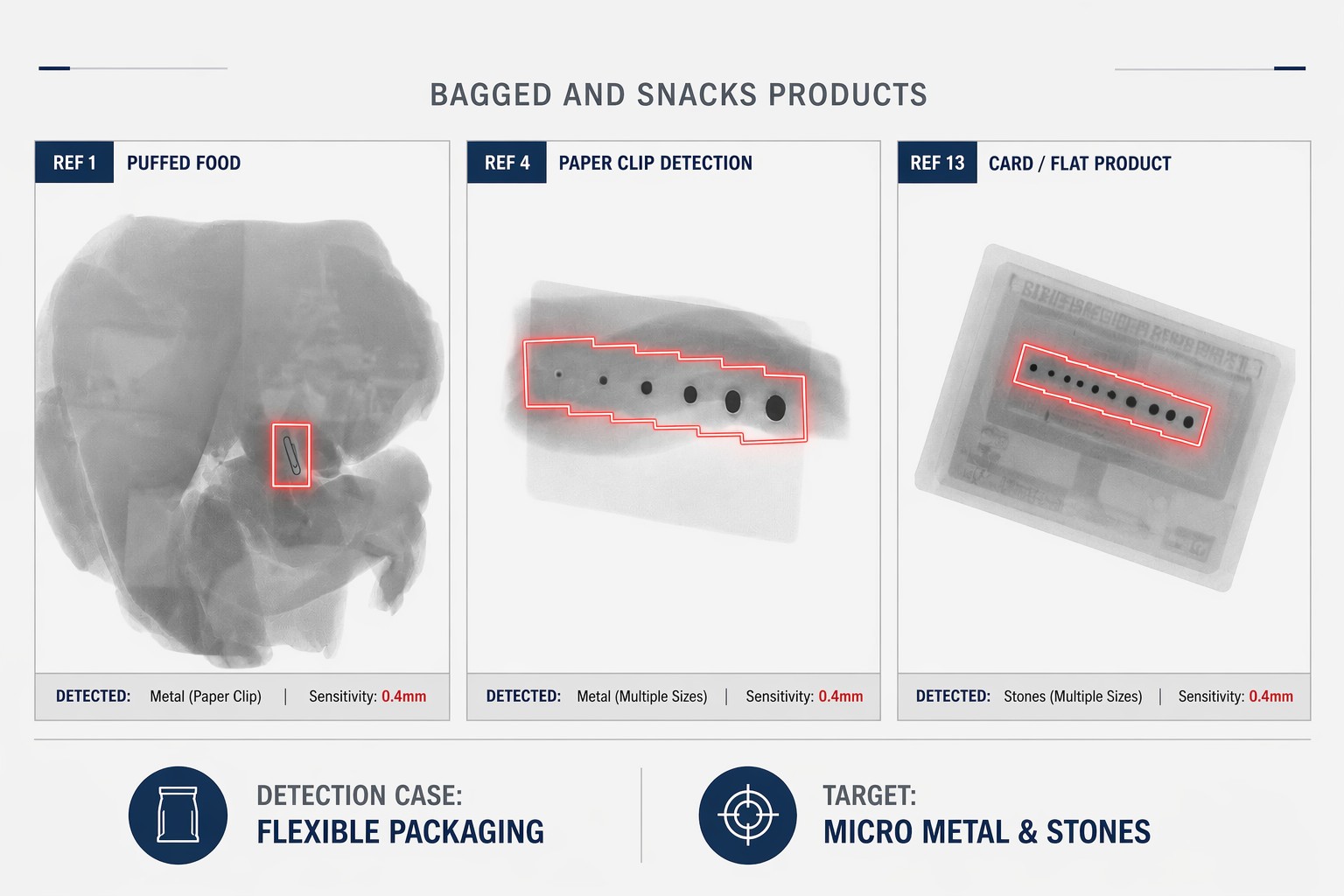
The verdict comes from a picture of the pack, not a single reading, so several checks ride on one pass.
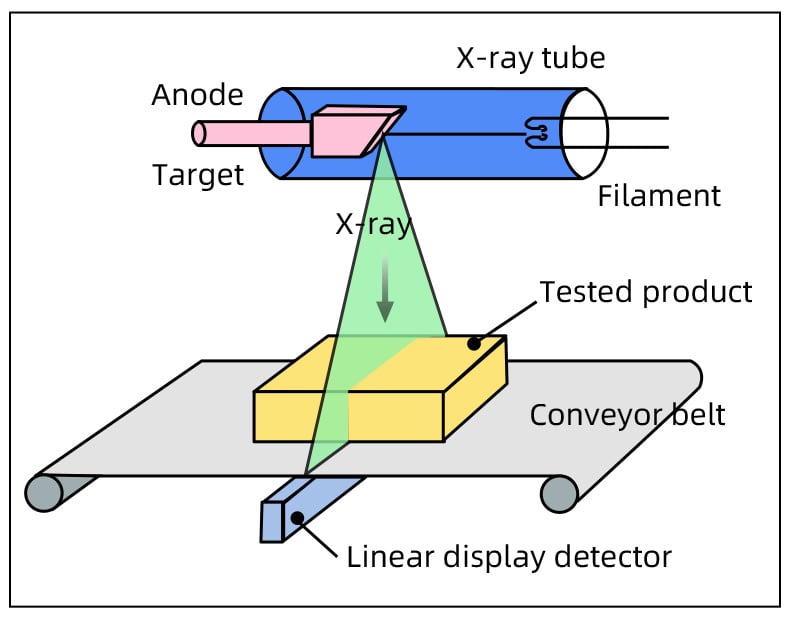
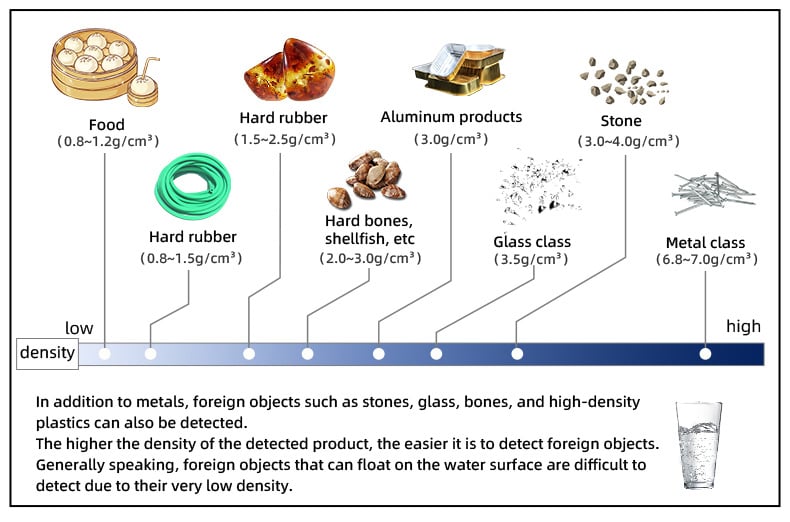
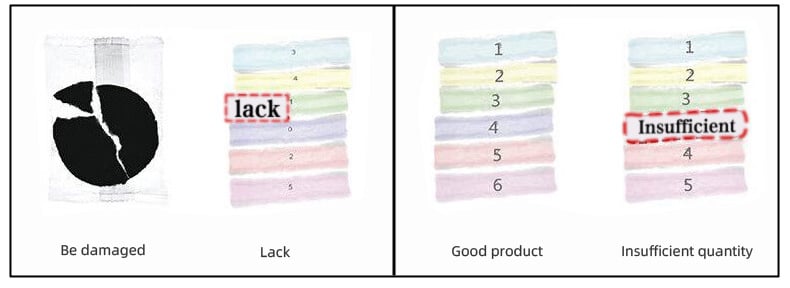
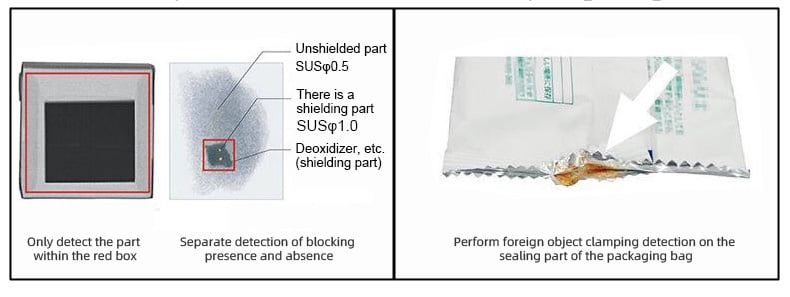
The tube fires a fan of X-rays down across the belt. The detector on the far side records how much of that fan survives the pack, and the software draws the difference as a greyscale image. Dense matter eats more of the beam and reads darker.
Everything after that is judgement. Each image is compared against the settings held for that product, the machine decides good or NG, and a failed pack leaves the belt on the pusher while the line keeps running.
Because the decision is made on a picture, contamination, shape, count, shielding and seal ride on the same pass, with the live image on the touchscreen.
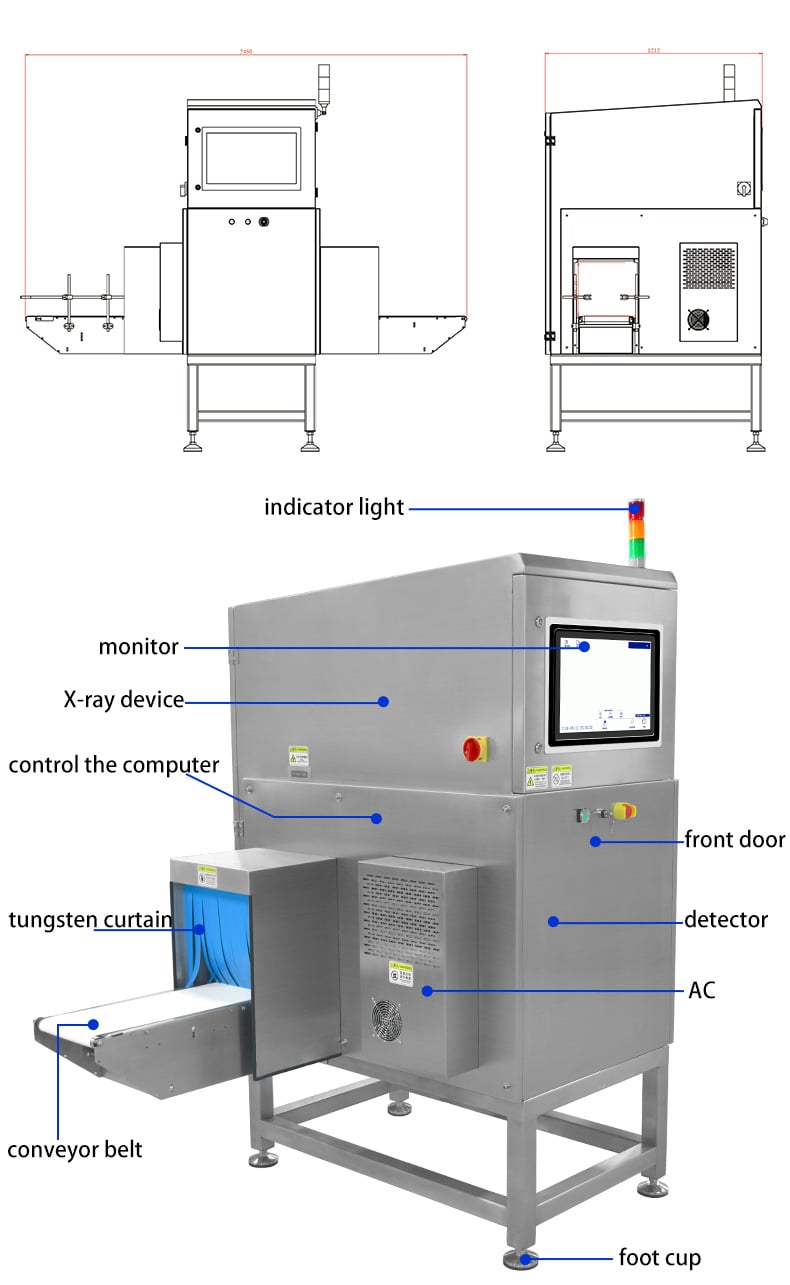
This is the build for lines that run sealed packs one after another and want the bad one gone without stopping. Bagged, boxed and bulk product: the 400 × 200 mm tunnel sets the ceiling, and the largest acceptable pack is 280 × 200 mm upright or 400 × 60 mm flat.
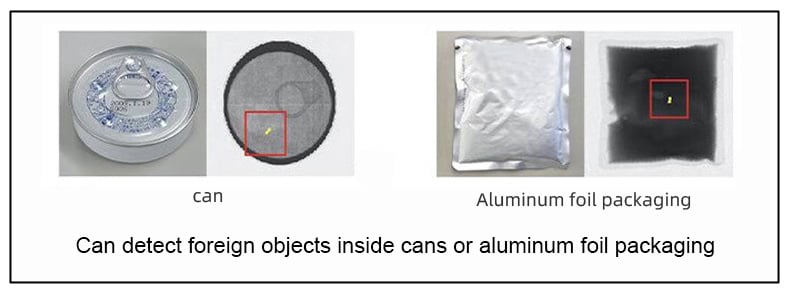
Typical work is a pack coming off filling or sealing, crossing the beam, then carrying on or being pushed aside. The decision is made inside the tunnel, so it makes no difference whether the pack is metal, foil laminate or plain film.
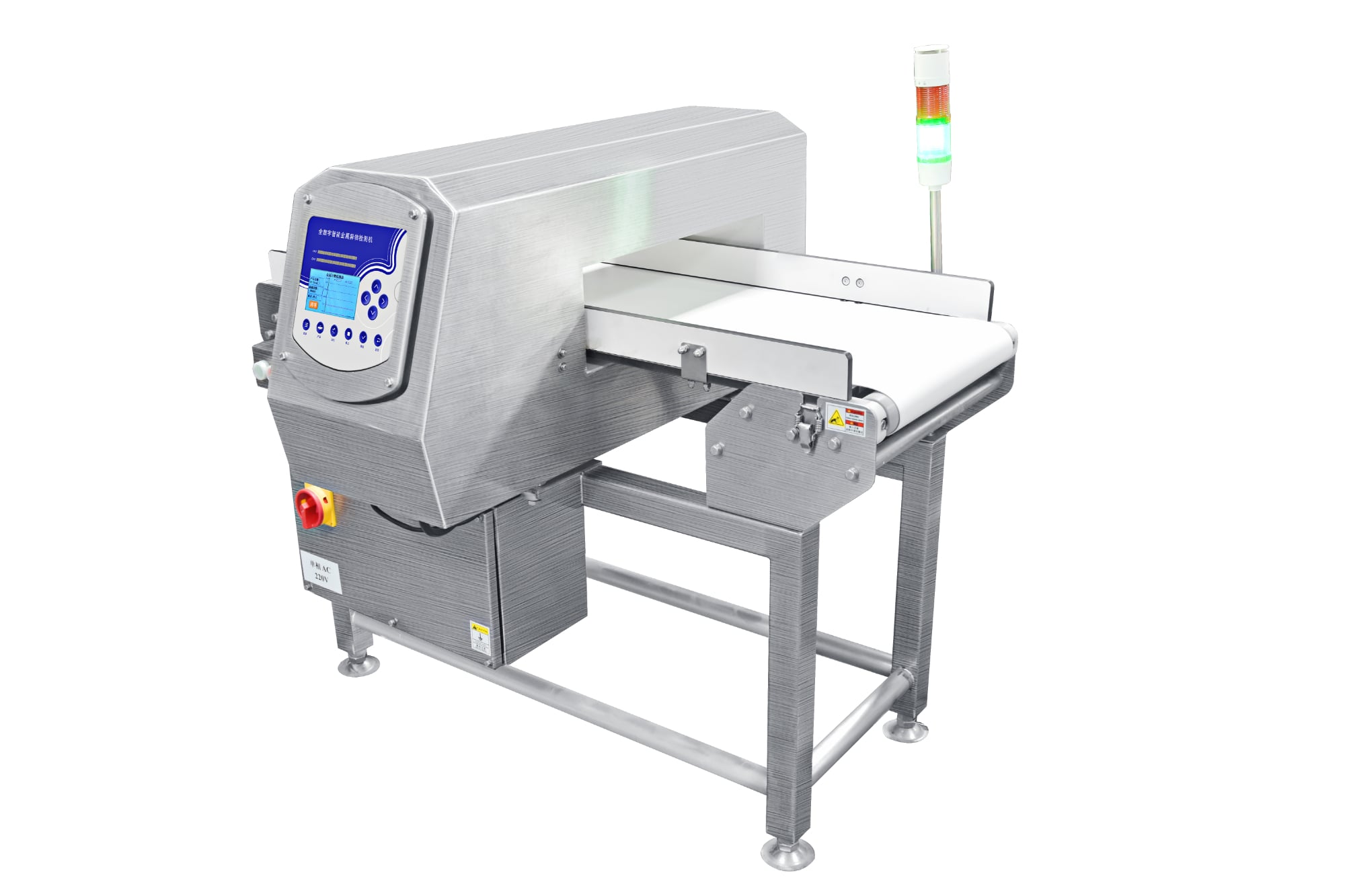
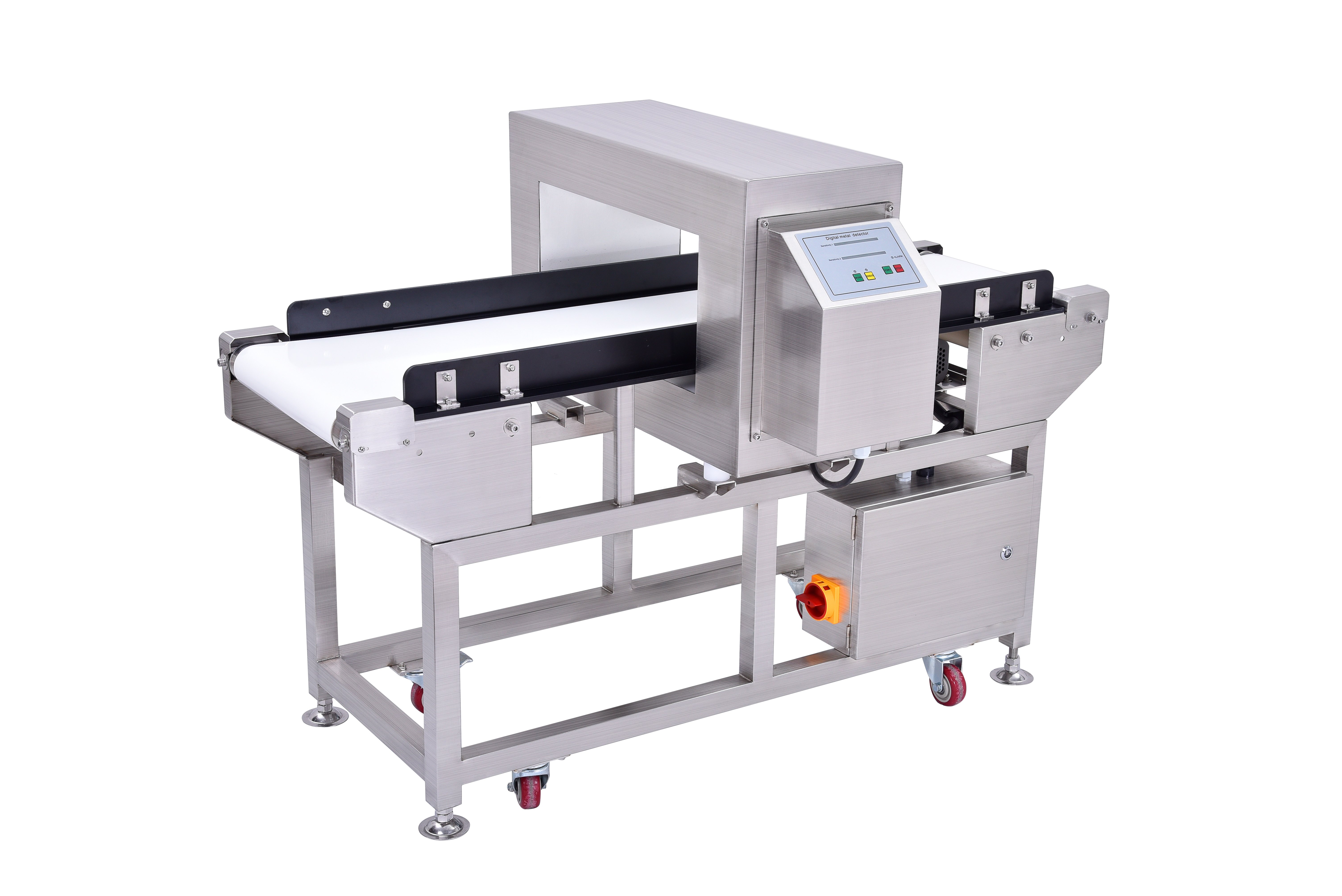
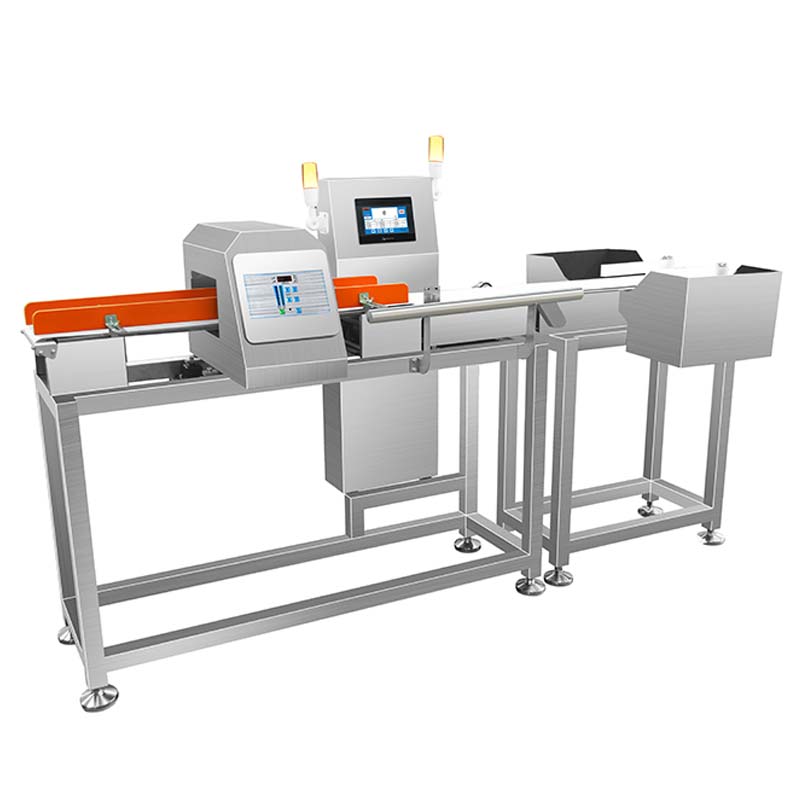
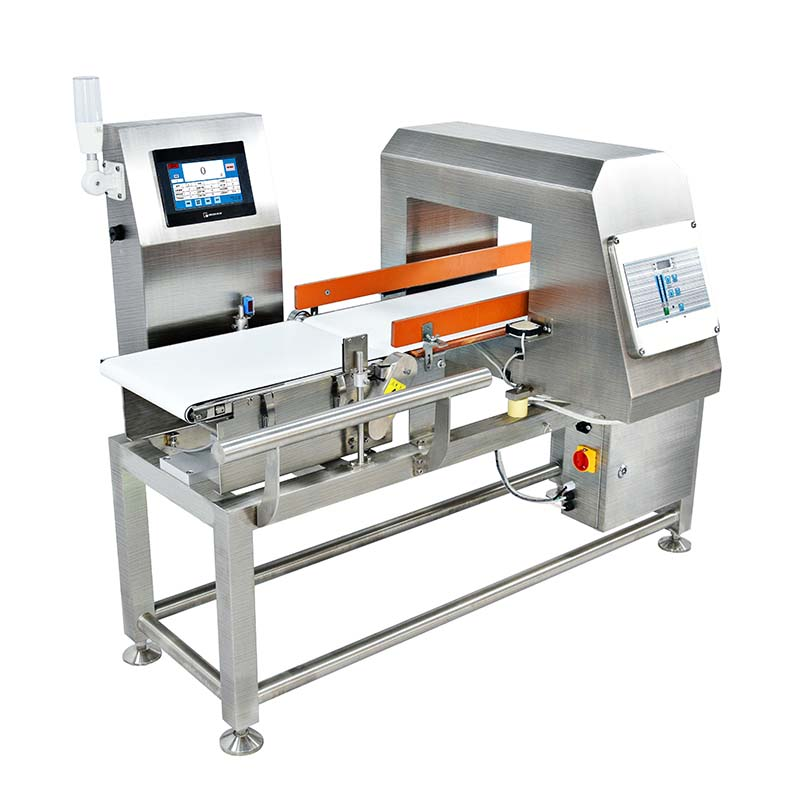
Every unit is assembled and run in on our own floor before dispatch. Below: a 4020 push-rod machine as a working line.
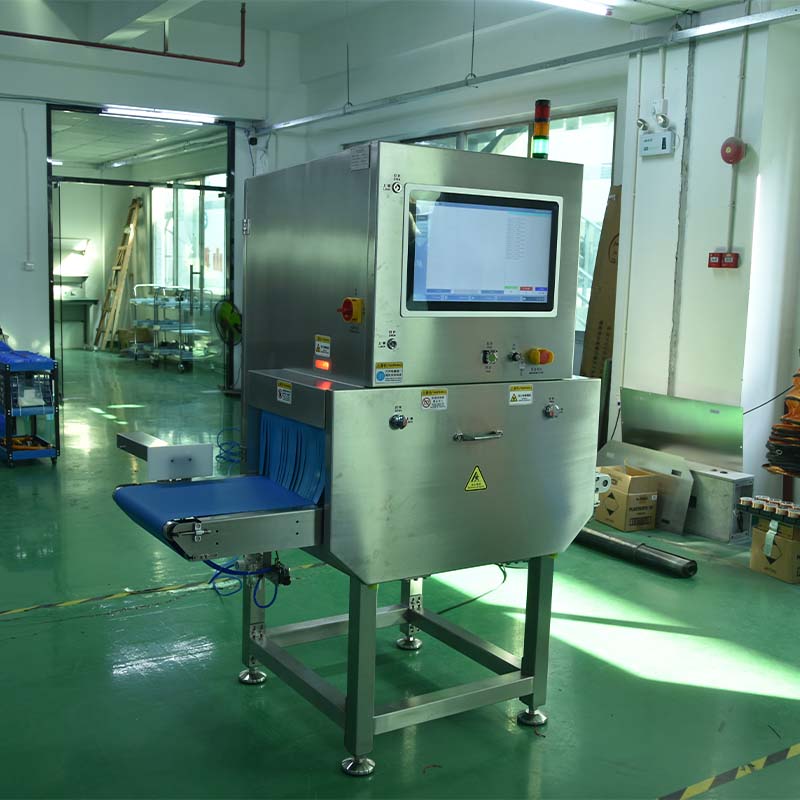
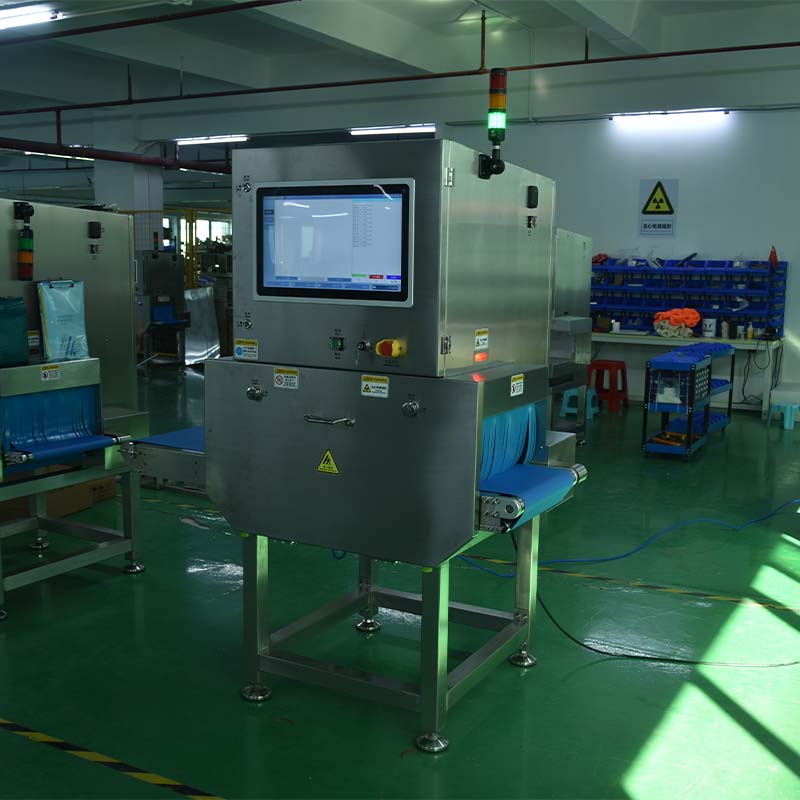
The tunnel is 400 × 200 mm; the largest acceptable pack is 280 × 200 mm upright or 400 × 60 mm flat, up to 10 kg.
It is pushed off. The blade sits along the belt edge inside the machine frame, so the pack clears without a second conveyor.
Nihil in fasciculo: manuale praescribit 0.6 mm SUS 304, 1.0 mm ceramicum et 2.0 mm vitrum. Per pachymen dependet ex densitate et spissitudine; tabula nostra 0.4 mm in tribus casibus notat.
Usque ad 10 kg per pachymen, ad quemlibet cinguli celeritatem inter 10 et 70 m/min.
Acciaius inox SUS 304 cum cingulo PU gradus cibarii, certificatum ad −15 usque ad +45 °C, et monitor linguis pluribus operatur.
Portus LAN et portus USB. Tactus monitor imaginem vivam et iudicium ostendit, et omnis decisio registratur.
Mittite magnitudinem pachymenti, pondus per pachymen et celeritatem cinguli vestri, et nos de aptatione, de baculo propulsore et de tunnello respondebimus.

 INTERRETIALIS