 EN



Detector Metallorum Ciborum: Quomodo Eligi, et Quae Praetermittit
Plurimae fabricae ciborum ad hoc eodem modo perveniunt. Aliquis in officina qualitatis (QA) claudere debet punctum criticum controlis corporum alienorum (CCP), et brevis ad emptiones perveniens legit "opus est nobis" metal Detector ".
Invenire machinam facile est. Eligi magnitudinem aperturae, per quam productum transit, non est facile; et haec apertura determinat minimum fragmentum, quod linea capere potest.
What a Food Metal Detector Actually Measures
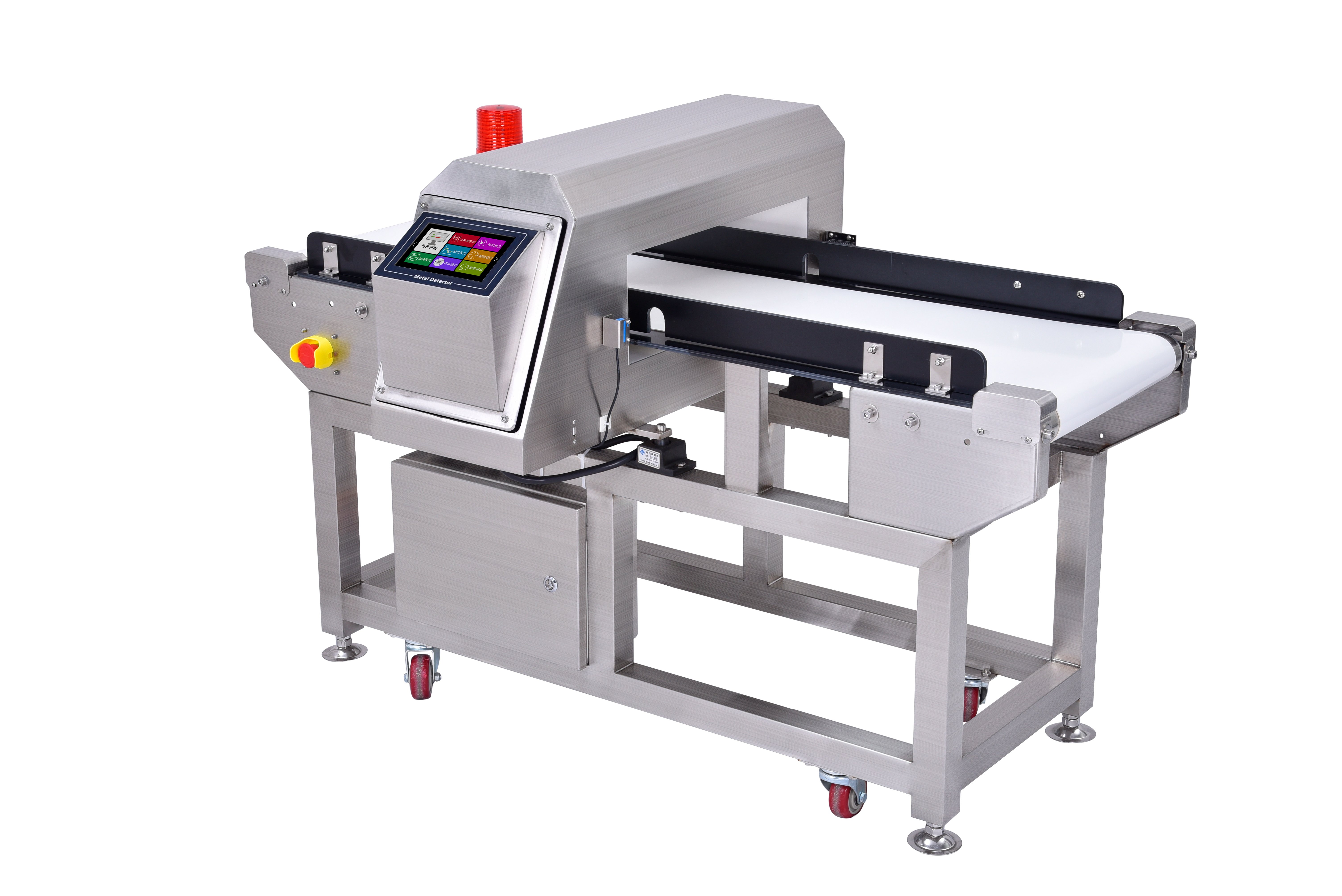
A food metal detector does not weigh the product and does not photograph it. It builds an electromagnetic field across the aperture and watches for the disturbance a conductive object makes in it. Conductivity and magnetic permeability are what register, and the three metal families behave differently.
- Ferrugineus — iron, steel, and the fine wire behind most recalls. Magnetic, and the easiest to catch.
- Non-ferrous — copper, brass, aluminium. Good conductors, with no magnetism to help.
- Stainless 304 and 316 — usually non-magnetic and a poorer conductor than copper, so the signal is small. It is the largest figure in the spec table.
So "detects metal" means nothing on its own. A sentence worth relying on names the metal and the size.
The Aperture Decides Your Sensitivity
Duo machinae poterunt eundem controllorem, eundem coil design, et eundem firmware habere, et tamen differre per factorem trium in stainless et prope per factorem quattuor in ferro, quia una maioris foraminis praebet. In metal detectoribus pro cibis, apertura est specificatio.
Haec est scala in nostro CQ-YW910K, ex eius spec sheet repetita. Altitudo canalis a 100 usque ad 350 mm extenditur; capita columnarum sunt codices aperturae quos industria citat.
| Codex aperturae | 4010 | 4012 | 4015 | 4020 | 4025 | 4030 | 4035 |
|---|---|---|---|---|---|---|---|
| Altitudo canalis | 100 mm | 120 mm | 150 mm | 200 mm | 250 mm | 300 mm | 350 mm |
| CQ-YW910K — Fe | 0.8 mm | 1.0 mm | 1.2 mm | 1.5 mm | 2.0 mm | 2.5 mm | 3.0 mm |
| CQ-YW910K — non-ferrous | 1.2 mm | 1.5 mm | 2.0 mm | 2.5 mm | 3.0 mm | 3,5 mm | 4.0 mm |
| CQ-YW910K — stainless 304 | 1.5 mm | 2.0 mm | 2.5 mm | 3.0 mm | 3,5 mm | 4.0 mm | 4,5 mm |
| CQ-YW806 — Fe only | 0.8 mm | 1.0 mm | 1.2 mm | 1.5 mm | 2.0 mm | 2.5 mm | 3.0 mm |
Transitus a apertura 4015 ad aperturam 4025 0,8 mm in ferro et unum millimetrum integrum in stainless impendit. Apertura maior est, et hoc solum differentiam explicat.
Itaque dimensionem aperturæ pro maximo pacco in serie tua statue, plus marginem pro modo quo super cingulum sedet, et ibi desine. Quicquid maius est, sensibilitas est quæ per totam vitam machinæ amittitur. Duo alia numeri ante pretium petendum sunt: velocitas cinguli est 25 ad 30 m/min in hoc modello et non regolabilis, et apertura fixa est cum machina ordinatur.
Effectus producti: producti humidi, salini et congelati
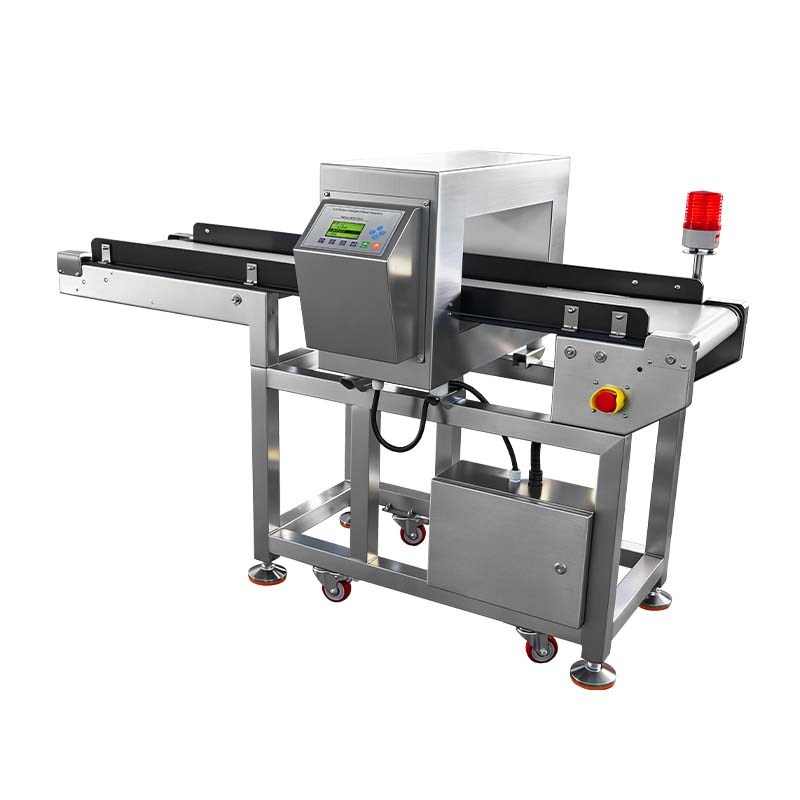
Biscottum siccum vix campum perturbat. Productum humidum, salinum aut saccharosum perturbat valde, quia aqua cum salsis et saccharis dissolutis conducit. Machina hoc ut signum magnum et lentum legit, et ab eo separare debet signum parvum et celerem quod fragmentum facit. Hoc est problema effectus producti, et hoc tectum imponit cuiquam detectori metallorum alimentario.
- Contentum salis. Salsicia, caro curata, nux salina, panis graviter salinus.
- Tortor. A frozen block reads differently from the same product thawed, and a product warming on the belt can drift out of the phase setting that worked at the start of the shift.
A difficult line needs a different detector rather than a bigger one.
Foil and Metallised Film Change What You Can Detect
Wrap the product in aluminium foil or a metallised film and you have wrapped it in a conductor. A standard food metal detector is then looking for a small fragment inside a large moving signal, and the only metal it still finds reliably is ferrous.
On foil packaging you give up non-ferrous and stainless detection. Our answer in this range is the ferrous-only CQ-YW806, which holds Fe sensitivity at 0.8 mm on the 4010 aperture. A separate article explains the mechanism behind foil .
What a Food Metal Detector Cannot See
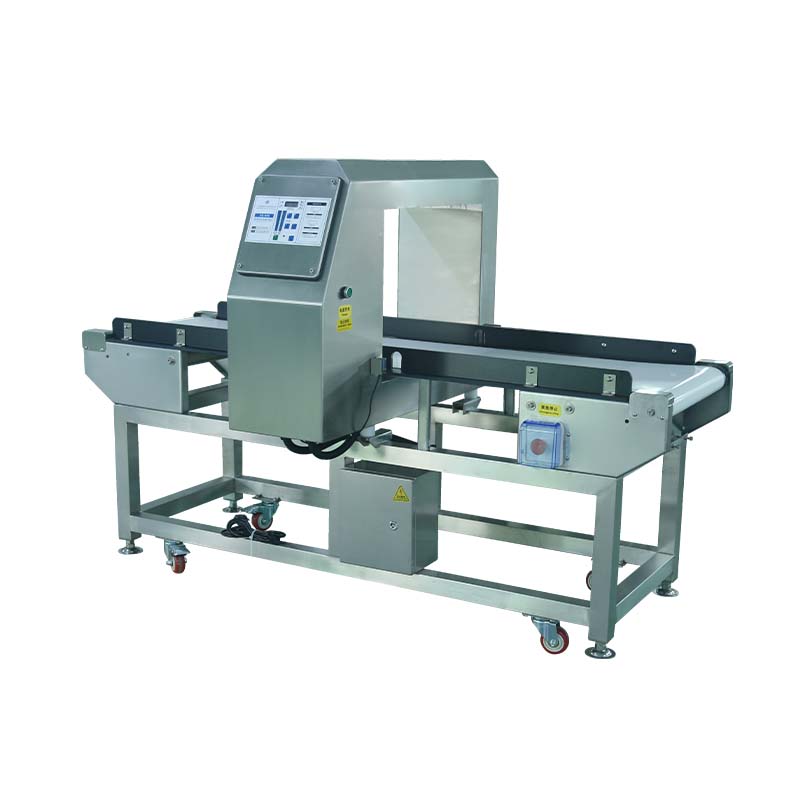
Metal is the entirety of a food metal detector’s vocabulary. Glass, stone, bone, ceramic, plastic, rubber, and wood are invisible to it—and so is every defect unrelated to metal: a missing tablet, an underfilled container, a faulty seal.
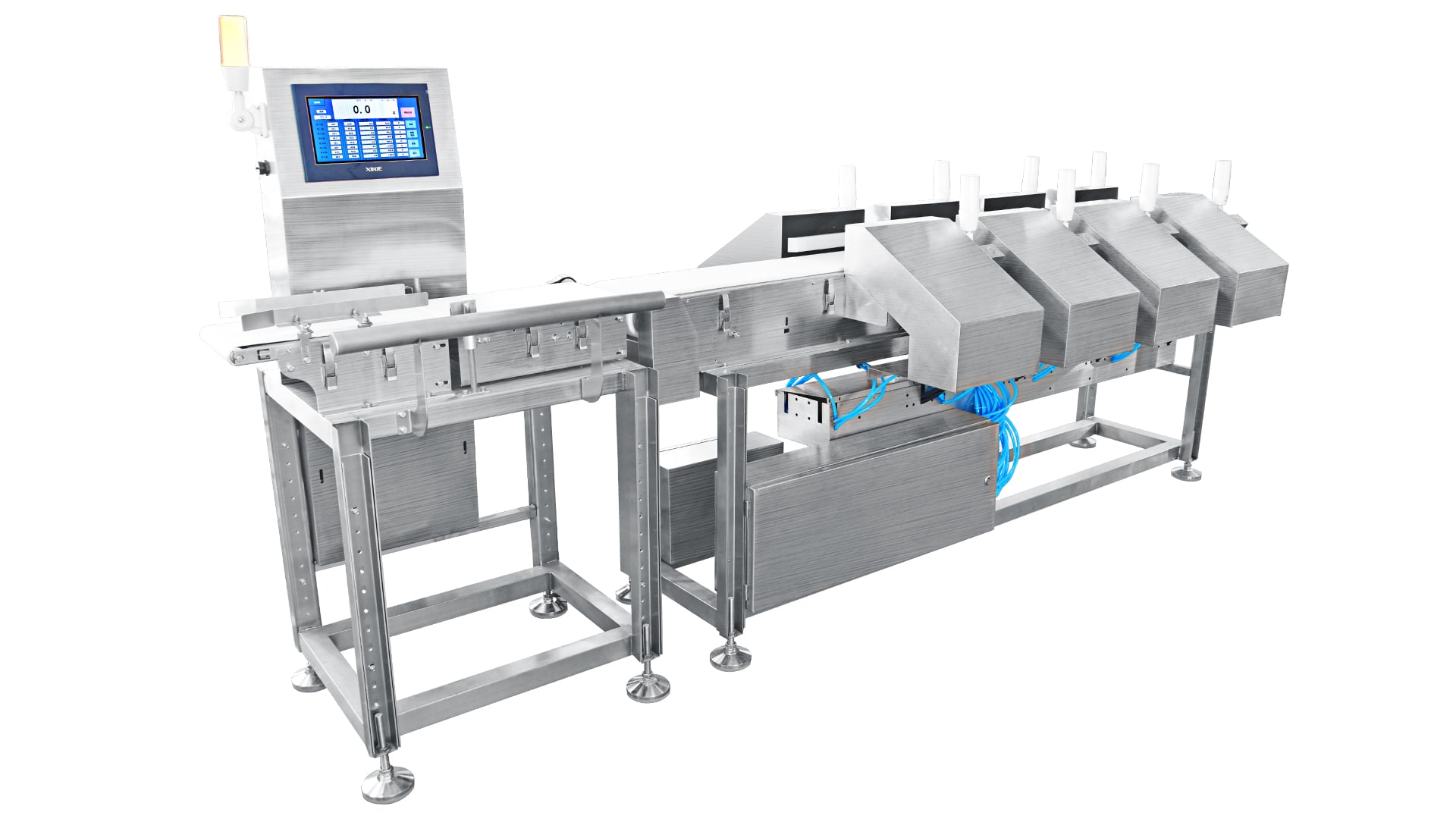
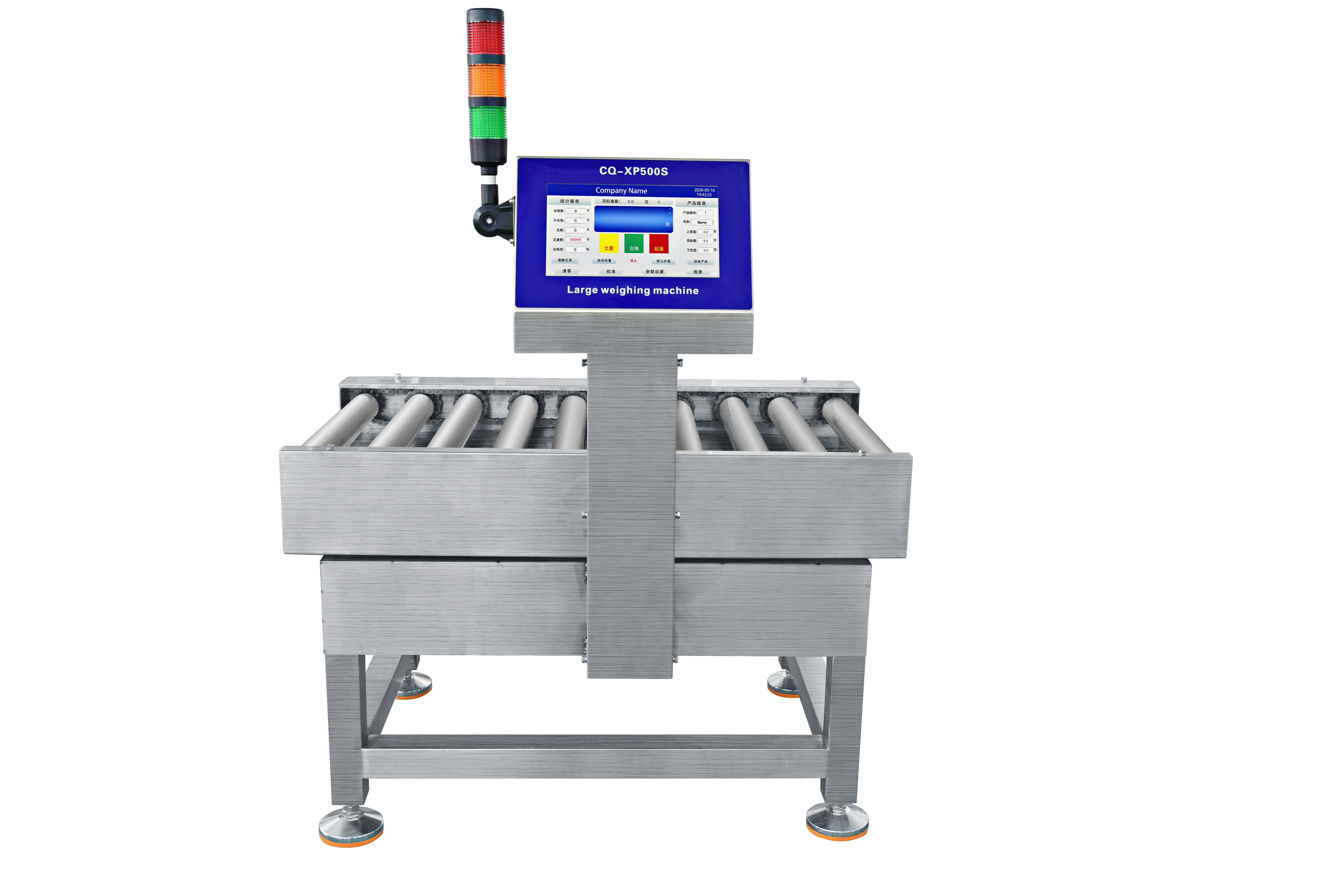
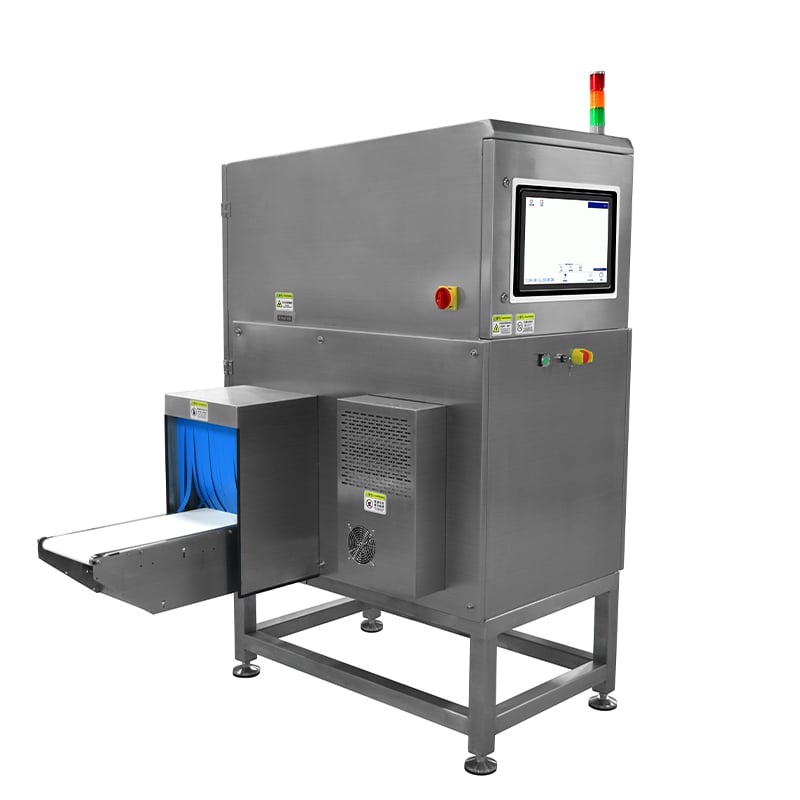
If those are your risks, the machine you need measures density rather than conductivity—and that is X-ray. If the risk is weight deviation rather than foreign objects, it is a checkweigher; our guide to selecting a checkweigher for food lines covers that decision.
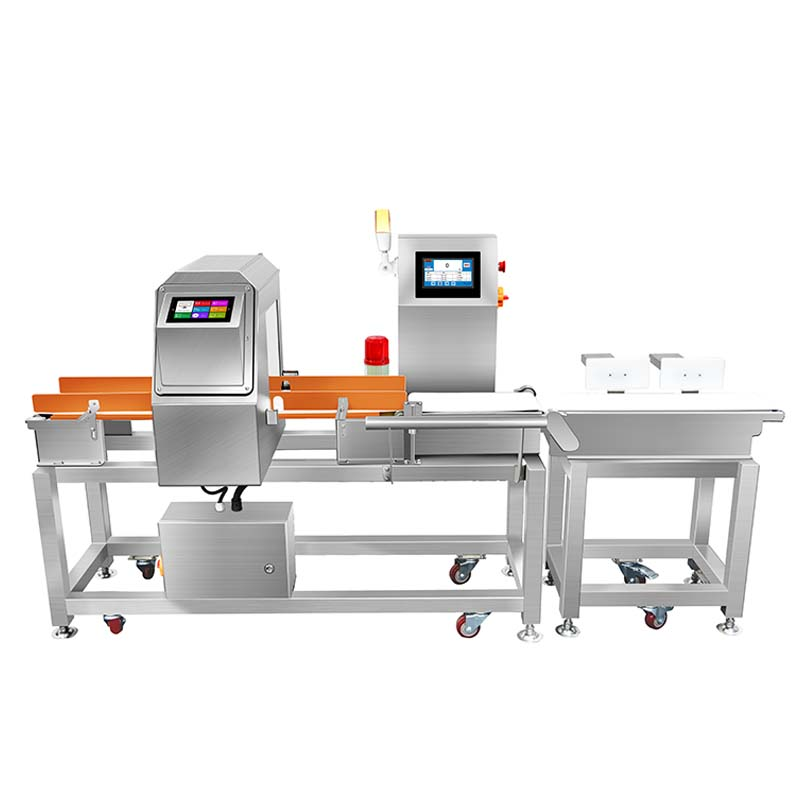
Where a production line requires both functions, a combined unit merits cost comparison against two separate units.
The Rejection System: Where Projects Fail
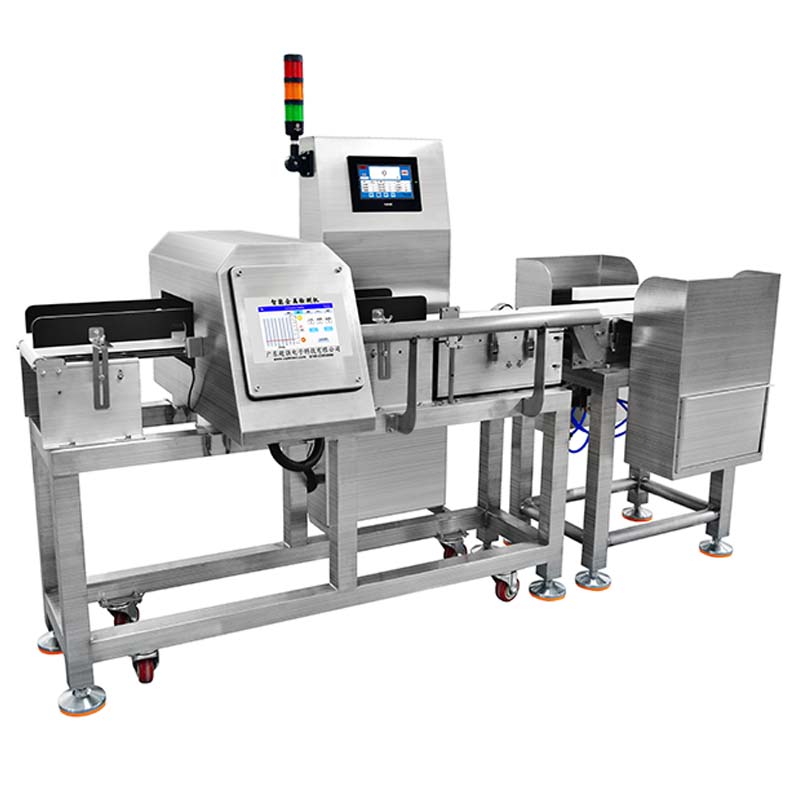
Detection is specified with care, while rejection is often assumed—leading commissioning visits to escalate into warranty disputes.
This range ships standard with an automatic stop and a 12 V buzzer; flap, air-blast, pusher, swing-arm, and sink-type rejection mechanisms are optional. Three questions determine which one you need:
- Potestne reiector malum pachetum expellere inter duo pacheta, ad velocitatem cinguli vestri?
- Significatne vasum reiectoris ad moderatorem, ut notatio confirmationem ostendat, non solum iussionem?
- Potestne pachetum reiectum iterum in lineam redire per interstitium aut per communem vasum excipientem?
Usum eius ut CCP: Examen Diurnum
Numeri in hoc articulo, sicut in quolibet foliolo, ex cingulo vacuo et ex certificatis globis experimentorum oriuntur. Machinam describunt, non lineam vestram.
Validatio hanc lacunam claudit. Proprium productum per machinam ducite, cum fragmentis experimentorum quae in productione utitis, ad verecundam velocitatem et onus lineae, et notate quid capiat. Hoc verum resultatum, non numerus in tabula technica, debet in documento vestro CCP apparere — una cum nomine qui examinat et loco ubi notatio asservatur.
Modelli, et quid unusquisque eorum sit
Totum metallicum cum schermo tactili et auto-doctrina: CQ-YW910K . Totum metallicum cum simpliciori tabula LCD: CQ-YW818 . Ferrosa tantum, pro folio et pellicula metallizata: CQ-YW806 et ad examen orientata CQ-YW807 . Umidum aut altae salinitatis producta :CQ-YW918 . Tota series est in metal Detector paginam.
Quaestiones Frequenter Rogatae
Quid detector metalli cibarius detegere potest?
Ferrosa, non-ferrosa et ferrum inoxidabile, ad magnitudines in tabula aperturarum supra. Vitrum, lapis, os, plasticum, caoutchouc et lignum non sunt conductiva; hoc opus ad radiographiam pertinet.
Quod metallum difficillimum est detectori metalli cibario invenire?
Ferrum inoxidabile 304 vel 316 — saepe non-magneticum et deterior conductor quam cuprum. In nostra apertura 4015 figura ferri est 1,2 mm et figura ferrum inoxidabilis est 2,5 mm.
Can a food metal detector see through aluminium foil?
Not at full capability. Foil is a conductor, so a food metal detector keeps ferrous detection and loses non-ferrous and stainless. CQ-YW806 is built for that case.
How often should a food metal detector be tested?
A check at start-up, at the end of the shift, and after any changeover or repair, using test pieces kept on the line. The interval belongs to your HACCP study.
What do you need to quote a food metal detector?
Pack dimensions, weight, temperature and packaging material; packs per minute; and which metal, at what size, with the reject going where.
A food metal detector is chosen in a fixed order: the metal you have to catch, the aperture that fits your largest pack, then the model that copes with your product and packaging. Everything else in the quotation follows.
Send us the pack dimensions and what you need to catch, and we will tell you which aperture holds it. The range is on our metal Detector paginam.

 Nuntii Calidi


 INTERRETIALIS