 EN
EN



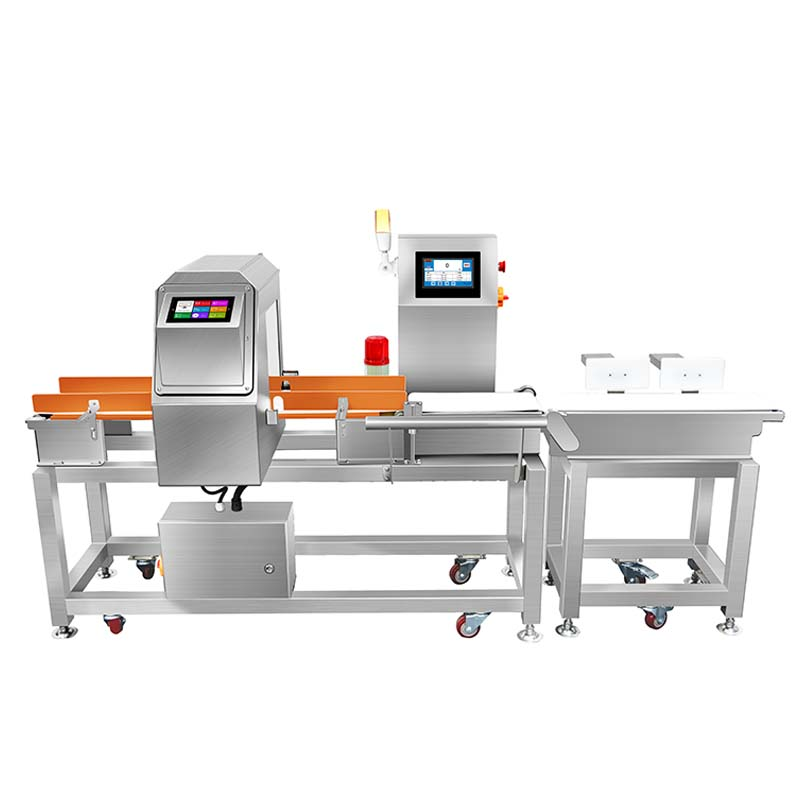
Food Metal Detector: How to Choose, and What It Misses
Most food factories arrive at this the same way. Someone in QA has to close the foreign-body CCP, and the brief reaching purchasing reads "we need a metal detector".
Finding the machine is easy. Choosing the size of the opening your product passes through is not, and that opening decides the smallest fragment the line can catch.
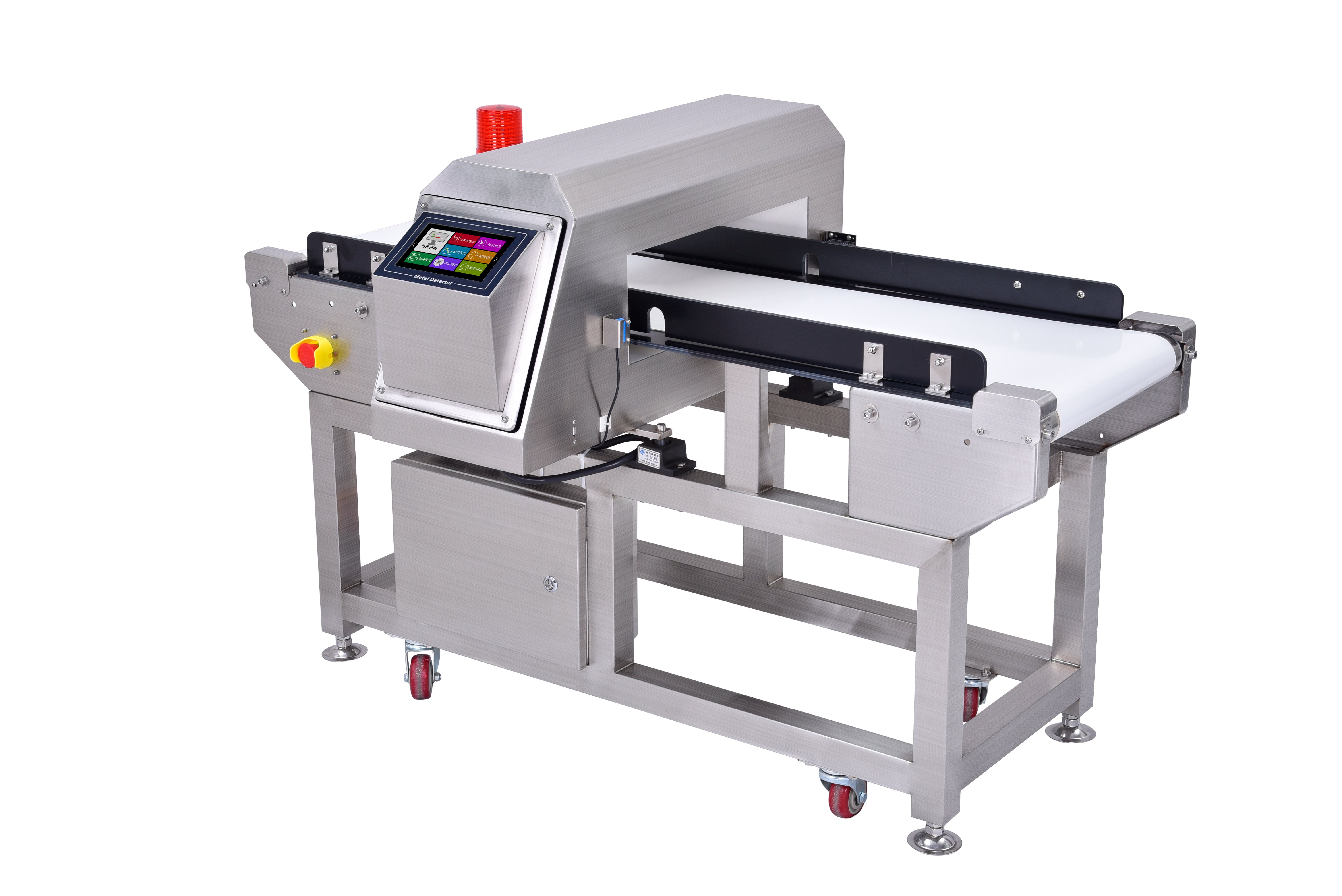
What a Food Metal Detector Actually Measures
A food metal detector does not weigh the product and does not photograph it. It builds an electromagnetic field across the aperture and watches for the disturbance a conductive object makes in it. Conductivity and magnetic permeability are what register, and the three metal families behave differently.
- Ferrous — iron, steel, and the fine wire behind most recalls. Magnetic, and the easiest to catch.
- Non-ferrous — copper, brass, aluminium. Good conductors, with no magnetism to help.
- Stainless 304 and 316 — usually non-magnetic and a poorer conductor than copper, so the signal is small. It is the largest figure in the spec table.
So "detects metal" means nothing on its own. A sentence worth relying on names the metal and the size.
The Aperture Decides Your Sensitivity
Two machines can share the same controller, coil design and firmware and still differ by a factor of three on stainless and nearly four on iron, because one presents a bigger hole. On a food metal detector the aperture is the specification.
This is the ladder on our CQ-YW910K, copied from its spec sheet. Channel height runs from 100 to 350 mm; the column headers are the aperture codes the industry quotes.
| Aperture code | 4010 | 4012 | 4015 | 4020 | 4025 | 4030 | 4035 |
|---|---|---|---|---|---|---|---|
| Channel height | 100 mm | 120 mm | 150 mm | 200 mm | 250 mm | 300 mm | 350 mm |
| CQ-YW910K — Fe | 0.8 mm | 1.0 mm | 1.2 mm | 1.5 mm | 2.0 mm | 2.5 mm | 3.0 mm |
| CQ-YW910K — non-ferrous | 1.2 mm | 1.5 mm | 2.0 mm | 2.5 mm | 3.0 mm | 3.5 mm | 4.0 mm |
| CQ-YW910K — stainless 304 | 1.5 mm | 2.0 mm | 2.5 mm | 3.0 mm | 3.5 mm | 4.0 mm | 4.5 mm |
| CQ-YW806 — Fe only | 0.8 mm | 1.0 mm | 1.2 mm | 1.5 mm | 2.0 mm | 2.5 mm | 3.0 mm |
Moving from the 4015 aperture to the 4025 costs 0.8 mm on iron and a full millimetre on stainless. The opening is larger, and that alone accounts for the difference.
So size the aperture for the largest pack in your range, plus margin for how it sits on the belt, and stop there. Anything larger than that is sensitivity given away for the life of the machine. Two other figures matter before you ask for a price: belt speed is 25 to 30 m/min on this model and not adjustable, and the aperture is fixed when the machine is ordered.
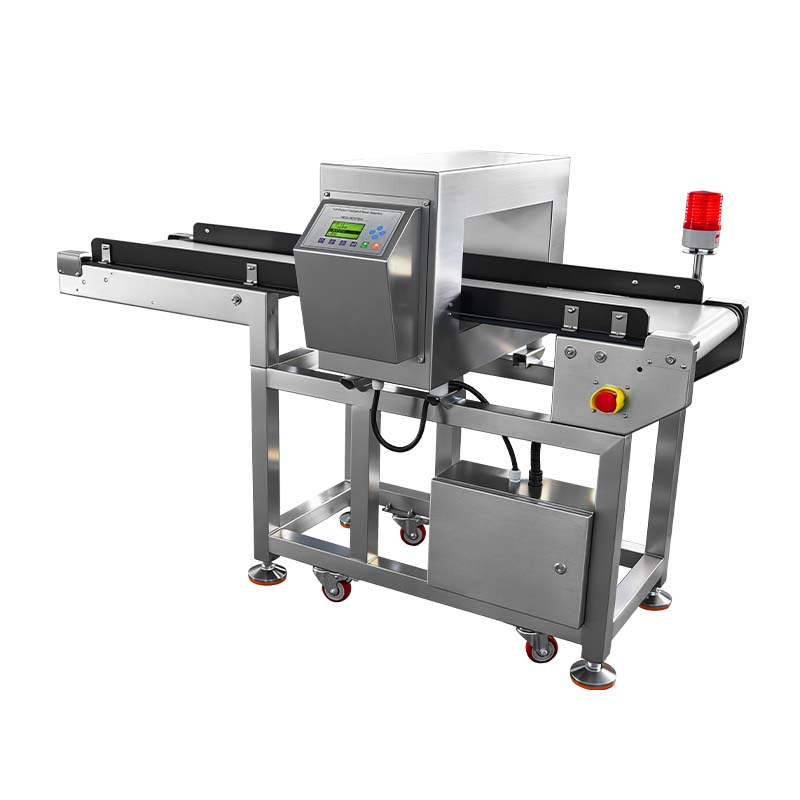
Product Effect: Wet, Salty and Frozen Products
A dry biscuit barely disturbs the field. A wet, salted or sugar-heavy product disturbs it a great deal, because water with dissolved salts and sugars conducts. The machine reads that as a large, slow signal and must separate it from the small, fast one a fragment makes. That is the product-effect problem, and it sets the ceiling on any food metal detector.
- Salt content. Sausage, cured meat, salted nuts, heavily salted bread.
- Temperature. A frozen block reads differently from the same product thawed, and a product warming on the belt can drift out of the phase setting that worked at the start of the shift.
A difficult line needs a different detector rather than a bigger one.
Foil and Metallised Film Change What You Can Detect
Wrap the product in aluminium foil or a metallised film and you have wrapped it in a conductor. A standard food metal detector is then looking for a small fragment inside a large moving signal, and the only metal it still finds reliably is ferrous.
On foil packaging you give up non-ferrous and stainless detection. Our answer in this range is the ferrous-only CQ-YW806, which holds Fe sensitivity at 0.8 mm on the 4010 aperture. A separate article explains the mechanism behind foil.
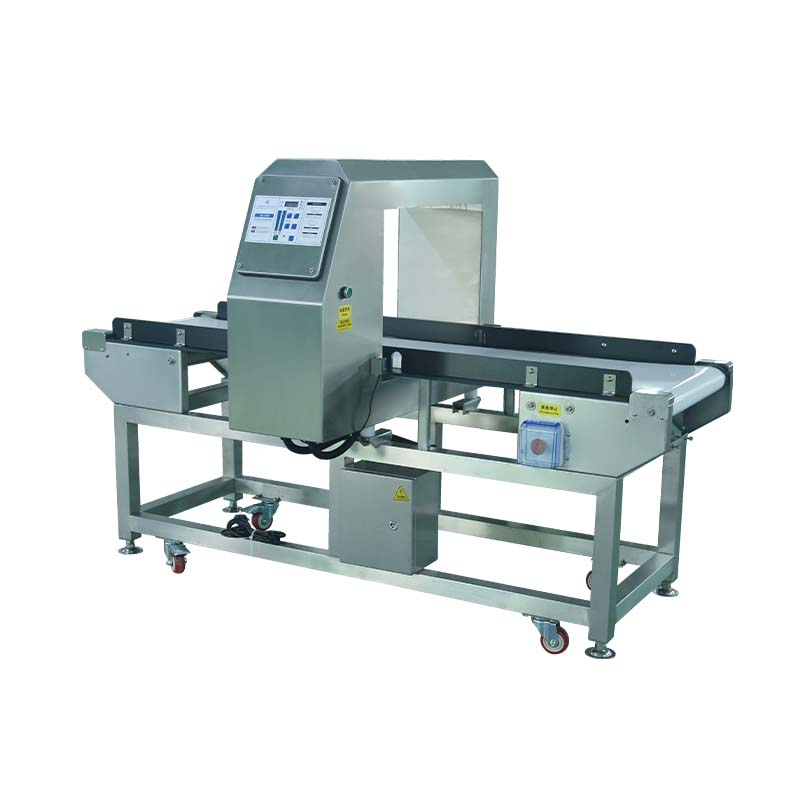
What a Food Metal Detector Cannot See
Metal is the whole of a food metal detector's vocabulary. Glass, stone, bone, ceramic, plastic, rubber and wood are invisible to it, and so is every defect unrelated to metal: a missing tablet, a low fill level, a bad seal.
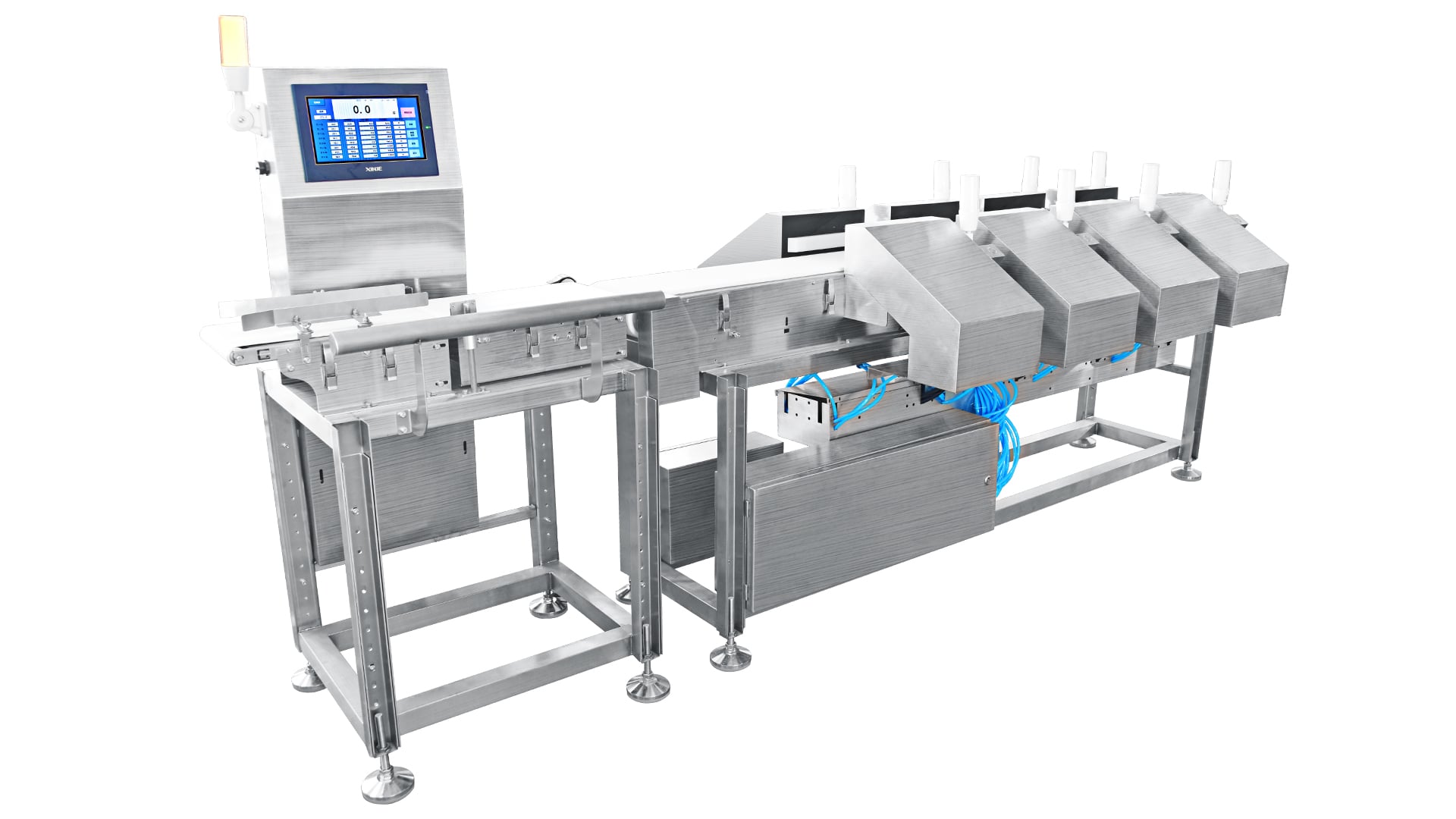
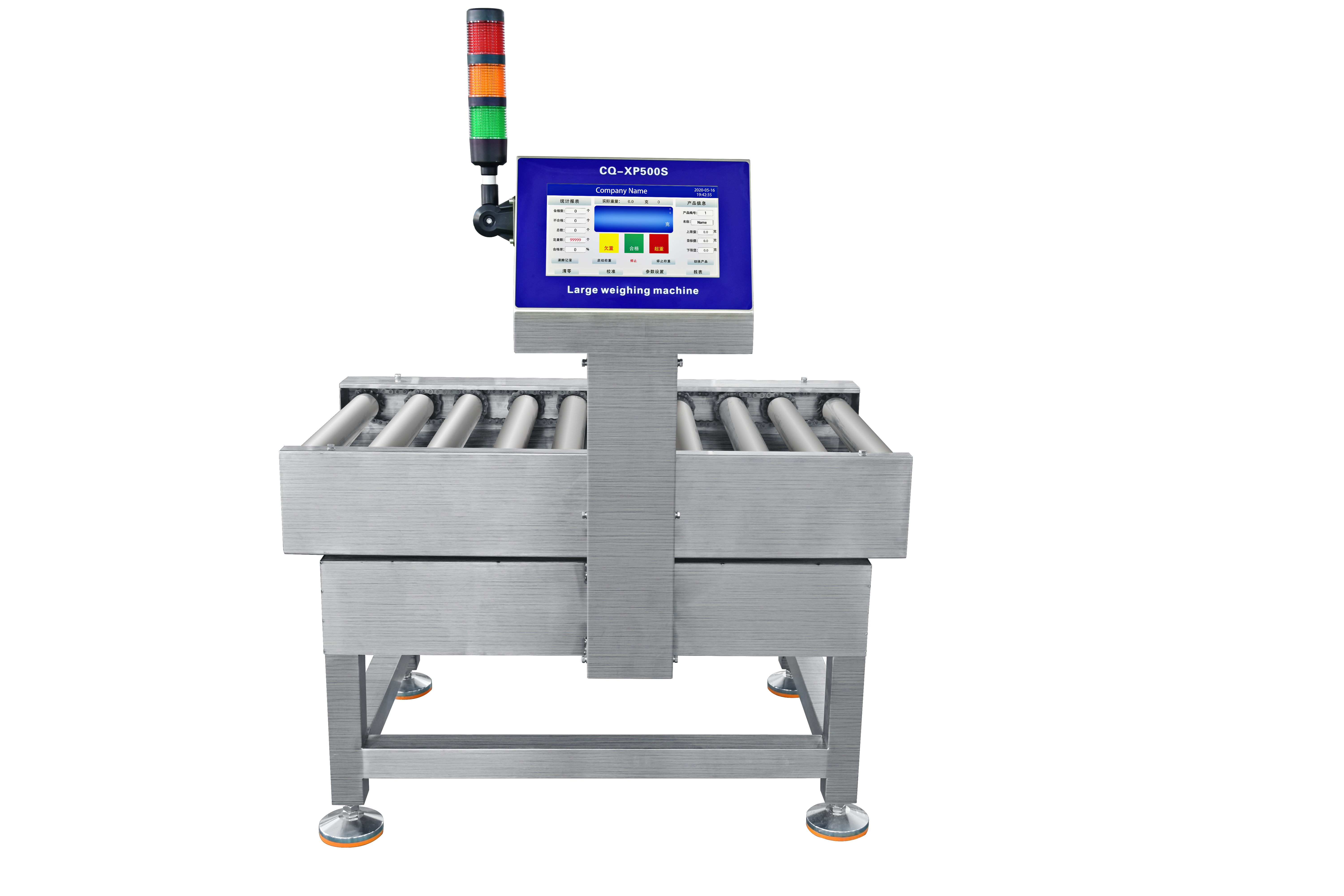
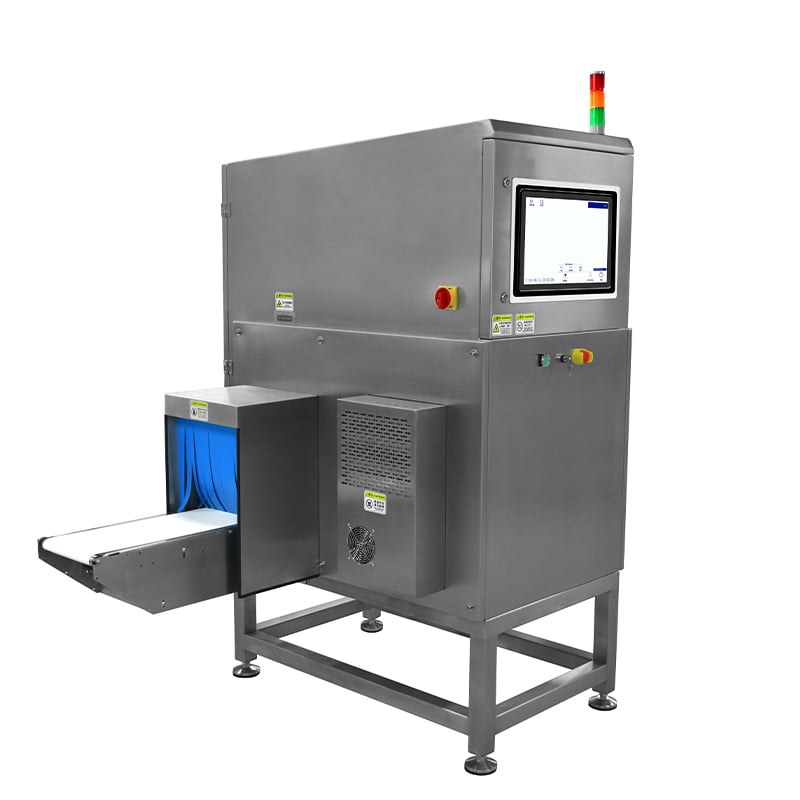
If those are your risks, the machine you need reads density rather than conductivity, and that is X-ray. If the risk is weight rather than foreign bodies, it is a checkweigher; our guide to choosing one for food lines covers that decision.
Where a line needs both, a combined unit is worth pricing against two frames.
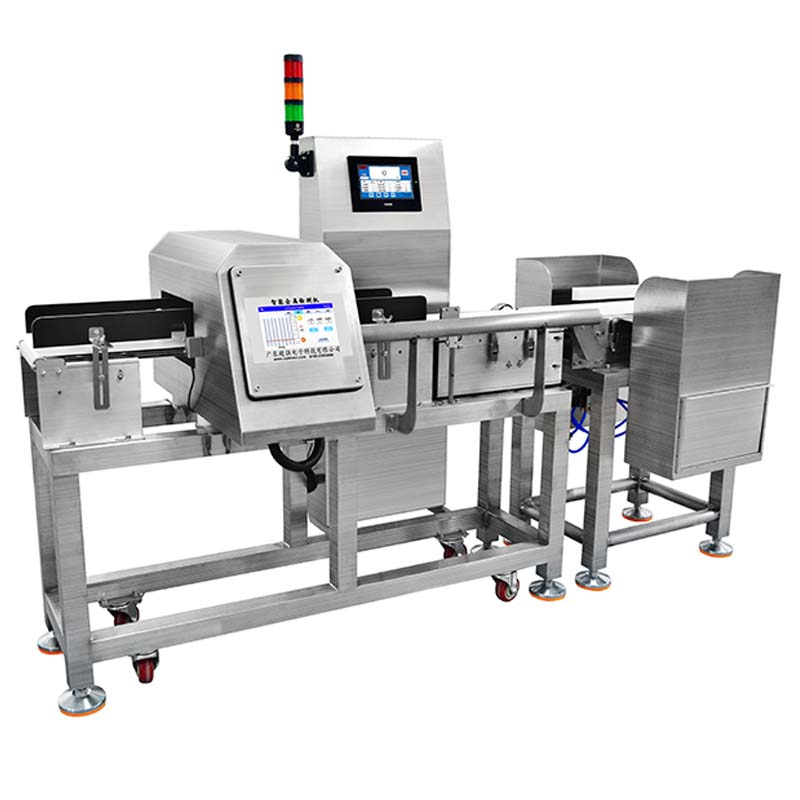
The Rejection System, Where Projects Fail
Detection gets specified carefully and rejection tends to get assumed, which is how a commissioning visit turns into a warranty argument.
This range ships with an automatic stop and a 12 V buzzer as standard; flap, air blow, pusher, swing arm and sink rejection are options. Three questions settle which one you need:
- Can the rejector clear a bad pack in the time between two packs at your belt speed?
- Does the reject bin signal back to the controller, so the record shows a confirmation and not just an instruction?
- Can a rejected pack find its way back onto the line through a gap or a shared catch tray?
Using It as a CCP: The Daily Test
The figures in this article, like those in any brochure, come from an empty belt and a set of certified test balls. They describe the machine, not your line.
Validation closes that gap. Run your own product through the machine with the test pieces you use in production, at the line's real speed and load, and record what it catches. That result, not the datasheet number, is what your CCP document should carry — along with who tests and where the record is filed.
The Models, and What Each One Is For
All-metal with a touch screen and auto-learning: CQ-YW910K. All-metal with a simpler LCD panel: CQ-YW818. Ferrous only, for foil and metallised film: CQ-YW806 and the audit-oriented CQ-YW807. Wet or high-salinity products: CQ-YW918. The whole range is on the metal detector page.
Frequently Asked Questions
What can a food metal detector detect?
Ferrous, non-ferrous and stainless steel, at the sizes in the aperture table above. Glass, stone, bone, plastic, rubber and wood are not conductive; that work belongs to X-ray.
Which metal is hardest for a food metal detector to find?
Stainless steel 304 or 316 — usually non-magnetic and a poorer conductor than copper. On our 4015 aperture the iron figure is 1.2 mm and the stainless figure is 2.5 mm.
Can a food metal detector see through aluminium foil?
Not at full capability. Foil is a conductor, so a food metal detector keeps ferrous detection and loses non-ferrous and stainless. CQ-YW806 is built for that case.
How often should a food metal detector be tested?
A check at start-up, at the end of the shift, and after any changeover or repair, using test pieces kept on the line. The interval belongs to your HACCP study.
What do you need to quote a food metal detector?
Pack dimensions, weight, temperature and packaging material; packs per minute; and which metal, at what size, with the reject going where.
A food metal detector is chosen in a fixed order: the metal you have to catch, the aperture that fits your largest pack, then the model that copes with your product and packaging. Everything else in the quotation follows.
Send us the pack dimensions and what you need to catch, and we will tell you which aperture holds it. The range is on our metal detector page.

 Hot News

 ONLINE